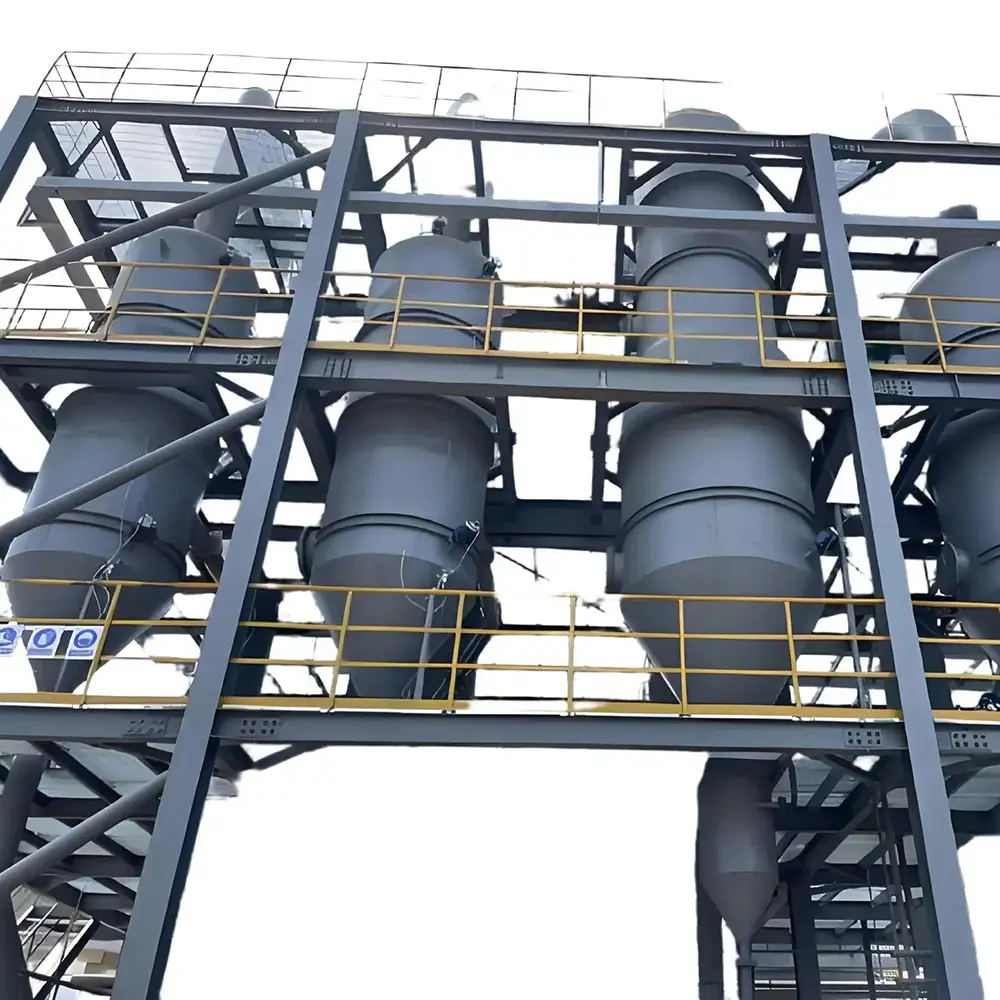
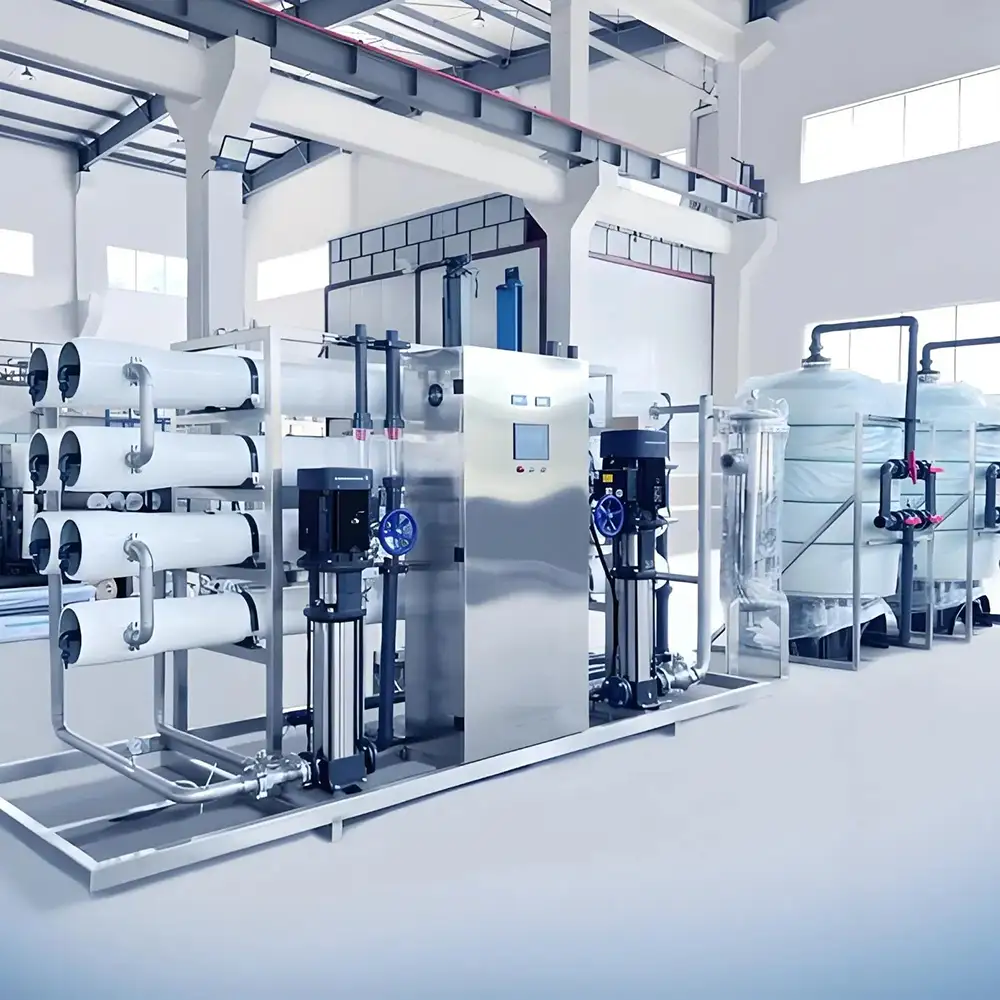
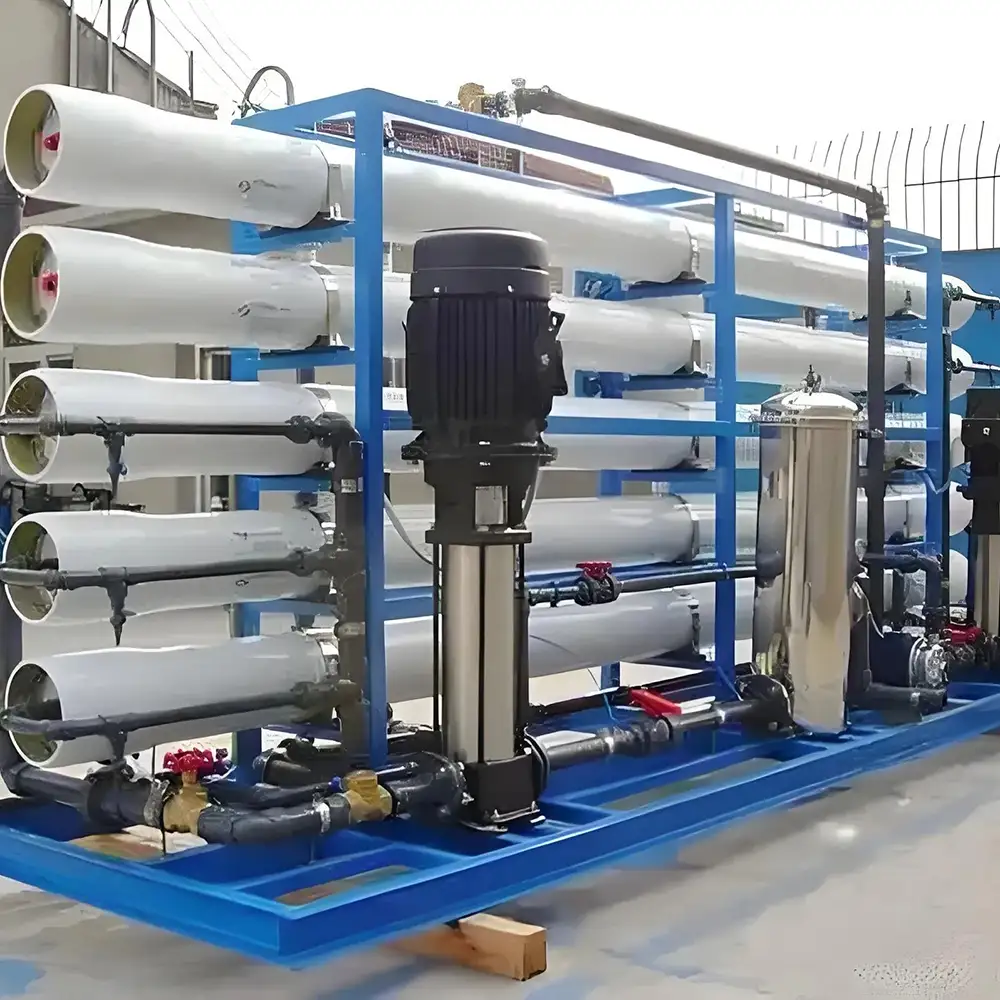
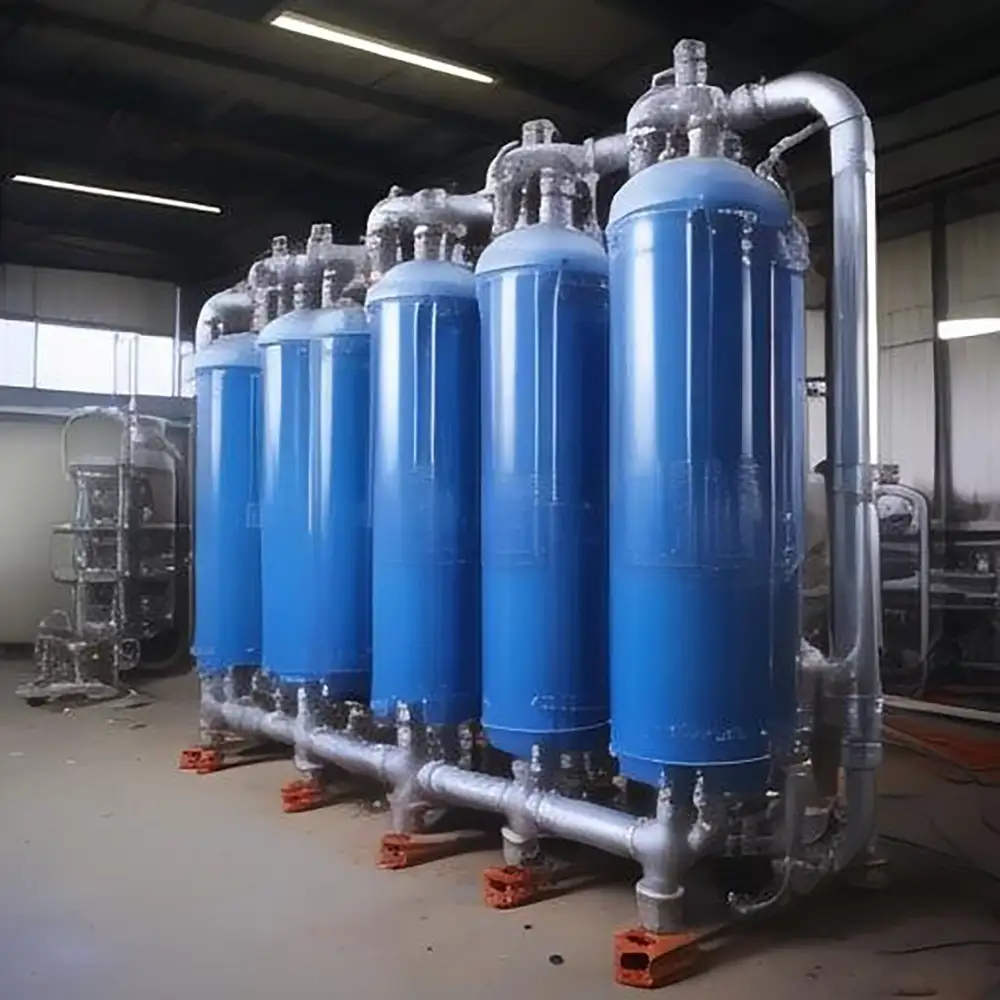
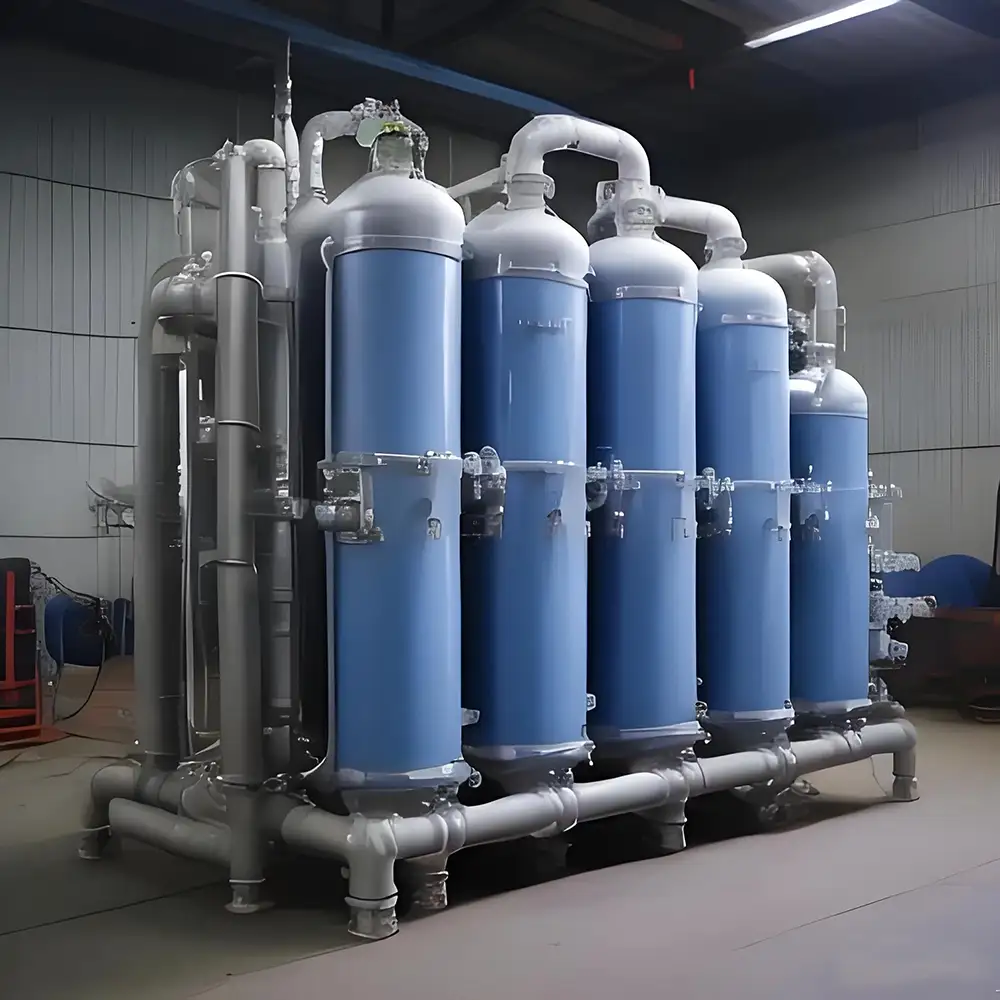
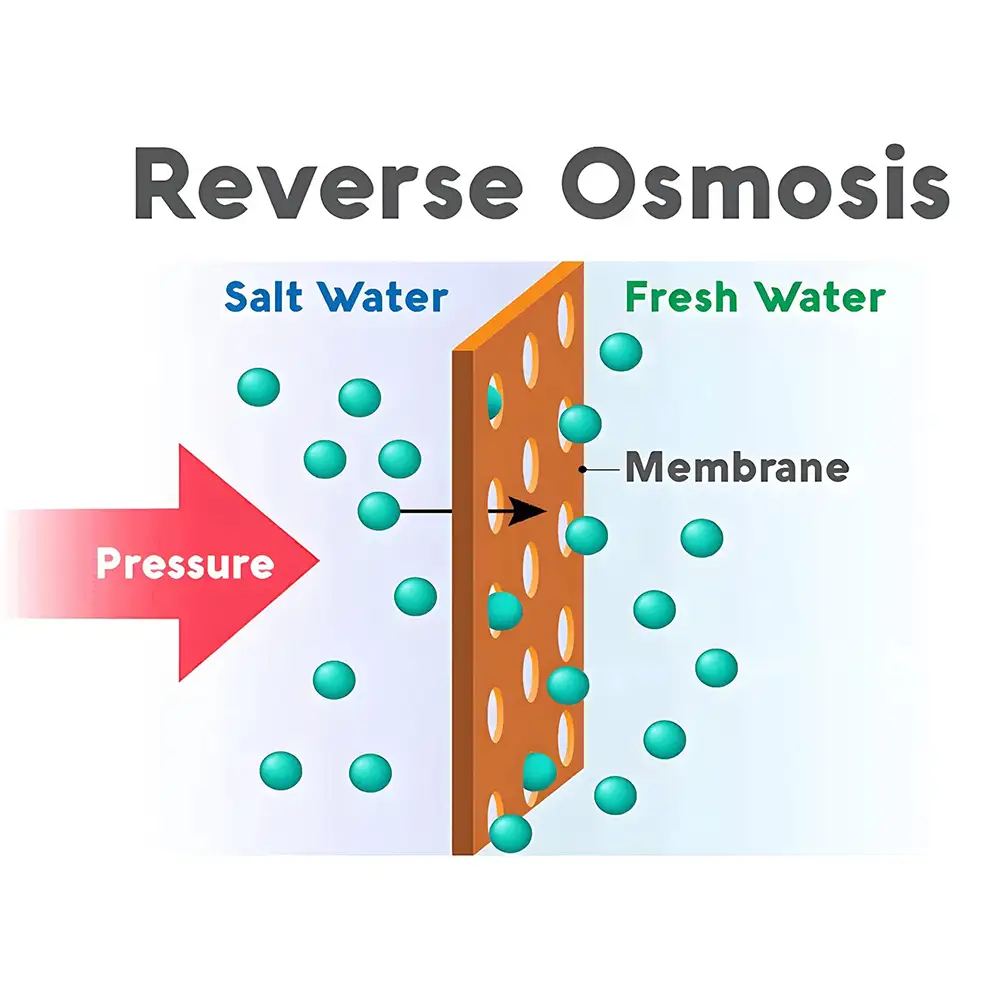
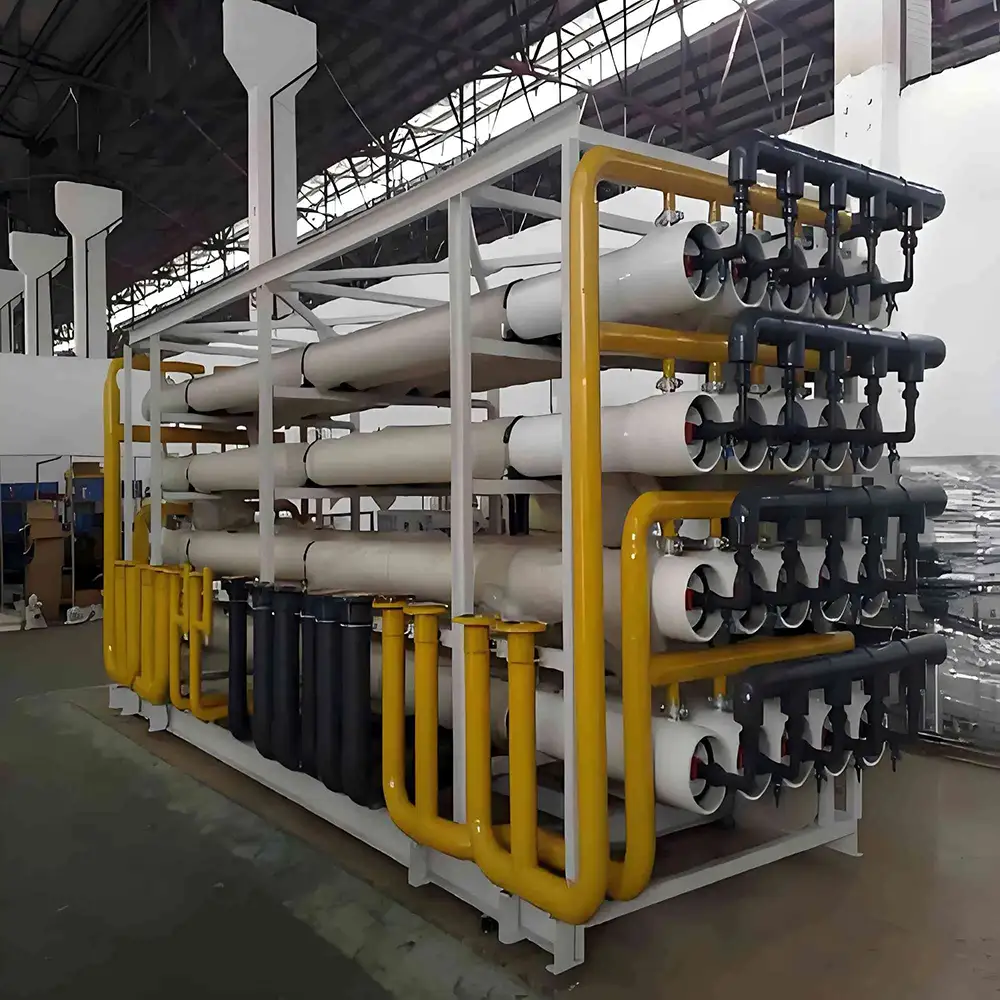
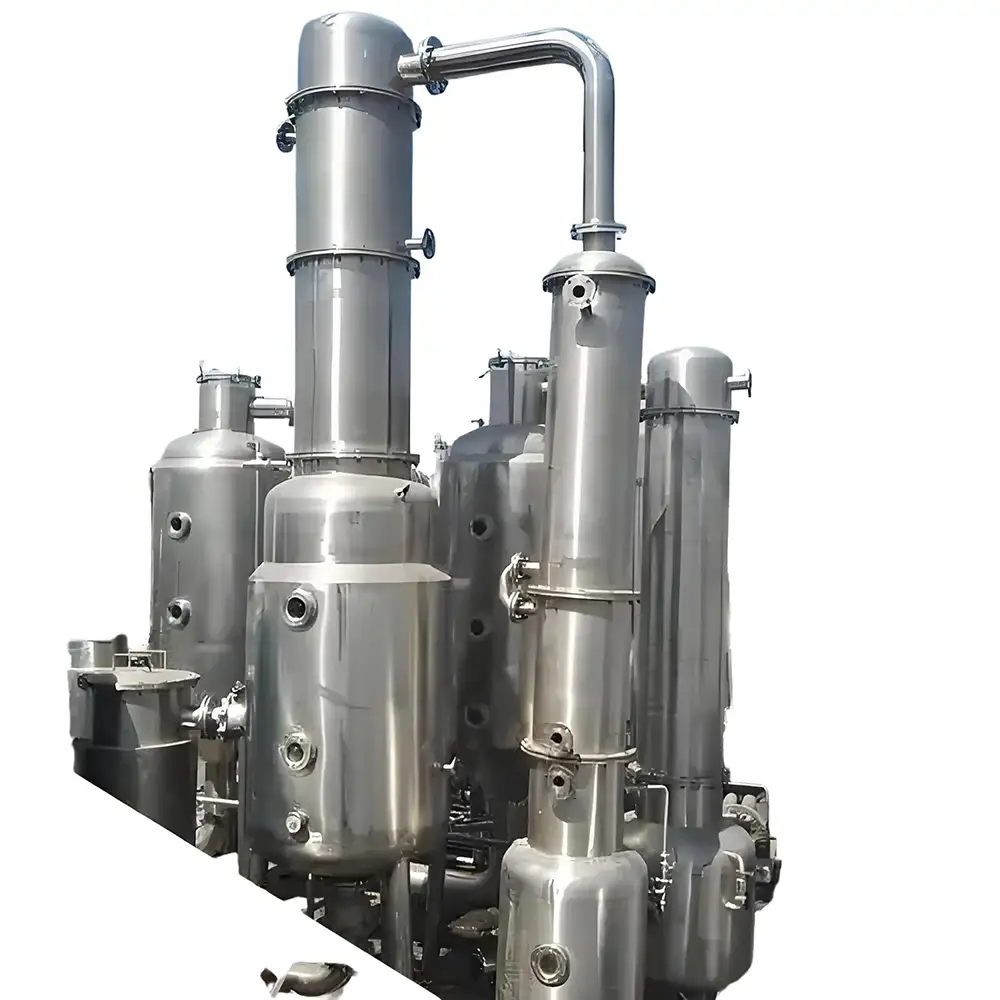
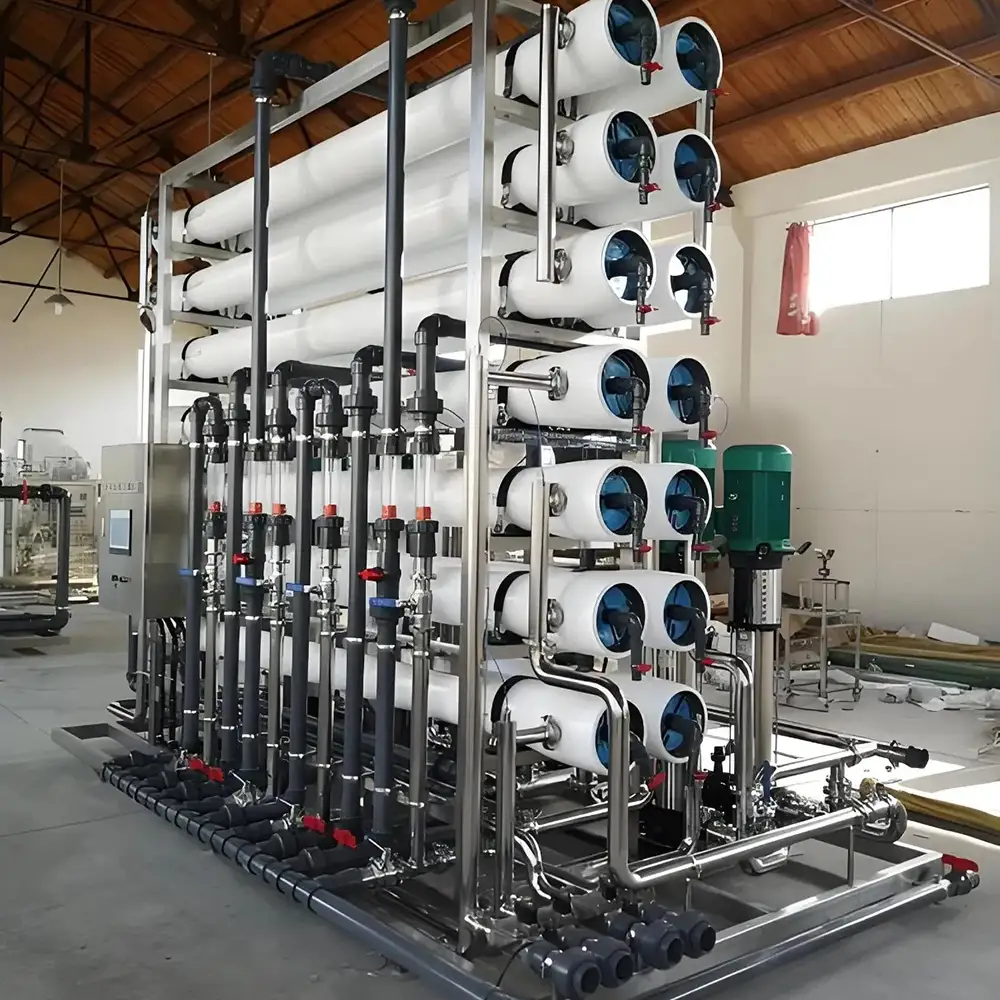
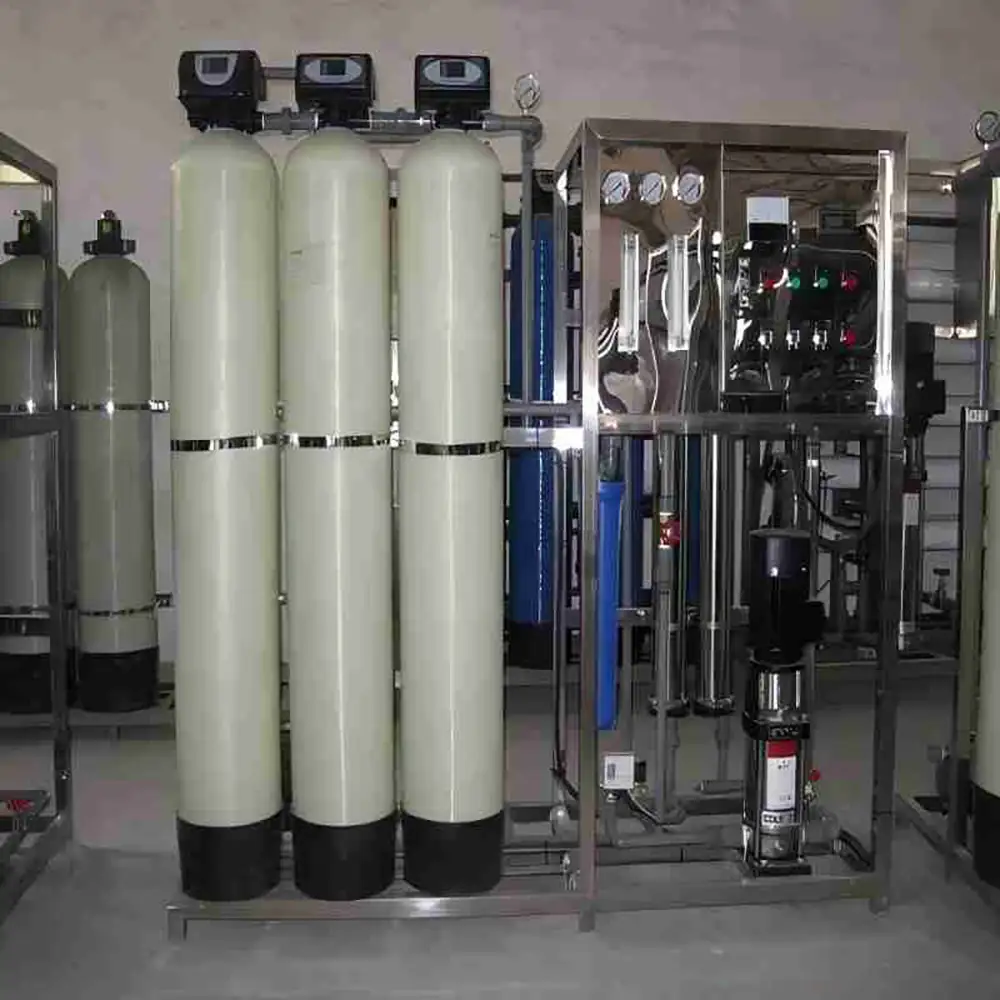
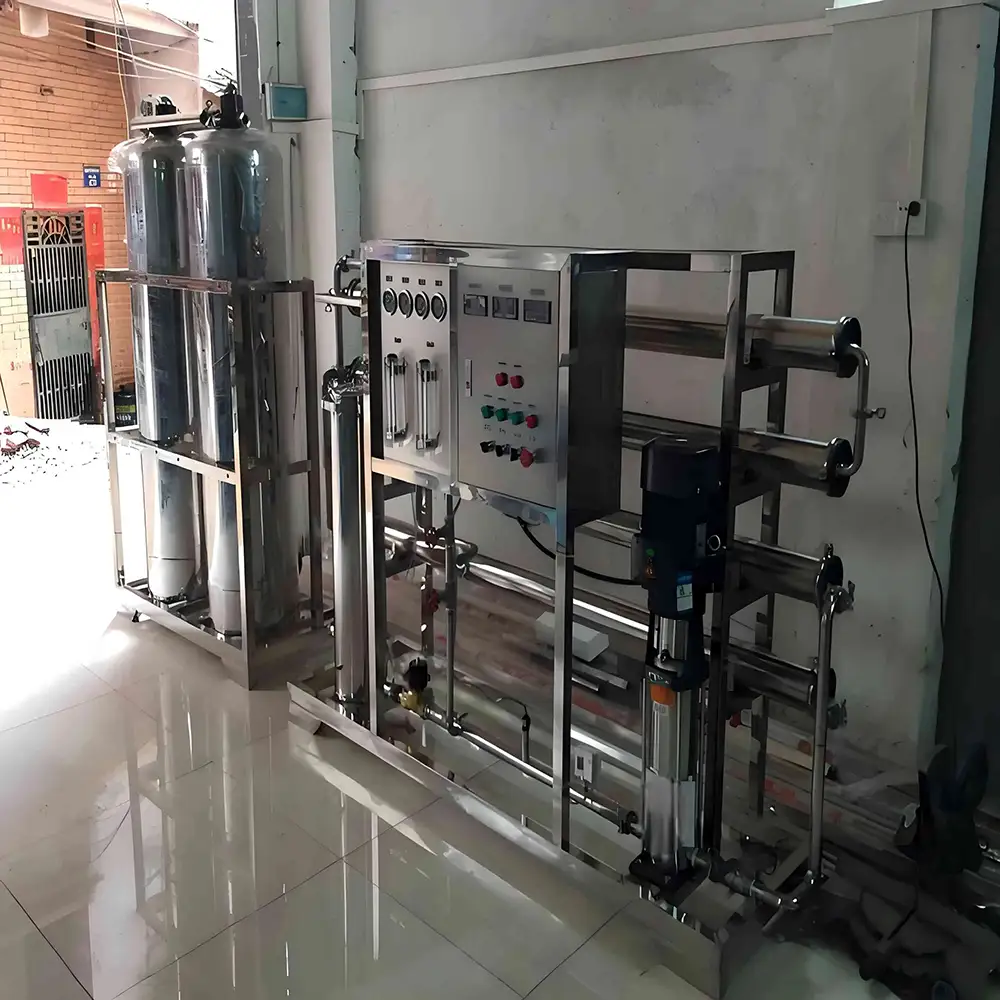
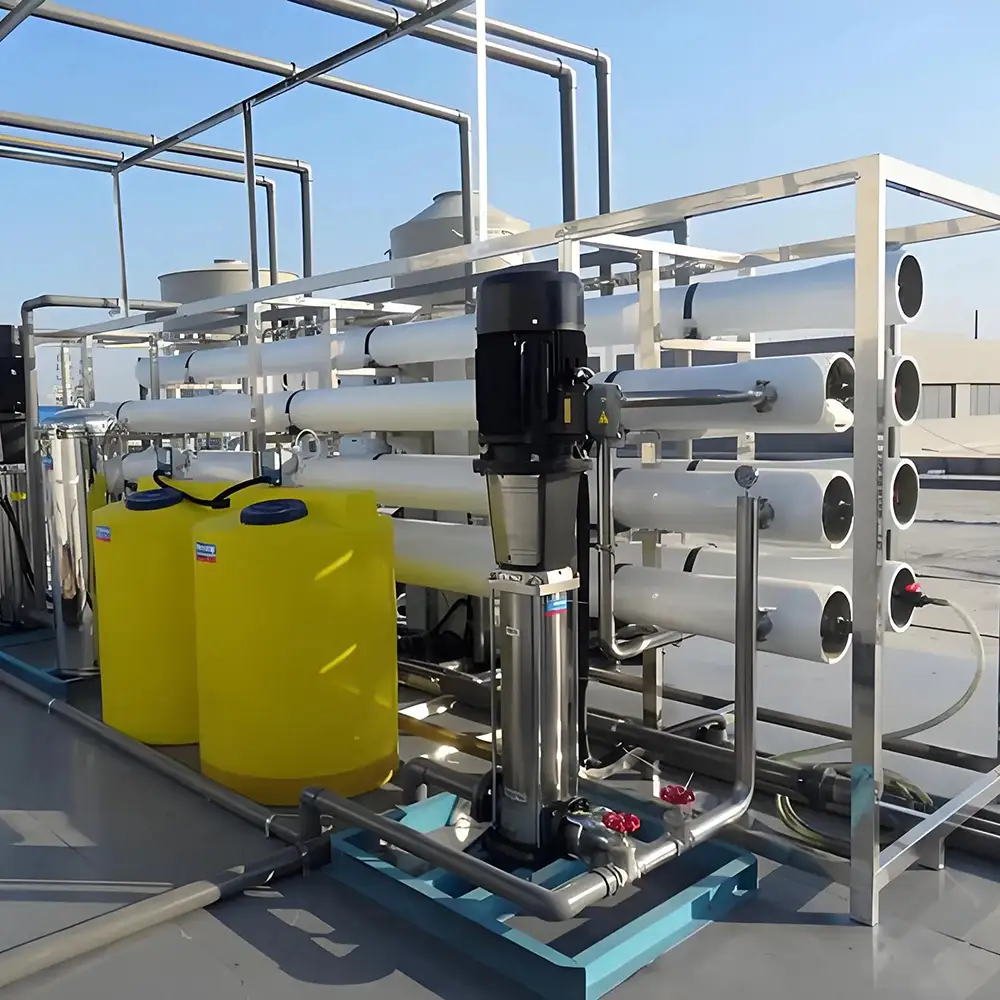
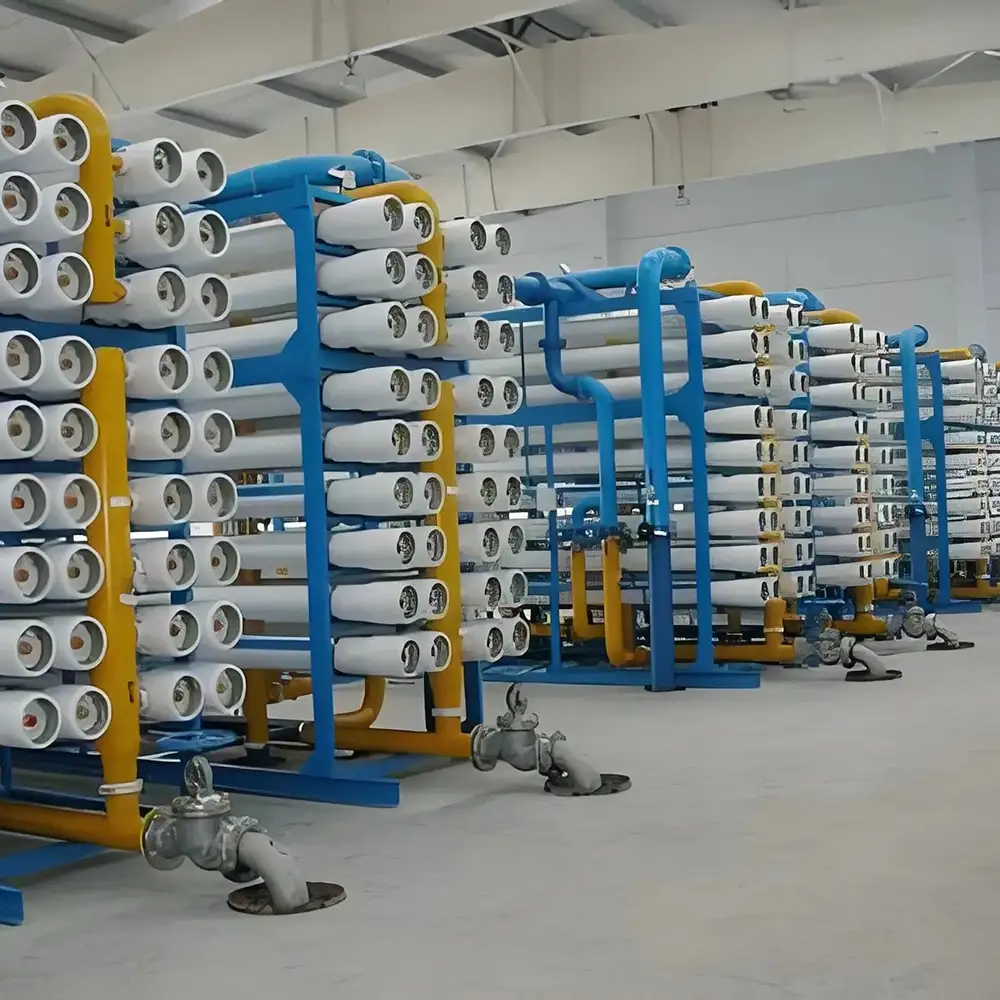
The reverse osmosis equipment passes the raw water through fine filters, granular activated carbon filters, compressed activated carbon filters, etc., and then pressurizes it through a pump, utilizing a pore size of 1/10000 μ The reverse osmosis membrane (RO membrane) of m (equivalent to 1/6000 of the size of Escherichia coli and 1/300 of the size of the virus) separates high concentration water into extremely low concentration water (i.e. pure water) and higher concentration water. Low concentration water is used, and high concentration water is discharged or reused as resources
Biological Film Ultrafiltration Membrane RO Water Treatment Plant for Farms, Schools and Wineries
A Biological Film Ultrafiltration Membrane RO Water Treatment Plant combines biological treatment, ultrafiltration membrane separation and reverse osmosis technology into a multi-stage water treatment solution. This type of integrated system can be designed for farms, schools, wineries, agricultural facilities, commercial properties and other locations that require reliable wastewater treatment, water purification or water reuse.
The main advantage of combining these technologies is that each treatment stage performs a different function. Biological film processes use microorganisms attached to carrier media to biologically degrade biodegradable organic matter. Ultrafiltration provides physical membrane separation for suspended solids, colloids and biological solids. Reverse osmosis provides a finer membrane barrier for dissolved salts and other dissolved contaminants.
EPA water reuse guidance identifies biological treatment, ultrafiltration and reverse osmosis as complementary treatment technologies that can be combined according to the required water quality and reuse objectives.
Integrated Biological Film Water Treatment
The biological film stage provides an important role when the incoming water contains biodegradable organic pollutants. Microorganisms grow on a protected carrier surface and form a biological film. As wastewater passes through the biological reactor, microorganisms can consume biodegradable organic compounds under suitable operating conditions.
A biological film process can be configured as an MBBR-type reactor, fixed-film bioreactor or another attached-growth biological treatment process. Aeration and mixing can be incorporated when aerobic treatment is required.
For farms, schools and wineries, biological treatment can help reduce the organic loading entering downstream membrane equipment. This is especially useful when the wastewater contains food-related organic matter, domestic sewage or agricultural wastewater.
Winery wastewater can have relatively high organic strength and significant seasonal variation. Research reviewed by the U.S. EPA notes that aerobic and anaerobic biological processes are commonly applied to winery wastewater, with treatment selection influenced by organic loading and operating conditions.
Ultrafiltration Membrane Treatment
After biological treatment, ultrafiltration can provide a physical barrier for suspended solids, colloids, bacteria and biological biomass. UF membranes operate under pressure and separate contaminants based primarily on membrane pore characteristics and the size of the materials being retained.
UF is particularly useful following biological treatment because it can separate biological solids from treated water without relying solely on conventional sedimentation. EPA documentation describes UF as a membrane process used to remove particulate matter and biological mass following biological treatment.
In a biological membrane treatment system, the UF stage can also help protect the downstream RO membrane from suspended solids and biological fouling. Proper pretreatment is important because membrane fouling can reduce flux and increase cleaning requirements.
RO Reverse Osmosis Water Purification
Reverse osmosis provides the final high-level membrane separation stage in many integrated water treatment systems. RO uses pressure to force water through a semipermeable membrane. The treated water becomes permeate, while rejected substances remain concentrated in the reject stream.
According to EPA, RO can remove a wide range of contaminants, including many dissolved inorganic substances, dissolved solids and salts. It can also be used for brackish and seawater desalination.
When UF is installed before RO, the UF stage can reduce suspended solids and biological material entering the RO membranes. This combination can create a multi-barrier treatment process:
Biological Treatment → UF Membrane → RO Reverse Osmosis → Disinfection / Post-Treatment
The actual process configuration should be selected based on raw-water quality, wastewater characteristics, required treatment objectives and final water-use requirements.
Farm Water Treatment Plant
Agricultural facilities can generate different types of water and wastewater, including domestic wastewater, livestock-related wastewater, equipment wash water and process water. The appropriate treatment process depends heavily on the specific source.
For farms requiring water reuse, biological treatment can reduce biodegradable organic loading, while UF can provide additional solids separation and RO can reduce dissolved salts when necessary.
Agricultural water reuse is already recognized as an important water-management application. EPA notes that appropriately treated recycled water can be used for agricultural activities including crops, pasture, orchards, vineyards and other agricultural applications, subject to applicable requirements.
For farm applications, the system may be configured for irrigation-related water treatment, equipment washing, non-potable reuse or other suitable applications. Potable or direct-contact applications require additional treatment and compliance evaluation.
School Water Treatment Plant
Schools may require treatment for domestic sewage, wastewater reuse or drinking-water purification depending on the facility and local infrastructure.
For decentralized locations, a compact integrated treatment plant can combine biological treatment, membrane filtration, disinfection and storage in one coordinated system.
The biological stage can address biodegradable wastewater, while UF provides fine filtration and RO can be added when dissolved solids or specific dissolved contaminants need additional reduction.
A school water treatment system can also include automatic controls, level sensors, flow meters, pressure monitoring, conductivity monitoring and alarm functions to simplify operation.
Winery Water Treatment Plant
Wineries have distinctive wastewater characteristics because wastewater generation can vary significantly during production, cleaning and harvest periods. Organic loading may also change throughout the year.
A winery water treatment plant can therefore use equalization before biological treatment to reduce sudden hydraulic and organic loading fluctuations.
A typical process may include:
Screening → Equalization → Biological Film Reactor → UF Membrane → RO System → Disinfection → Reuse or Discharge
The final configuration depends on whether the treated water is intended for discharge, equipment cleaning, utility applications or another approved reuse purpose.
RO has also been investigated specifically for winery wastewater treatment. One EPA-listed research study evaluated RO for winery wastewater and reported substantial reductions in several measured parameters at pilot scale, demonstrating the potential of membrane treatment for high-strength winery wastewater.
Biological Film and Membrane Process Advantages
Combining biological and membrane treatment can provide several technical advantages.
The biological stage can reduce biodegradable organic loading before membrane filtration. UF can then retain suspended solids and biological solids, while RO provides additional dissolved-contaminant separation.
This multi-stage approach can be useful where conventional biological treatment alone cannot achieve the required water quality.
It can also support water reuse applications where a higher-quality treated stream is required. However, the final treatment level should always be determined from source-water analysis and the intended reuse or discharge standard.
Automatic Operation and System Control
The treatment plant can be equipped with a PLC control panel for automatic operation. Sensors can monitor water level, flow, pressure, pump status and membrane operating conditions.
Automatic valves can control filtration cycles, backwashing and cleaning sequences where applicable. The RO system can also incorporate high-pressure protection, low-feed-water protection and conductivity monitoring.
Remote monitoring can be added for farms, schools and wineries where the treatment plant may operate away from centralized maintenance personnel.
Compact and Modular Water Treatment Design
The biological film, UF and RO stages can be supplied as separate process units or integrated into a modular treatment plant.
Compact skid-mounted systems are suitable where installation space is limited. Larger plants can use multiple treatment trains to increase capacity or provide operational redundancy.
The equipment configuration can include tanks, pumps, biological carriers, membrane modules, control panels, dosing equipment, filtration units, storage tanks and disinfection equipment.
Water Reuse and Final Disinfection
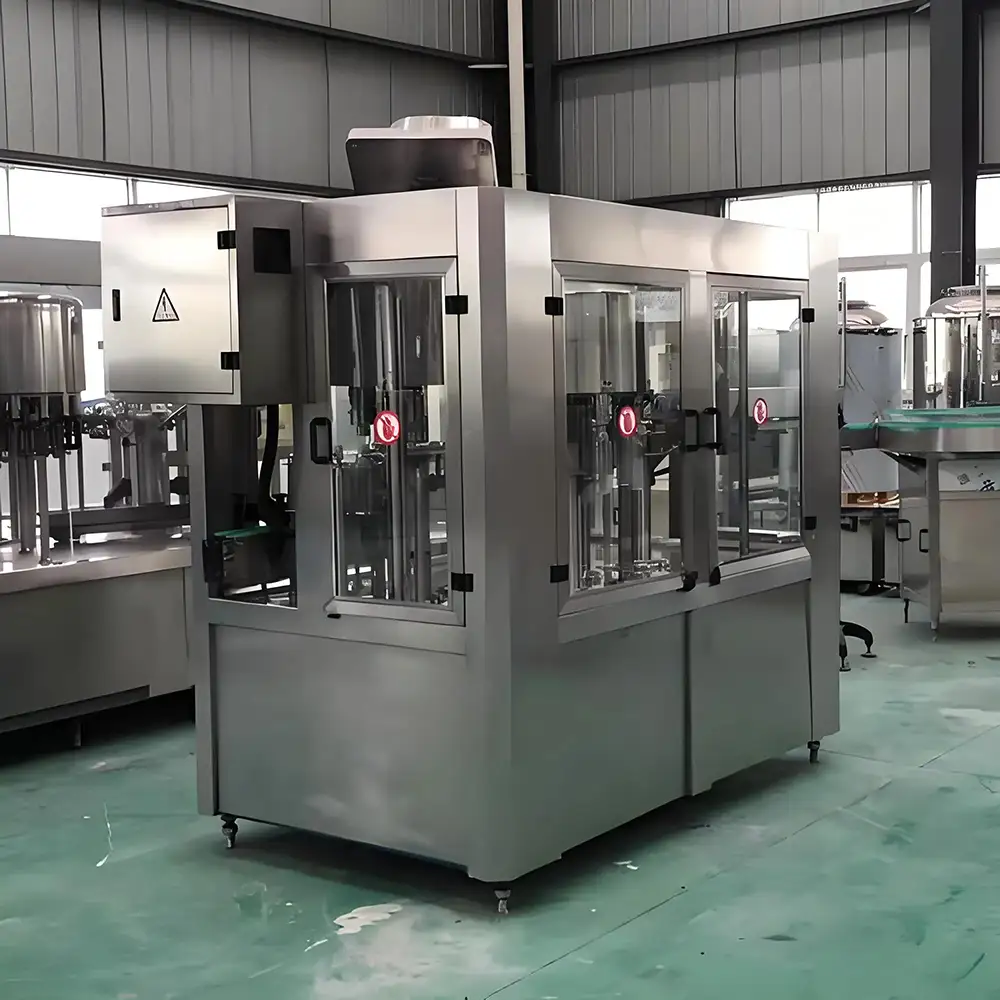
When treated water is intended for reuse, final disinfection may be added after membrane treatment. Depending on the application and local requirements, technologies may include UV, chlorine, chloramine, ozone or other approved disinfection methods.
EPA water reuse guidance lists biological oxidation followed by membrane filtration and disinfection as one possible treatment approach for certain reuse applications.
The required treatment and disinfection level depends on the final water application. Irrigation, toilet flushing, equipment washing and potable water have different requirements and should not be treated as equivalent applications.
Why Choose Our Biological Film, UF and RO Water Treatment Plant?
Integrated Multi-Stage Treatment: Combines biological treatment, UF membrane filtration and RO purification.
Flexible Application: Designed for farms, schools, wineries and other decentralized facilities.
Reduced Membrane Loading: Biological and UF treatment can help reduce the contaminant load reaching RO membranes.
Water Reuse Capability: Can be configured for suitable non-potable water reuse applications.
Modular Configuration: Treatment stages can be supplied as integrated or separate process units.
Automatic Control: PLC-based controls can simplify daily operation and monitoring.
Application-Based Design: System configuration can be developed according to source-water analysis.
Compact Installation: Skid-mounted and modular options can reduce installation complexity.
Multiple Membrane Options: UF and RO membrane configurations can be selected according to treatment requirements.
Wide Industry Coverage: Suitable for agricultural, educational, food-processing, winery and other commercial applications.
FAQs
1. What Is a Biological Film Water Treatment System?
A biological film system uses microorganisms attached to a carrier or support surface to biologically treat wastewater. It is commonly used for reducing biodegradable organic pollutants.
2. What Is the Function of UF in This Treatment Plant?
Ultrafiltration provides a physical membrane barrier that can remove suspended solids, colloids and biological solids. It can also help protect downstream RO membranes.
3. Why Use UF Before RO?
UF can reduce suspended solids and biological material before the RO stage, helping create more suitable feed conditions for RO membrane operation.
4. What Does the RO Stage Remove?
RO can reduce dissolved salts, dissolved solids and many other dissolved contaminants. Actual removal depends on membrane characteristics and feed-water conditions.
5. Can This System Treat Farm Wastewater?
Yes. The system can be designed for selected agricultural wastewater streams, but the treatment configuration depends on whether the source is domestic sewage, livestock wastewater, equipment wash water or another farm wastewater stream.
6. Can It Be Used on a Winery?
Yes. Winery wastewater can be treated using biological processes and membrane technologies. Equalization is often useful because winery wastewater characteristics can change substantially during production and cleaning periods.
7. Can This System Be Used at a School?
Yes. It can be configured for school wastewater treatment, decentralized sewage treatment or suitable water reuse applications depending on site conditions.
8. Can the Treated Water Be Used for Irrigation?
Potentially, depending on the treatment quality, source water, crop type and applicable local regulations. Agricultural reuse requirements vary by jurisdiction and intended use.
9. Does the RO System Produce Reject Water?
Yes. RO produces a permeate stream and a concentrate or reject stream. The concentrate needs appropriate management based on the site and applicable requirements.
10. Is Disinfection Required After UF and RO?
It depends on the intended use and applicable standards. For many water reuse applications, final disinfection is an important additional treatment barrier.
11. Can the Plant Operate Automatically?
Yes. PLC controls, automatic valves, level sensors, pressure monitoring, flow measurement and conductivity monitoring can be integrated into the system.
12. How Do I Select the Right Treatment Capacity?
The design should consider daily flow, peak flow, wastewater characteristics, organic loading, TSS, dissolved solids, conductivity, temperature and the required final water quality. A source-water or wastewater analysis is recommended before final equipment selection.
Conclusion
The Biological Film Ultrafiltration Membrane RO Water Treatment Plant combines biological treatment and advanced membrane separation into a flexible process for farms, schools, wineries and other decentralized applications. Biological treatment can address biodegradable organic loading, UF can provide fine solids separation, and RO can provide additional dissolved-solids and salt reduction. The final process should be engineered according to the source-water characteristics and intended discharge or reuse application.
Prev:
RO Water Treatment System for Water Purificatio and Drinking Water Production
Next:
Water Purification Reverse Osmosis Membrane Treatment Equipment Sewage Treatment Plant
TAG:
Agricultural Water Treatment,
Integrated Wastewater Treatment System,
Food Industry Wastewater Treatment,
Food Processing Wastewater Treatment,
Agricultural Wastewater Treatment,
Organic Wastewater Treatment,
High COD Wastewater Treatment,
Farm Wastewater Treatment,
Integrated Water Treatment System,
Wastewater Treatment Plant,
Reverse Osmosis Water Treatment,
RO Water Purification System,
Wastewater Reuse System,
Process Water Purification,
Water Treatment Plant,
Ultrafiltration Water Treatment,
RO Water Treatment Plant,
Industrial Reverse Osmosis System,
Industrial RO System,
Advanced Water Treatment,
RO Water Treatment System,
Water Recycling System,
Process Water Treatment,
Ultrafiltration Membrane,
UF Membrane System,
UF Water Purification,
UF Membrane Filtration,
Ultrafiltration Water Purification,
RO Membrane System,
RO Membrane Filtration,
Related Category:
Biological Film Water Treatment Plant,Biofilm Water Treatment System,Ultrafiltration Membrane Water Treatment China, suppliers, manufacturers, factory, customized, wholesale, quotation, made in China