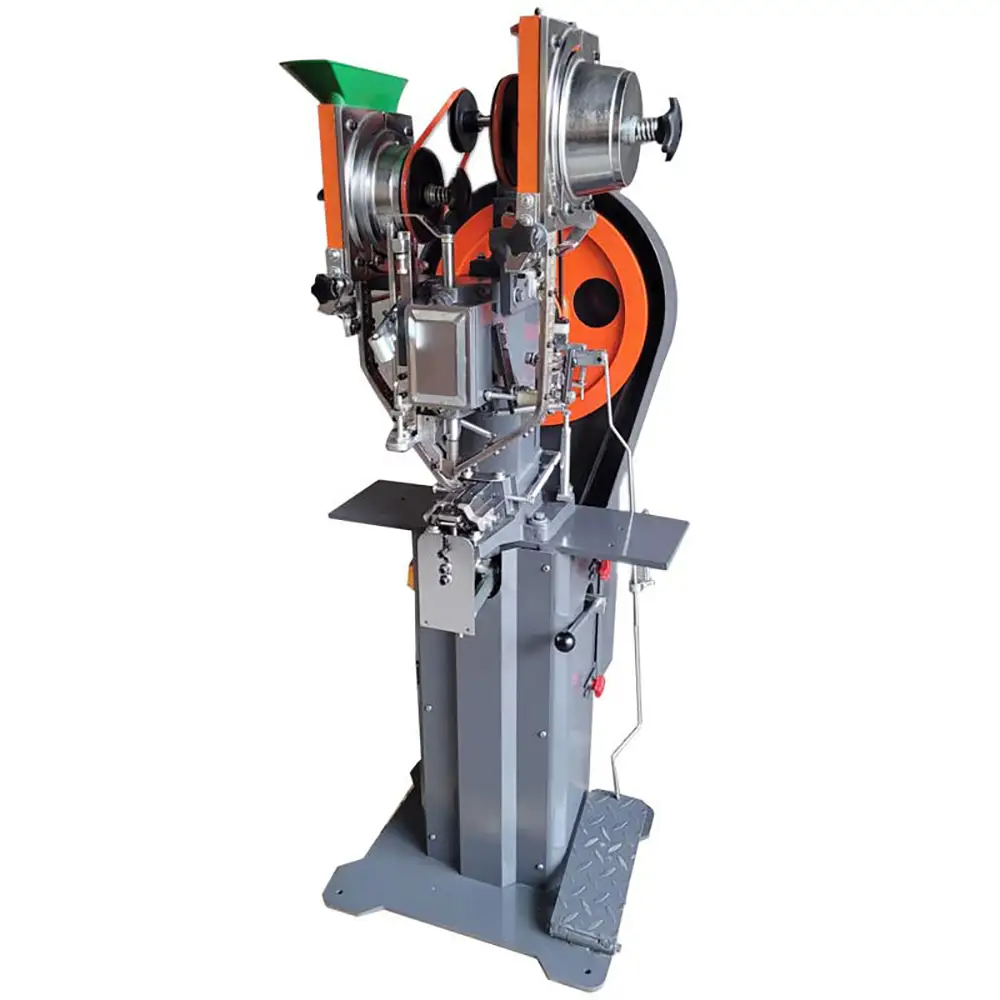
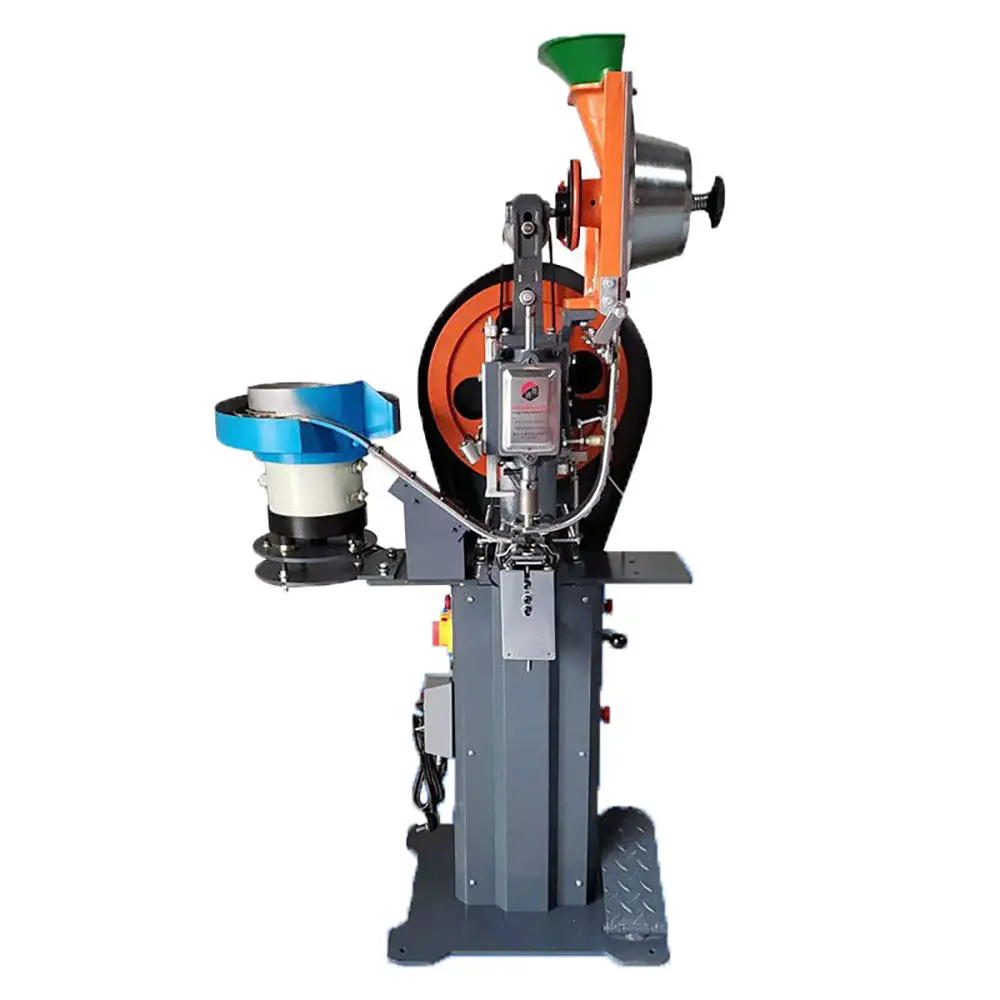
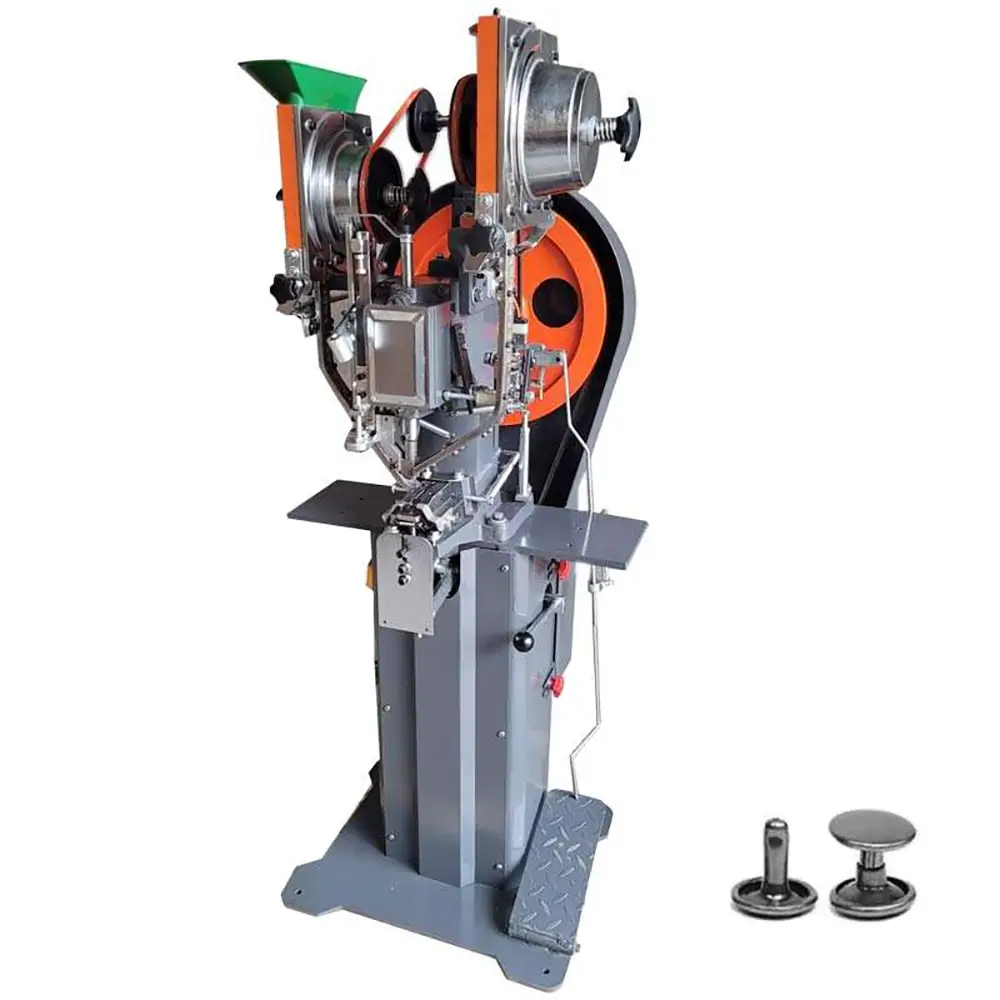
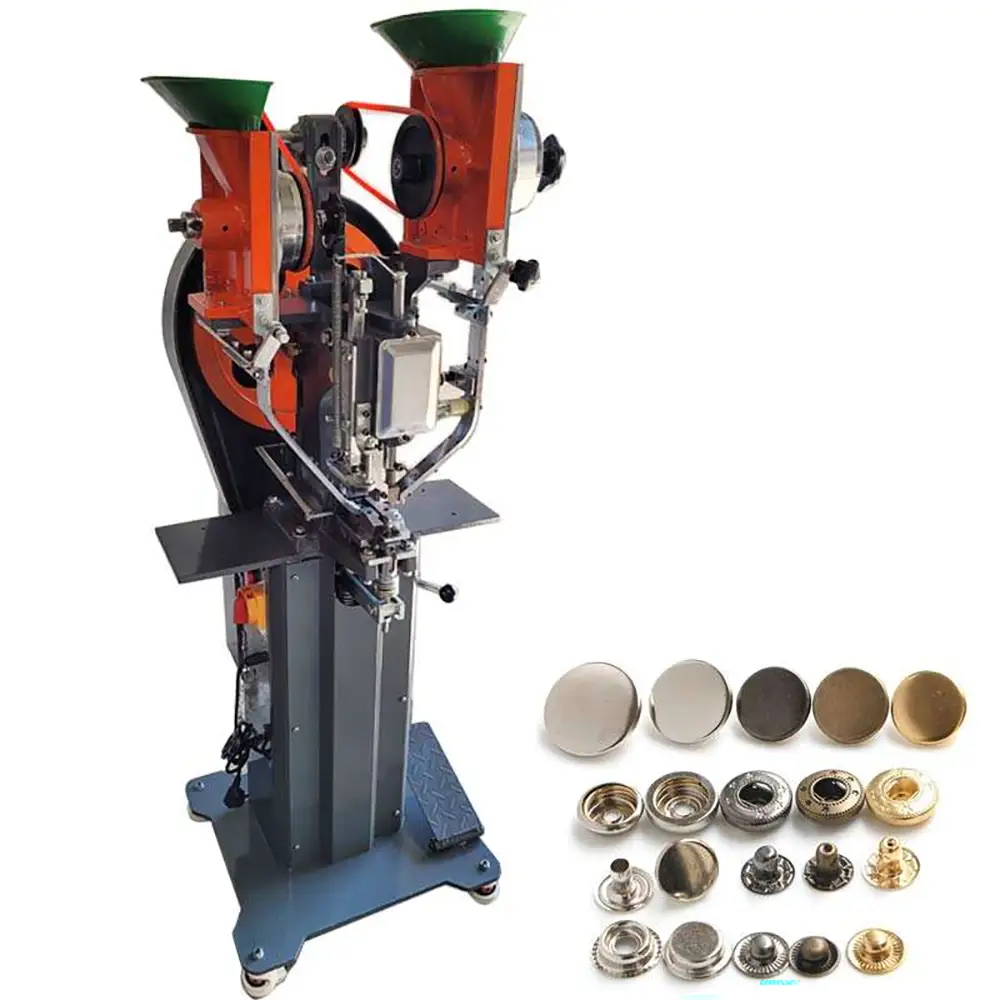
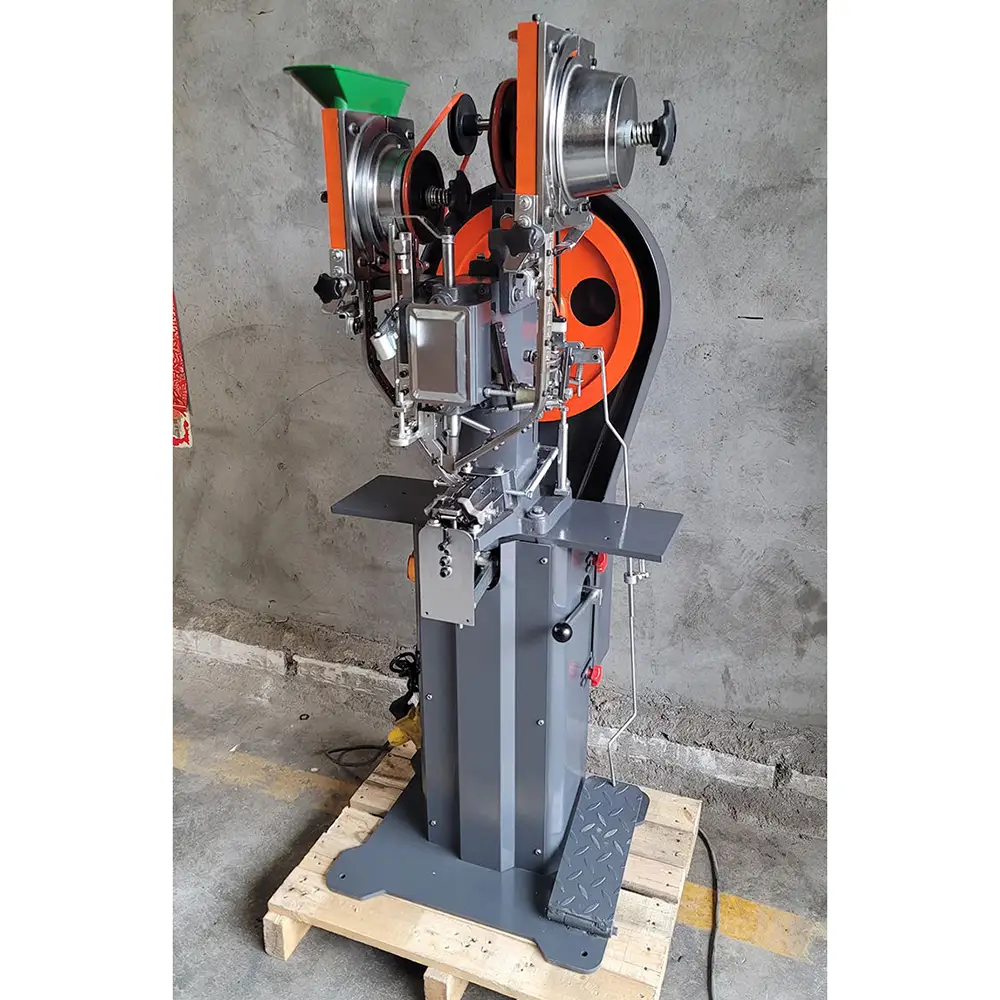
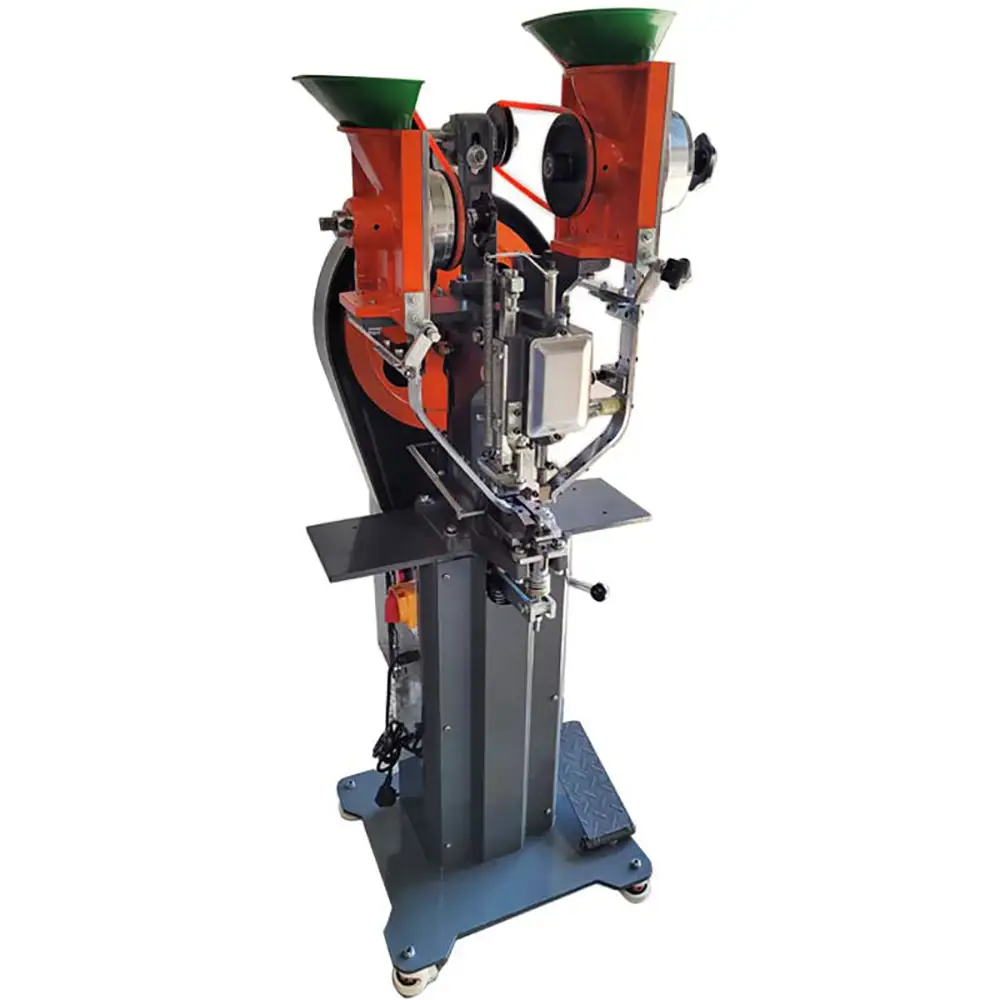
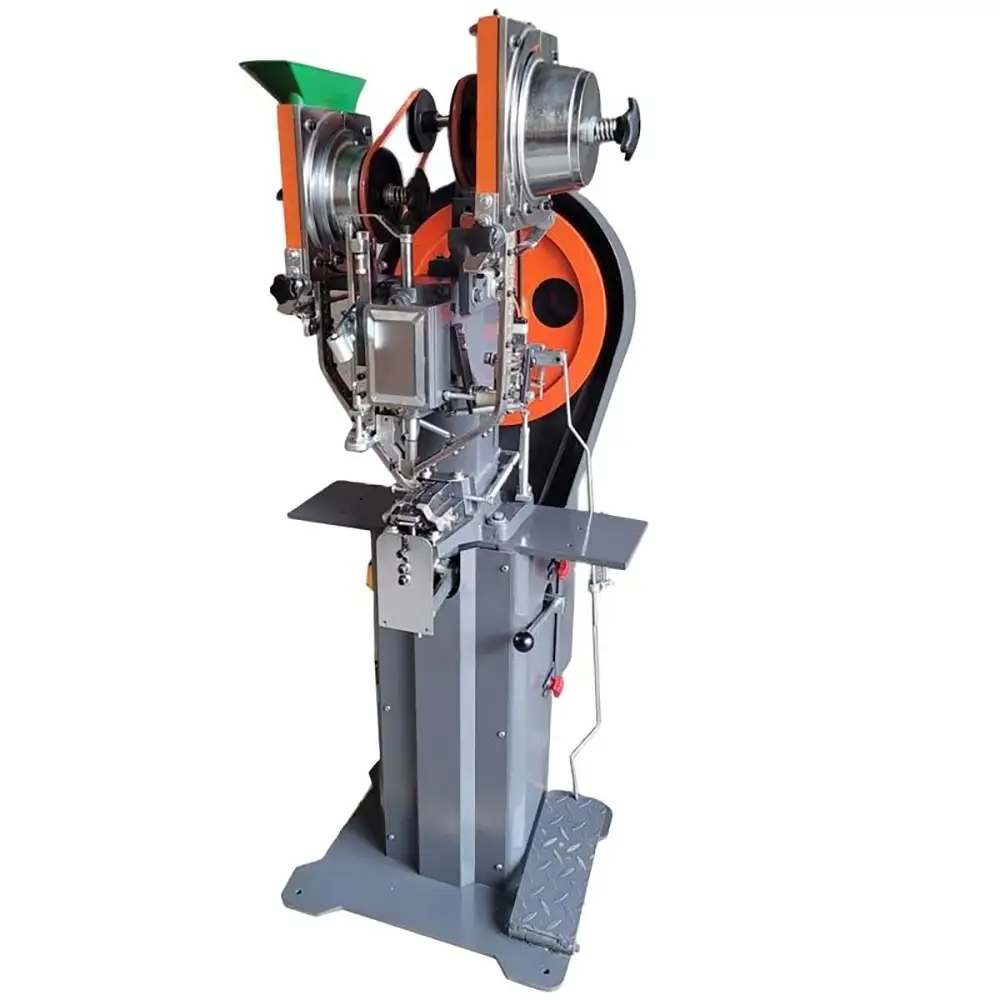
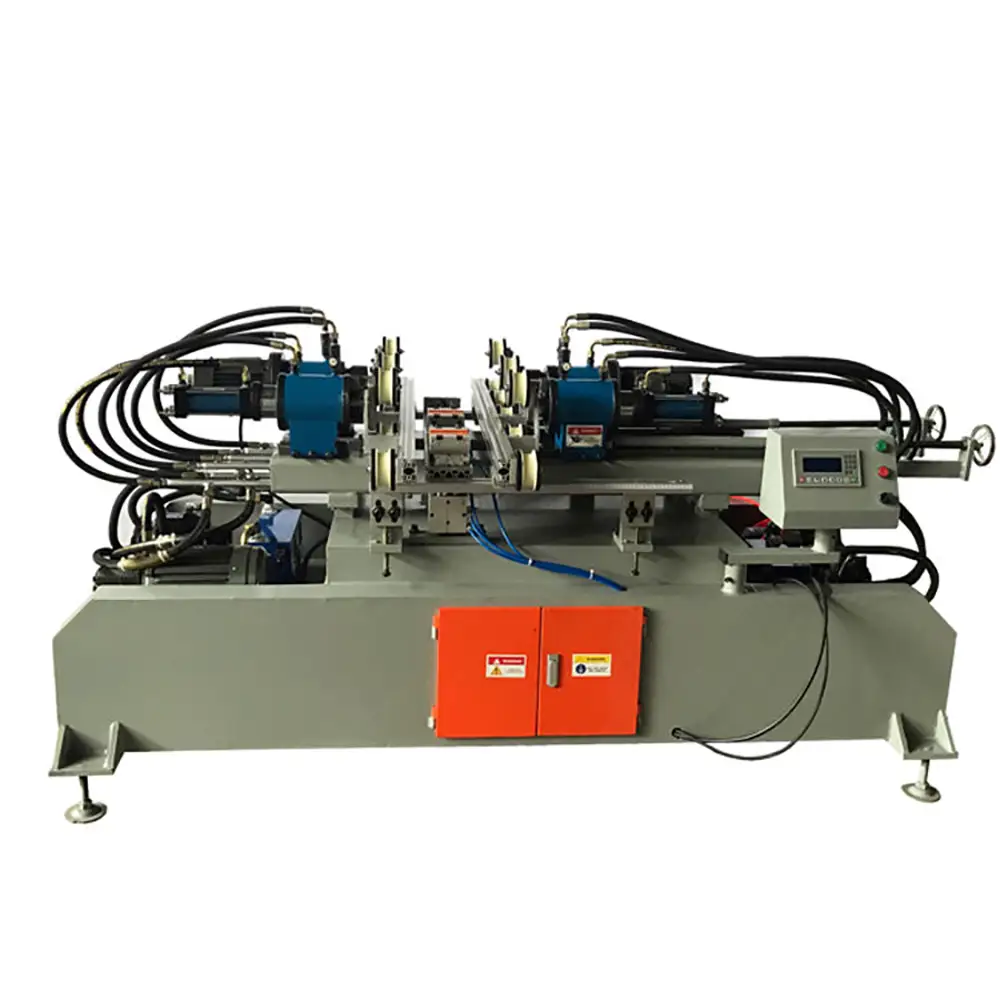
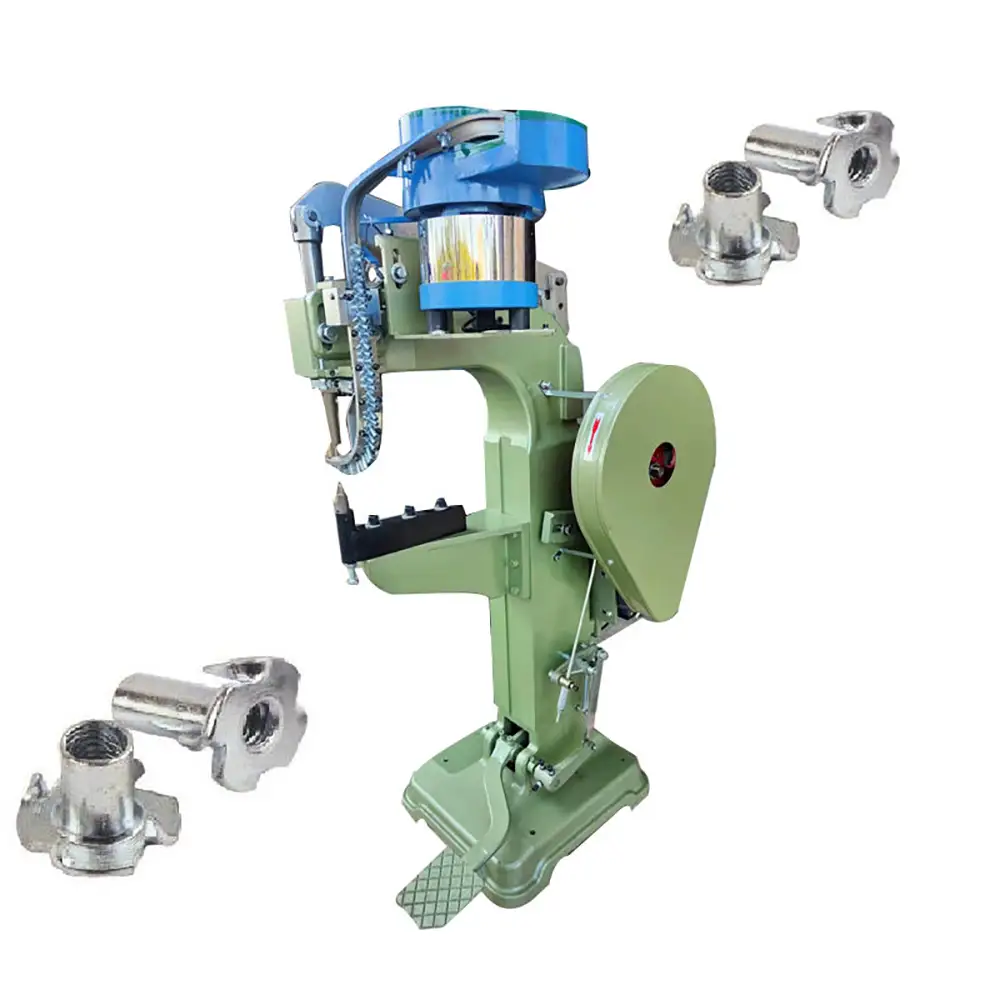
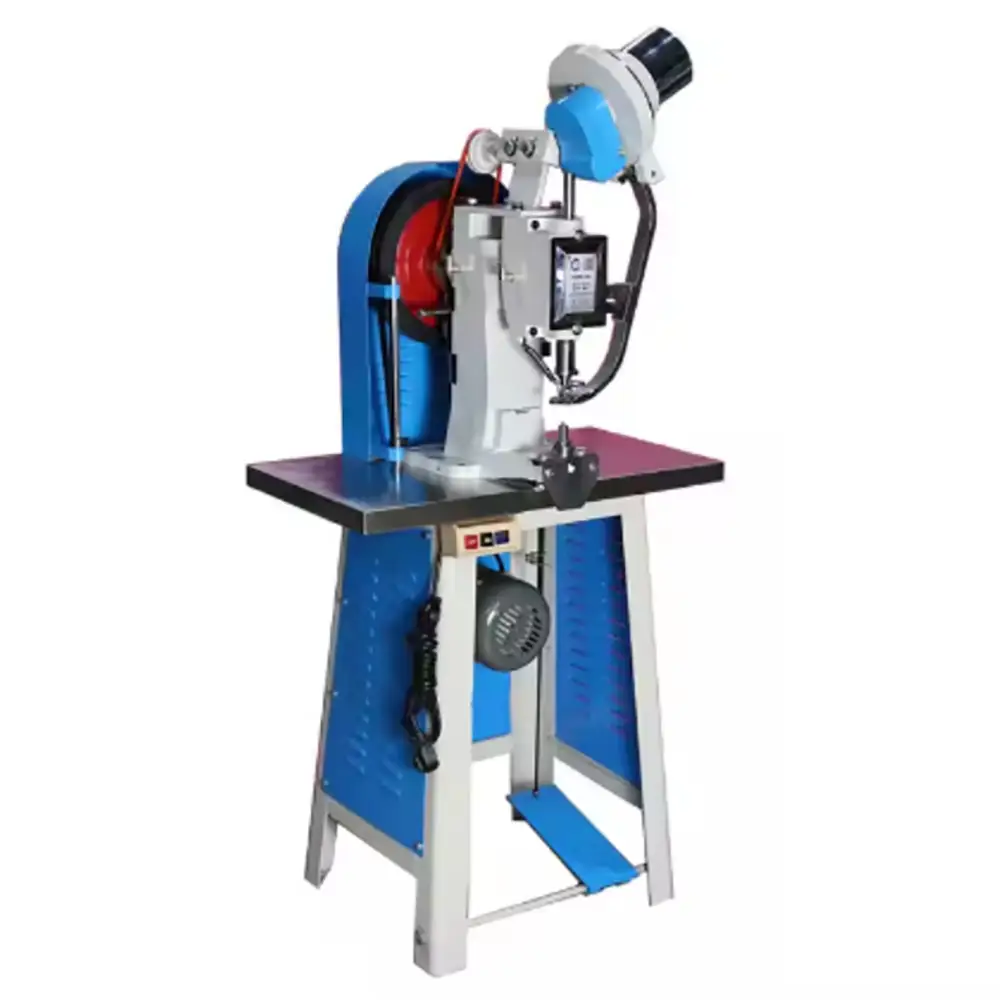
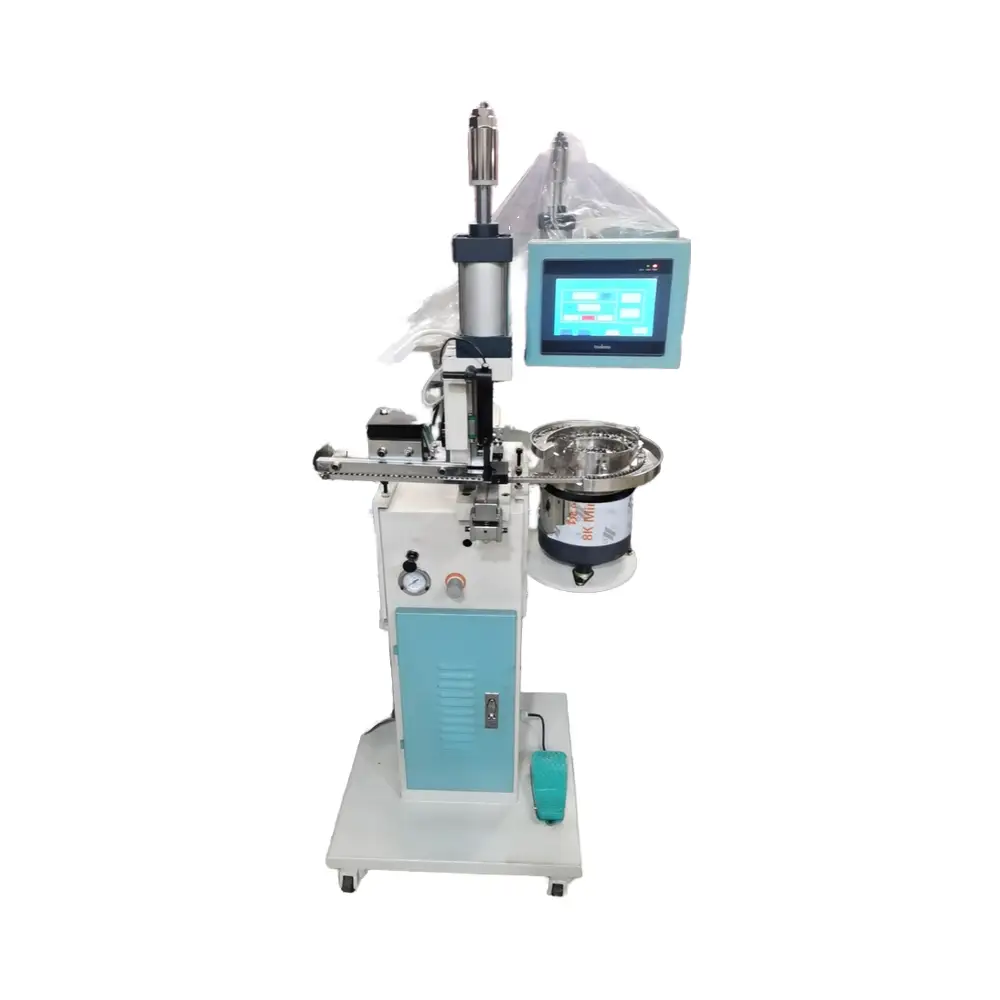
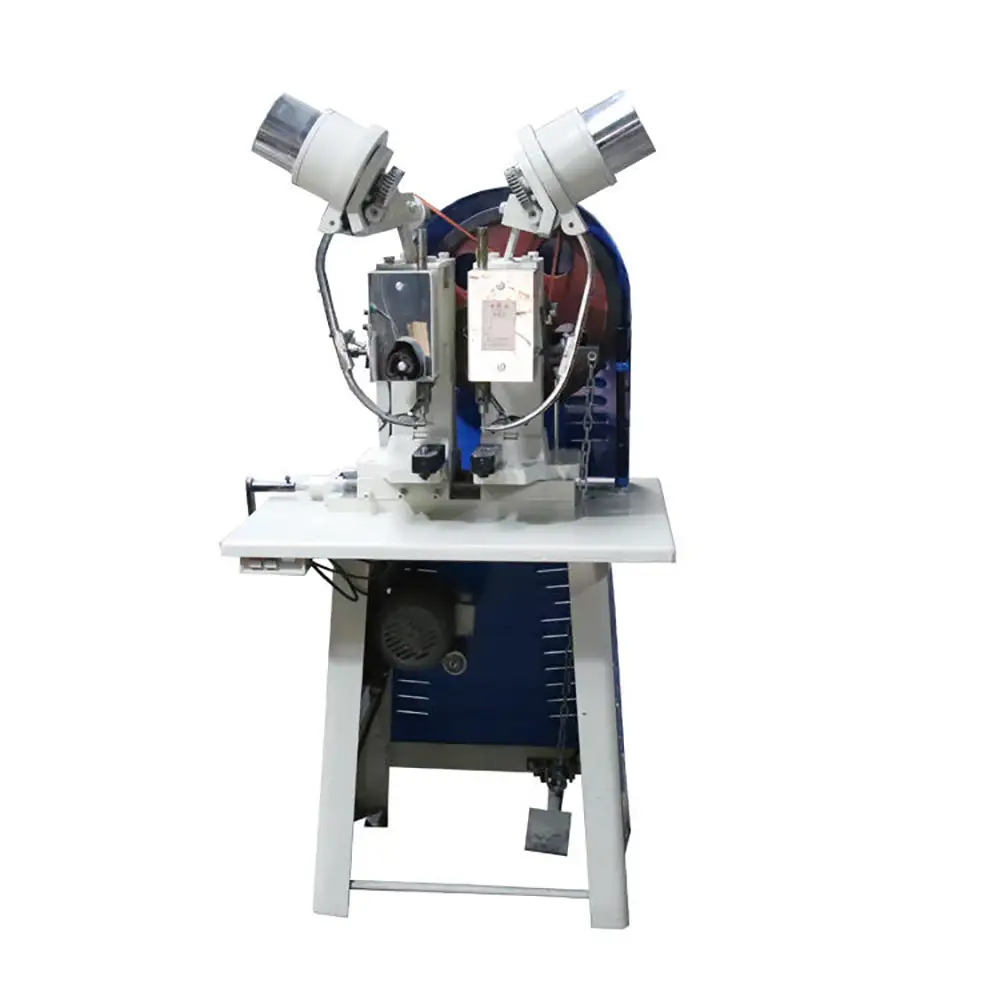
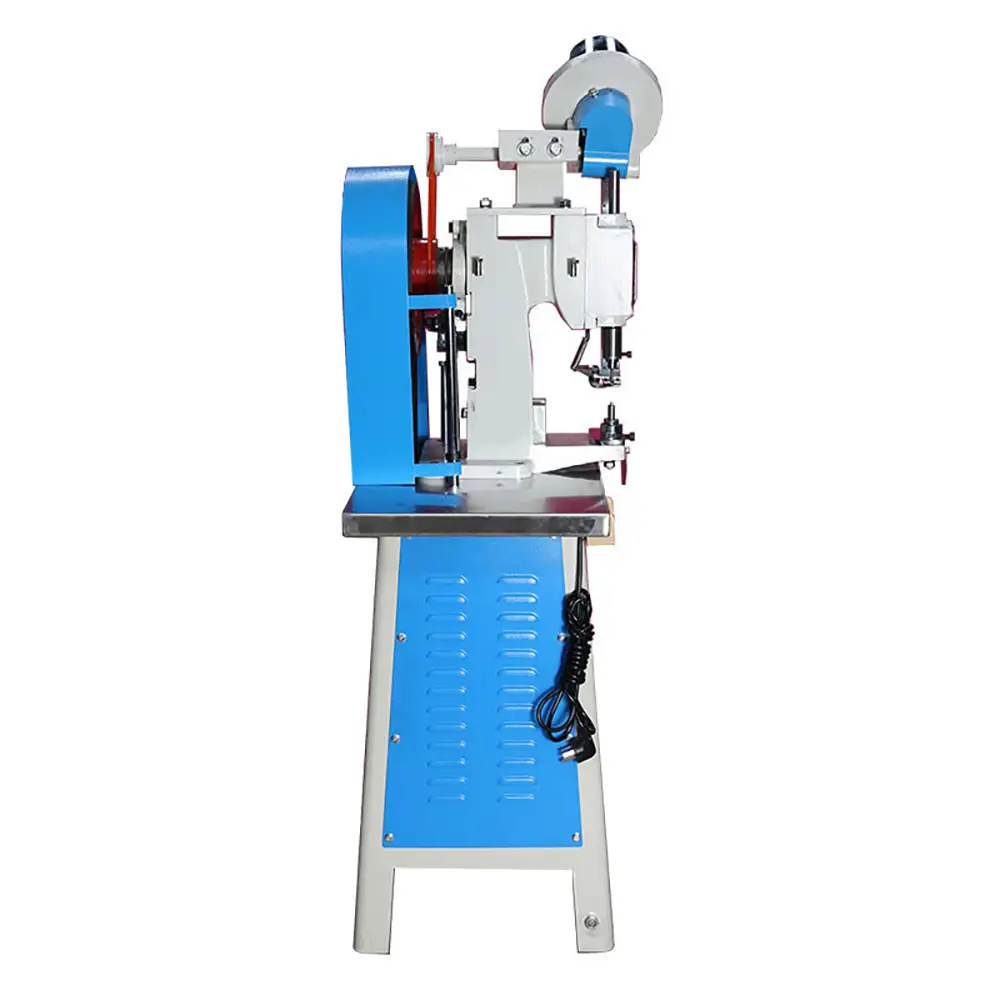
Feature: Applicable to: shoe uppers, leather goods, clothing, medical equipment and other products, automatic feeding up and down, riveting completed in one time.
|
Rivet ability |
Φ5-15mm |
|
Rivet diameter |
3-12mm |
|
Rivet length |
3-8mm |
|
Throat depth |
130mm |
|
Motor |
1/2HP |
|
size |
600*650*500mm |
|
Net weight |
180kg |
Automatic Vibrating Plate Riveting Machine with Dual Head
The Automatic Vibrating Plate Riveting Machine with Dual Head is an industrial fastening solution designed for automated rivet feeding, positioning, and riveting operations. Combining a vibrating plate feeding system with a dual-head riveting configuration, the machine is suitable for manufacturers looking to improve production efficiency, reduce manual rivet handling, and achieve consistent fastening results.
Automatic rivet feeding is particularly valuable in repetitive production environments. Instead of manually placing individual rivets into the riveting position, the vibrating plate can organize and deliver compatible rivets toward the working area. The dual-head design can then be configured to process two riveting positions or perform coordinated operations according to the product structure.
This type of equipment can be adapted for different rivet dimensions, workpiece geometries, and production requirements. Customized fixtures, dies, feeding tracks, and riveting heads can be developed according to the customer's actual product.
Automatic Vibrating Plate Riveting Machine
A vibrating plate or vibratory feeding system is commonly used to organize small fastening components before they enter an automatic production process. For riveting applications, the feeding system helps maintain a continuous supply of rivets to the working station.
The vibrating plate can be configured according to the shape and dimensions of the rivets being used. Proper feeding track design is important because rivets must be oriented correctly before entering the riveting position.
For manufacturers processing large batches of similar products, automatic feeding can significantly reduce repetitive manual loading operations. It can also help create a more standardized production workflow.
The exact feeding capacity and compatible rivet range depend on the machine configuration and the characteristics of the rivet.
Dual Head Riveting Machine
The dual head riveting machine is designed around two riveting heads, allowing the equipment to handle two working positions or two related riveting operations.
Depending on the product design, both heads may be configured for the same riveting operation or customized for different processing requirements. This flexibility can be useful for components that require multiple rivets at fixed positions.
A dual-head configuration can also reduce workpiece repositioning. When two riveting points are accessible within the same fixture, both operations can potentially be completed during one production cycle.
The actual working sequence depends on the product geometry, rivet specifications, tooling, and control configuration.
Automatic Rivet Feeding System
The automatic feeding system is one of the key components of this riveting solution.
Rivets are placed into the vibrating plate, where vibration helps organize and guide the components toward the feeding track. The track then directs the rivets toward the riveting station in a controlled orientation.
This process can reduce the amount of manual rivet handling required by operators.
A typical automatic feeding process includes:
Rivets are loaded into the vibrating plate.
Vibration helps orient and separate the rivets.
The feeding track guides the rivets toward the working position.
The riveting mechanism receives the rivet.
The workpiece is positioned in the fixture.
The dual heads perform the required riveting operation.
The finished component is removed for the next cycle.
The actual sequence can be customized according to the production process.
Vibratory Plate Feeder for Rivets
The vibratory plate feeder is especially useful for small rivets and fasteners that need to be automatically oriented before riveting.
Different rivets can have different head shapes, lengths, diameters, and materials. Therefore, the feeding plate and track should be designed around the specific rivet.
A properly matched feeding system can help reduce feeding errors and improve production continuity.
For OEM projects, customers should provide rivet samples or detailed rivet dimensions so that the appropriate feeding configuration can be evaluated.
Dual Head Automatic Riveter
A dual-head automatic riveter can be used when a product requires multiple fastening points. Instead of relying on separate manual riveting stations, the machine can combine multiple riveting operations into one automated workstation.
This can be useful for:
Metal Hardware
Brackets
Sheet Metal Components
Furniture Hardware
Automotive Components
Electrical Components
Leather Hardware
Bags and Accessories
Small Mechanical Parts
Industrial Assemblies
The final application depends on the rivet type, material, workpiece thickness, hole configuration, and required joint characteristics.
Consistent Rivet Positioning
Accurate positioning is important for automated riveting because the rivet must be aligned correctly with the workpiece hole before forming.
A dedicated product fixture can hold the workpiece in a repeatable position. Customized riveting dies can then form the rivet consistently.
For dual-head machines, fixture accuracy becomes especially important because the relative position between the two riveting points must correspond to the product design.
Consistent positioning can help reduce production variation and simplify quality inspection.
Improve Production Efficiency
Automatic feeding and dual-head riveting can help streamline repetitive fastening operations.
Compared with manual rivet loading and individual riveting, automated equipment may provide several production benefits:
Reduced Manual Rivet Handling
Improved Production Continuity
Consistent Rivet Positioning
Reduced Operator Fatigue
Repeatable Riveting Cycles
Reduced Workpiece Repositioning
Improved Production Workflow
Easier Process Standardization
Actual production efficiency depends on the rivet size, workpiece structure, number of riveting points, feeding system, tooling, and operator workflow.
Flexible Tooling and Product Fixtures
Different products require different riveting positions and fixture structures. A universal machine configuration may therefore need customized tooling for specific applications.
The machine can be configured with:
Customized Riveting Dies
Product Positioning Fixtures
Vibrating Feeding Plates
Rivet Feeding Tracks
Dual Riveting Heads
Automatic Rivet Delivery Systems
Safety Guards
Foot Controls or Automatic Controls
Product Locating Devices
Customized tooling allows the machine to be adapted to different product dimensions and production processes.
Automatic Riveting for B2B Manufacturing
For B2B manufacturers, automation is often used to reduce repetitive labor and improve process consistency. A vibrating plate automatic riveting machine can become part of a dedicated production station or integrated into a larger assembly line.
The machine can be suitable for both standalone operation and customized production systems, depending on the required level of automation.
For high-volume manufacturing, automatic feeding helps maintain a continuous supply of rivets, while the dual-head structure can increase the number of fastening operations performed during each cycle.
This combination can help manufacturers establish a more efficient and repeatable assembly process.
Why Choose Our Automatic Vibrating Plate Riveting Machine?
Automatic Rivet Feeding:
The vibrating plate system automatically organizes and supplies compatible rivets to the riveting station.
Dual Head Configuration:
Two riveting heads provide flexibility for processing multiple riveting positions or coordinated operations.
Reduced Manual Handling:
Automatic feeding reduces the need for operators to manually place rivets during repetitive production.
Consistent Riveting:
Dedicated dies and fixtures help maintain repeatable rivet positioning and forming.
Flexible Application:
The machine can be configured for various metal, hardware, leather, furniture, automotive, and industrial fastening applications.
Customized Tooling:
Feeding tracks, fixtures, riveting dies, and working heads can be adapted to the product.
Industrial Production:
The machine is designed for repetitive B2B manufacturing and assembly operations.
OEM and Custom Solutions:
Customized machine configurations can be developed according to rivet samples, product drawings, and production requirements.
Main Applications
The Automatic Vibrating Plate Riveting Machine with Dual Head can be considered for suitable applications such as:
Metal Hardware
Sheet Metal Components
Brackets
Furniture Hardware
Cabinet Hardware
Automotive Parts
Electrical Components
Electronic Hardware
Leather Products
Bags and Accessories
Textile Hardware
Mechanical Components
Industrial Assemblies
Small Metal Parts
General Fastening Applications
How to Choose the Right Automatic Riveting Machine?
Before selecting the machine, manufacturers should confirm the rivet type, diameter, length, material, head shape, and feeding orientation.
The workpiece information is equally important. Buyers should provide the workpiece material, thickness, hole diameter, riveting position, and required number of rivets.
For a dual-head machine, the distance between the two riveting positions should also be confirmed. If two different rivets or operations are required, this should be specified during machine design.
For customized projects, providing product samples, rivet samples, drawings, or videos of the current production process can help determine the appropriate feeding and riveting configuration.
FAQS
1. What is an automatic vibrating plate riveting machine?
It is an automatic riveting machine equipped with a vibrating plate feeding system for organizing and supplying rivets to the riveting station.
2. What is the purpose of the vibrating plate?
The vibrating plate helps separate, orient, and feed compatible rivets toward the automatic riveting mechanism.
3. What does the dual-head design mean?
A dual-head design uses two riveting heads, which can be configured to process two riveting positions or perform related operations according to the product.
4. Can the two heads rivet at the same time?
The machine can be configured for coordinated or simultaneous riveting when the product structure and machine design allow it.
5. Can the machine automatically feed rivets?
Yes. The vibrating plate and feeding track are designed to provide automatic rivet feeding.
6. Can the feeding system be customized?
Yes. The vibrating plate, feeding track, and orientation components can be designed according to the specific rivet dimensions and shape.
7. What types of products can be riveted?
Suitable products may include metal hardware, brackets, furniture components, automotive parts, leather goods, bags, electrical components, and other compatible assemblies.
8. Can the machine use different rivet sizes?
Different rivet specifications can require different feeding and tooling components. Compatibility should be confirmed according to the actual rivet dimensions.
9. Is the machine suitable for mass production?
Yes. Automatic feeding and dual-head riveting make it suitable for repetitive industrial production applications.
10. Can the machine be customized for our product?
Yes. Riveting heads, dies, fixtures, feeding tracks, vibrating plates, and control configurations can be customized according to the product and production requirements.
Conclusion
The Automatic Vibrating Plate Riveting Machine with Dual Head provides an efficient solution for manufacturers that need automatic rivet feeding and repeatable multi-position fastening. By combining vibratory plate feeding with a dual-head riveting structure, the machine can reduce manual rivet handling and streamline repetitive production processes.
Its flexible tooling and customizable feeding system make it suitable for a broad range of industrial fastening applications. For manufacturers producing metal hardware, furniture components, automotive parts, leather goods, electrical hardware, and other products requiring repetitive riveting, the machine can be configured around the actual rivet and workpiece requirements.
For the best production result, customers should provide rivet samples, product drawings, workpiece materials, riveting positions, and expected production requirements. These details allow the riveting system, feeding mechanism, fixtures, and dual-head configuration to be matched to the specific application.
Prev:
Feed Automatically Trolley Case Automatic Large Luggage Box Bags Riveting Machine
Next:
Multi-function Double Head Handbag Gift Box Eyelet Button Machine Shoes Eyeleting Buttonhole Machine
TAG:
Industrial Riveting Machine,
Industrial Riveting Equipment,
Metal Riveting Machine,
Rivet Fastening Machine,
Rivet Setting Machine,
Precision Riveting Machine,
Automatic Riveting Machine,
Automatic Rivet Feeding Machine,
Multi-Head Riveting Machine,
Automatic Riveting Equipment,
Automatic Fastening Machine,
Double Head Riveting Equipment,
Double Head Riveting Machine,
Rivet Feeding Machine,
Metal Fastening Machine,
Rivet Fastening Equipment,
Rivet Press Machine,
Hardware Riveting Machine,
Hardware Fastening Machine,
Automatic Double Head Riveting Machine,
Two Head Riveting Machine,
Automatic Hardware Riveting Machine,
Automatic Fastener Riveting Machine,
Fastener Riveting Machine,
Automatic Rivet Feeder,
Sheet Metal Riveting Machine,
Sheet Metal Riveter,
Automatic Rivet Press Machine,
Industrial Riveting Press,
Automatic Riveter,
Related Category:
Automatic Vibrating Plate Riveting Machine, Dual Head Riveting Machine, Vibrating Plate Riveting Machine, Automatic Rive China, suppliers, manufacturers, factory, customized, wholesale, quotation, made in China