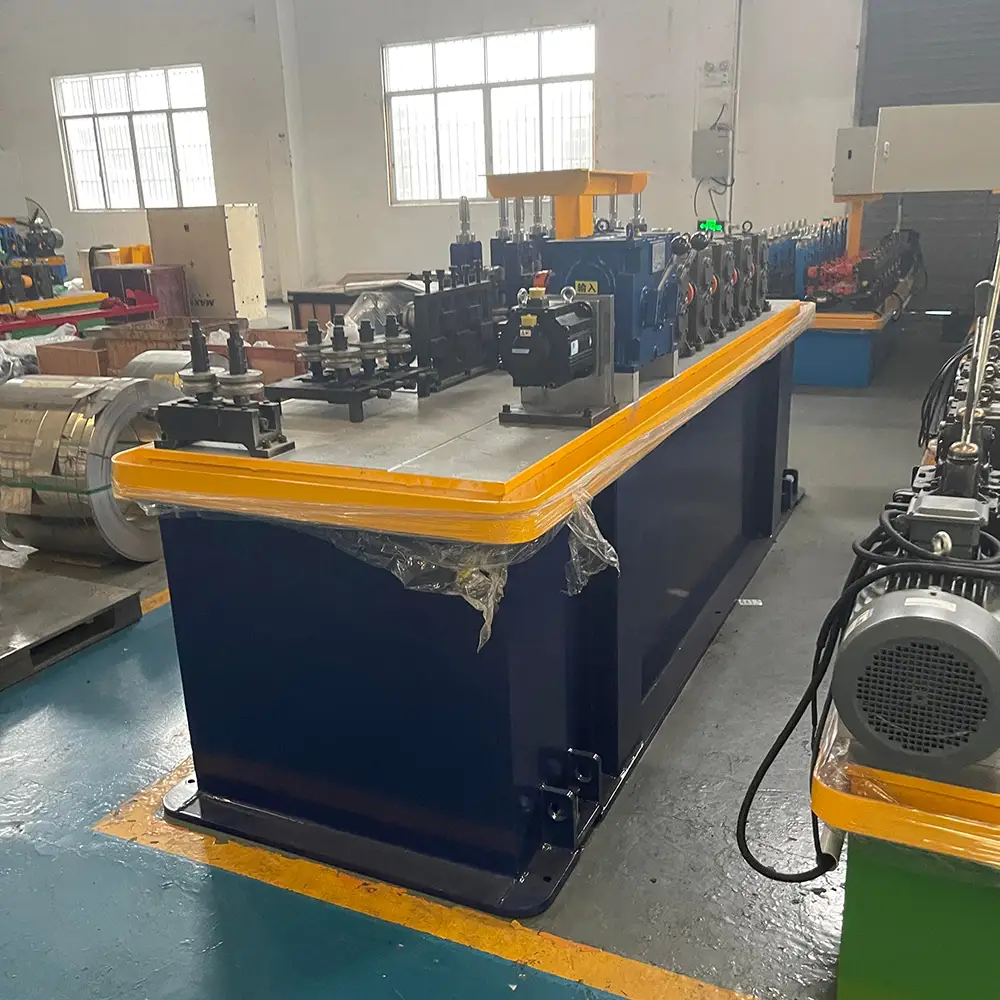
|
item |
value |
|
machine type |
Tube Mill Line |
|
warranty |
1 Year |
|
weight (kg) |
2000 |
|
key selling points |
Automatic, Easy to Operate, High Productivity |
|
Useful life |
20 Years |
|
Mojor motor |
90KW |
|
Dimension(L*W*H) |
20m*2.5m*1.7m |
|
Pipe length |
3-6 meters |
|
Pipe making speed |
20-100m/min
|
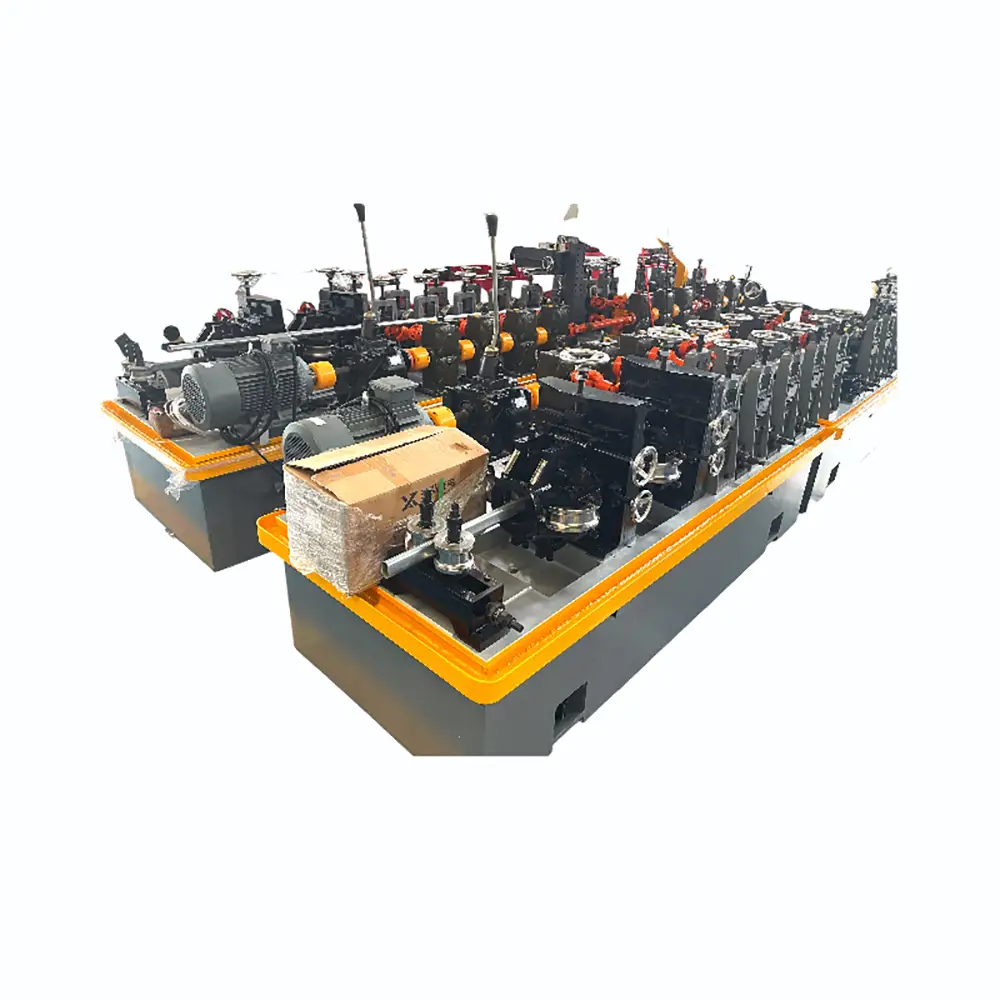
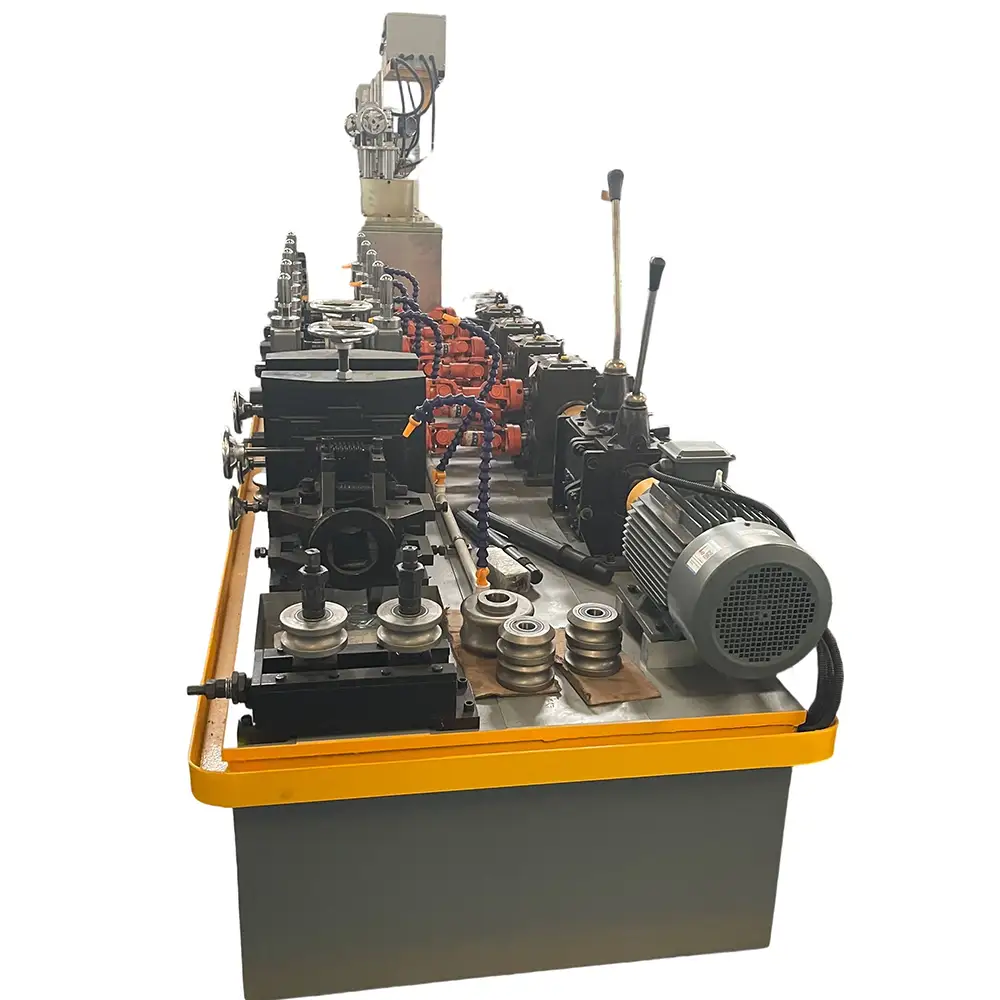
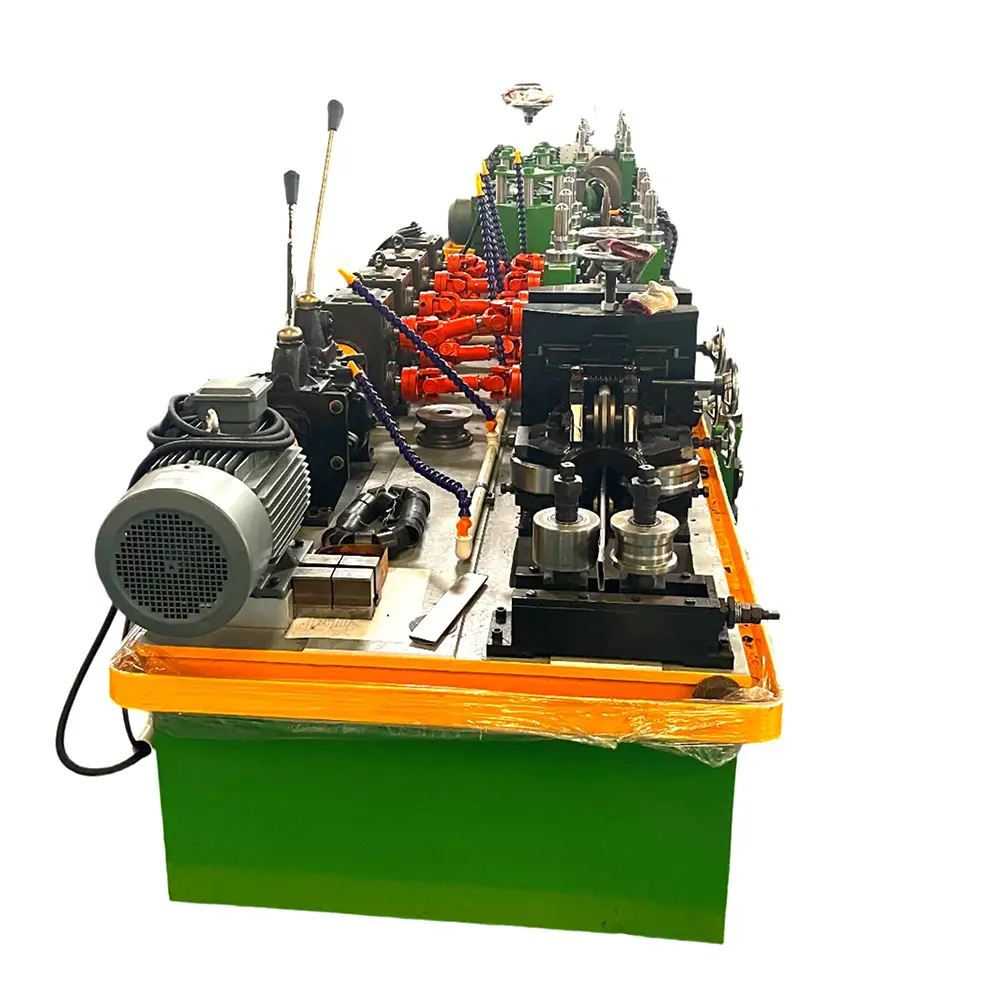
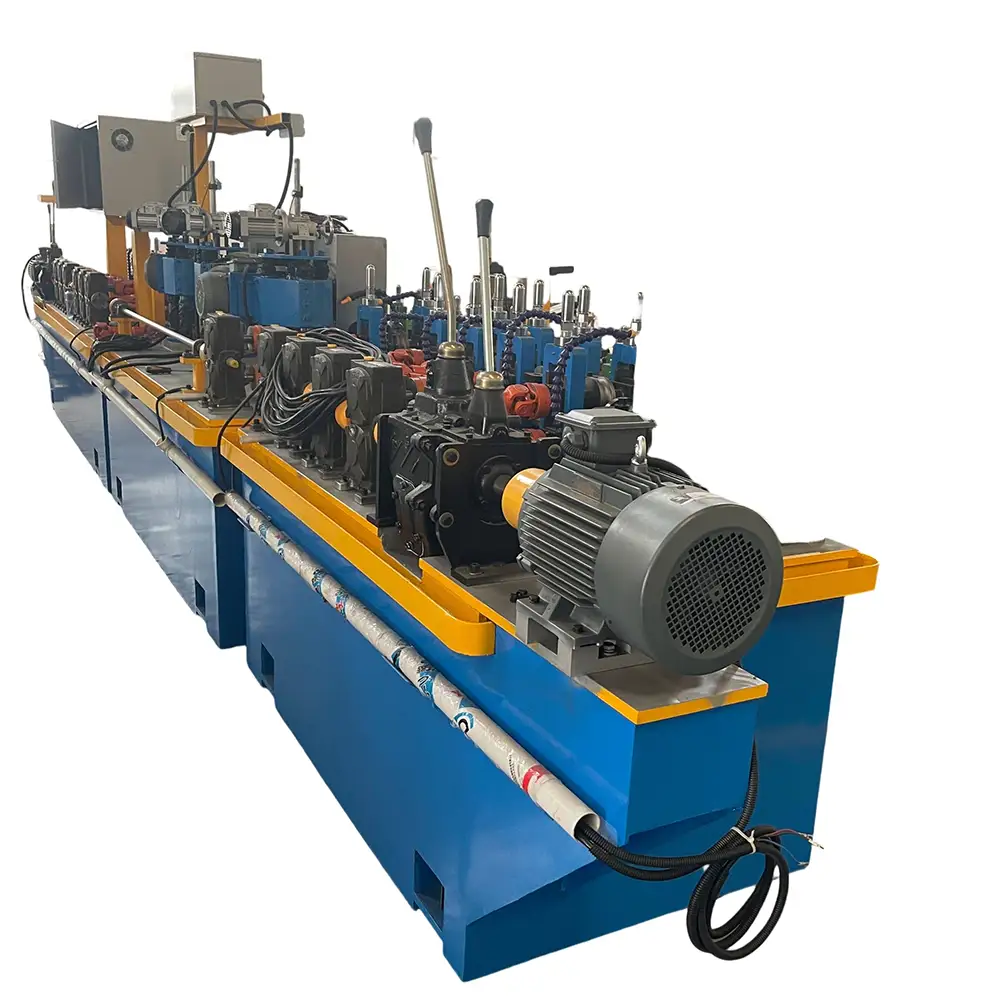
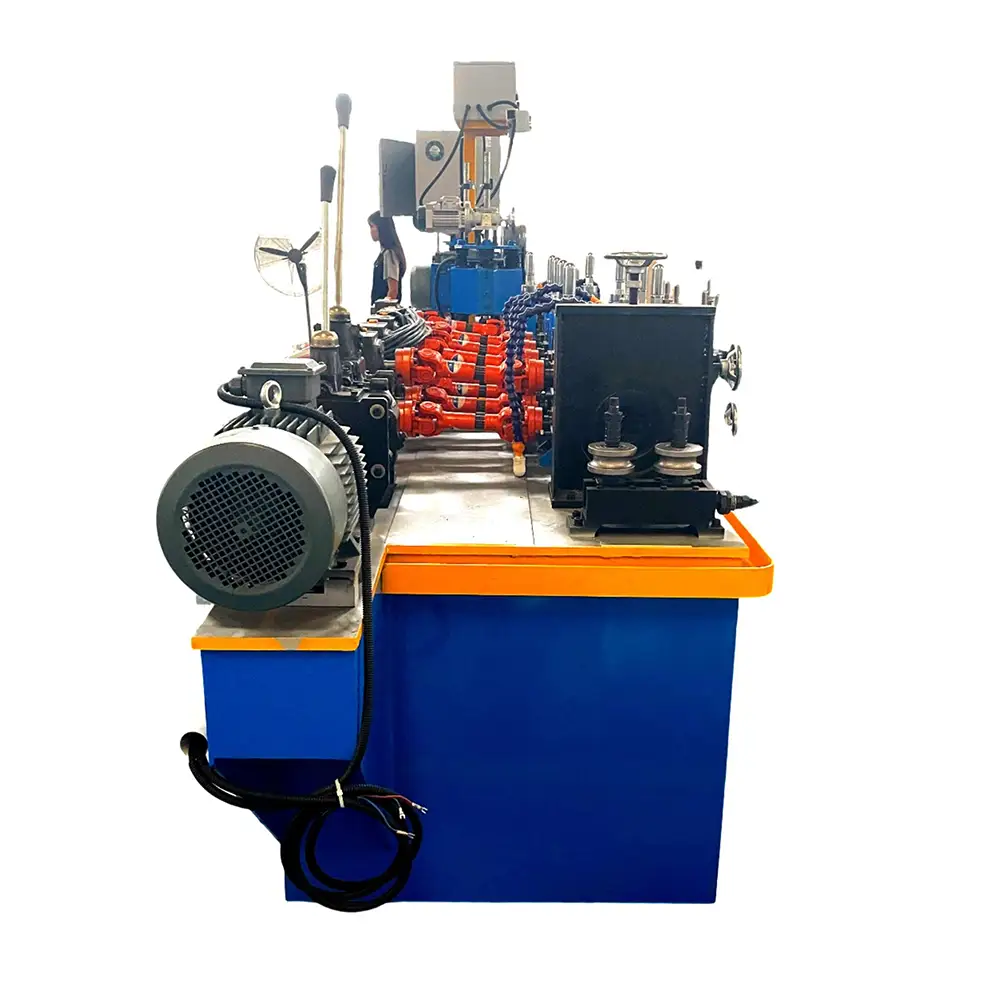
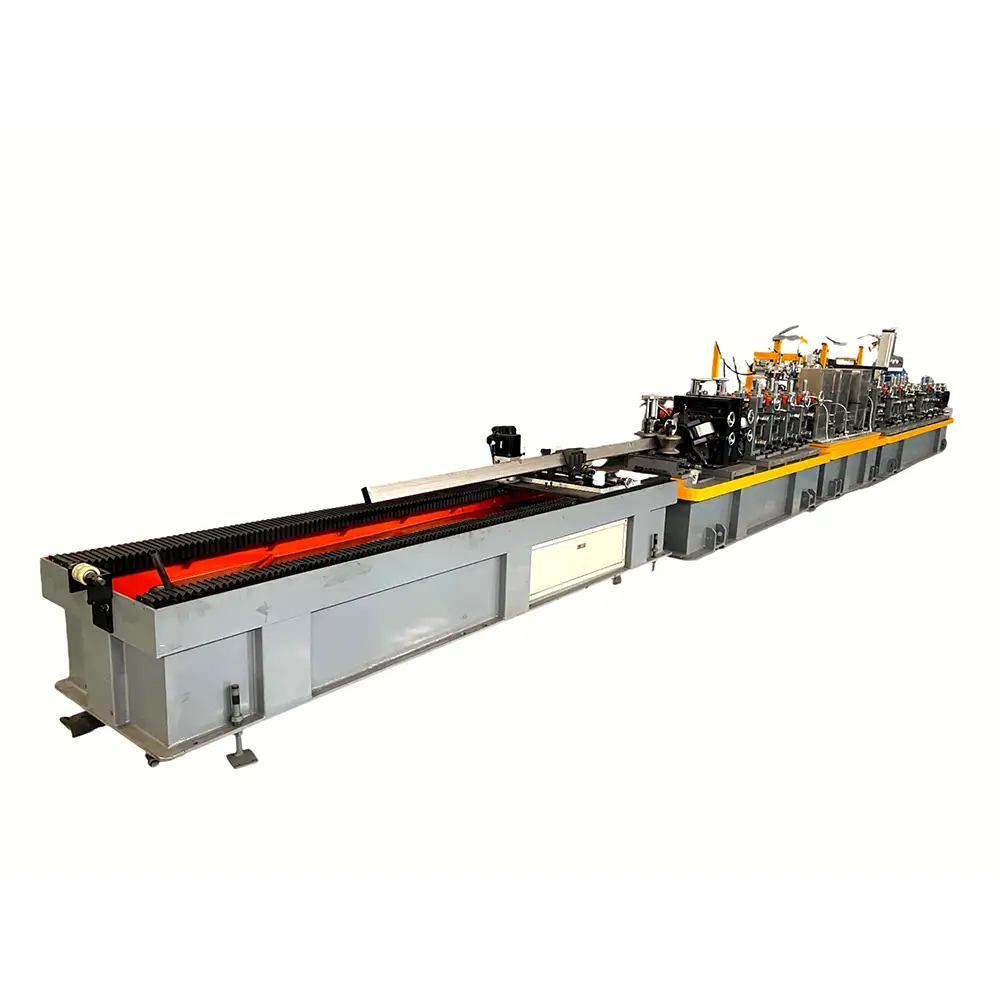
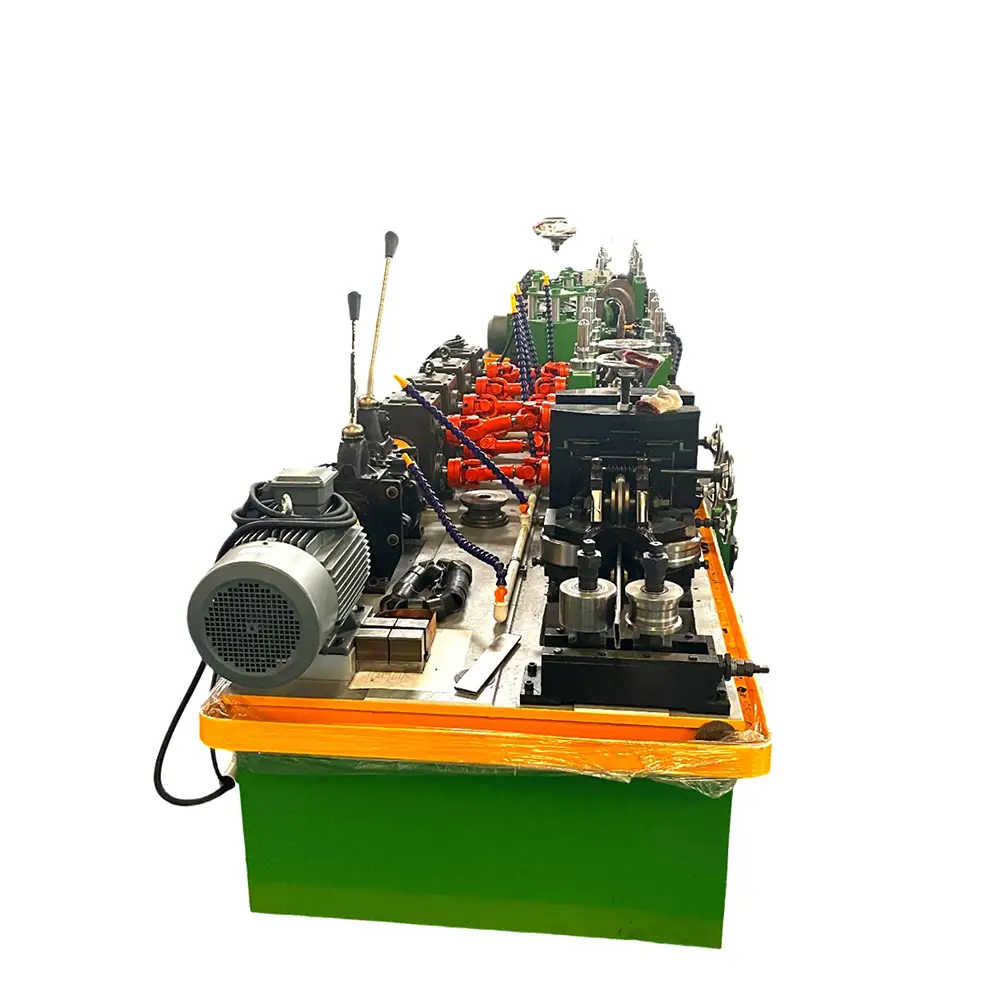
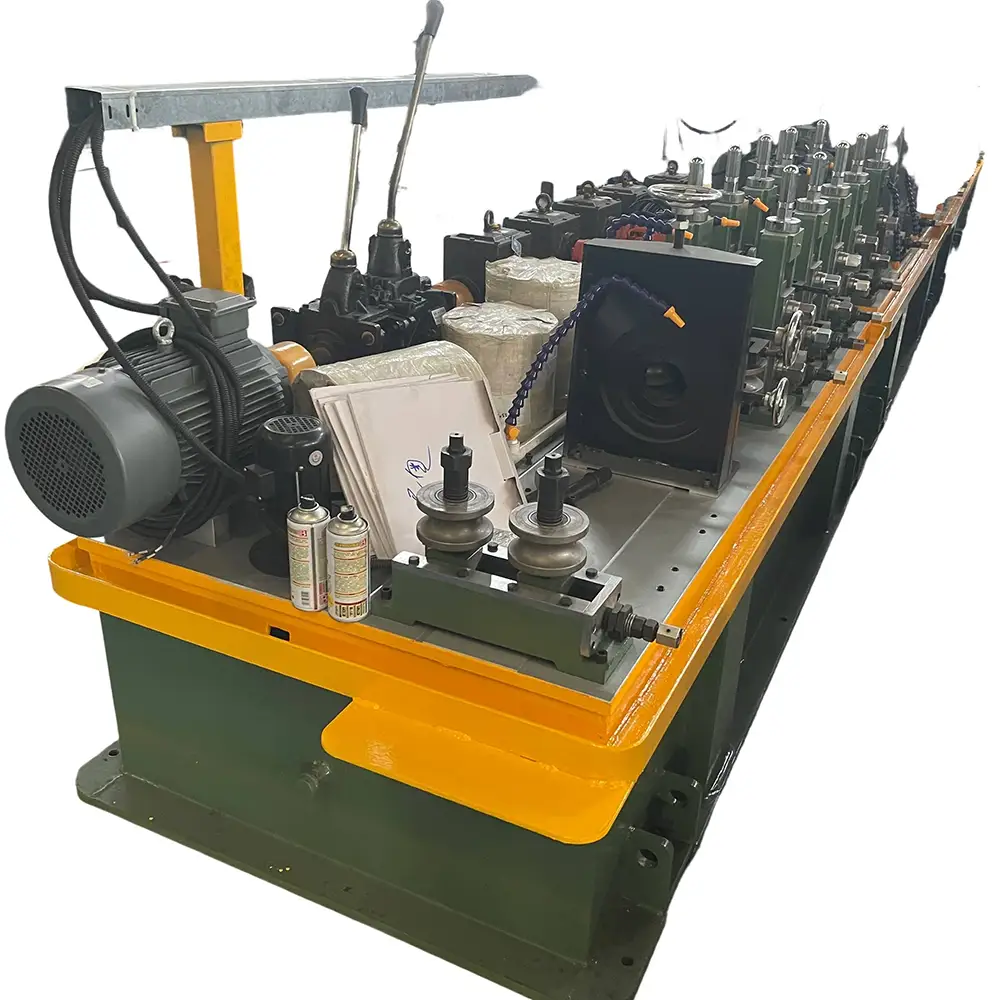
Automatic Stainless Steel Tube and Carbon Steel Pipe Making Machine
The Automatic Stainless Steel Tube Making Machine / Carbon Steel Pipe Making Machine / Tube Welding Forming Equipment is an integrated production solution designed for continuous manufacturing of metal tubes and pipes. It combines material feeding, roll forming, longitudinal seam welding, sizing, straightening, and cutting into a coordinated production process.
This type of tube mill is suitable for manufacturers producing stainless steel tubes, carbon steel pipes, and other welded metal profiles for industrial and commercial applications. By integrating multiple operations into one production line, manufacturers can reduce repeated manual handling, improve production continuity, and maintain more consistent tube dimensions.
The machine can be configured according to the required material, tube diameter, wall thickness, profile, finished length, production volume, and welding requirements. Because stainless steel and carbon steel have different forming and welding characteristics, tooling and process parameters should be selected specifically for the intended material and product range.
Integrated Tube Welding and Forming Production
A welded tube production line starts with metal strip or coil material. The raw material is continuously introduced into the machine through a controlled feeding system. Depending on the line configuration, the material may pass through leveling, guiding, joining, or preparation equipment before entering the forming section.
During roll forming, a series of forming rollers gradually bends the flat metal strip into a tubular shape. The progressive forming process allows the material edges to approach one another in preparation for longitudinal seam welding.
The welding section then joins the edges along the tube seam. Welding parameters should be matched to the material grade, thickness, tube diameter, and required production conditions.
After welding, the tube passes through sizing and forming rollers. These stations help establish the required outside dimensions and profile. Additional straightening and cutting equipment can then produce finished tubes at the specified length.
This continuous workflow makes the equipment suitable for industrial manufacturers that need repeatable production rather than individual manual tube fabrication.
Stainless Steel Tube Manufacturing
Stainless steel is widely used for products that require corrosion resistance, durability, clean surfaces, and an attractive appearance. Stainless steel welded tubes can be found in construction, furniture, food-processing equipment, architectural fabrication, industrial machinery, automotive components, fluid systems, and decorative applications.
The stainless steel tube making machine can be configured for round tubes and, depending on tooling, square or rectangular profiles.
During production, the forming rollers need to be properly adjusted to avoid unnecessary deformation and surface damage. Stainless steel surface quality can be particularly important for decorative and architectural tubes, so suitable tooling, handling procedures, and finishing operations should be considered.
For applications requiring a specific surface finish, downstream equipment such as polishing or finishing systems can be integrated according to the production plan.
Carbon Steel Pipe Manufacturing
Carbon steel is widely used for structural, industrial, mechanical, fabrication, and general engineering applications. A carbon steel pipe making machine forms steel strip into a tubular profile before joining the longitudinal seam through the selected welding process.
Carbon steel production may involve different grades, thicknesses, and surface conditions. The forming rolls, welding parameters, sizing equipment, and cutting system should therefore be selected according to the customer's target products.
Carbon steel pipes can be used for structural frames, machinery components, fabrication projects, furniture, industrial systems, and other applications where the material properties are suitable.
For coated or galvanized material, additional process considerations may be required because the coating can affect forming, welding, fume generation, and surface treatment.
Tube Mill Working Process
A typical automatic tube and pipe production line can include the following stages:
1. Coil Loading and Feeding
Metal strip or coil is loaded into the production system and continuously fed toward the forming section. Proper alignment helps maintain stable material flow.
2. Strip Preparation
Depending on the configuration, the line may include leveling, guiding, strip joining, or other preparation equipment to support continuous production.
3. Roll Forming
Forming rollers progressively bend the flat strip into the required tubular profile. The number and arrangement of forming stations depend on the target tube specifications.
4. Longitudinal Seam Welding
The edges of the formed strip are joined along the longitudinal seam. The welding system is selected according to material, thickness, tube dimensions, and production requirements.
5. Weld Processing
Depending on the final application, the welded area may require trimming, smoothing, inspection, or additional finishing.
6. Sizing and Straightening
Sizing rollers establish the final tube dimensions while straightening equipment can improve alignment and finished-product consistency.
7. Automatic Cutting
The continuous tube is cut into predetermined lengths. Cutting technology and accuracy depend on the selected machine configuration.
8. Inspection and Collection
Finished pipes or tubes can be inspected before being transferred to collection, packaging, storage, polishing, or additional processing.
Round, Square, and Rectangular Tube Production
Tube forming equipment can be designed for different profiles depending on the tooling configuration.
Round tubes are widely used in fluid handling, furniture, construction, automotive components, handrails, and general fabrication.
Square tubes are commonly used for frames, supports, furniture, machinery structures, gates, and architectural fabrication.
Rectangular tubes are suitable for structural frames, equipment components, furniture, fabrication projects, and other applications requiring a rectangular cross-section.
The actual size range should be confirmed according to the production line design. Changing between different sizes or profiles may require different forming and sizing tooling.
Automatic Production and Manufacturing Efficiency
Automation helps coordinate the different stages of tube manufacturing. Instead of manually transferring material between separate machines, an integrated production line allows feeding, forming, welding, sizing, and cutting to operate as a connected workflow.
A properly configured control system can help operators monitor machine operation and adjust relevant production parameters. Additional automation can include automatic material feeding, length measurement, cutting, inspection, material collection, and downstream handling.
However, the term automatic does not necessarily mean completely unmanned operation. The actual automation level depends on the selected configuration, auxiliary equipment, material handling system, and factory production requirements.
Material and Tooling Considerations
The most important information for selecting a tube mill includes material type, material grade, strip thickness, strip width, tube diameter, profile, finished length, and required production volume.
Stainless steel and carbon steel should not automatically use identical process settings. Their forming behavior, surface requirements, and welding characteristics can differ.
Tooling should therefore be designed around the customer's actual products. For manufacturers producing multiple sizes, interchangeable tooling can provide greater flexibility.
Providing product drawings, tube samples, raw-material information, and target production requirements allows the equipment supplier to recommend an appropriate machine configuration.
Industrial Applications
Automatic stainless steel and carbon steel tube production equipment can support many industries.
Construction and Structural Fabrication: Tubes can be used for frames, supports, railings, architectural components, and general steel fabrication.
Furniture Manufacturing: Round, square, and rectangular tubes are widely used for furniture frames, tables, chairs, shelving, and decorative structures.
Automotive Industry: Selected welded tubes can be used for structural, exhaust, fluid-handling, and fabricated automotive components according to application requirements.
Industrial Equipment: Metal tubes are used in machinery frames, equipment structures, conveyors, guards, and fabricated components.
Architectural Fabrication: Stainless steel tubes are particularly suitable for railings, decorative structures, partitions, and architectural metalwork.
General Metal Fabrication: Carbon steel and stainless steel tubes can be processed into components for workshops, equipment manufacturers, and fabrication companies.
Quality Control
Quality control should begin with incoming raw materials. Coil width, thickness, material grade, surface condition, and dimensional consistency should be checked before production.
During forming, operators should monitor material alignment, roller adjustment, forming stability, and tube shape.
The welding process should be monitored to maintain a consistent longitudinal seam. Finished tubes can then be checked for outside dimensions, straightness, weld appearance, surface condition, and cut length.
For applications requiring specific standards or testing procedures, additional inspection systems can be incorporated according to customer requirements.
Custom Tube Mill Solutions
Different manufacturers have different production goals. Some require a stainless steel tube line for decorative products, while others need a carbon steel pipe line for structural or industrial applications.
The production line can be planned around the customer's target product range. Possible customization areas include forming tooling, welding equipment, electrical controls, tube sizing systems, cutting equipment, material handling, online inspection, polishing, and packaging.
OEM and ODM services can also be considered for specialized production requirements and factory layouts.
Installation and Maintenance
Correct installation and commissioning are important for stable production. The machine should be installed on a suitable foundation with appropriate electrical power, cooling, compressed air, ventilation, and other utilities required by the selected configuration.
Routine maintenance should include inspection of forming rolls, bearings, transmission components, welding systems, cutting tools, guides, lubrication points, electrical components, and safety devices.
Operators should pay attention to abnormal vibration, unusual noise, inconsistent tube dimensions, unstable welding, material misalignment, and surface defects.
Regular preventive maintenance can help minimize unexpected downtime and maintain stable production performance.
FAQs
1. What materials can this tube making machine process?
The equipment can be configured for stainless steel and carbon steel tube or pipe production. Exact material grades and thickness ranges should be confirmed before ordering.
2. Can it produce stainless steel tubes and carbon steel pipes?
Yes. The production line can be configured for either material or, where appropriate, for multiple product requirements with suitable tooling and process settings.
3. Can the machine produce round tubes?
Yes. Round welded tube production is a common application for tube mill equipment.
4. Can it produce square and rectangular tubes?
Depending on the machine design and tooling, the line can be configured for square and rectangular welded tube production.
5. Does the machine include a welding system?
A complete welded tube production line can include longitudinal seam welding equipment. The appropriate welding method should be selected according to the material and product specifications.
6. Is the tube production line fully automatic?
The line can integrate automatic feeding, forming, welding, sizing, straightening, and cutting. The actual automation level depends on the selected configuration and auxiliary systems.
7. Can different tube sizes be produced?
Yes, if the production line is designed for the required size range. Different products may require tooling changes or production setup adjustments.
8. What information is needed to select a machine?
Important information includes material type and grade, thickness, tube diameter, profile, finished length, required production capacity, and welding requirements.
9. Can the production line be customized?
Yes. Tooling, welding systems, controls, cutting equipment, automation, material handling, and auxiliary equipment can be considered according to project requirements.
10. Can stainless steel tubes be polished after welding?
Yes. For applications requiring a specific surface finish, polishing or other downstream finishing equipment can be added according to the product requirements.
Why Choose Us
1. Integrated Production Solution
We provide coordinated tube forming, welding, sizing, straightening, and cutting solutions for industrial pipe manufacturing.
2. Stainless Steel and Carbon Steel Applications
The equipment can be configured according to the different processing characteristics and product requirements of stainless steel and carbon steel.
3. Flexible Tube Profiles
Suitable tooling can be selected for round, square, rectangular, and other specified tube profiles according to the machine design.
4. Customized Tooling
Forming and sizing tooling can be developed around the customer's required tube dimensions and product range.
5. Automation Integration
Automatic feeding, welding, sizing, cutting, measurement, collection, and other functions can be integrated according to the production plan.
6. Industrial Production Design
The production line is designed for continuous manufacturing environments where stable material flow and consistent processing are important.
7. OEM and ODM Support
We can work with B2B customers on customized equipment configurations, tooling, electrical systems, layouts, and auxiliary machinery.
8. Technical Support
We provide technical communication covering machine selection, production requirements, commissioning, operation, maintenance, spare parts, and after-sales support according to project needs.
Prev:Sorry, no information
Next:
Automatic Pipe Tube Making Machine Line for Stainless Steel Industrial Pipe Welding Equipment
TAG:
Pipe Forming Machine,
Tube Forming Machine,
Metal Pipe Making Machine,
Round Pipe Making Machine,
Metal Pipe Manufacturing Machine,
Metal Tube Manufacturing Machine,
Tube Manufacturing Equipment,
Automatic Stainless Steel Tube Machine,
Stainless Steel Tube Welding Machine,
Stainless Steel Pipe Welding Machine,
Carbon Steel Pipe Welding Machine,
Carbon Steel Tube Welding Machine,
Longitudinal Seam Welding Machine,
Pipe Production Line,
Pipe Welding Machine,
Pipe Cutting Machine,
Tube Cutting Machine,
Automatic Tube Forming Equipment,
Stainless Steel Tube Cutting Machine,
Automatic Tube Cutting Machine,
Automatic Pipe Cutting Machine,
Metal Pipe Welding Equipment,
Metal Tube Welding Equipment,
Industrial Pipe Production Line,
Carbon Steel Pipe Cutting Machine,
Stainless Steel Tube Manufacturing Equipment,
Tube Mill Production Line,
Pipe Mill Production Line,
Continuous Tube Production Equipment,
Continuous Pipe Production Equipment,
Related Category:
Automatic Stainless Steel Tube Making Machine,Carbon Steel Pipe Making Machine,Tube Welding Forming Equipment,Stainless China, suppliers, manufacturers, factory, customized, wholesale, quotation, made in China