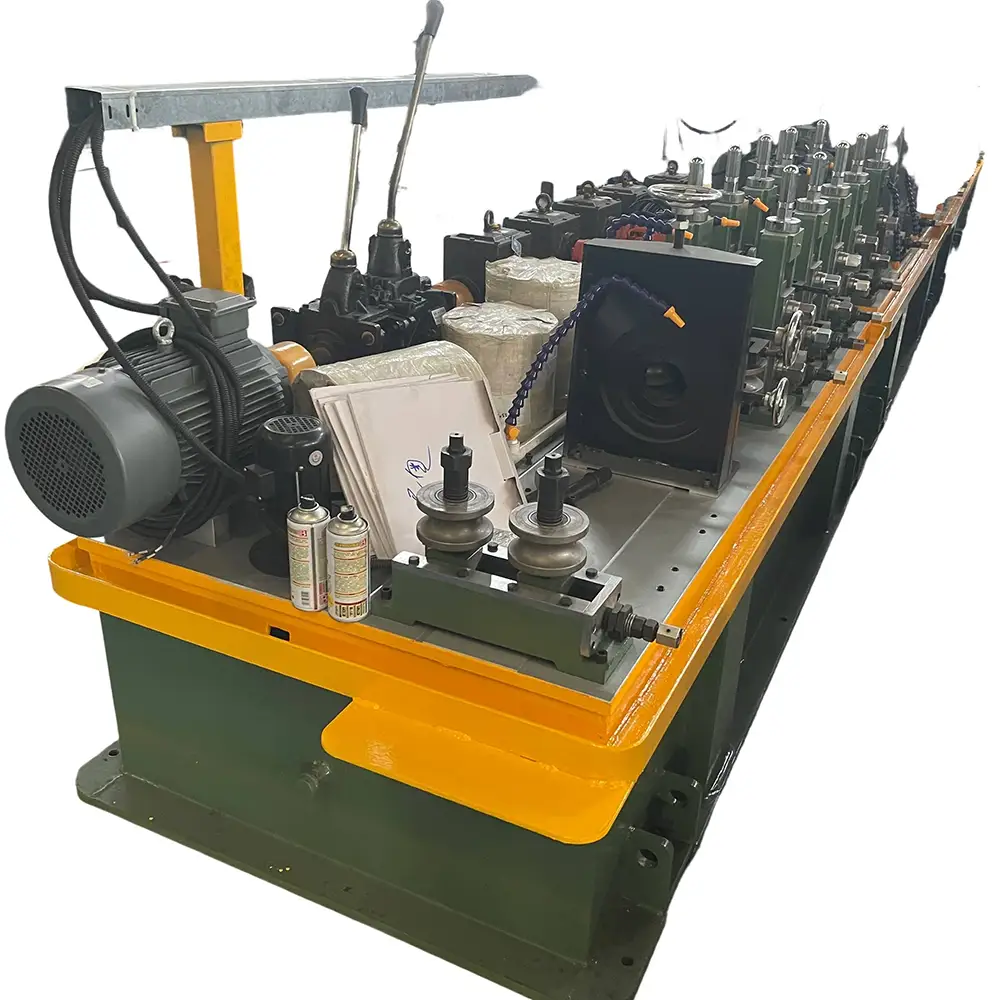
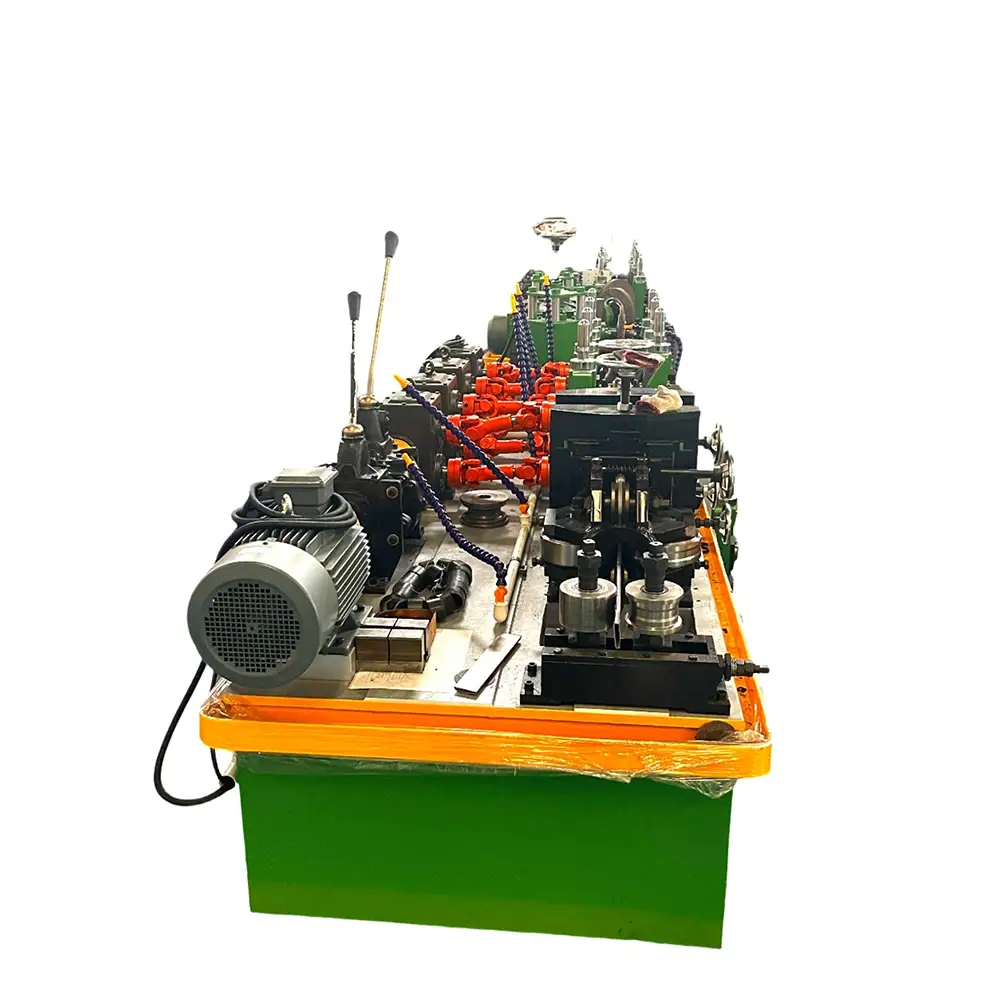
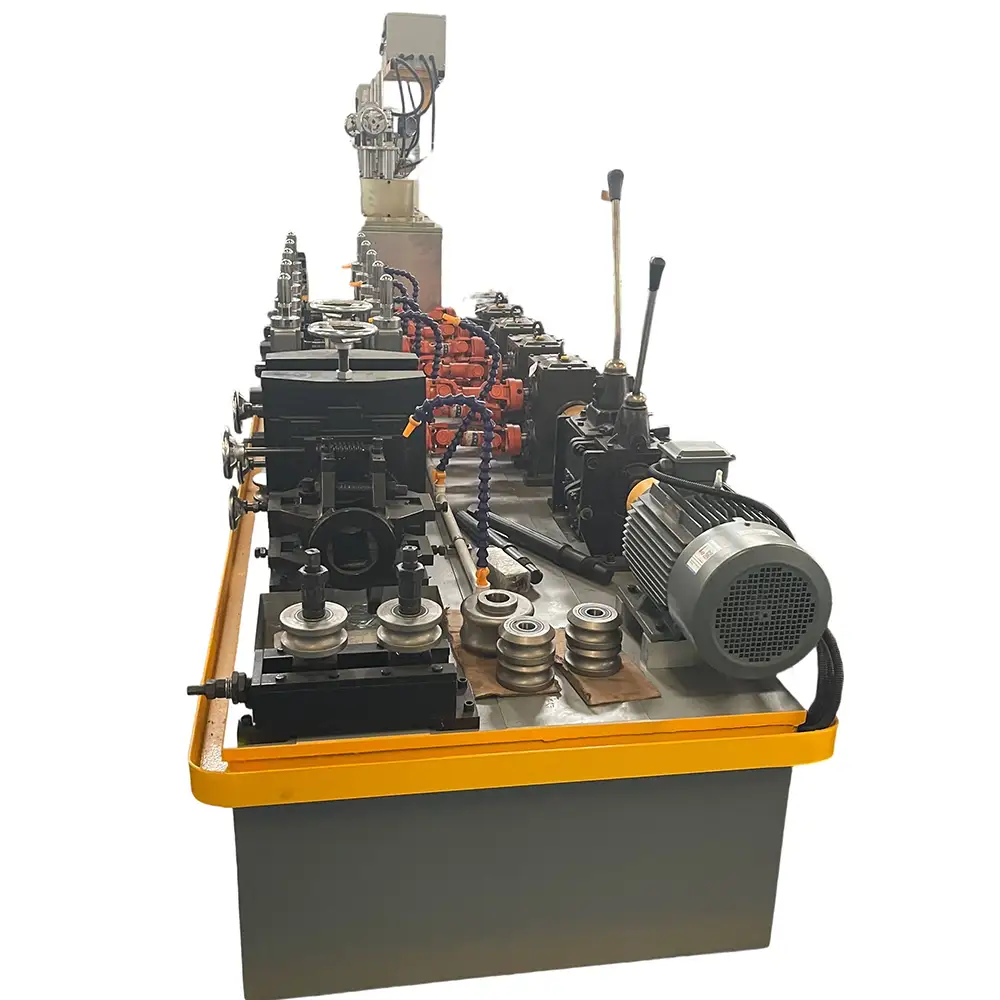
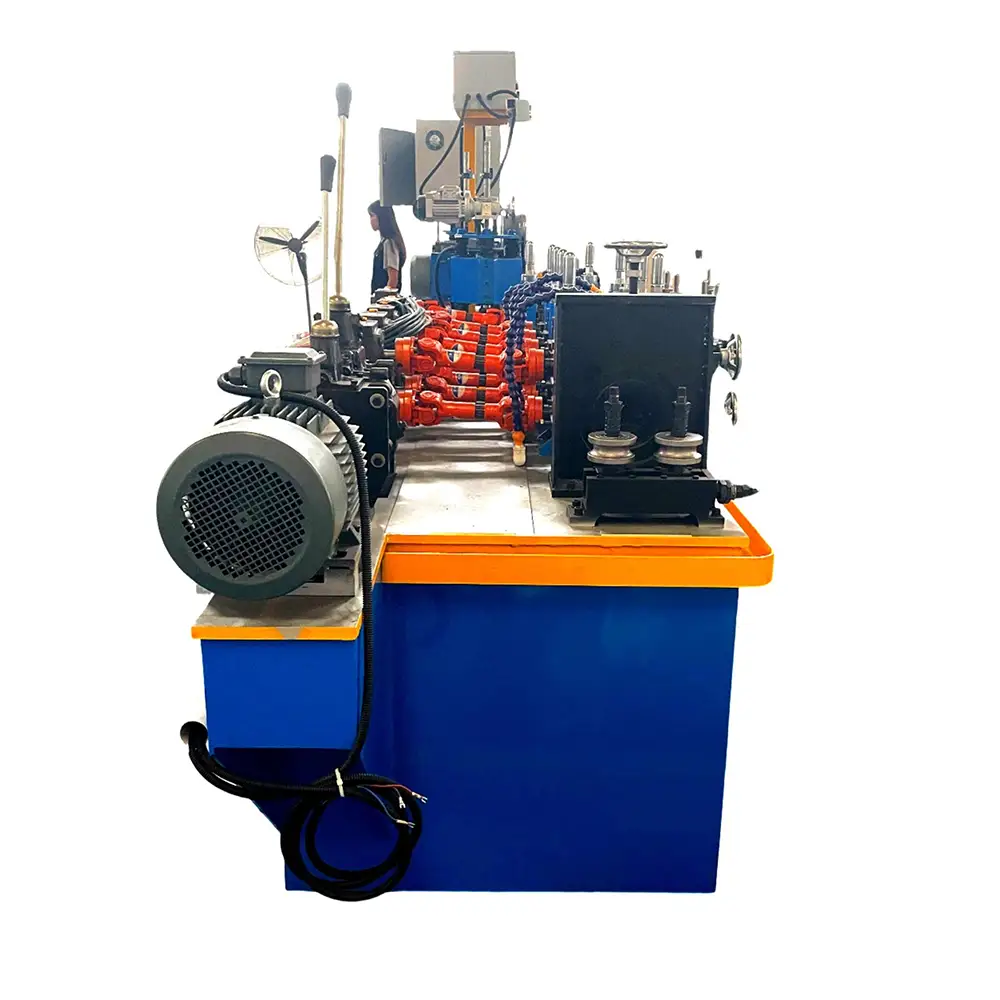
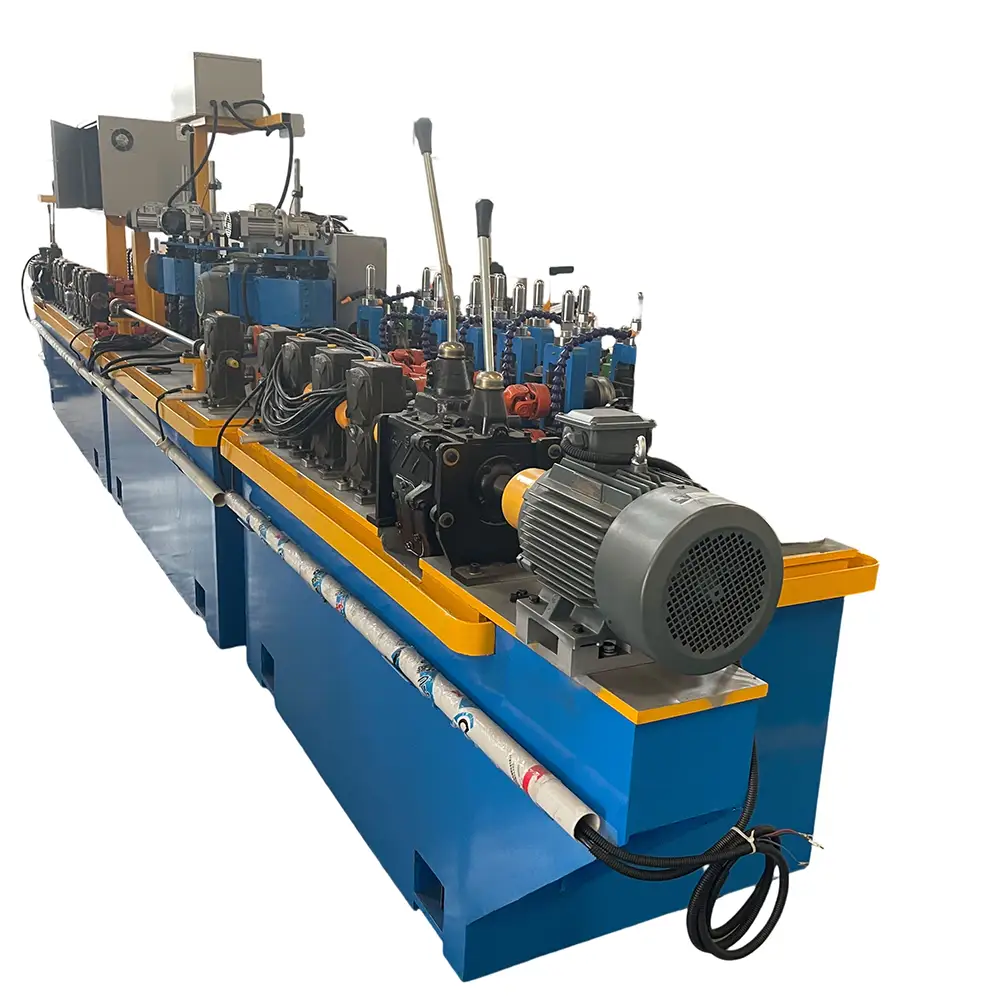
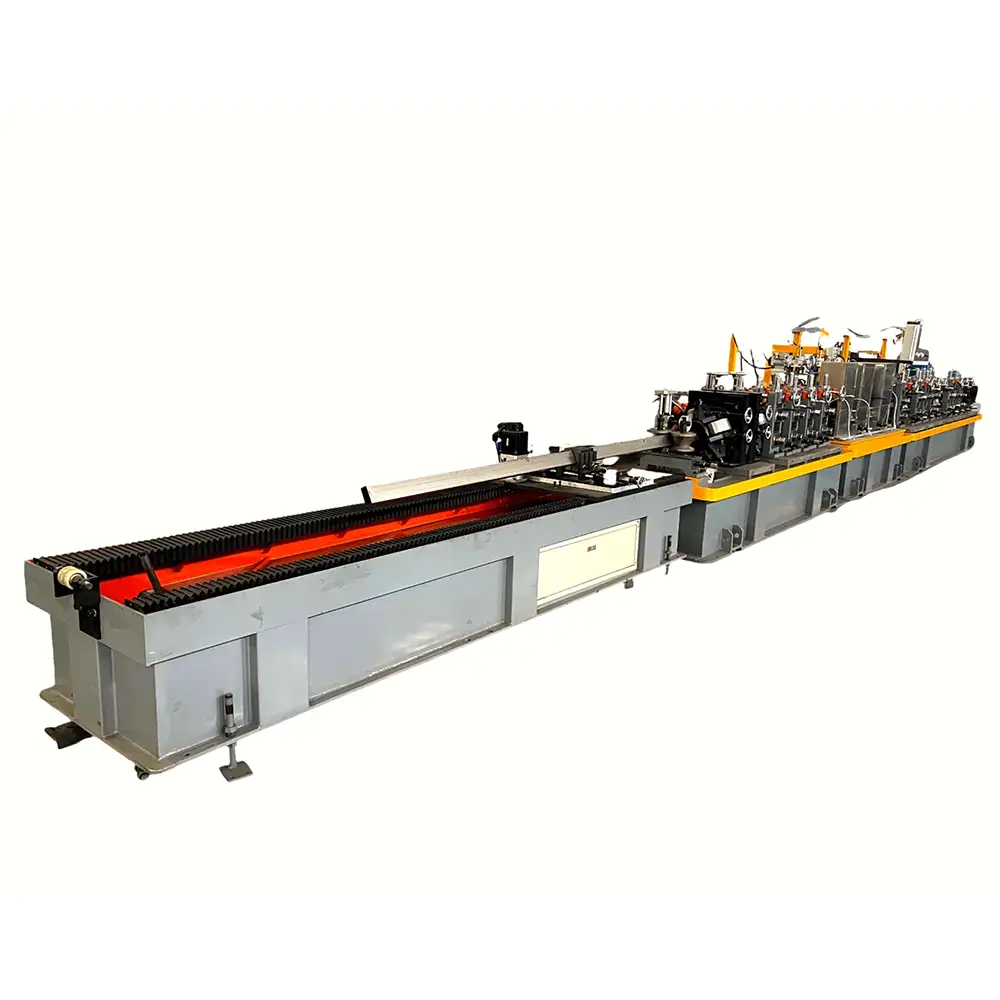
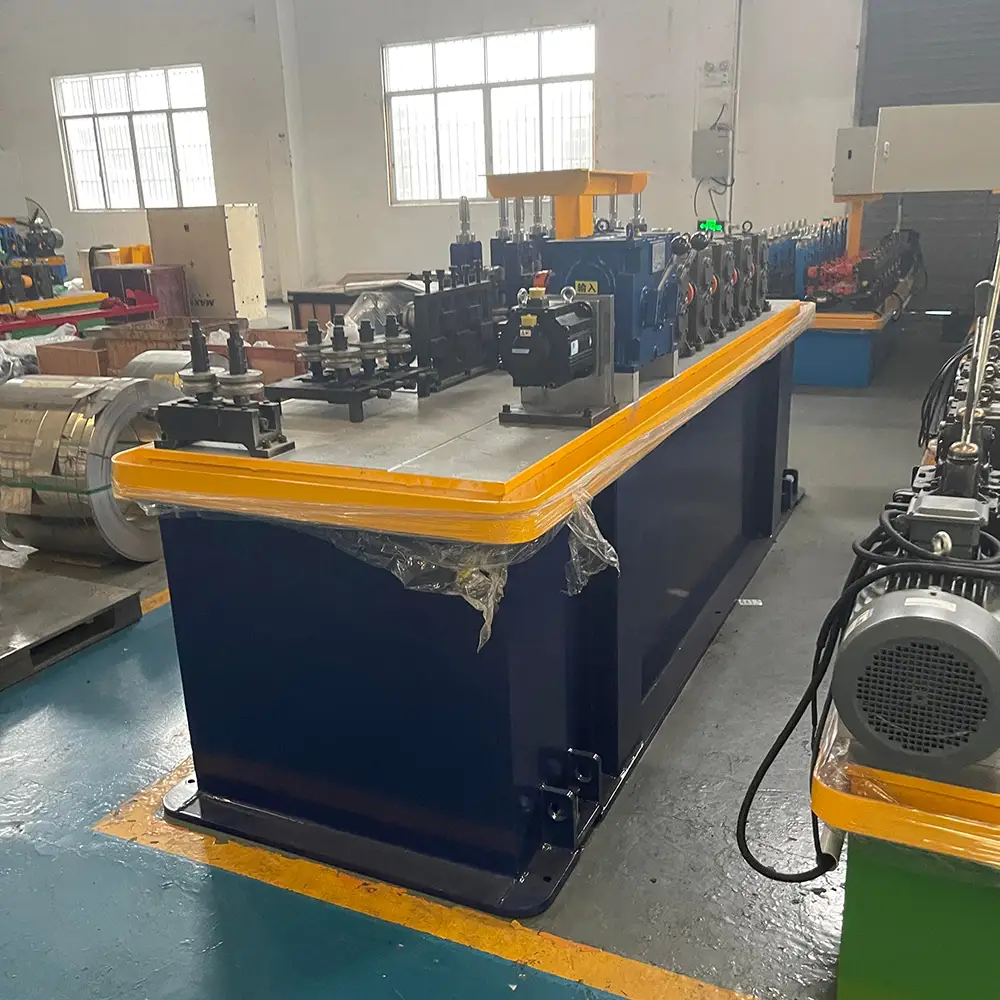
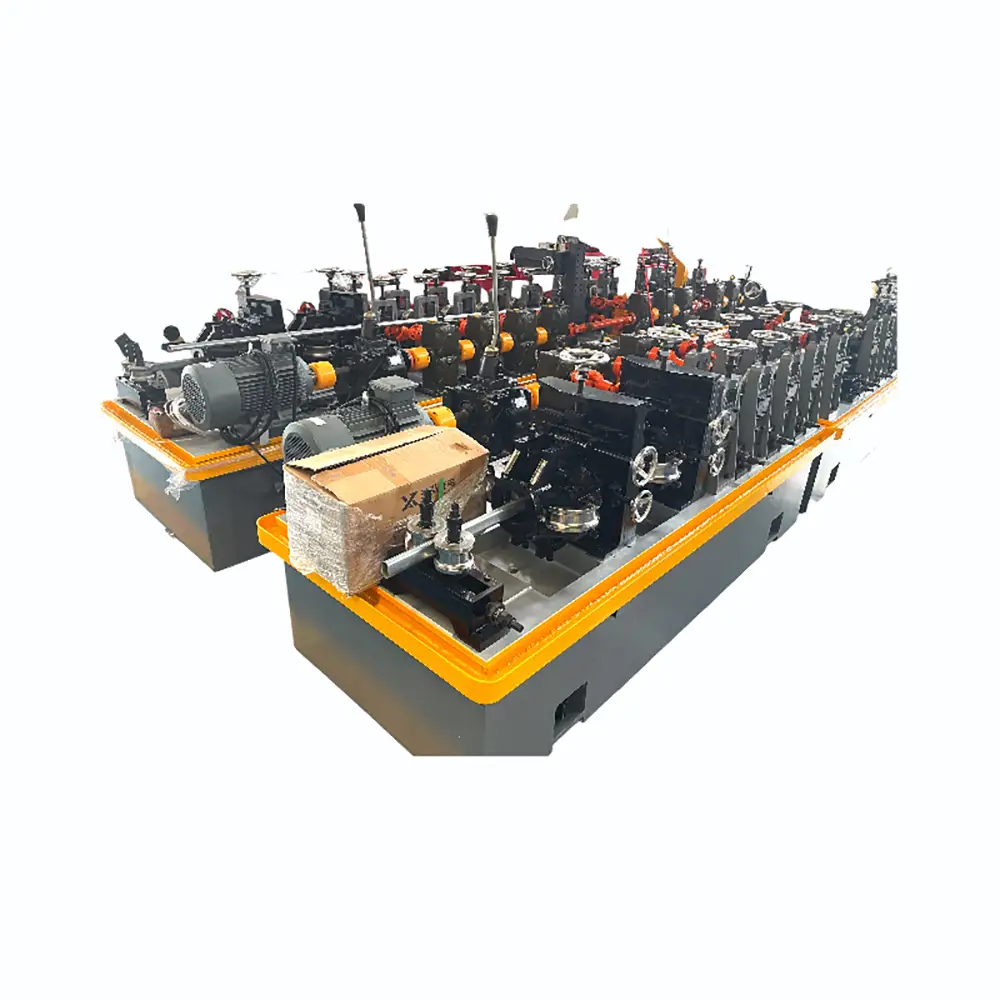
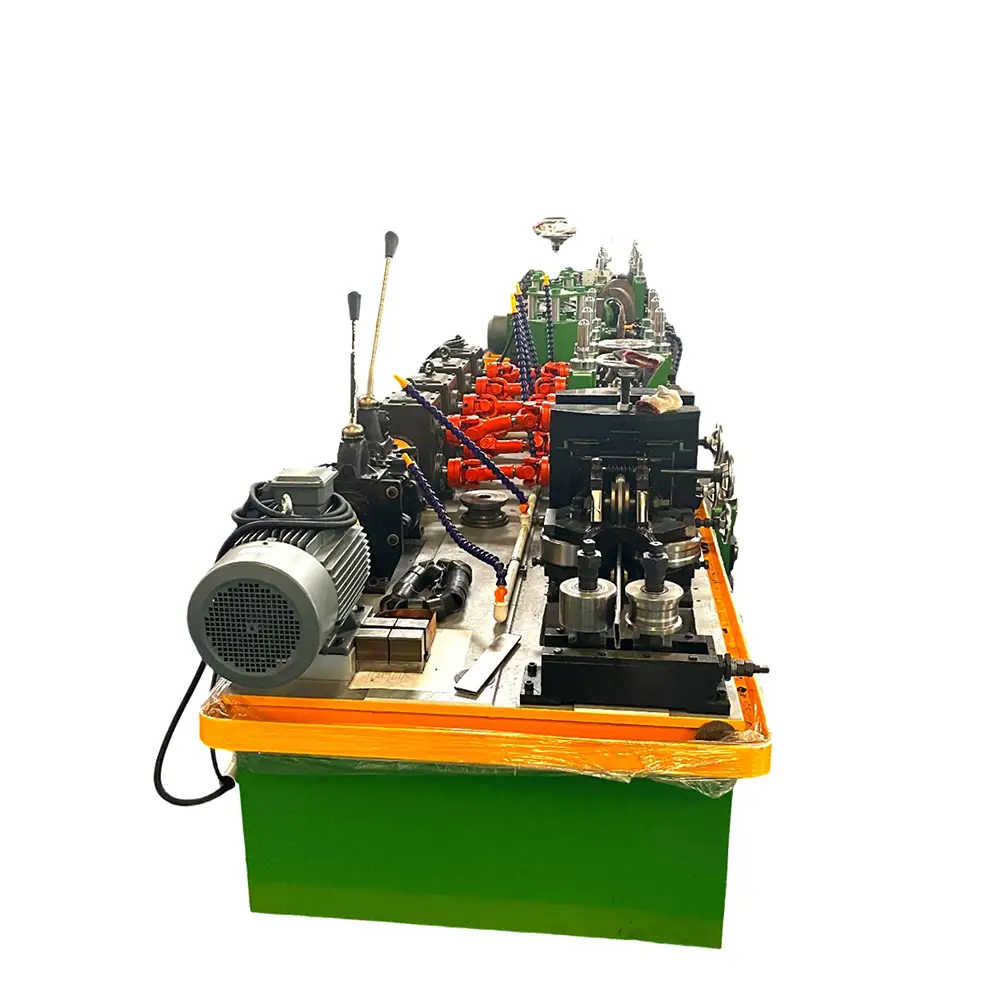
The Automatic Round Pipe Laser Welding Making Machine is an industrial tube mill and pipe production line designed for the continuous manufacturing of round metal pipes and tubes. It is suitable for applications involving carbon steel, galvanized iron or GI materials, and other compatible ferrous metals, depending on the selected machine configuration.
Modern pipe manufacturing requires stable material feeding, accurate forming, reliable seam welding, precise sizing, and consistent cutting. An integrated production line coordinates these processes to create a continuous manufacturing workflow, helping reduce manual handling and improve production consistency.
This equipment combines a tube-forming system with a laser welding process for joining the longitudinal seam of the formed tube. Laser welding can provide a concentrated heat source and controlled welding zone, making it suitable for applications where manufacturers require a controlled and efficient seam-welding process.
The exact production method, tube dimensions, line speed, laser power, welding configuration, and material range depend on the customer's requirements. Before ordering, customers should provide the raw material grade, strip thickness, tube diameter, tube wall thickness, production speed, and finished pipe requirements.
|
machine type |
Tube Mill Line |
|
warranty |
1 Year |
|
weight (kg) |
2000 |
|
key selling points |
Automatic, Easy to Operate, High Productivity |
|
Useful life |
20 Years |
|
Mojor motor |
90KW |
|
Dimension(L*W*H) |
20m*2.5m*1.7m |
|
Pipe length |
3-6 meters |
|
Pipe making speed |
20-100m/min |
Automatic Round Pipe Production
The production line is designed around continuous processing. A typical workflow begins with steel strip or coil preparation and continues through feeding, forming, seam welding, sizing, straightening, cutting, and finished pipe collection.
A representative process may include:
Coil loading and material feeding
Strip leveling and preparation
Continuous roll forming
Round tube shaping
Laser seam welding
Weld seam treatment where required
Tube sizing and calibration
Straightening
Automatic cutting
Finished pipe collection
The actual configuration can vary depending on pipe dimensions, raw material specifications, production capacity, and downstream requirements.
Laser Welding for Pipe Manufacturing
Laser welding uses a focused laser energy source to create a localized welding zone along the longitudinal seam of the formed tube.
Compared with some conventional welding processes, laser welding can provide a concentrated heat input and a narrow weld zone when correctly configured. This can be advantageous for certain tube production applications requiring controlled welding characteristics.
However, laser welding performance depends on material grade, strip thickness, surface condition, laser power, welding speed, joint preparation, shielding conditions, and machine configuration.
For galvanized or GI steel, the zinc coating and welding process require appropriate engineering and safety considerations. Customers should specify whether the raw material is galvanized before forming and provide the coating information when requesting a production-line solution.
Carbon Steel Pipe Production
Carbon steel is widely used for industrial pipes, structural tubing, furniture components, machinery, construction, transportation, and general fabrication.
A carbon steel tube mill can continuously transform steel strip into round pipe through progressive roll forming and longitudinal seam welding.
The forming rolls gradually change the flat strip into a round tubular shape before the edges meet at the welding position. After welding, sizing rolls can help establish the required external diameter and roundness.
The exact steel grade and mechanical properties should be evaluated when selecting the forming rolls, welding system, and line configuration.
GI and Galvanized Iron Pipe Applications
GI pipe generally refers to galvanized iron or galvanized steel pipe with a zinc coating designed to provide improved corrosion resistance.
Galvanized materials can be used in construction, water-related infrastructure, agricultural installations, fencing, conduit, structural applications, and other projects depending on the product specification.
When processing GI strip, the production line must be designed around the characteristics of the galvanized coating and the selected welding technology. Laser welding parameters should be established according to the actual material and coating condition.
Customers should specify whether the tube will be galvanized before forming or undergo galvanizing after tube production, as these are different manufacturing processes.
Continuous Tube Forming
Roll forming is one of the core processes in the tube mill. The steel strip passes through a sequence of forming rolls that progressively shape it into a round tube.
Proper roll design and alignment are essential for maintaining stable forming conditions. Incorrect alignment can contribute to uneven edges, dimensional variation, excessive forming stress, or weld seam positioning problems.
The tooling is therefore designed according to the target tube diameter, wall thickness, material properties, and production requirements.
For manufacturers producing multiple tube sizes, different tooling sets may be required, depending on the machine design.
Automatic Laser Seam Welding
Once the strip has been formed into a tubular shape, the longitudinal edges are brought together and welded.
The laser welding head is positioned along the seam to create a continuous welded joint. The welding system can be integrated with the production line's control and material movement systems.
Stable strip feeding and accurate seam positioning are important for consistent weld quality. The welding parameters should be optimized according to material thickness, tube diameter, production speed, and laser configuration.
For demanding applications, weld inspection and process monitoring can be incorporated according to customer requirements.
Tube Sizing and Calibration
After welding, the tube passes through sizing and calibration sections. These rolls help refine the external dimensions and shape of the finished pipe.
Sizing is particularly important when pipes need to meet controlled diameter or dimensional tolerances for downstream assembly.
The number of sizing stands and their configuration depend on the pipe specification and required production accuracy.
Additional straightening may be used to improve the linearity of the finished tube before automatic cutting.
Automatic Cutting to Length
The finished continuous tube can be automatically divided into specified lengths.
Automatic cutting reduces the need for operators to manually measure and cut each pipe. The cutting system can be configured according to the customer's required pipe length, production speed, material type, and downstream handling requirements.
Cutting accuracy depends on the machine configuration, control system, material movement, and operating conditions.
Finished tubes can then be transferred to a collection table or downstream handling system.
Production Efficiency
A continuous tube mill can significantly streamline pipe manufacturing compared with separate manual forming and welding processes.
Automatic feeding, forming, laser welding, sizing, and cutting allow the production line to maintain a coordinated workflow. This can reduce intermediate material handling and help manufacturers achieve consistent production scheduling.
The actual production speed should be determined from the specific tube diameter, wall thickness, steel grade, coil width, welding process, laser power, cutting length, and required quality level.
The term "automatic" describes the integrated control and processing concept; it should not be interpreted as completely unmanned production unless the complete line is specifically configured for that purpose.
Pipe Surface and Weld Quality
Pipe quality depends on both the raw material and the production process. Important factors include strip thickness consistency, edge condition, forming accuracy, seam alignment, laser parameters, cooling, sizing, and cutting.
The finished pipe can be inspected for external diameter, wall thickness, straightness, surface condition, weld appearance, and other requirements.
For applications involving pressure, structural loads, fluid transportation, or regulated industries, the applicable standards and testing requirements should be specified before production.
Applications
The automatic round pipe production line can be used in many industries.
Construction:
For compatible carbon steel and GI pipes used in building and infrastructure projects.
Furniture Manufacturing:
For round steel tubes used in tables, chairs, frames, shelving, and other products.
Automotive Components:
For selected tubular components where the material and weld specifications are appropriate.
Industrial Fabrication:
For machinery frames, equipment components, supports, and fabricated structures.
Agricultural Equipment:
For compatible tubular frames, supports, and fabricated agricultural components.
Fencing and Structural Products:
For suitable round steel and galvanized tubes used in fencing and structural applications.
Factory Integration
The tube mill can be integrated into a larger production environment. Upstream equipment may include coil storage, coil loading, leveling, slitting, and material preparation.
Downstream systems can include pipe straightening, end facing, deburring, inspection, bundling, packaging, and automated material handling.
For high-volume production, automation can be extended to material loading, finished pipe collection, inspection, and packaging according to the factory's requirements.
Maintenance
Routine maintenance is essential for maintaining stable tube mill operation.
Operators should regularly inspect forming rolls, bearings, transmission components, welding equipment, laser optics, cooling systems, sensors, cutting tools, electrical components, and material handling systems.
The laser system requires appropriate cleaning, alignment, cooling, and maintenance according to the manufacturer's instructions. Welding areas should also be kept clean and protected from contamination.
Forming rolls should be inspected for wear and alignment. Any abnormal vibration, noise, weld instability, or dimensional variation should be investigated before continued production.
OEM and Custom Production Lines
Different pipe manufacturers have different diameter ranges, material grades, wall thicknesses, production capacities, and finished product requirements.
As a professional Tube Mill Manufacturer, Pipe Making Machine Factory, Laser Welding Equipment Supplier, and Metal Pipe Production Line Vendor, we can provide customized production-line solutions according to customer specifications.
OEM and ODM services can include forming rolls, laser welding systems, sizing sections, automatic cutting, control systems, material handling, cooling systems, inspection equipment, electrical standards, factory layout, and packaging.
For an accurate quotation, customers should provide the pipe diameter range, wall thickness range, raw material type, steel grade, coil width, galvanized coating information if applicable, target production speed, pipe length, and required output.
FAQs
1. What is an automatic round pipe laser welding machine?
It is an integrated tube mill designed to continuously form metal strip into round tubes and weld the longitudinal seam using a laser welding system.
2. What materials can the machine process?
Depending on configuration, it can be designed for carbon steel, galvanized steel or GI material, iron, and other compatible ferrous metals.
3. Can it produce GI pipes?
Yes, suitable configurations can be designed for galvanized material. The customer should provide information about the zinc coating and whether galvanizing occurs before or after tube production.
4. What tube shapes can the line produce?
This configuration is primarily designed for round pipe or round tube production. Different shapes such as square or rectangular tubes may require different forming tooling and machine configurations.
5. What is the advantage of laser welding?
Laser welding provides a concentrated heat source and can offer controlled welding characteristics for suitable tube production applications.
6. Can the machine automatically cut the finished pipe?
Yes, an automatic cutting section can be integrated according to the required pipe length and production process.
7. Can one tube mill produce multiple pipe diameters?
Potentially, depending on the machine design. Different pipe sizes may require different forming and sizing tooling.
8. What information is needed for machine selection?
Provide the material type, steel grade, pipe diameter, wall thickness, coil width, galvanized coating information, target production speed, finished pipe length, and required output.
9. Does laser welding work with galvanized steel?
It can be used with suitable galvanized steel configurations, but zinc coating characteristics require appropriate process engineering, ventilation, safety controls, and welding parameters.
10. Can the complete line be customized?
Yes. Forming, laser welding, sizing, cutting, controls, cooling, inspection, material handling, and other sections can be customized according to the production requirements.
Why Choose Us
Integrated Tube Mill Solution
We provide coordinated solutions for tube forming, laser seam welding, sizing, straightening, cutting, and material handling.
Laser Welding Technology
The production line can incorporate laser welding for controlled longitudinal seam welding of suitable metal tubes.
Multi-Material Capability
Configurations can be evaluated for carbon steel, GI steel, iron, and other compatible ferrous materials.
Customized Forming Tooling
Forming and sizing rolls can be selected or designed according to the required tube diameter, wall thickness, and material.
Automatic Production Workflow
Multiple production stages can be integrated into a continuous line to reduce repetitive manual handling.
OEM & ODM Support
We provide customized production-line configurations for pipe manufacturers, distributors, engineering companies, and industrial users.
Application-Based Engineering
We evaluate material specifications, tube dimensions, production targets, and downstream requirements before recommending equipment.
International B2B Service
We support overseas customers with technical communication, equipment configuration, production-line planning, export packaging, and project coordination.
Prev:
Automatic Pipe Tube Making Machine Line for Stainless Steel Industrial Pipe Welding Equipment
Next:
Aluminum/Iron/Copper Pipe Full Automatic Tube Production Line/pipe Making Machine
TAG:
Pipe Forming Machine,
Tube Forming Machine,
Round Tube Forming Machine,
Round Pipe Forming Machine,
Round Pipe Making Machine,
Steel Pipe Manufacturing Machine,
Tube Manufacturing Equipment,
Steel Tube Manufacturing Machine,
Longitudinal Tube Welding Machine,
Industrial Pipe Welding Machine,
Steel Tube Welding Machine,
Industrial Tube Welding Machine,
Steel Pipe Welding Machine,
Longitudinal Pipe Welding Machine,
Industrial Laser Welding Machine,
Automatic Laser Welding Machine,
Laser Pipe Welding Machine,
Laser Tube Welding Machine,
Steel Tube Laser Welding Machine,
Steel Pipe Laser Welding Machine,
Steel Tube Production Line,
Automatic Tube Cutting Machine,
Automatic Pipe Cutting Machine,
Tube Straightening Machine,
Pipe Straightening Machine,
Metal Pipe Welding Equipment,
Metal Tube Welding Equipment,
Automatic Pipe Manufacturing Machine,
Pipe Cutting Production Line,
Tube Cutting Production Line,
Related Category:
Automatic Round Pipe Welding Machine,Laser Welding Pipe Making Machine,Round Pipe Laser Welding Machine China, suppliers, manufacturers, factory, customized, wholesale, quotation, made in China