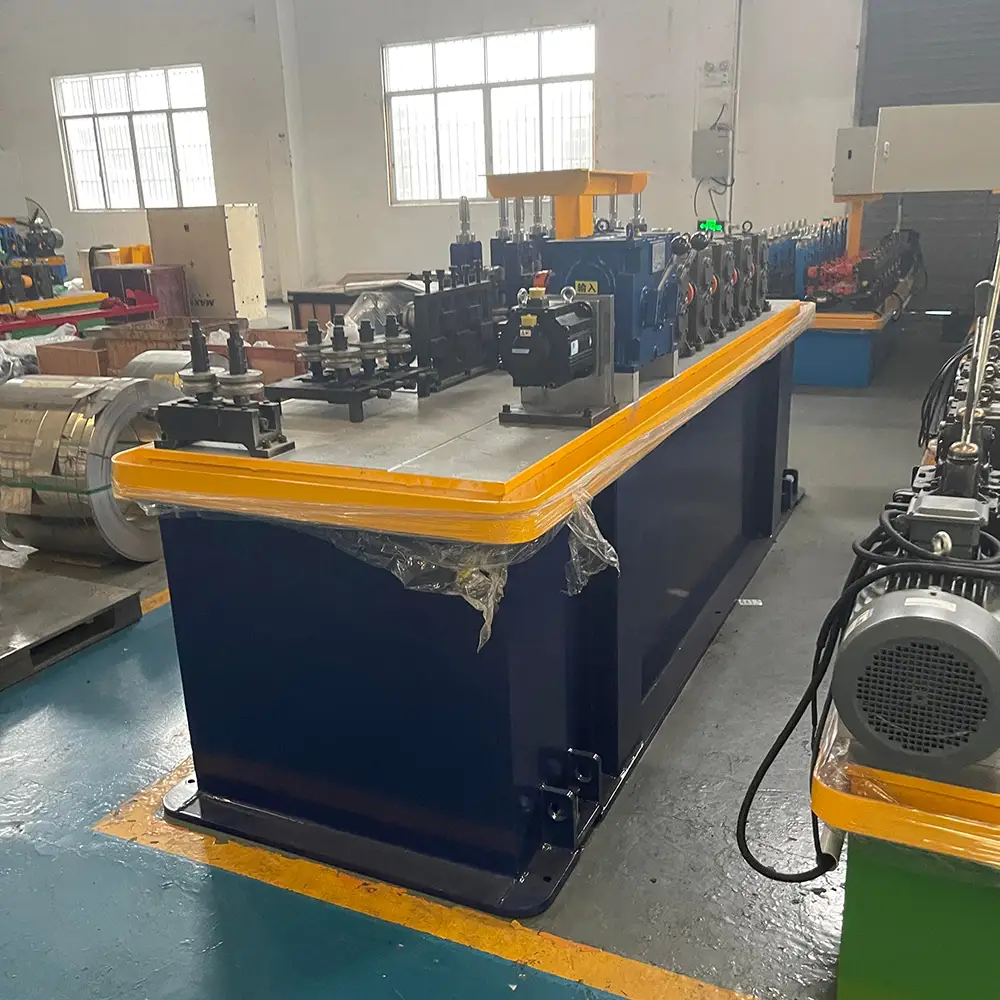
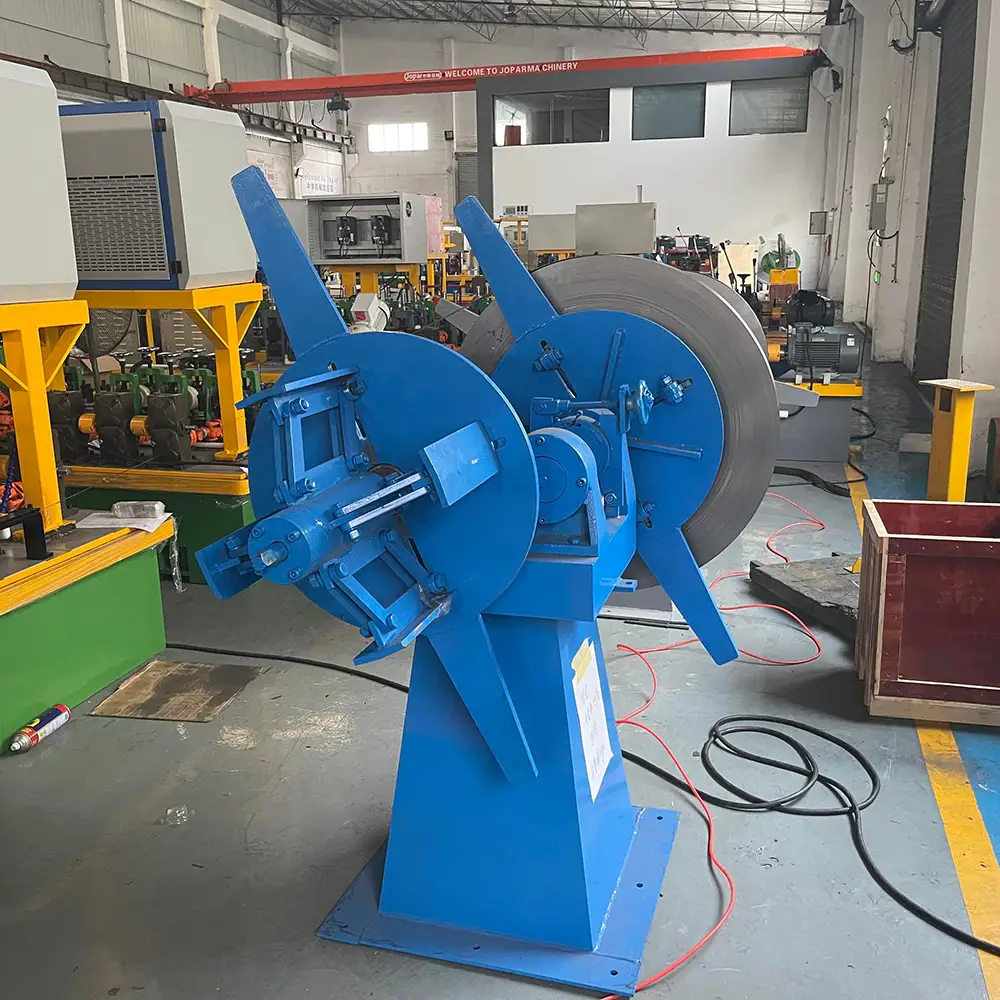
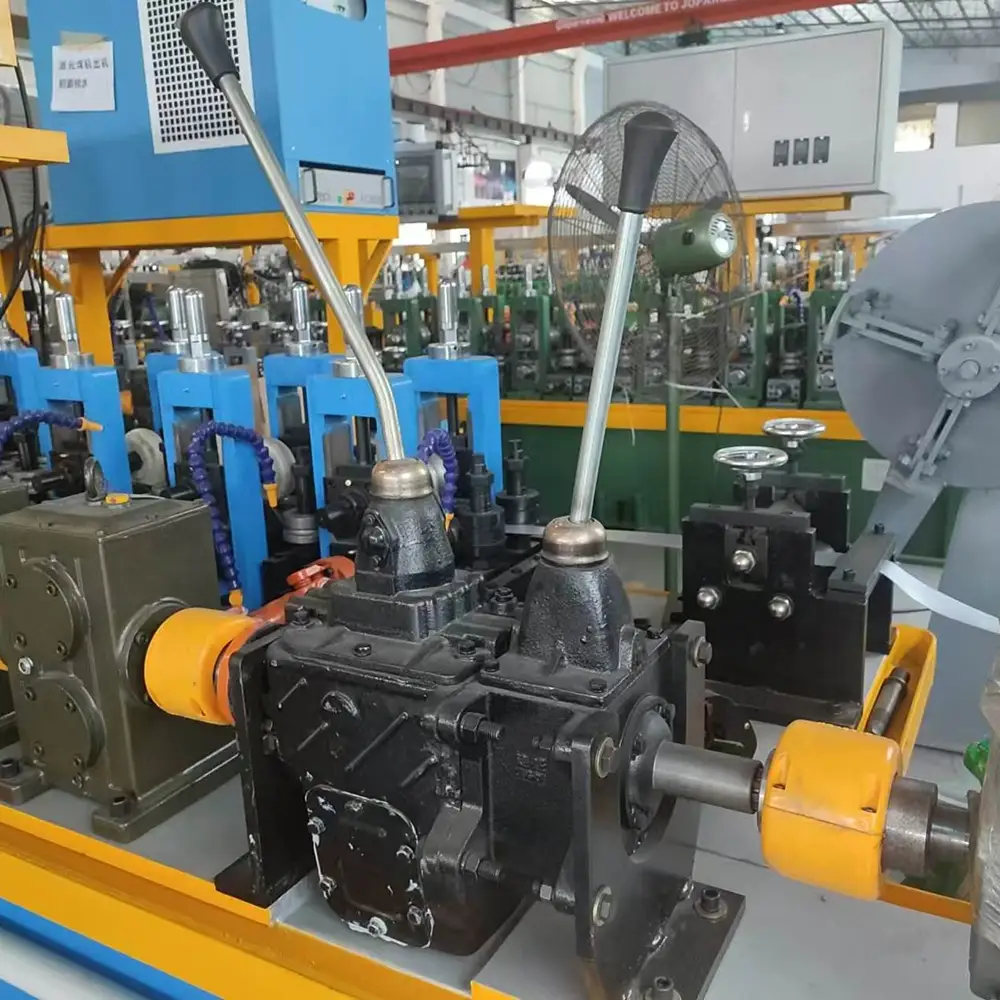
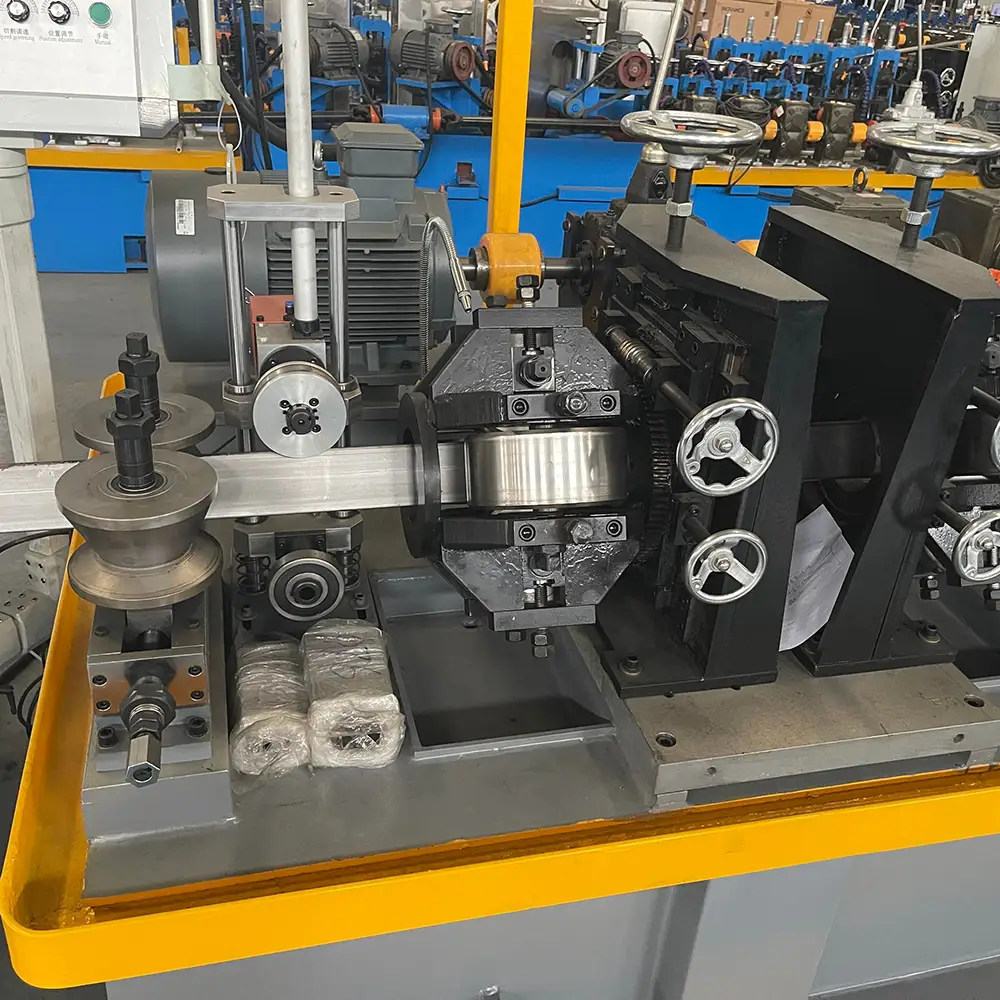
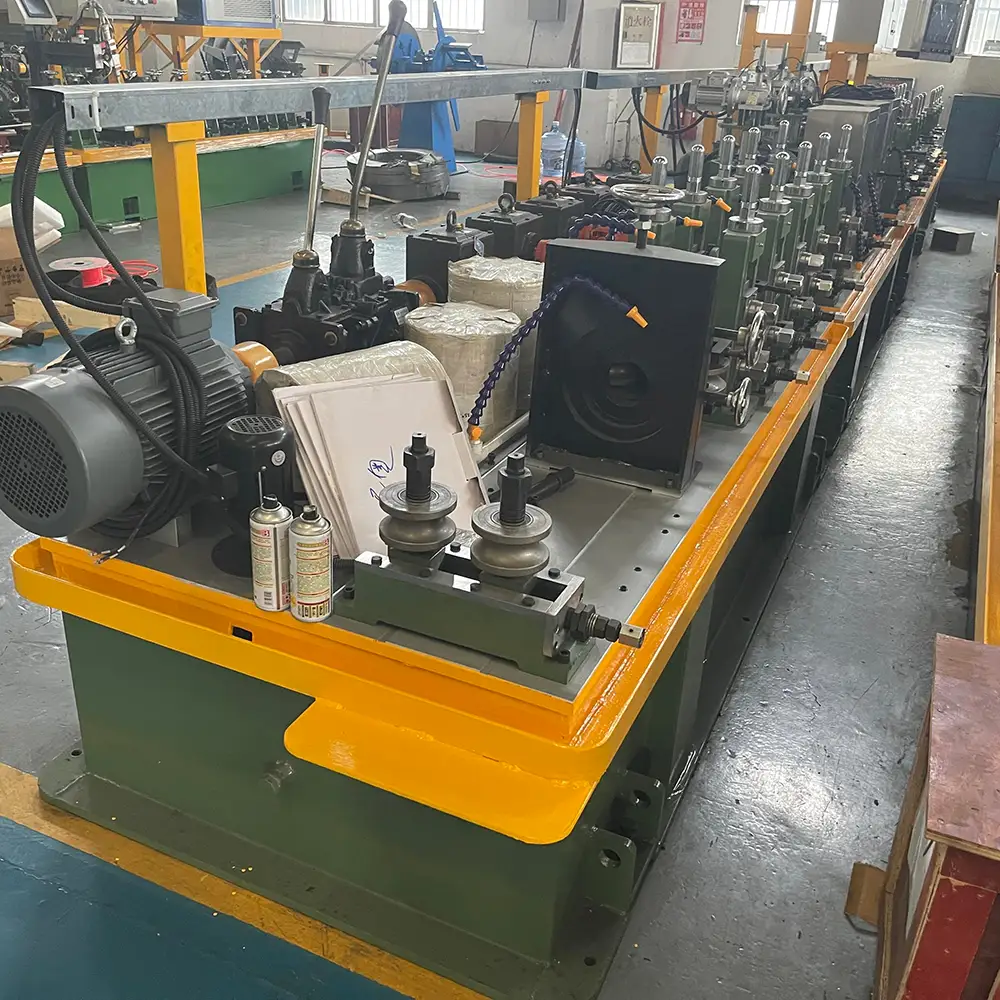
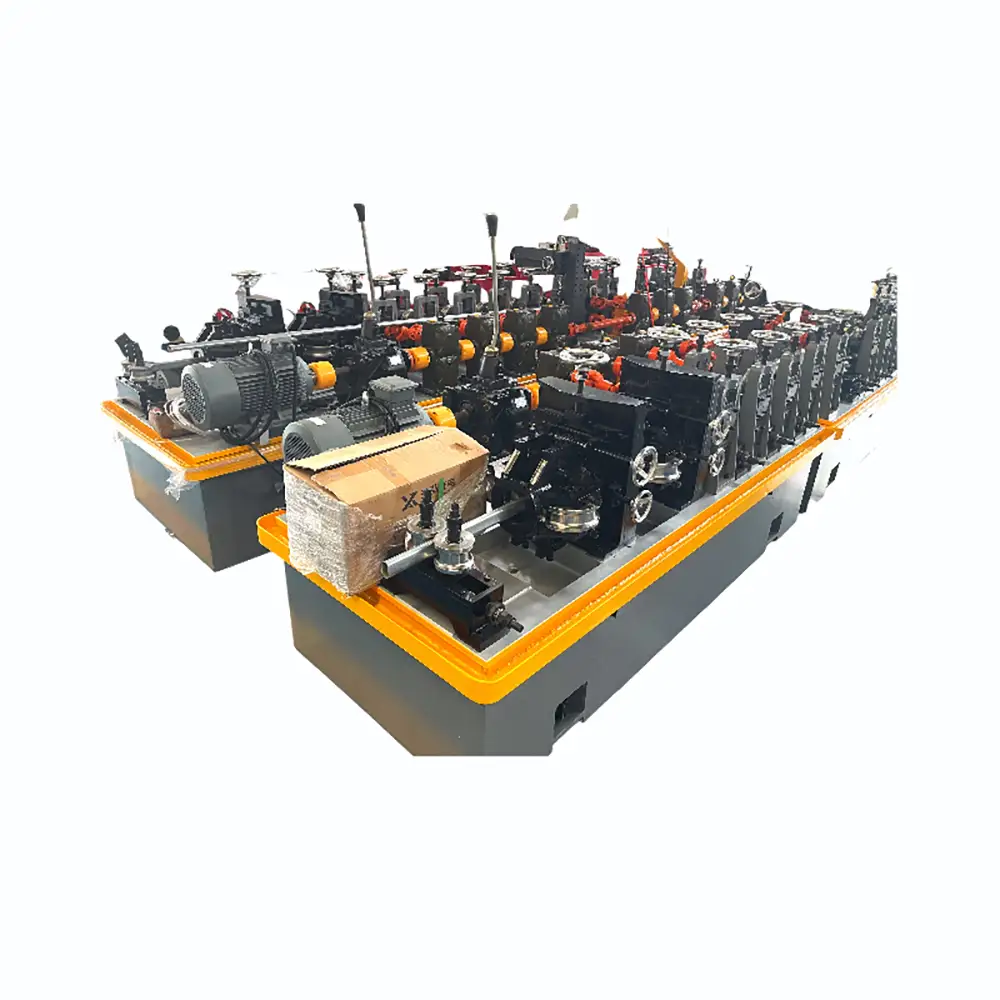
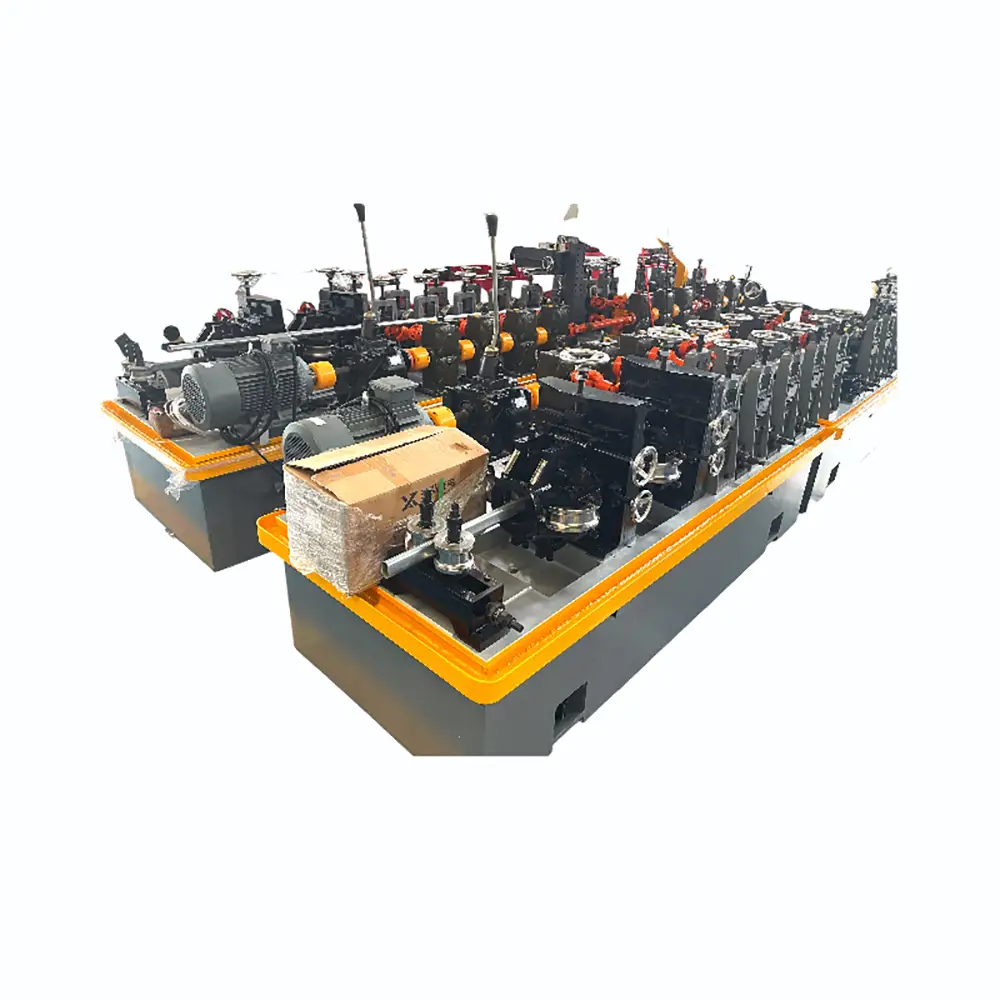
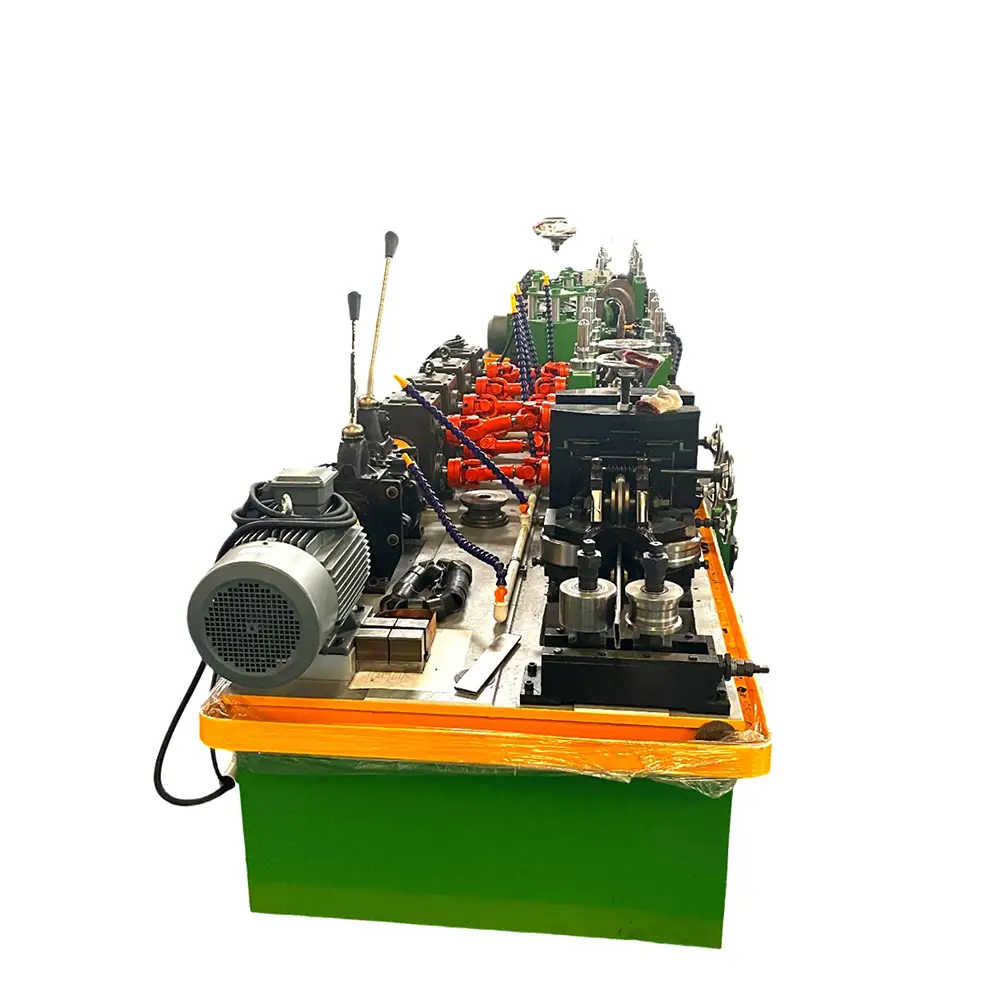
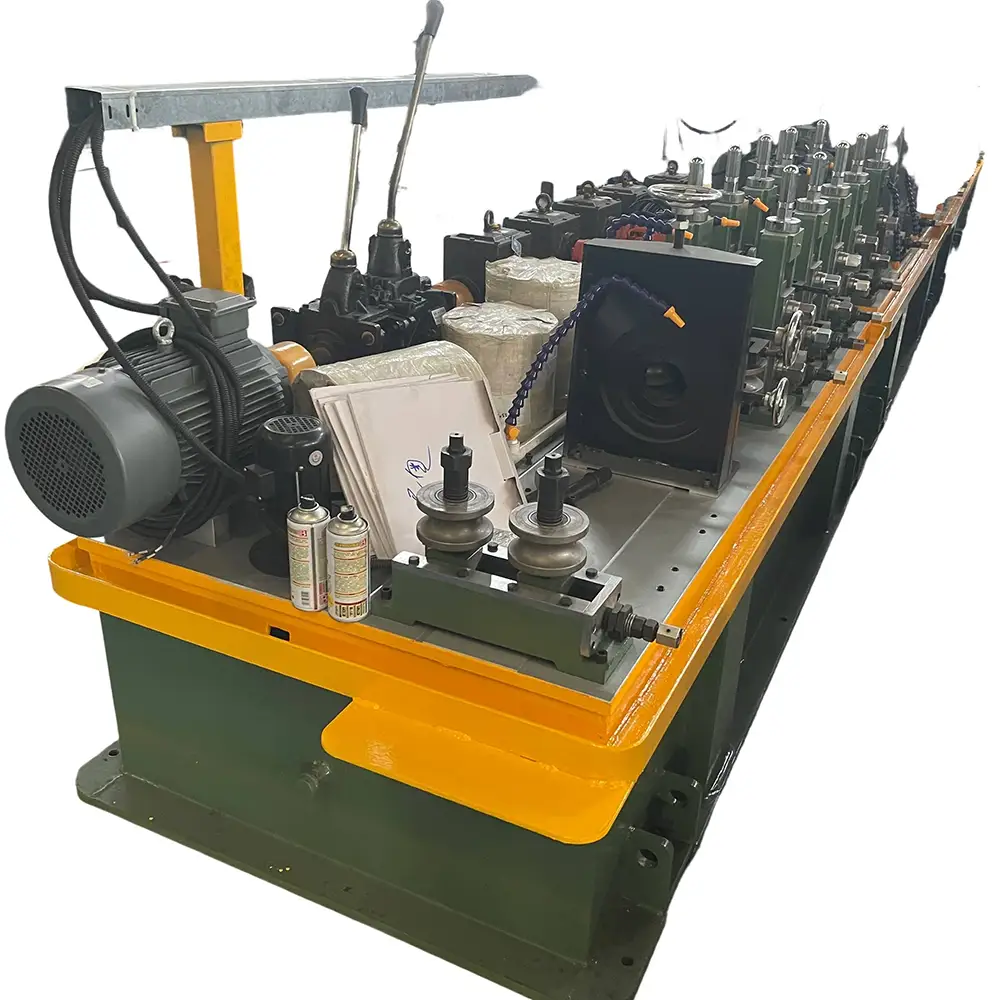
The Full Automatic Aluminum/Iron/Copper Pipe Tube Production Line is an integrated metal tube manufacturing solution designed for continuous production of pipes and tubes from different metal materials. Depending on the machine configuration, the production line can be designed for aluminum, iron or steel, copper, and other suitable metal strip or coil materials.
For modern tube manufacturers, production efficiency depends on more than a single forming machine. A complete pipe production line coordinates material feeding, forming, welding or joining where applicable, sizing, straightening, cutting, and material collection into a continuous workflow. This reduces unnecessary manual handling and provides a more organized manufacturing process.
The exact production process depends on the selected material and pipe specification. Aluminum, copper, and ferrous metals have different forming, welding, heat-transfer, surface-treatment, and tooling requirements. Therefore, the production line should be configured according to the material grade, strip thickness, tube diameter, wall thickness, production speed, and final application.
|
machine type |
Tube Mill Line |
|
warranty |
1 Year |
|
weight (kg) |
2000 |
|
key selling points |
Automatic, Easy to Operate, High Productivity |
|
Useful life |
20 Years |
|
Mojor motor |
90KW |
|
Dimension(L*W*H) |
20m*2.5m*1.7m |
|
Pipe length |
3-6 meters |
|
Pipe making speed |
20-100m/min |
Full Automatic Tube Manufacturing Concept
The production line is designed to automate multiple stages of pipe and tube production. Instead of moving individual workpieces manually between separate machines, raw material can enter the line and pass through a coordinated sequence of processing stations.
A typical configuration may include:
Coil or strip feeding
Material leveling and preparation
Roll forming
Tube forming
Welding or joining
Sizing and shaping
Straightening
Cutting to required length
Finished tube collection
The exact equipment combination depends on whether the customer is producing welded tubes, formed profiles, or another type of metal pipe.
Automation levels can also be customized according to production requirements. Sensors, control systems, feeding systems, cutting units, and material handling equipment can be integrated to reduce manual intervention.
Aluminum Pipe Production
Aluminum is lightweight, corrosion resistant, and widely used in transportation, construction, heat exchange, furniture, industrial equipment, and other applications.
An aluminum tube production line requires tooling and process parameters suitable for the selected aluminum alloy and tube specification. Aluminum has different mechanical and thermal properties from steel, so forming and joining conditions should be configured accordingly.
The production line can be designed for aluminum tubes and profiles according to required diameter, wall thickness, shape, and length.
For specialized aluminum tube applications, customers should provide the alloy grade, raw material thickness, tube dimensions, and joining requirements before machine selection.
Copper Pipe Production
Copper tubes are widely used in refrigeration, air conditioning, plumbing, heat exchange, electrical systems, and industrial applications.
Copper has excellent thermal and electrical conductivity, but its material characteristics require appropriate forming and joining processes. A copper tube production line can be configured around the required tube diameter, wall thickness, material grade, and production method.
For HVAC and refrigeration applications, dimensional consistency and surface quality can be especially important. The production line should therefore be selected based on the final tube specification and applicable industry requirements.
Iron and Steel Pipe Production
Iron and steel tubes are commonly used for structural components, furniture, machinery, automotive applications, construction, fluid transportation, and industrial fabrication.
Ferrous metal tube production generally involves robust forming and joining equipment capable of handling the required material strength and thickness.
A steel tube production line may include coil feeding, leveling, forming rolls, high-frequency welding or another suitable joining process, sizing rolls, straightening, cutting, and collection.
The exact production technology depends on whether the customer requires carbon steel tube, galvanized steel tube, stainless steel tube, or another ferrous material.
Continuous Roll Forming
Roll forming is an important process in many welded tube production lines. A continuous metal strip passes through a series of forming rolls that progressively shape the flat strip into a tubular profile.
Progressive forming helps transform the strip into the required round, square, rectangular, or customized tube geometry.
The roll tooling must be designed according to the required tube dimensions and material characteristics. Different tube sizes may require different tooling sets or adjustable tooling arrangements.
Proper roll alignment is important for maintaining stable production and consistent tube geometry.
Welding and Tube Joining
For welded pipe production, the edges of the formed strip are joined to create a continuous tube.
Depending on the material and application, the line may use a suitable welding or joining technology. Steel tube production may use high-frequency welding, while aluminum and copper applications can require different joining solutions depending on the alloy and product specification.
The welding system should be selected according to material type, thickness, tube diameter, production speed, and required weld quality.
Customers should provide detailed material and product information so the manufacturer can recommend the appropriate welding configuration.
Tube Sizing and Straightening
After forming and welding, the tube may pass through sizing rolls to achieve the required external dimensions and geometry.
Sizing helps establish consistent tube diameter or profile dimensions. Straightening equipment can then correct minor deviations and prepare the finished tube for cutting or downstream processing.
The required number and arrangement of sizing and straightening stations depend on the tube specification and production requirements.
Automatic Cutting
Automatic cutting allows continuous tube production to be divided into specified lengths.
The cutting system can be configured according to the customer's required tube length, production speed, material characteristics, and downstream handling process.
Accurate length control is important for applications where finished tubes are supplied as standardized components. Cutting performance also depends on the machine configuration and material conditions.
Production Efficiency
Automation can significantly reduce repetitive manual handling in a tube manufacturing plant. A coordinated production line allows several processes to operate as part of one continuous workflow.
This can help improve production organization, reduce intermediate material storage, and support higher-volume manufacturing.
However, actual production speed should not be assumed solely from the phrase "full automatic." Line speed depends on tube diameter, wall thickness, raw material properties, forming configuration, welding method, cutting length, and other production parameters.
Customers should establish the target output based on their actual product specifications.
Quality Control
Consistent tube quality requires control throughout the production process. Important factors include raw material quality, strip width, material thickness, roll alignment, forming conditions, welding parameters, sizing, straightness, and cutting accuracy.
Depending on the application, manufacturers may use dimensional inspection, weld inspection, surface inspection, length measurement, and other quality-control procedures.
For demanding applications, customers should specify the applicable standards, tolerances, testing requirements, and inspection procedures before production.
Applications
The automatic pipe and tube production line can support many industries, including:
HVAC and Refrigeration:
Copper and aluminum tubes can be used for heat-transfer and refrigeration-related applications.
Construction:
Steel and aluminum tubes can be used for structural and architectural components.
Automotive Manufacturing:
Metal tubes can be used for selected exhaust, structural, fluid, and component applications.
Furniture Manufacturing:
Round, square, and rectangular tubes are widely used for frames and structural components.
Industrial Equipment:
Metal tubes can be used in machinery frames, equipment structures, fluid systems, and fabricated assemblies.
Electrical Applications:
Copper and aluminum tubes or profiles can be used in selected electrical and conductive applications.
Factory Layout and Line Integration
A complete tube production line requires sufficient space for raw material loading, forming equipment, welding, sizing, cutting, finished product collection, and operator access.
The factory layout should consider coil storage, material movement, power supply, cooling requirements, ventilation, compressed air where required, and maintenance access.
For automated factories, the tube line can potentially be connected with coil loading equipment, packaging systems, inspection equipment, storage systems, or other downstream machinery.
Maintenance
Regular maintenance helps maintain production stability. Operators should inspect forming rolls, bearings, transmission components, welding or joining systems, cutting tools, sensors, electrical components, and material handling systems.
Roll tooling should be kept properly aligned and inspected for wear. Welding systems should be maintained according to the manufacturer's recommendations.
Lubrication, cooling systems, electrical connections, pneumatic components, and safety devices should also be checked at appropriate intervals.
OEM and Custom Tube Production Solutions
Different tube manufacturers have different product ranges and production targets. For this reason, the production line should be engineered around the customer's actual requirements rather than selected only by a general machine name.
As a professional Tube Production Line Manufacturer, Pipe Making Machine Factory, Metal Tube Equipment Supplier, and Industrial Pipe Manufacturing Equipment Vendor, we support customized B2B production solutions.
Customers can provide material type, alloy or steel grade, raw material thickness, tube diameter, wall thickness, tube shape, required length, target production capacity, welding method, and applicable standards.
OEM and ODM services can cover line configuration, forming rolls, welding systems, sizing sections, automatic cutting, controls, material handling, packaging, electrical specifications, and factory layout integration.
FAQs
1. What materials can this tube production line process?
Depending on configuration, the line can be designed for aluminum, copper, iron or steel, and other suitable metal materials.
2. Can one production line make aluminum, copper, and steel tubes?
Not necessarily with one unchanged configuration. Different materials can require different tooling, forming parameters, welding systems, and production configurations.
3. What types of tubes can be produced?
Depending on the machine design, the line can produce round, square, rectangular, or other specified tube profiles.
4. Is the production line fully automatic?
The system can be configured for a high level of automation, but the exact automation functions depend on the selected equipment and production requirements.
5. Can the tube length be customized?
Yes. The cutting section can be configured according to the required finished tube length and production process.
6. Can the line produce welded steel tubes?
Yes, suitable configurations can be designed for welded steel tube production, including forming, welding, sizing, straightening, and cutting.
7. Can it produce copper pipes for HVAC applications?
A suitable copper tube configuration can be designed for HVAC and refrigeration applications. Material grade, diameter, wall thickness, and applicable requirements should be confirmed.
8. How do I choose the right production line?
Provide the material, tube diameter, wall thickness, tube shape, raw material dimensions, required length, target output, and welding or joining requirements.
9. Can different tube sizes be produced?
Potentially, depending on the forming tooling and machine configuration. Multiple tooling sets may be required for different tube sizes.
10. Is OEM and ODM customization available?
Yes. Production line layout, forming tooling, welding equipment, cutting systems, controls, material handling, and other specifications can be customized according to the project.
Why Choose Us
Complete Tube Production Solutions
We provide integrated equipment concepts covering forming, joining, sizing, straightening, cutting, and material handling.
Multi-Material Experience
Production solutions can be evaluated for aluminum, copper, steel, and other suitable metal materials.
Application-Based Configuration
Machine selection is based on tube diameter, wall thickness, material properties, production capacity, and final application.
Automatic Production Capability
Feeding, forming, cutting, control, and material handling functions can be integrated according to the required automation level.
Customized Tooling
Forming rolls and related tooling can be designed according to the required tube dimensions and material.
OEM & ODM Support
We support customized production lines for manufacturers, distributors, engineering companies, and industrial users.
Complete B2B Project Support
From technical specifications and machine configuration to factory layout and production-line integration, we can support international projects.
Quality-Focused Manufacturing
Equipment assembly, component selection, testing, and process evaluation are performed with attention to stable industrial production.
Prev:
Automatic Round Pipe Laser Welding Making Machine Equipment Carbon Steel Gi Iron Production Line Tube Mill Manufacturer
Next:Sorry, no information
TAG:
Metal Pipe Forming Machine,
Metal Tube Forming Machine,
Pipe Processing Machine,
Tube Processing Machine,
Pipe Fabrication Machine,
Tube Fabrication Machine,
Tube Manufacturing Machine,
Metal Tube Processing Equipment,
Metal Pipe Making Machine,
Pipe Manufacturing Machine,
Tube Manufacturing Equipment,
Metal Pipe Processing Equipment,
Automatic Metal Tube Machine,
Automatic Tube Welding Machine,
Steel Tube Manufacturing Machine,
Pipe Welding Production Line,
Automatic Pipe Welding Machine,
Tube Welding Production Line,
Pipe Production Line,
Steel Tube Production Line,
Automatic Metal Pipe Machine,
Automatic Tube Cutting Machine,
Automatic Pipe Cutting Machine,
Tube Straightening Machine,
Pipe Straightening Machine,
Industrial Pipe Production Line,
Copper Tube Production Equipment,
Pipe Cutting Production Line,
Tube Cutting Production Line,
Tube Mill Production Line,
Related Category:
Automatic Tube Production Line,Pipe Making Machine,Aluminum Pipe Production Line China, suppliers, manufacturers, factory, customized, wholesale, quotation, made in China