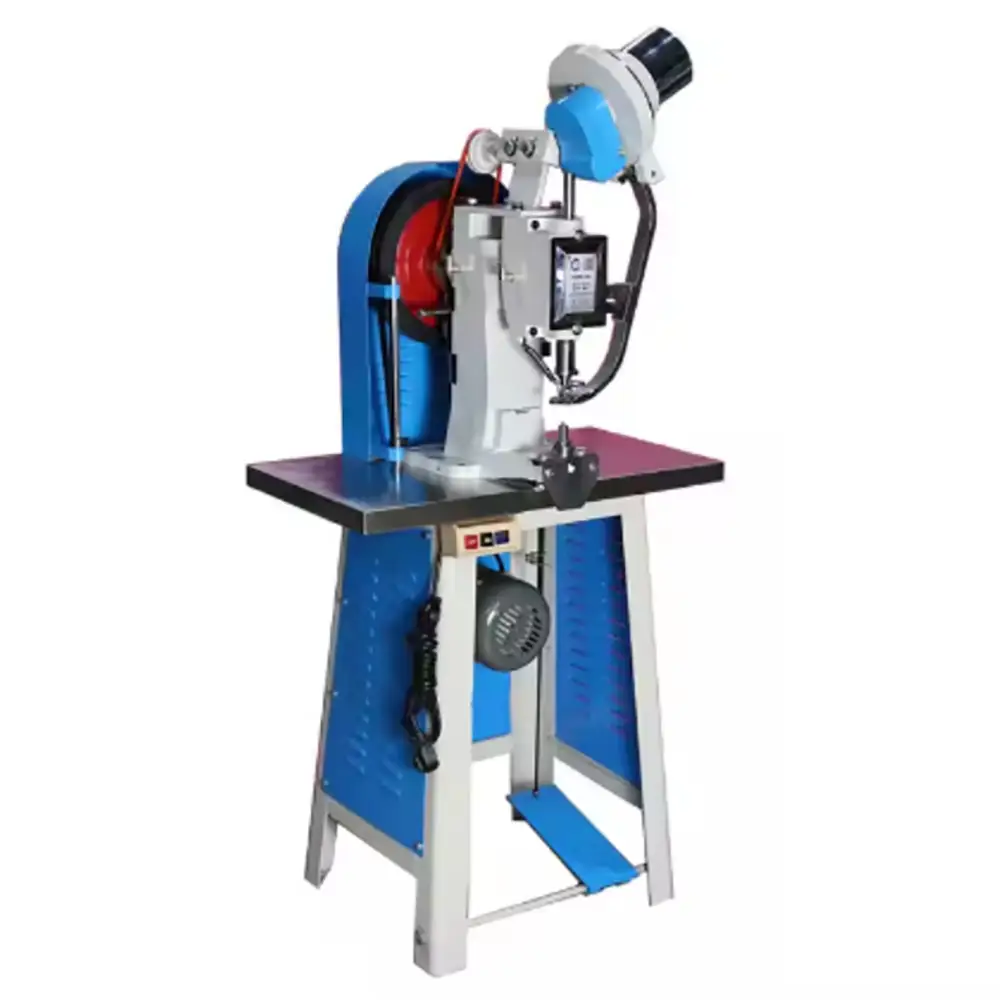
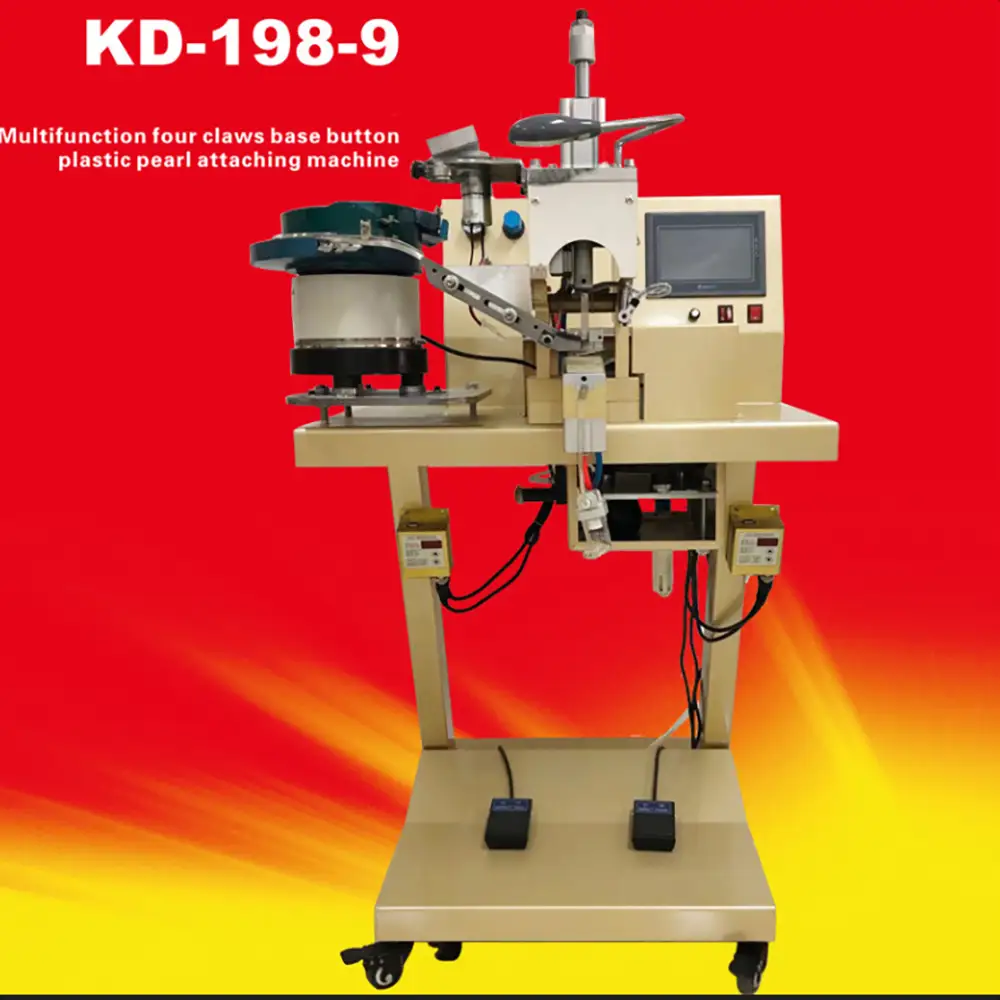
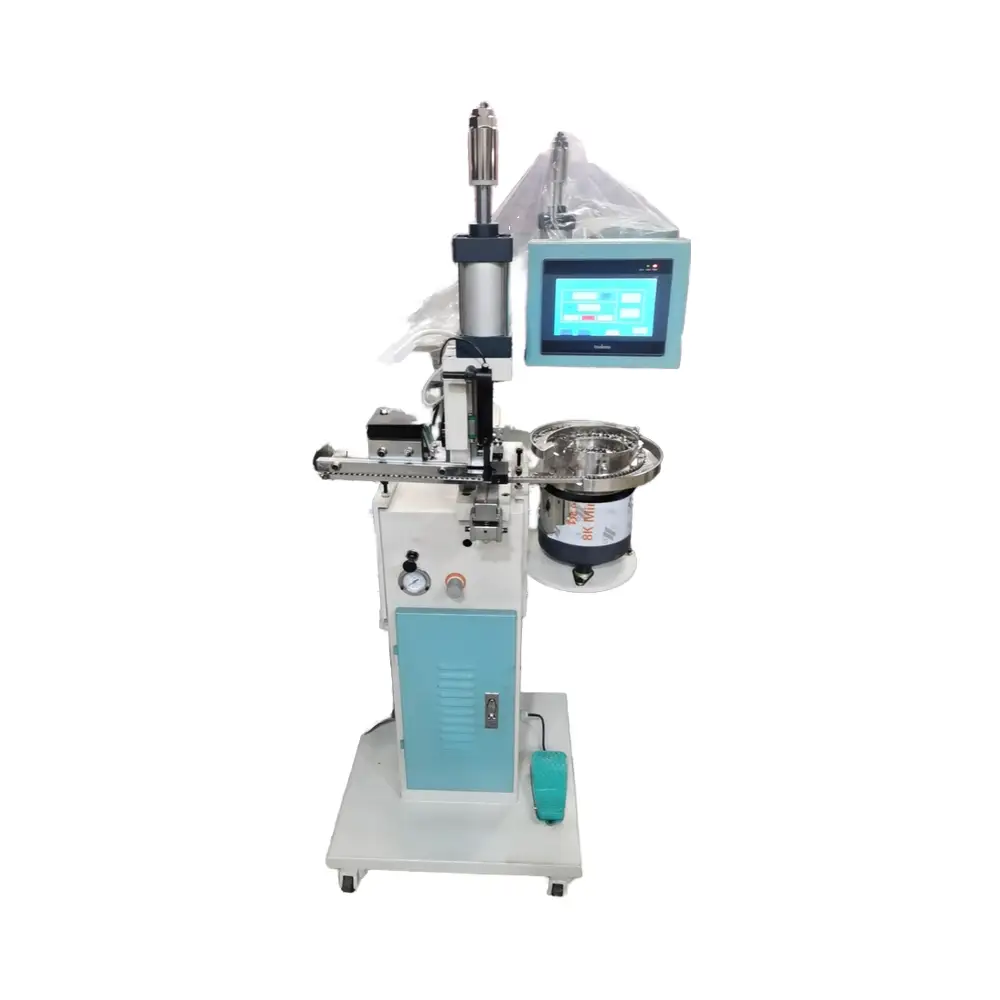
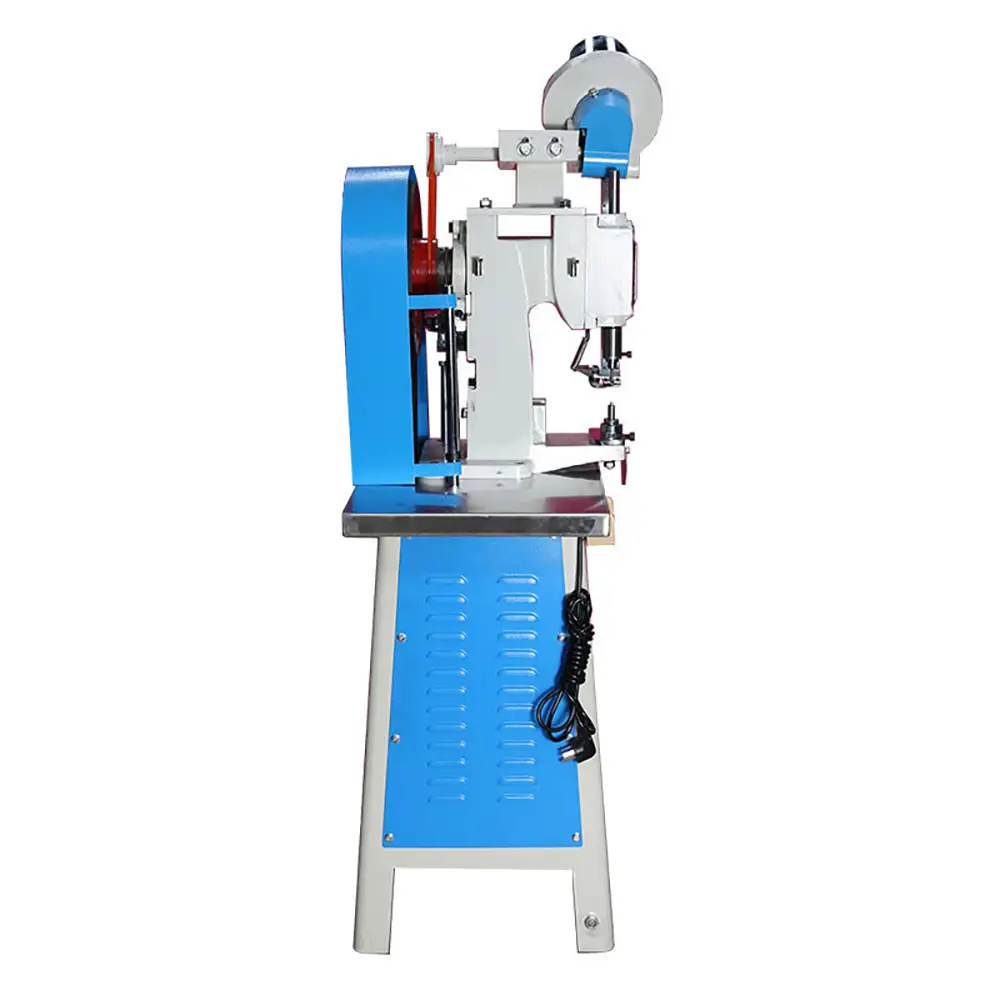
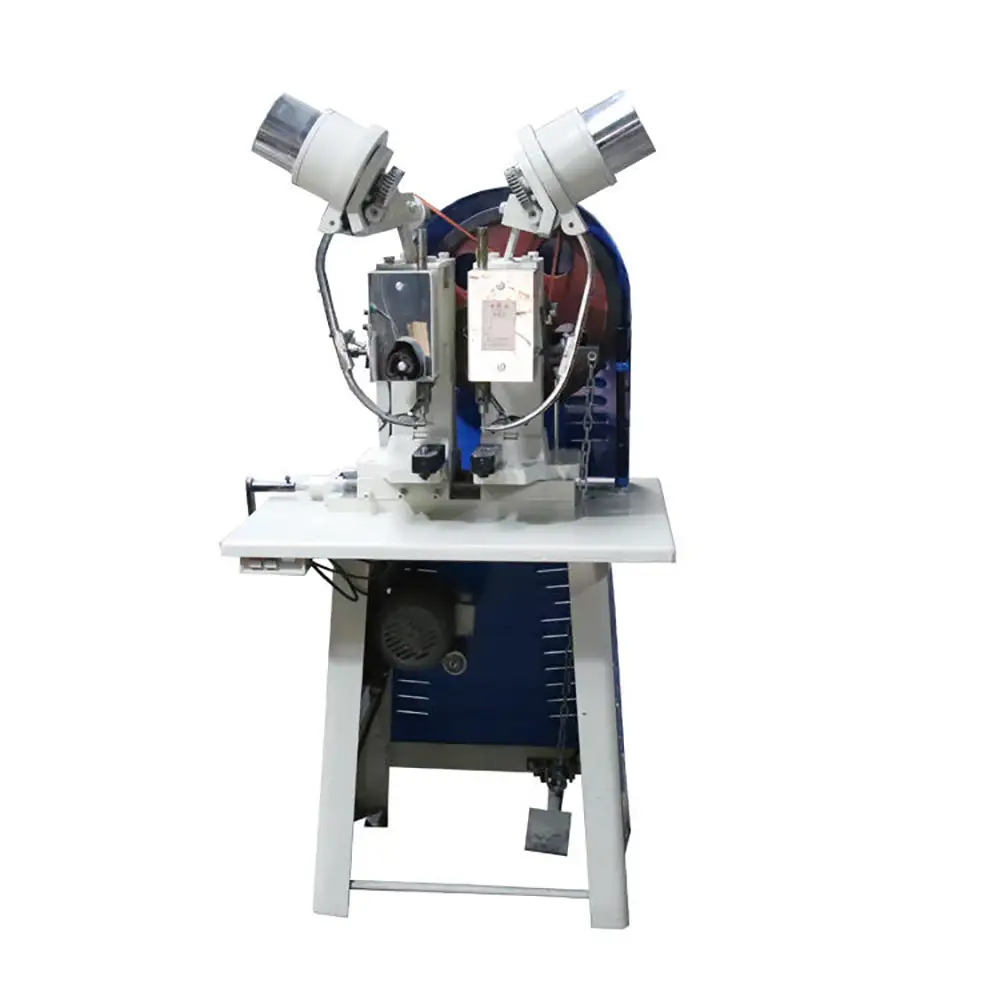
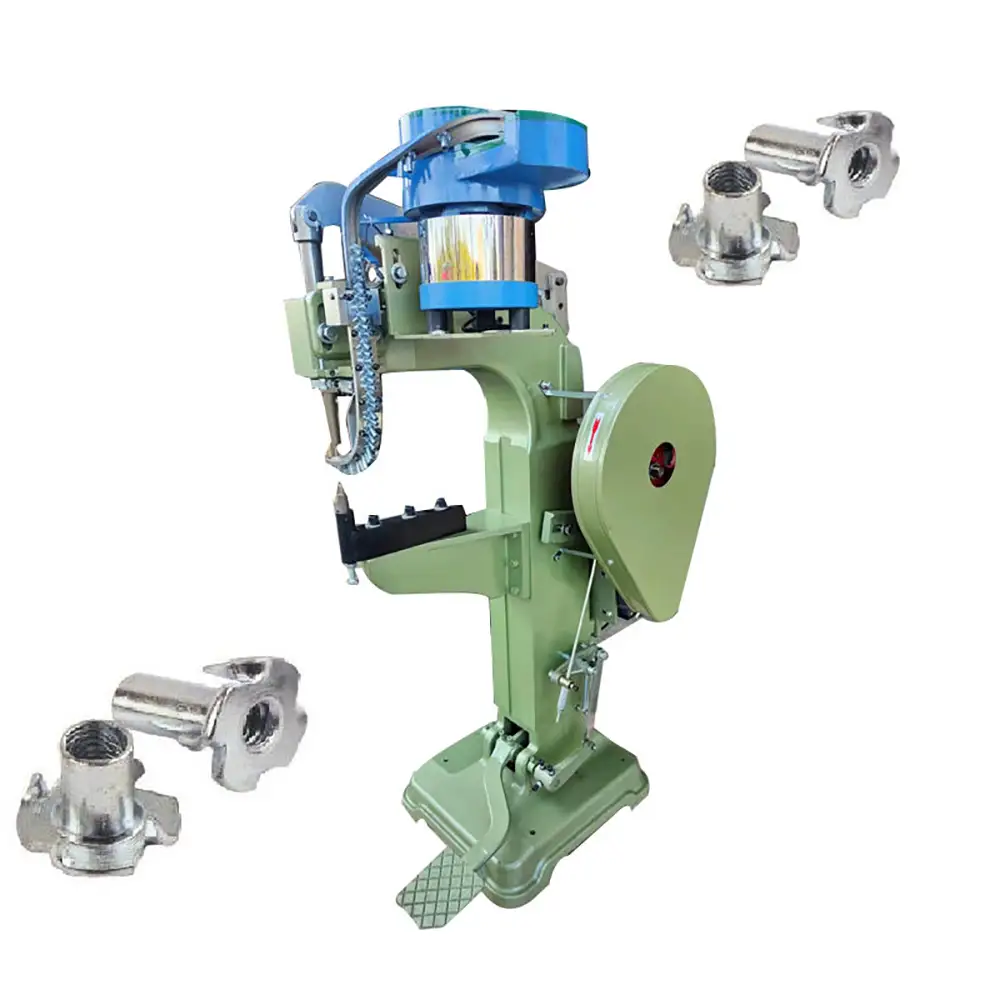
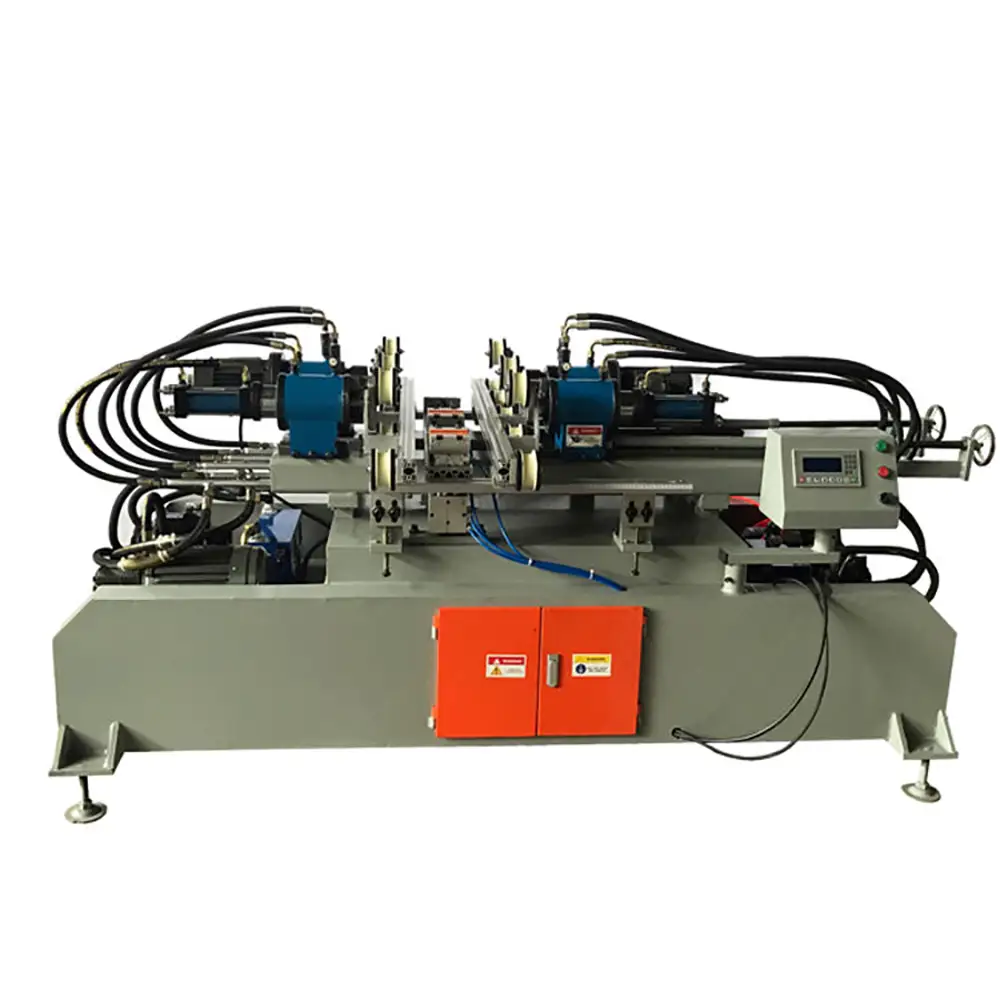
Automatic Belt Punching and Riveting Machine
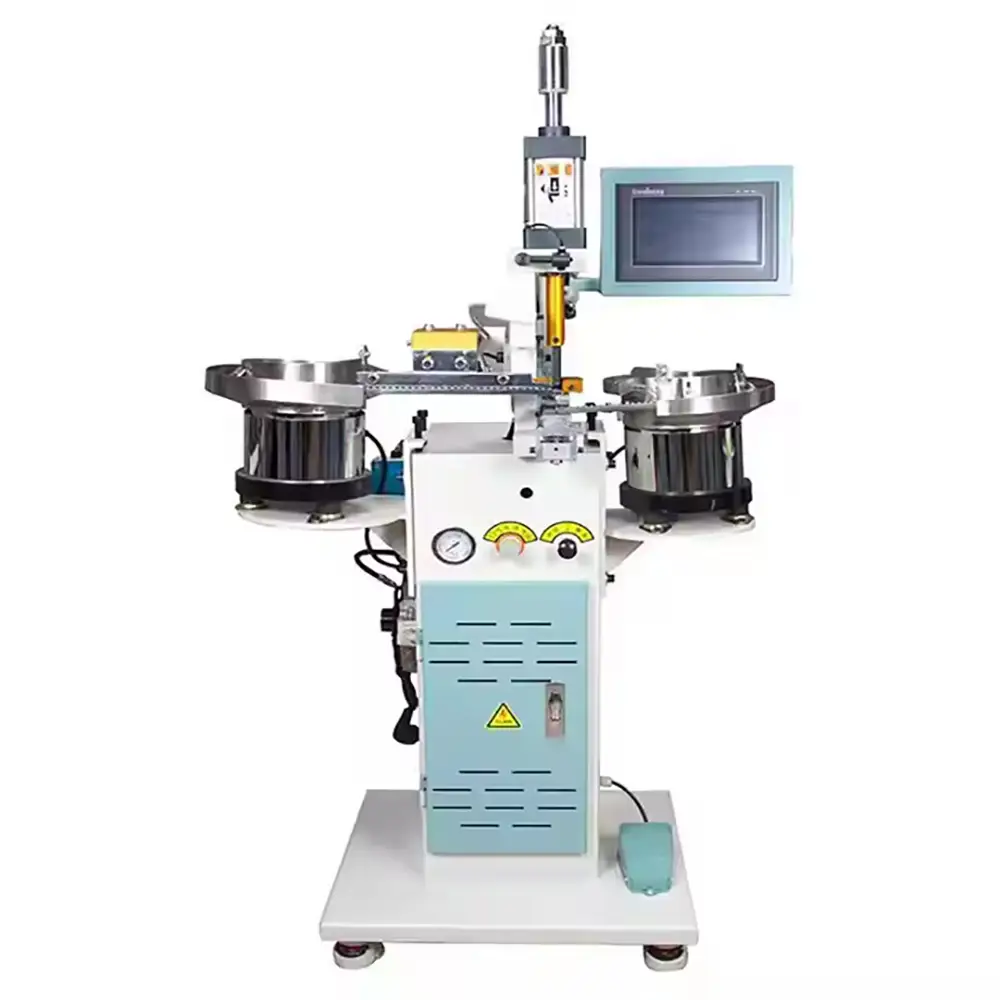
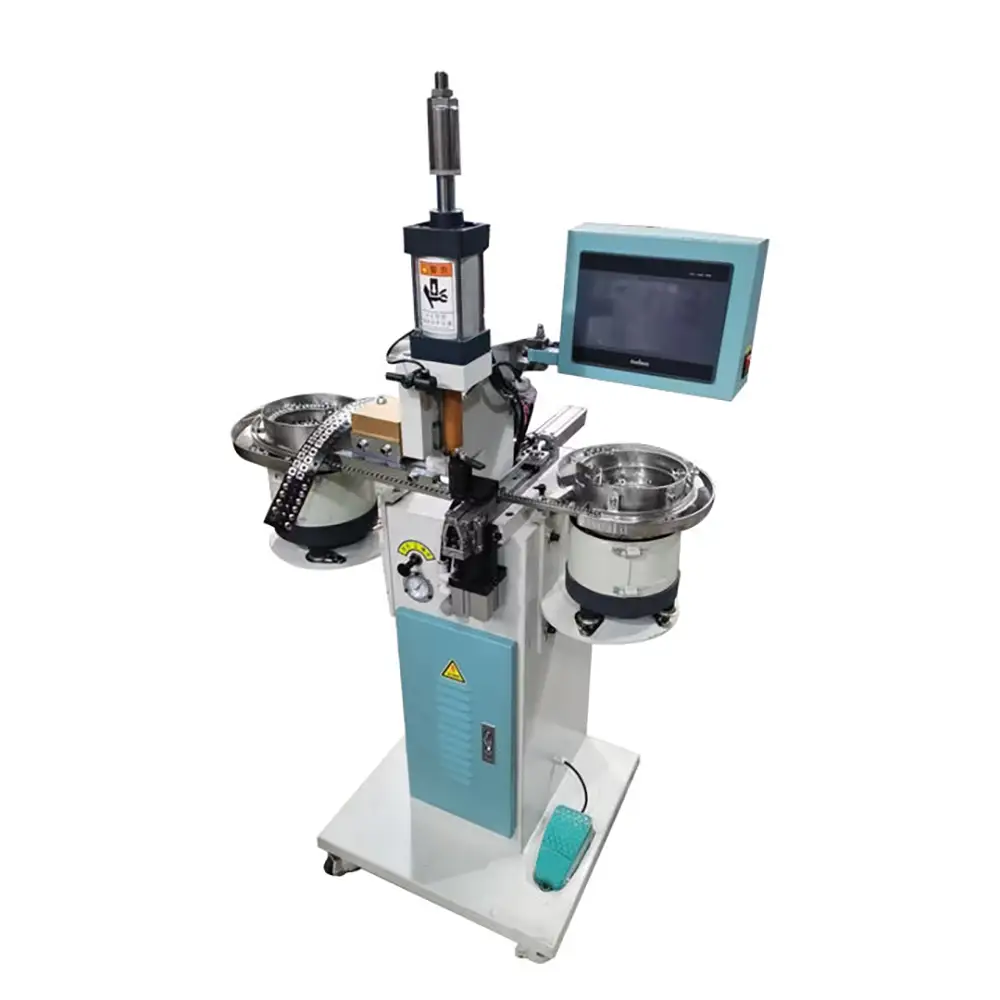
The Automatic Feeding Rivets Belt Punching Riveting Machine for Belts Single and Double-sided Rivets is an industrial fastening solution designed for manufacturers of leather belts, fashion belts, work belts, luggage straps, pet collars, accessories, and other products requiring repeated punching and riveting operations.
The machine combines belt punching, automatic rivet feeding, and riveting into an efficient production workflow. It is designed to reduce repetitive manual operations while improving consistency in rivet positioning and fastening.
For manufacturers producing large quantities of belts, manually positioning individual rivets and punching holes can require considerable labor. An automatic rivet feeding and riveting process can help streamline production and create a more standardized manufacturing operation.
The machine can be configured according to the belt material, rivet type, rivet dimensions, hole requirements, and finished product design.
|
Item |
Data |
|
Model |
ST50 Automatic machine |
|
Power |
750W |
|
Working size |
5-10mm rivet, can be customized |
|
Working common size |
8mm, can be customized |
|
Voltage |
110V/220V/380V, etc. |
|
Eyelet materials |
Iron or stainless steel, etc |
|
Speed |
3000pc/hour |
|
Weight |
120Kg |
|
Packing size |
80*60*135cm |
Automatic Rivet Feeding
One of the main advantages of this machine is its automatic rivet feeding system. Instead of requiring operators to manually place each rivet into the riveting position, compatible rivets can be supplied through a feeding mechanism.
Automatic feeding helps create a more continuous production workflow and reduces repetitive manual handling. This is particularly useful for belt manufacturers where hundreds or thousands of similar riveting operations may be required during a production run.
The feeding system should be matched to the actual rivet shape, size, material, and orientation requirements. Different rivet designs may require different feeding and tooling configurations.
Belt Punching and Riveting
The machine combines belt punching and riveting operations to simplify the fastening process. A punching operation prepares the hole, while the riveting operation installs and secures the compatible rivet.
Accurate punching is important because the hole position directly affects the final position of the rivet. Consistent positioning helps improve the appearance and functionality of finished belts.
Depending on the machine configuration, positioning guides, fixtures, or other alignment components can be used to help operators maintain repeatable belt positioning during production.
Single-Sided Rivet Applications
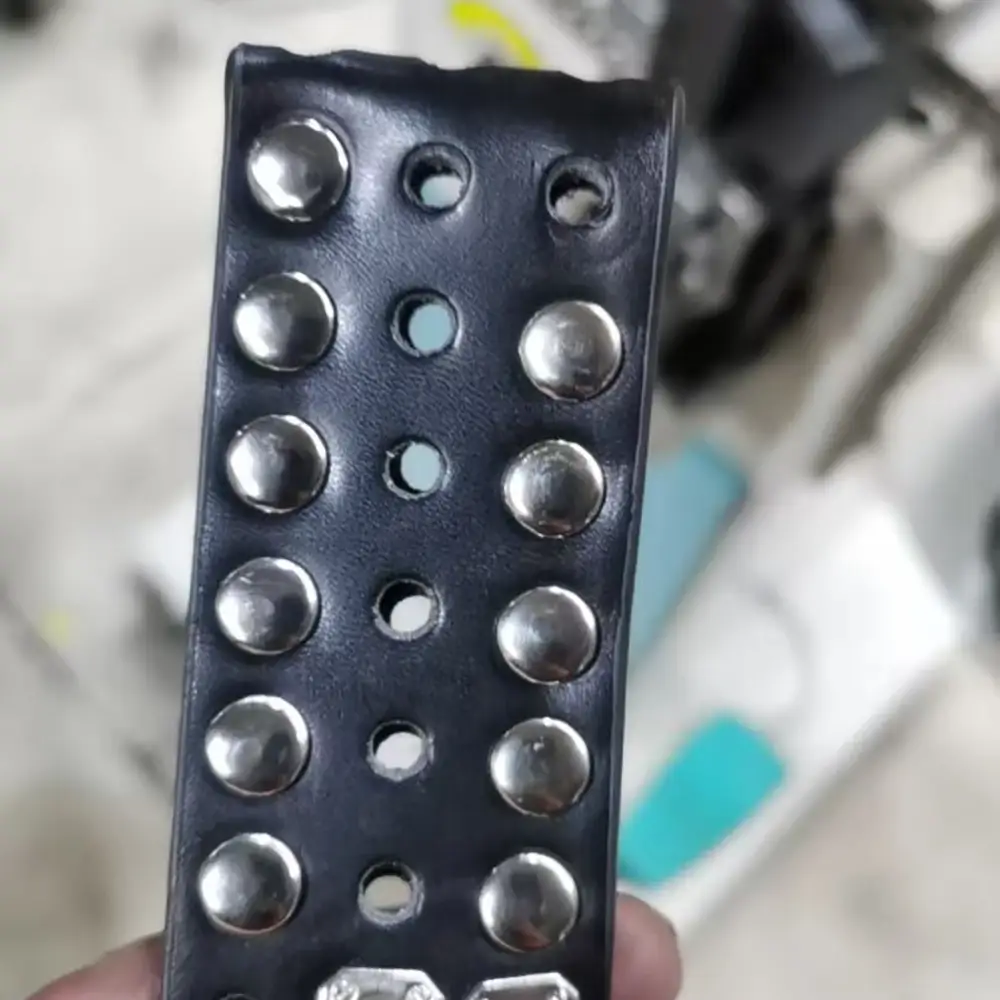
Single-sided rivets are commonly used in belts, leather goods, straps, accessories, and related products. They provide a practical fastening method where the finished rivet appearance is primarily required on one side of the product.
The machine can be configured with suitable tooling for compatible single-sided rivets. Proper punch and die selection is important to ensure that the rivet is securely formed without unnecessarily damaging the belt material.
Single-sided rivet applications may include leather belts, fashion accessories, straps, pet collars, bags, and other products.
Double-Sided Rivet Applications
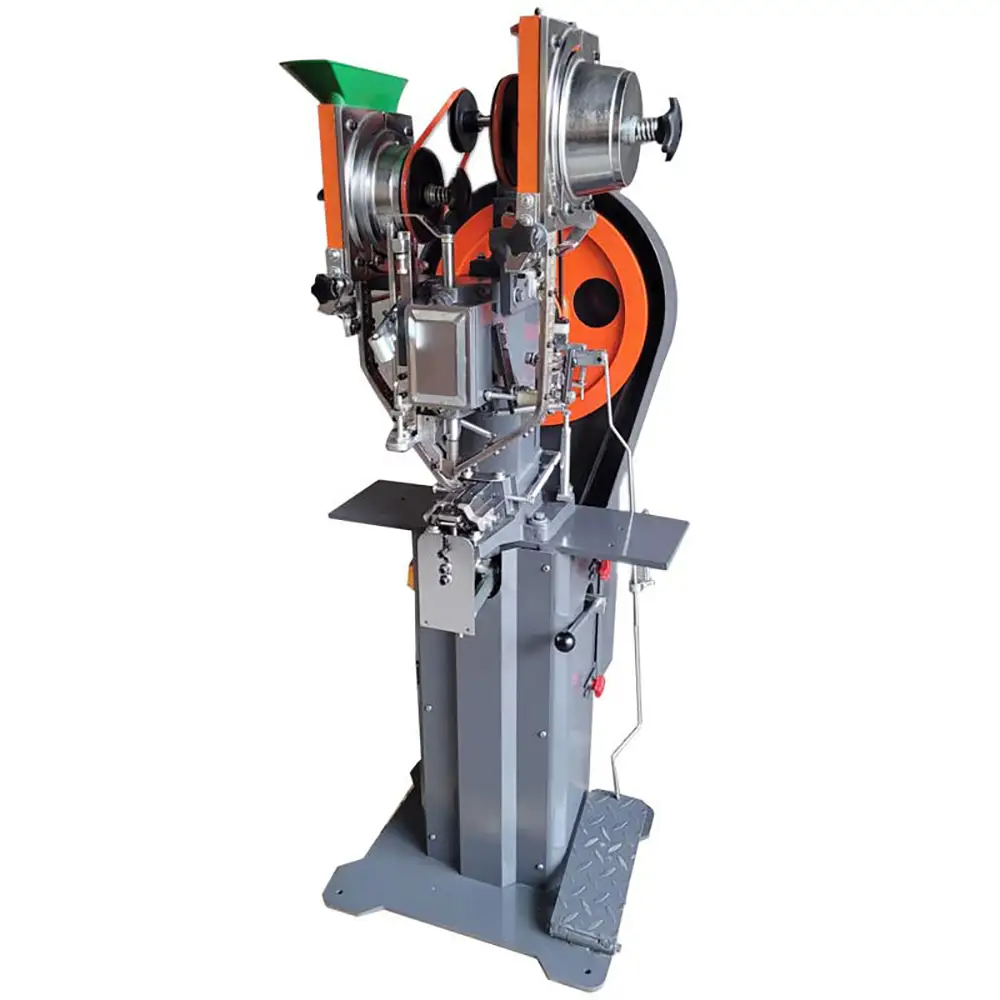
Double-sided rivets can provide a finished appearance on both sides of the belt or assembled product. They are frequently used when the rear side of the fastener is visible or when a particular decorative or structural effect is required.
The machine can support compatible double-sided rivet applications when the appropriate tooling and feeding configuration are selected.
Double-sided riveting is commonly considered for premium leather goods, fashion belts, decorative straps, bags, accessories, and other products where both sides of the fastener may be visible.
Leather Belt Riveting Machine
Leather belts require accurate hole positioning and controlled riveting because excessive force or incorrect tooling can damage the leather surface.
The machine can be used for compatible genuine leather, synthetic leather, PU, PVC, webbing, and other belt materials. Tooling should be selected according to material thickness, hardness, rivet design, and required finished appearance.
For premium leather products, sample testing is recommended to verify that the riveting process provides the desired result without excessive deformation around the rivet.
Automatic Belt Rivet Press
The machine functions as an industrial belt rivet press for repetitive production. Automatic rivet feeding reduces manual rivet placement, while the punching and riveting process helps standardize the fastening workflow.
This can be especially valuable for manufacturers producing belts in large quantities or with repeated rivet patterns.
By reducing manual steps, manufacturers can improve workflow efficiency and allow operators to focus on belt positioning, inspection, and material handling.
Consistent Rivet Positioning
Belt products often contain multiple rivets arranged in specific patterns. Consistent spacing and alignment are therefore important for both product appearance and functionality.
A suitable positioning system can help operators locate the belt correctly before each punching and riveting operation. Depending on the product design, customized guides or fixtures can be considered.
For belts with repeated holes or rivets, a standardized positioning process can help improve batch-to-batch consistency.
Flexible Tooling for Different Rivets
Rivets are available in different diameters, lengths, shapes, materials, and head designs. A machine should therefore be configured according to the actual fastener being used.
Possible tooling configurations include different punches, dies, riveting heads, feeding components, and positioning fixtures.
For manufacturers using both single-sided and double-sided rivets, separate tooling configurations may be considered depending on the machine design and production requirements.
Improve Production Efficiency
Automatic rivet feeding can significantly reduce repetitive manual work during belt production. Instead of manually selecting and positioning each rivet, the feeding mechanism can supply compatible rivets to the working area.
When combined with belt punching and riveting, the machine provides a more streamlined production process.
The actual production capacity depends on the belt design, rivet type, material, number of rivets per product, operator workflow, and machine configuration.
Wide Range of Belt Applications
The machine can be used for compatible applications including:
Leather Belts
Fashion Belts
Dress Belts
Work Belts
Safety Belts
Military-Style Belts
Pet Collars
Dog Collars
Luggage Straps
Bag Straps
Leather Straps
Harness Components
Webbing Products
Fashion Accessories
Leather Goods
Other Riveted Products
OEM and Custom Belt Riveting Solutions
Different belt manufacturers may use different materials, rivets, hole patterns, and product designs. Customized tooling can therefore be important for specialized applications.
OEM and custom solutions may include customized punches, dies, riveting heads, rivet feeding components, positioning fixtures, and other application-specific equipment.
Manufacturers can provide product drawings, belt samples, rivet samples, or production requirements for machine evaluation and tooling development.
Why Choose Our Automatic Belt Riveting Machine?
1. Automatic Rivet Feeding
The automatic feeding system helps reduce manual rivet placement and supports a more efficient production workflow.
2. Integrated Punching and Riveting
Belt punching and rivet fastening are combined into a streamlined production process.
3. Single- and Double-Sided Rivet Applications
The machine can be configured for compatible single-sided or double-sided rivets.
4. Suitable for Belt Manufacturing
It is designed for repetitive riveting applications involving leather belts, straps, collars, and related products.
5. Consistent Rivet Positioning
Suitable fixtures and positioning systems help maintain repeatable riveting locations.
6. Flexible Tooling
Punches, dies, riveting heads, and feeding components can be selected according to the application.
7. Improved Production Efficiency
Automatic feeding reduces repetitive manual work and helps standardize the production process.
8. OEM and Custom Support
Customized tooling and machine configurations can be developed for specific belt and fastener requirements.
How to Choose the Right Belt Riveting Machine?
Before selecting the machine, manufacturers should consider:
Single-Sided or Double-Sided Rivets
Rivet Diameter
Rivet Length
Rivet Head Design
Rivet Material
Belt Material
Belt Thickness
Required Hole Diameter
Rivet Spacing
Number of Rivets per Product
Required Production Volume
Desired Automation Level
Tooling Requirements
Providing belt samples and rivet samples is recommended for accurate machine and tooling selection.
FAQS
1. Can this machine automatically feed rivets?
Yes. The machine is designed with an automatic rivet feeding system for compatible rivet types and configurations.
2. Can it punch and rivet belts?
Yes. It is designed to combine belt punching and riveting into an efficient production process.
3. Can it work with single-sided rivets?
Yes. Suitable tooling can be configured for compatible single-sided rivets.
4. Can it work with double-sided rivets?
Yes. The machine can be configured for compatible double-sided rivet applications with appropriate tooling.
5. What belt materials can be processed?
Applications may include genuine leather, synthetic leather, PU, PVC, webbing, textile, and other compatible materials.
6. Can it be used for dog collars?
Yes. The machine can be configured for compatible pet collar and dog collar riveting applications.
7. Can it be used for luggage straps?
Yes. Luggage straps and other leather or textile strap products can be considered when the material and rivets are compatible.
8. Can different rivet sizes be used?
Different rivet sizes may require corresponding punches, dies, feeding components, or riveting tools. Compatibility should be confirmed according to the actual rivet specifications.
9. Can the rivet feeding system be customized?
Depending on the rivet design and machine configuration, the feeding system can be customized or adjusted for specific fasteners.
10. Can the machine process different belt designs?
Yes. Different positioning fixtures or tooling configurations can be used for different belt designs and rivet patterns.
11. Can OEM tooling be provided?
Yes. Customized punches, dies, riveting heads, fixtures, and feeding components can be developed for specific applications.
12. Is the machine suitable for high-volume production?
Yes. Automatic rivet feeding and integrated punching/riveting make it suitable for repetitive industrial belt production.
13. What information should I provide for a quotation?
Provide belt material and thickness, rivet type, rivet dimensions, single- or double-sided design, hole diameter, rivet spacing, product samples, and expected production volume.
Prev:
Semi-Automatic Cloth Buttoning Machine Display Rack Buttoning Tool Manual Sewing Machine
Next:
Electric Automatic Two Heads Two Holes Paper Bag Punching Eyeletting Machine Eyeleter Combined Punching Riveting Machine
TAG:
Industrial Riveting Equipment,
Rivet Setting Machine,
Automatic Rivet Feeding Machine,
Belt Riveting Machine,
Strap Riveting Machine,
Leather Riveting Machine,
Rivet Feeding Riveting Machine,
Automatic Rivet Feeder,
Belt Rivet Machine,
Leather Belt Riveting Machine,
Dog Collar Riveting Machine,
Automatic Rivet Setting Machine,
Webbing Riveting Machine,
Leather Strap Riveting Machine,
Pet Collar Riveting Machine,
Luggage Strap Riveting Machine,
Automatic Belt Riveting Machine,
Belt Riveting Equipment,
Industrial Belt Riveting Machine,
Automatic Belt Punching Machine,
Belt Punching Machine,
Leather Belt Punching Machine,
Belt Fastening Machine,
Belt Punching Riveting Machine,
Automatic Belt Rivet Machine,
Single Sided Rivet Machine,
Double Sided Rivet Machine,
Single Sided Belt Riveting Machine,
Double Sided Belt Riveting Machine,
Single Cap Rivet Machine,
Related Category:
Automatic Belt Riveting Machine, Belt Punching Riveting Machine, Automatic Rivet Feeding Machine, Belt Rivet Machine, Be China, suppliers, manufacturers, factory, customized, wholesale, quotation, made in China