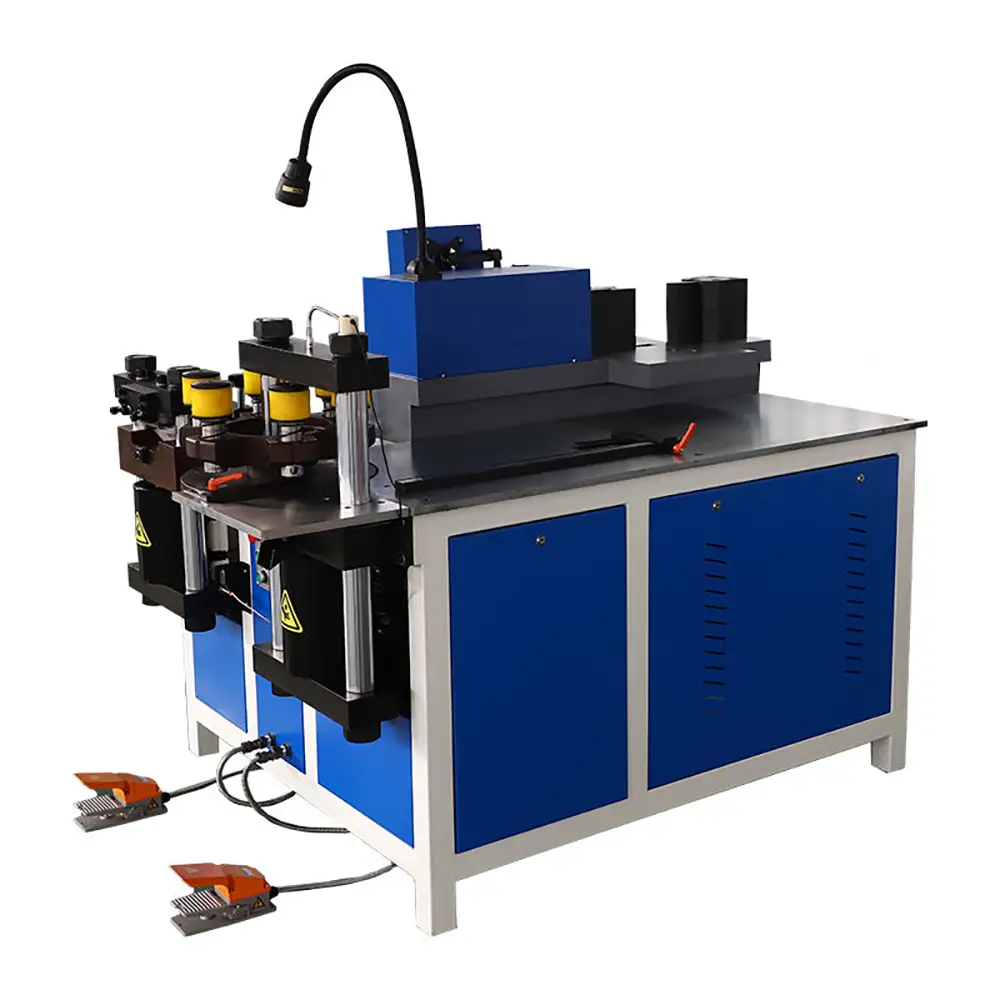
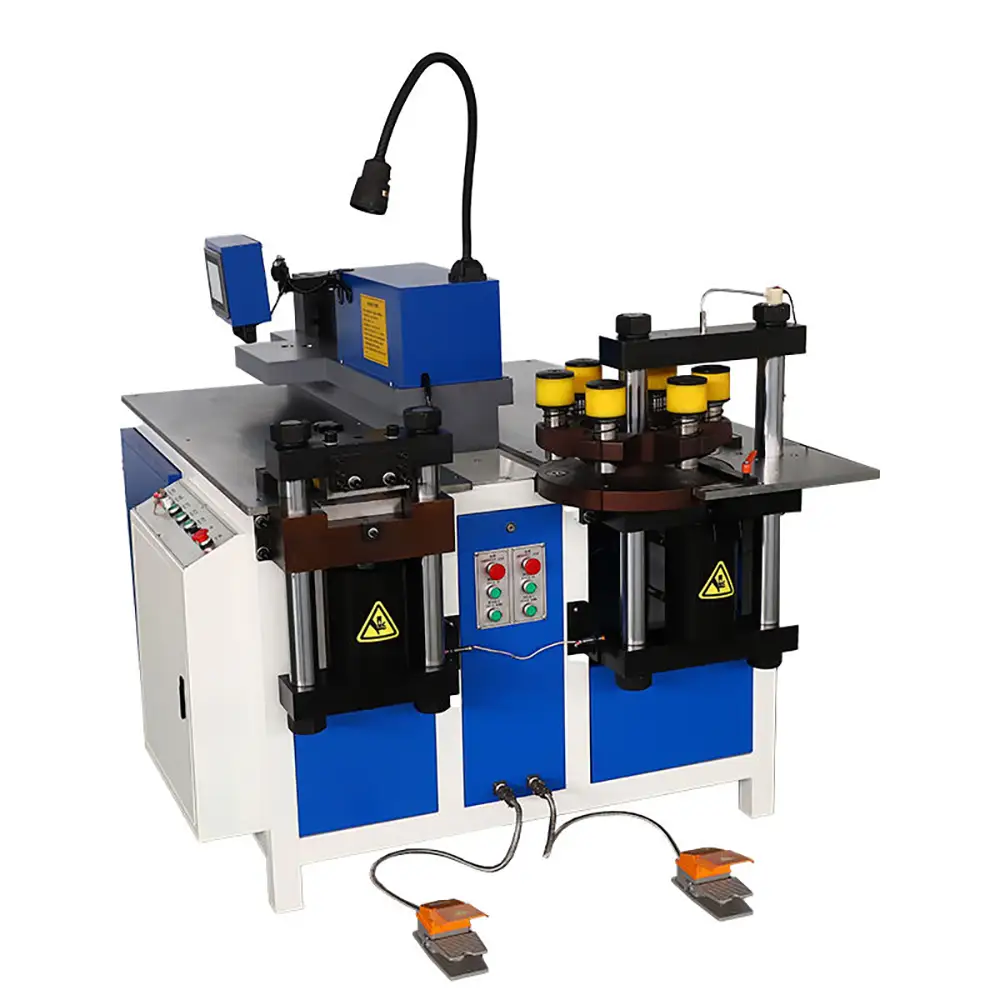
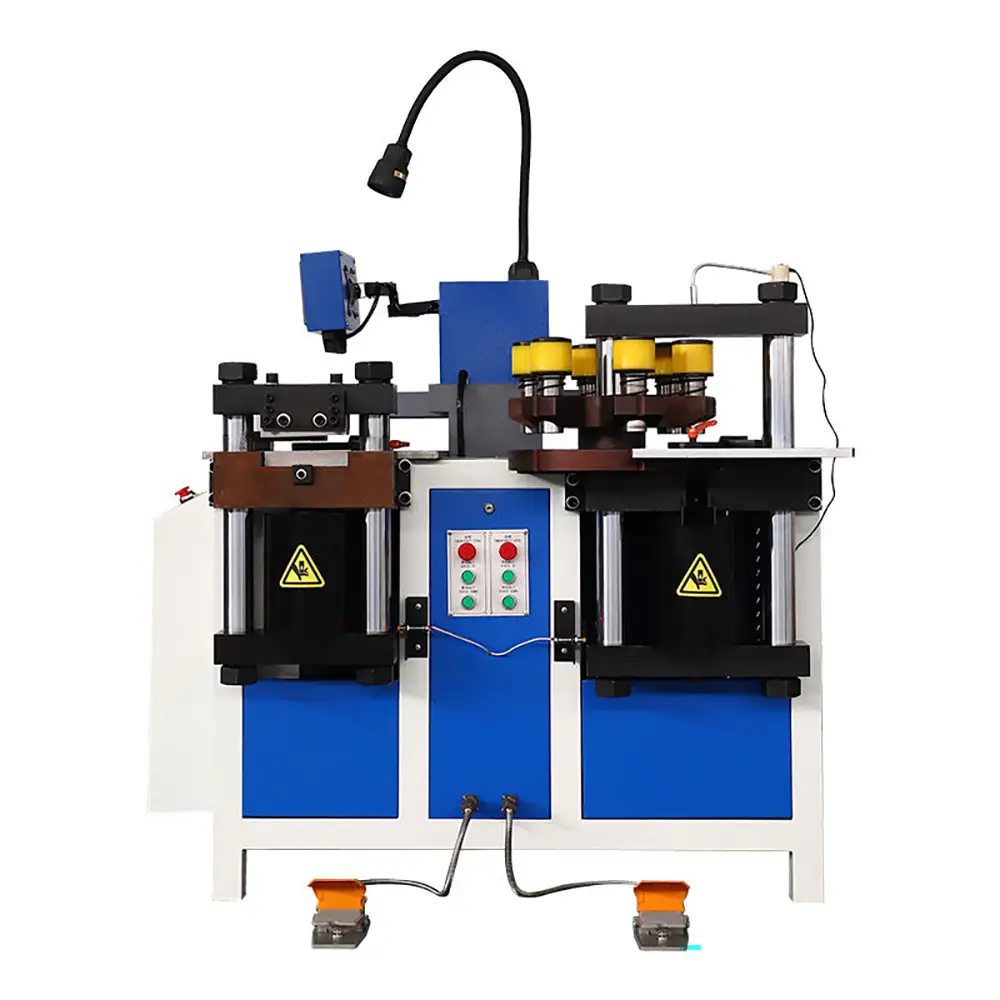
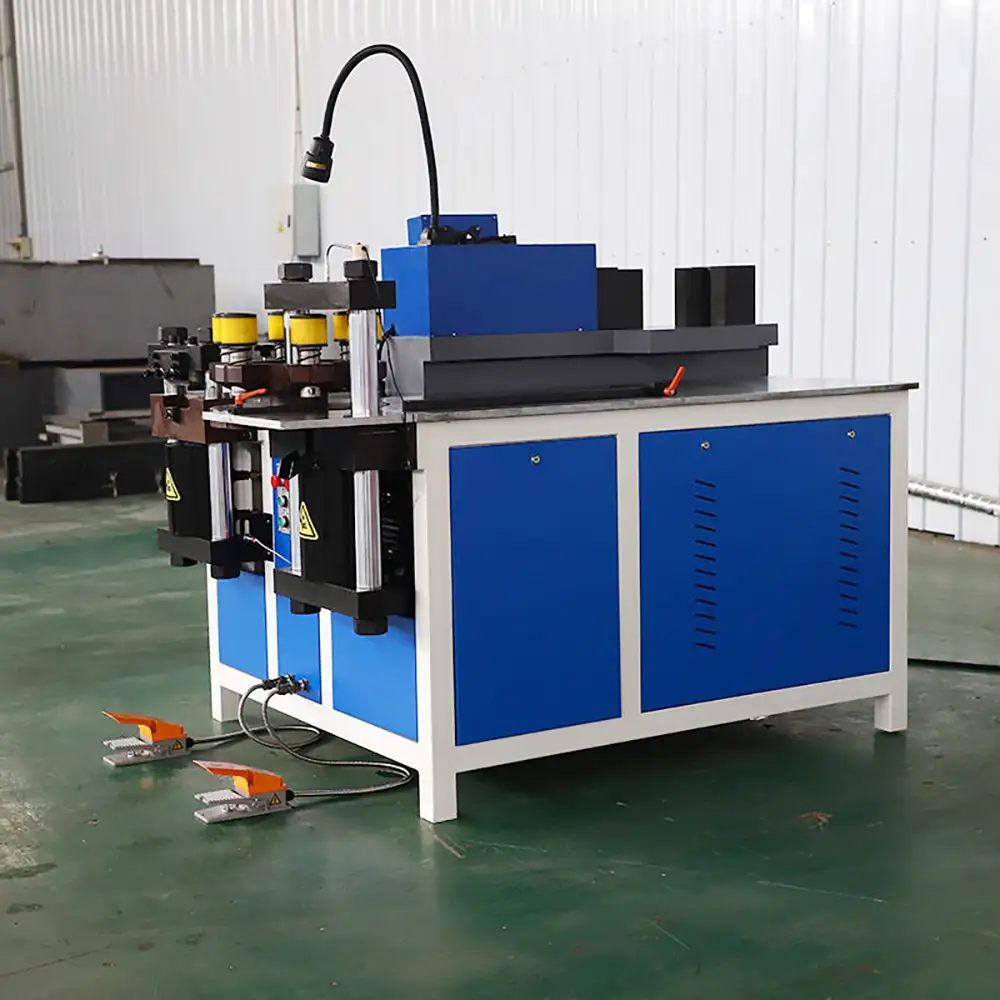
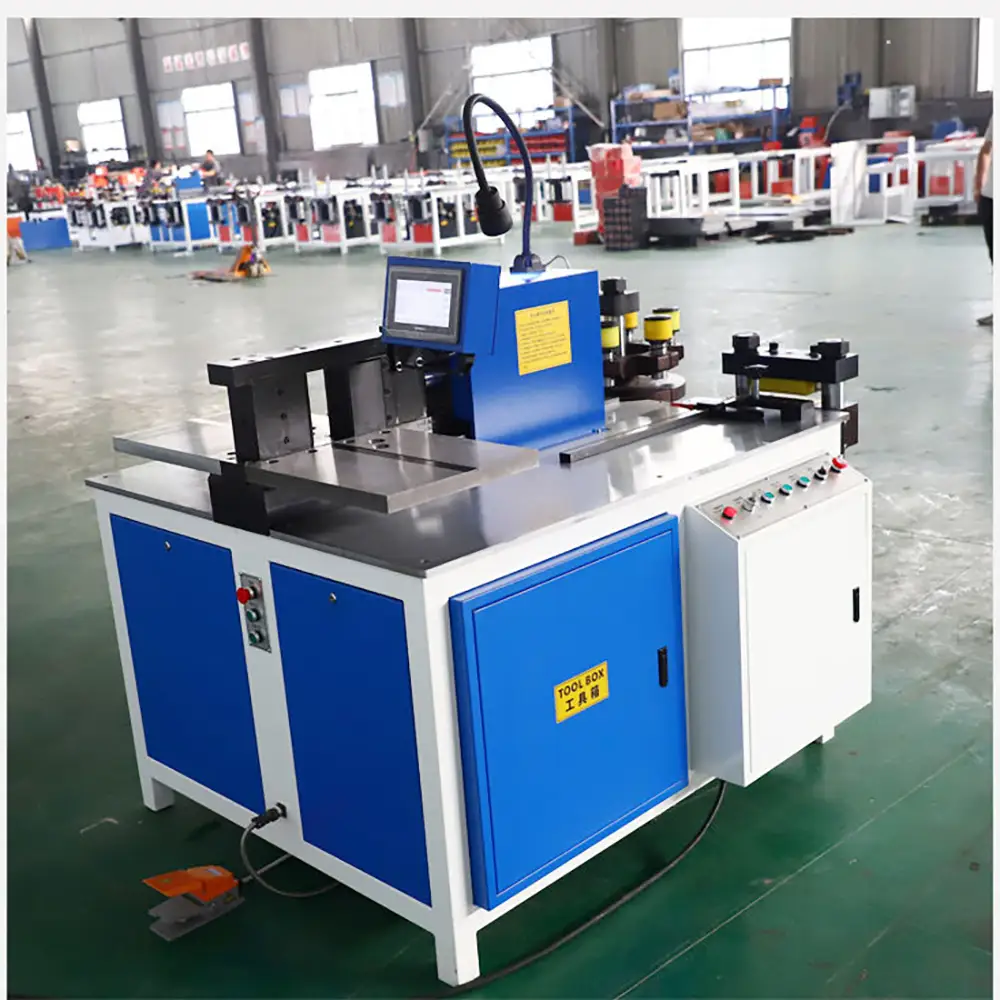
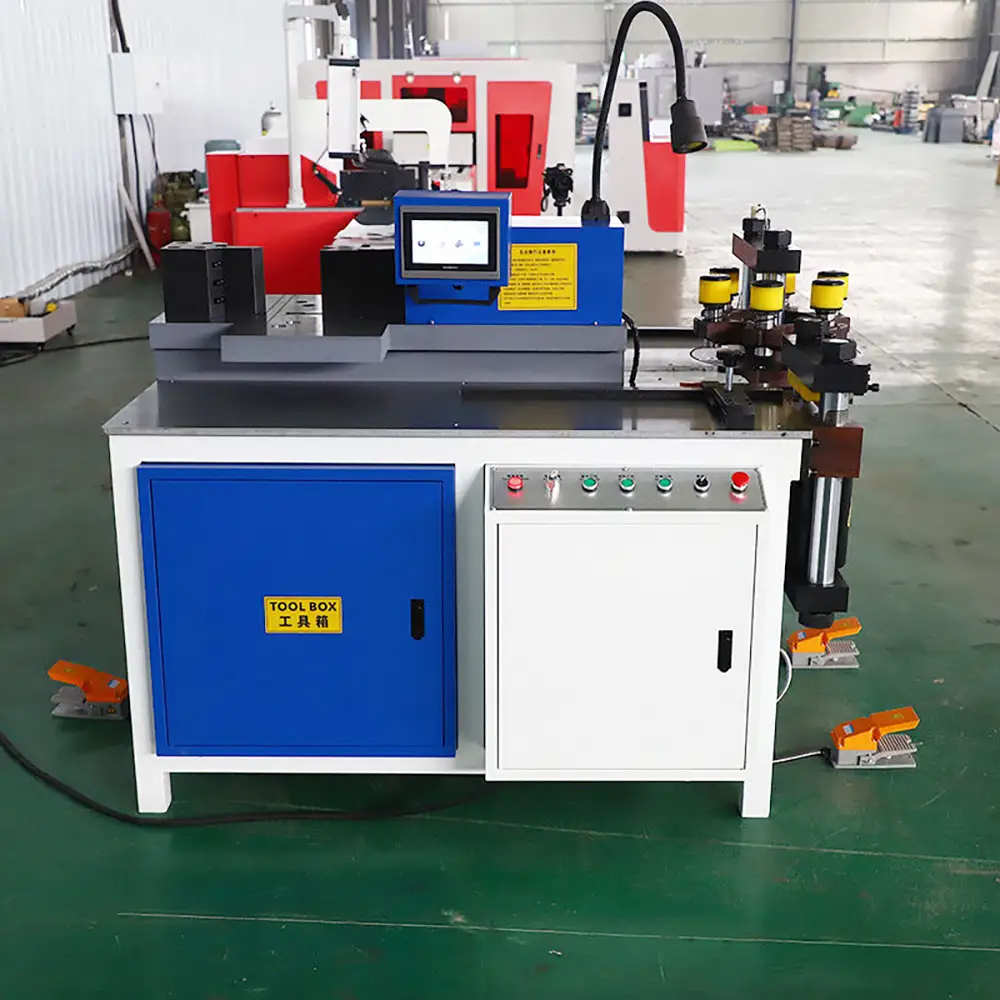
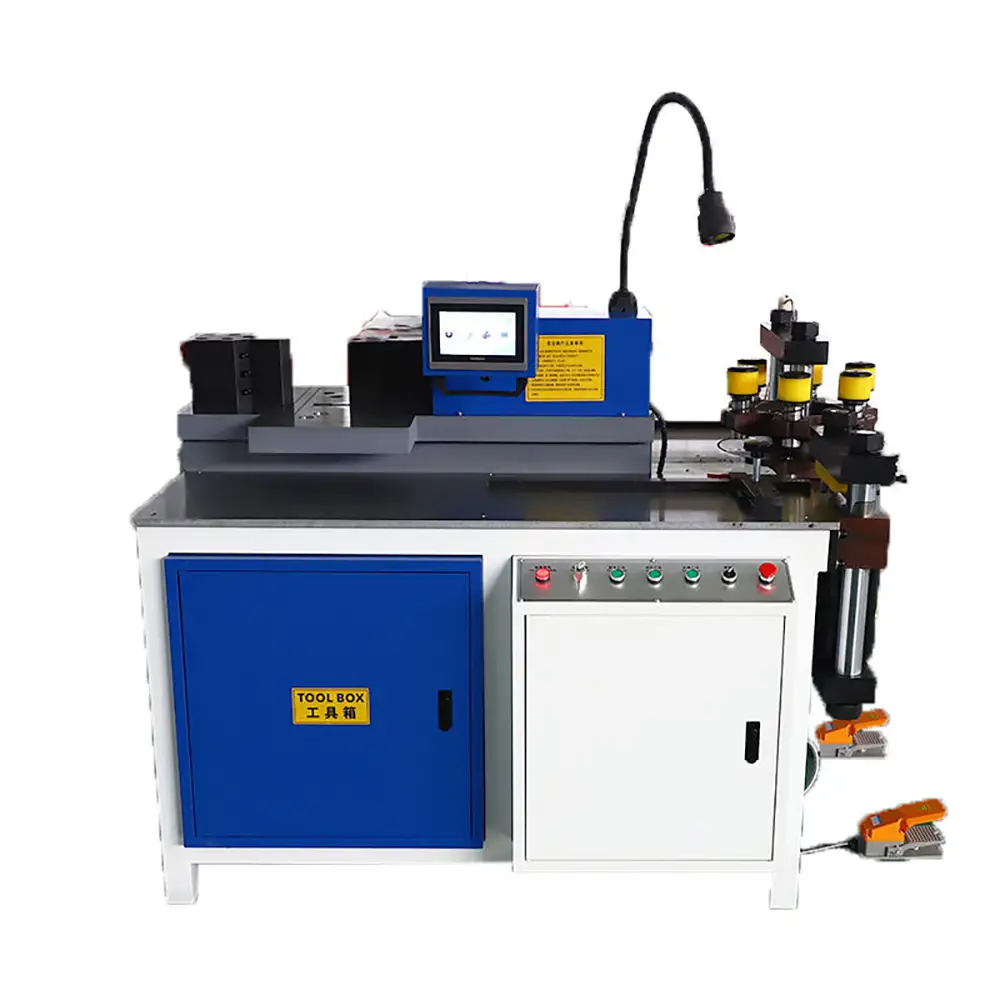
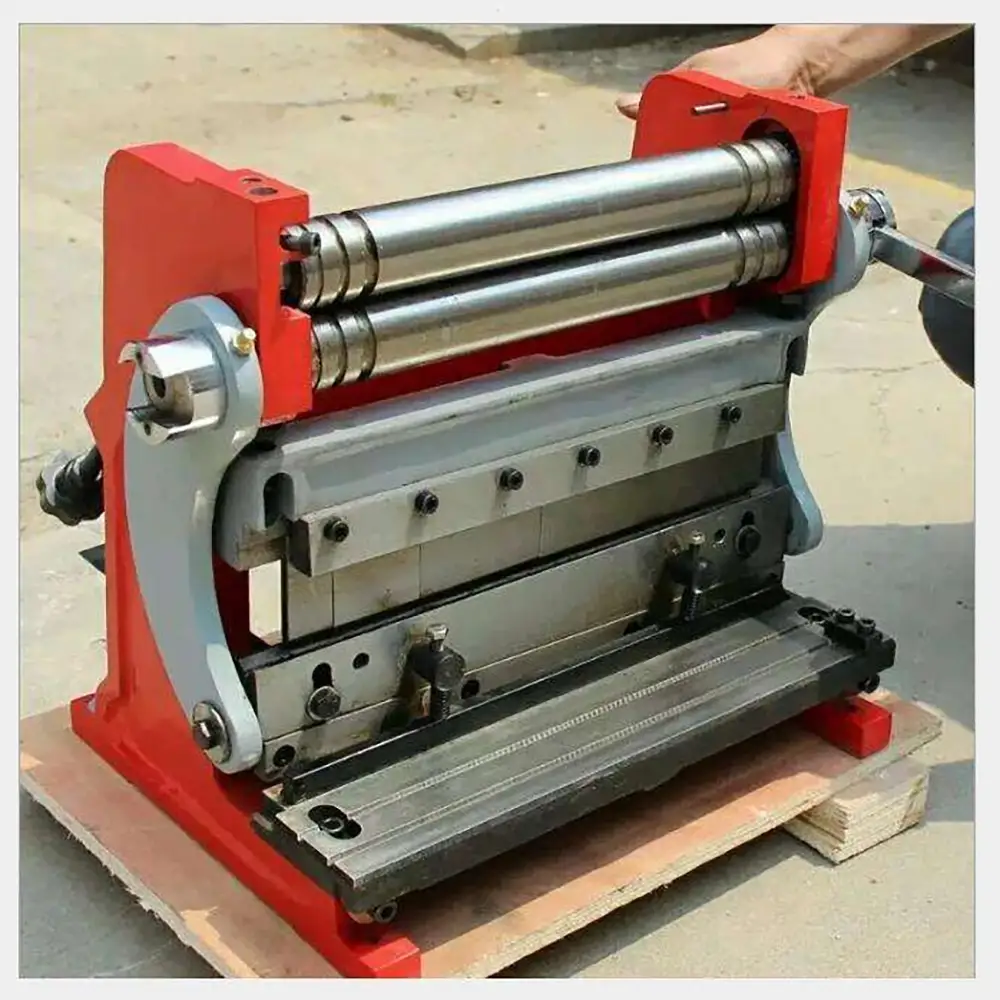
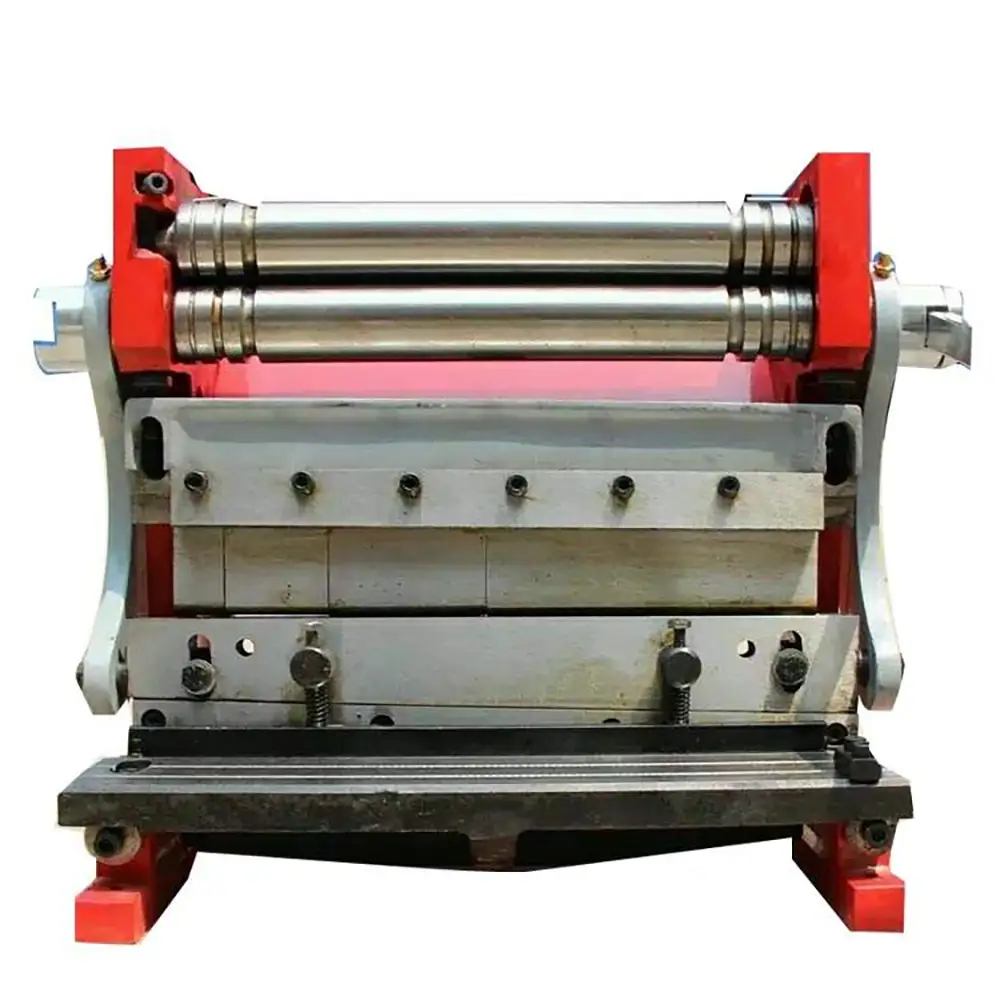
Multifunctional busbar machine, CNC copper bar processing machine, busbar machine, three in one open punching and bending closed copper plate machine.Customized consultation with sellers.The busbar processing machine is used for punching, shearing, and bending copper bars
|
Maximum punching force (kn) |
400 |
|
Punching processing range(mm) |
OD 4.3-36 |
|
Max. Thickness (mm) |
16mm |
|
Max. Width (mm) |
160mm |
|
Maximum shear force (KN) |
500 |
|
Maximum shear width(mm) |
160 |
|
Max. Shearing Thickness (mm) |
16 |
|
Maximum bending force(KN) |
400 |
|
Maximum bending width(mm) |
160 |
|
Maximum bending thickness(mm) |
16 |
|
Bend width(mm) |
30-100 |
|
Bend U shape minimum width (mm) |
50 |
|
Dimension(mm) |
1780*1400*1200 |
|
Work table dimension(mm) |
1400*1250*1200 |
|
Main motor power(kw) |
3*4kw |
|
Machine weight(T) |
1.5 |
Automatic Busbar Processing Machine for Copper and Aluminum
The Automatic Busbar Processing Machine is an integrated solution designed for processing copper and aluminum busbars used in electrical power distribution and industrial electrical systems. By combining cutting,punching,and bending functions in one machine,the equipment can simplify busbar fabrication and improve production consistency.
Copper and aluminum busbars are widely used in electrical cabinets,switchgear,power distribution panels,transformers,control cabinets,and other electrical equipment. Before installation,busbars often require several operations,including cutting to length,punching mounting holes,and bending into specific shapes.
An integrated busbar processing machine allows these operations to be performed within one coordinated production system,helping reduce repeated workpiece handling and improve workflow efficiency.
Integrated Cutting,Punching and Bending
The main advantage of this machine is its multifunctional design. Instead of using separate machines for every busbar operation,the system can combine several essential processing functions.
Typical operations include:
Copper busbar cutting
Aluminum busbar cutting
Round and elongated hole punching
Busbar bending
Angle bending
Forming operations
Customized hole positioning
Busbar length preparation
The exact processing functions depend on the machine configuration,tooling,and control system.
For manufacturers producing different electrical cabinet designs,the ability to change processing parameters and tooling can provide greater flexibility than a single-purpose busbar machine.
Copper Busbar Processing
Copper is widely used for busbars because of its excellent electrical conductivity and suitability for electrical power distribution applications.
The machine can be configured for copper busbar cutting,punching,and bending according to the required dimensions and processing specifications.
Copper busbars may be processed into straight sections,angled connections,holes,slots,and other shapes required for electrical assemblies.
Because copper is relatively soft compared with many structural metals,proper tooling and clamping are important for maintaining clean cutting edges and accurate hole dimensions.
Actual busbar thickness,width,and processing capacity depend on the machine configuration.
Aluminum Busbar Processing
Aluminum busbars provide a lightweight alternative for certain electrical applications. The material has different mechanical and electrical characteristics from copper,so appropriate processing parameters and tooling should be selected.
The machine can be configured for aluminum busbar cutting,punching,and bending where the machine design supports the required material and dimensions.
When switching between copper and aluminum,the operator should follow the recommended tooling and processing settings rather than assuming that identical parameters will produce the same result.
Busbar Cutting
Cutting is usually the first major operation in busbar fabrication. Accurate cutting allows the workpiece to reach the required length before punching and bending.
A controlled cutting mechanism can help provide repeatable busbar dimensions for production batches. Clean cutting also reduces the amount of secondary finishing that may be required.
Cutting performance depends on busbar width,thickness,material,tool condition,and machine configuration.
For high-volume production,the cutting function can be incorporated into a standardized workflow where material is positioned,cut,and transferred to the next processing operation.
Busbar Punching
Electrical busbars often require holes for bolts,terminals,connectors,and mounting points. The punching function allows holes to be created at specified positions according to the electrical assembly design.
Common punching patterns can include round holes,elongated holes,and other shapes supported by the selected tooling.
Accurate positioning is important because even a small deviation can make installation difficult when the busbar must align with electrical terminals or mounting structures.
For customized projects,customers should provide drawings showing hole diameter,slot dimensions,spacing,and location so the appropriate tooling and machine configuration can be selected.
Busbar Bending
Busbar bending is used to create the three-dimensional shapes required inside electrical cabinets and switchgear assemblies.
Depending on the machine design,the bending function can support different angles and forming operations. This allows a flat copper or aluminum strip to be transformed into a customized busbar configuration.
Accurate bending depends on material properties,width,thickness,bend radius,tooling,and machine settings.
Copper and aluminum behave differently during bending,so production parameters should be established according to the actual material and workpiece dimensions.
CNC and Automatic Control
An automatic or CNC-controlled busbar processing machine can help improve production consistency by controlling processing positions and sequences.
Depending on the machine configuration,the control system may store processing parameters or programs for repeated jobs. This can reduce manual measurement and help operators reproduce commonly used busbar designs.
Automatic operation does not necessarily mean completely unmanned production. Material loading,unloading,tool changes,inspection,and other tasks may still require operator involvement depending on the machine and production workflow.
Electrical Cabinet and Switchgear Applications
Busbar processing equipment is widely used in the electrical manufacturing industry. Typical applications include:
Electrical distribution cabinets
Switchgear
Control panels
Power distribution systems
Transformer connections
Industrial control equipment
Motor control centers
Power supply equipment
Electrical enclosures
Renewable energy electrical systems
The processed busbar can be used as an electrical conductor or connection component inside the finished electrical assembly.
Production Efficiency
Combining cutting,punching,and bending operations in one machine can reduce repeated workpiece movement between different machines.
For manufacturers handling multiple busbar designs,the integrated approach can simplify production planning and improve workspace utilization.
Automatic positioning and programmable processing can also reduce manual measurement for repeat orders.
Actual production output depends on the number of operations per workpiece,material dimensions,tool changes,programming,loading and unloading,and operator workflow.
Precision and Quality Control
Busbar fabrication requires dimensional consistency because processed components must fit accurately within electrical cabinets and assemblies.
Quality control should include checking busbar length,width,and thickness as well as hole position,opening dimensions,bending angle,and finished shape.
Tool wear should also be monitored because worn cutting or punching tools can affect edge quality and hole dimensions.
For critical electrical applications,the finished busbar should be inspected according to the customer's drawings and applicable product requirements.
Tooling and Customization
Different busbar designs require different cutting,punching,and bending tools. Tool selection should be based on material,thickness,width,hole shape,bending radius,and final geometry.
Customers can provide busbar drawings or samples when requesting a machine. This allows the manufacturer to evaluate the required tooling and processing sequence.
Custom configurations can also be considered for distributors,electrical equipment manufacturers,and B2B industrial buyers.
Safety and Maintenance
Busbar processing machines involve cutting forces,punching forces,and bending forces. Operators should keep hands away from active processing areas and use the machine's guards,safety controls,and emergency stop systems according to the equipment design.
Regular maintenance should include inspection of hydraulic or mechanical systems,tooling,workholding components,electrical connections,and control systems.
Cutting and punching tools should be maintained or replaced when wear begins to affect processing quality.
OEM and B2B Supply
The Automatic Busbar Processing Machine is suitable for electrical cabinet manufacturers,switchgear producers,power equipment manufacturers,industrial electrical contractors,and machinery distributors.
OEM and customized solutions can be evaluated according to busbar material,maximum dimensions,processing operations,automation requirements,and production volume.
Providing detailed drawings,material specifications,and target processing examples can help determine the most suitable machine configuration.
FAQs
1. What is an automatic busbar processing machine?
It is a multifunctional machine designed to perform operations such as cutting,punching,and bending on electrical busbars.
2. Can it process copper busbars?
Yes. Copper busbar processing is a primary application when the machine is configured with suitable tooling and capacity.
3. Can it process aluminum busbars?
Yes,if the machine configuration supports aluminum busbar dimensions and the appropriate tooling and processing parameters are used.
4. What operations can the machine perform?
Depending on the configuration,it can perform busbar cutting,punching,bending,and selected forming operations.
5. What types of holes can it punch?
Common tooling can support round holes,elongated holes,and other shapes depending on the machine's punch and die configuration.
6. Can the machine bend copper busbars?
Yes. It can be configured for copper busbar bending within its specified material and dimensional capacity.
7. Can it bend aluminum busbars?
Yes,provided the machine and tooling are suitable for the aluminum busbar's width,thickness,and required bend geometry.
8. Is the machine CNC controlled?
Many automatic busbar processing machines use CNC or programmable control systems,but the exact control configuration depends on the selected model.
9. Can it process different busbar sizes?
The machine can typically process a range of busbar dimensions within its rated working capacity. Exact width and thickness should be confirmed before purchase.
10. What industries use busbar processing machines?
Typical users include electrical cabinet manufacturers,switchgear manufacturers,power equipment companies,and industrial electrical system producers.
11. Can the machine be customized?
Yes. Tooling,processing functions,control systems,and machine configuration can be evaluated according to customer requirements.
12. What information is needed for a quotation?
Provide busbar material,cross-section dimensions,required cutting length,hole sizes and positions,bending angles,production volume,and drawings if available.
Why Choose Us
1. Multifunctional Busbar Processing
Combines essential cutting,punching,and bending operations in one integrated production solution.
2. Copper and Aluminum Applications
Designed for suitable copper and aluminum busbar processing with application-specific tooling.
3. Efficient Electrical Fabrication
Reduces repeated workpiece handling between separate processing machines.
4. Flexible Hole Processing
Supports different punching requirements according to the selected punch and die tooling.
5. Controlled Busbar Bending
Provides a dedicated bending function for producing shaped electrical busbars.
6. Programmable Production
Automatic or CNC control can help improve repeatability for recurring busbar designs.
7. Customized Tooling Support
Tooling and machine configuration can be evaluated from customer drawings,samples,and technical requirements.
Prev:
3-in-1 Copper Busbar Cutting Punching Bending Busbar Processing Machine
Next:Sorry, no information
TAG:
Copper Bar Punching Machine,
Copper Bar Cutting Machine,
Busbar Punching And Bending Machine,
CNC Busbar Processing Machine,
Electrical Panel Busbar Machine,
Busbar Bending Equipment,
Automatic Copper Busbar Machine,
Switchgear Busbar Processing Machine,
Copper Busbar Bending Machine,
Copper Busbar Punching Machine,
Copper Busbar Processing Machine,
Copper Busbar Fabrication Machine,
Busbar Bending Machine,
Busbar Punching Machine,
Busbar Fabrication Machine,
Automatic Busbar Processing Machine,
Copper Busbar Cutting Machine,
Busbar Cutting Machine,
Busbar Cutting Punching Bending Machine,
Copper Bar Bending Machine,
Metal Busbar Processing Machine,
Aluminum Bar Cutting Machine,
Busbar Cutting Equipment,
Aluminum Bar Punching Machine,
Aluminum Bar Bending Machine,
Electrical Panel Fabrication Machine,
Switchgear Manufacturing Machine,
Power Equipment Busbar Machine,
Industrial Busbar Fabrication Equipment,
Automatic Electrical Busbar Machine,
Related Category:
Automatic Busbar Processing Machine,Copper Busbar Processing Machine,Aluminum Busbar Processing Machine,Busbar Cutting M China, suppliers, manufacturers, factory, customized, wholesale, quotation, made in China