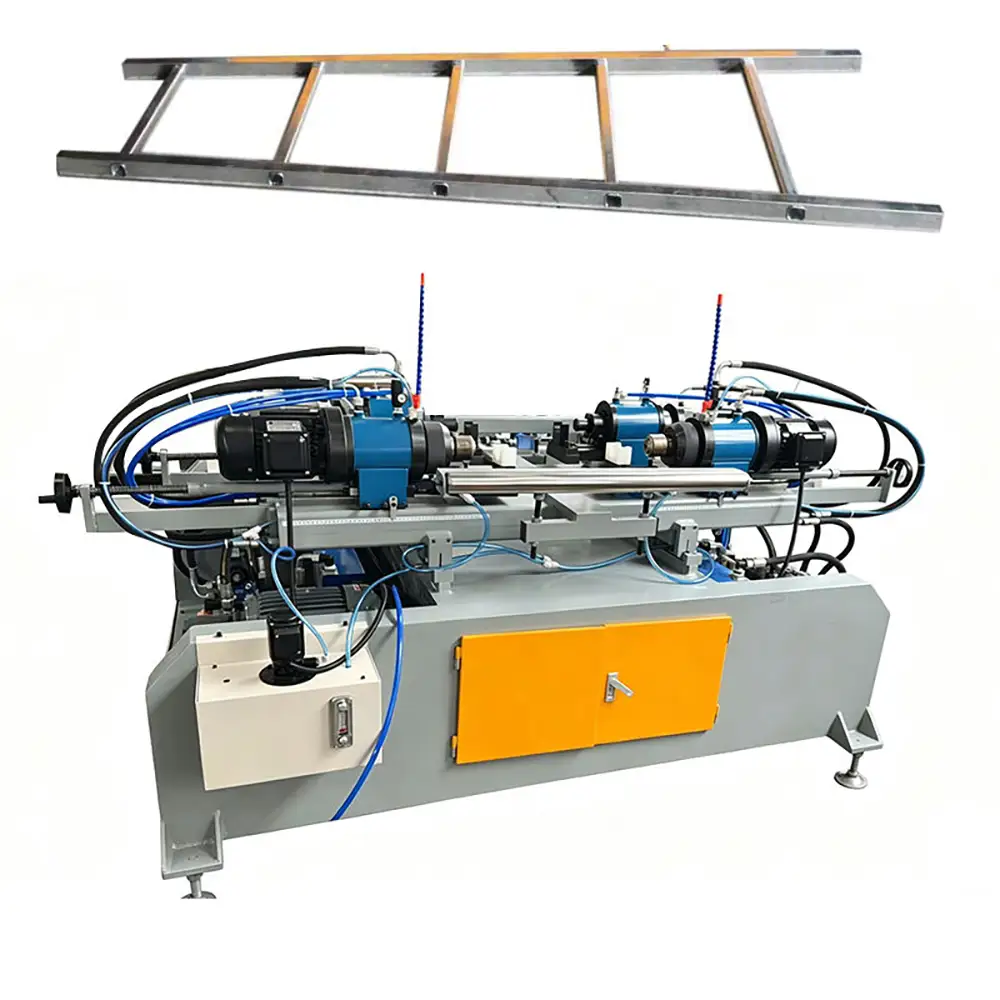
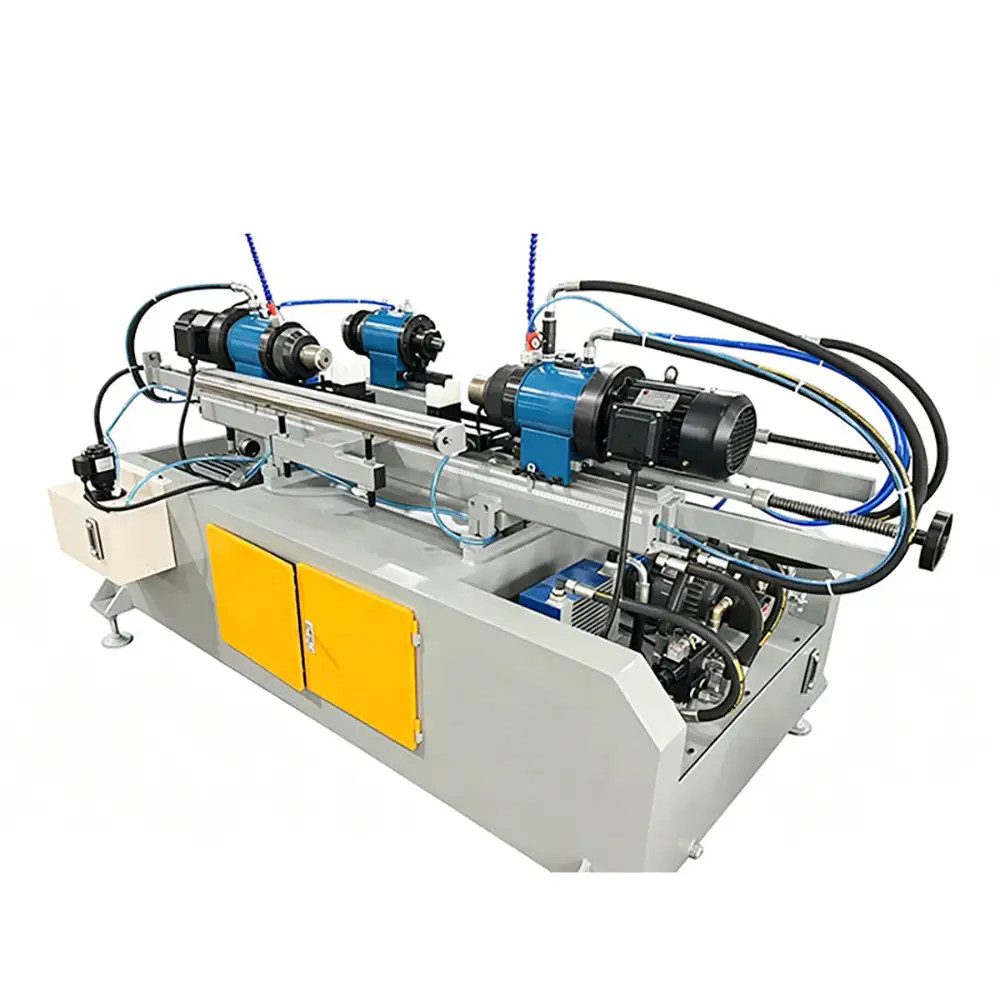
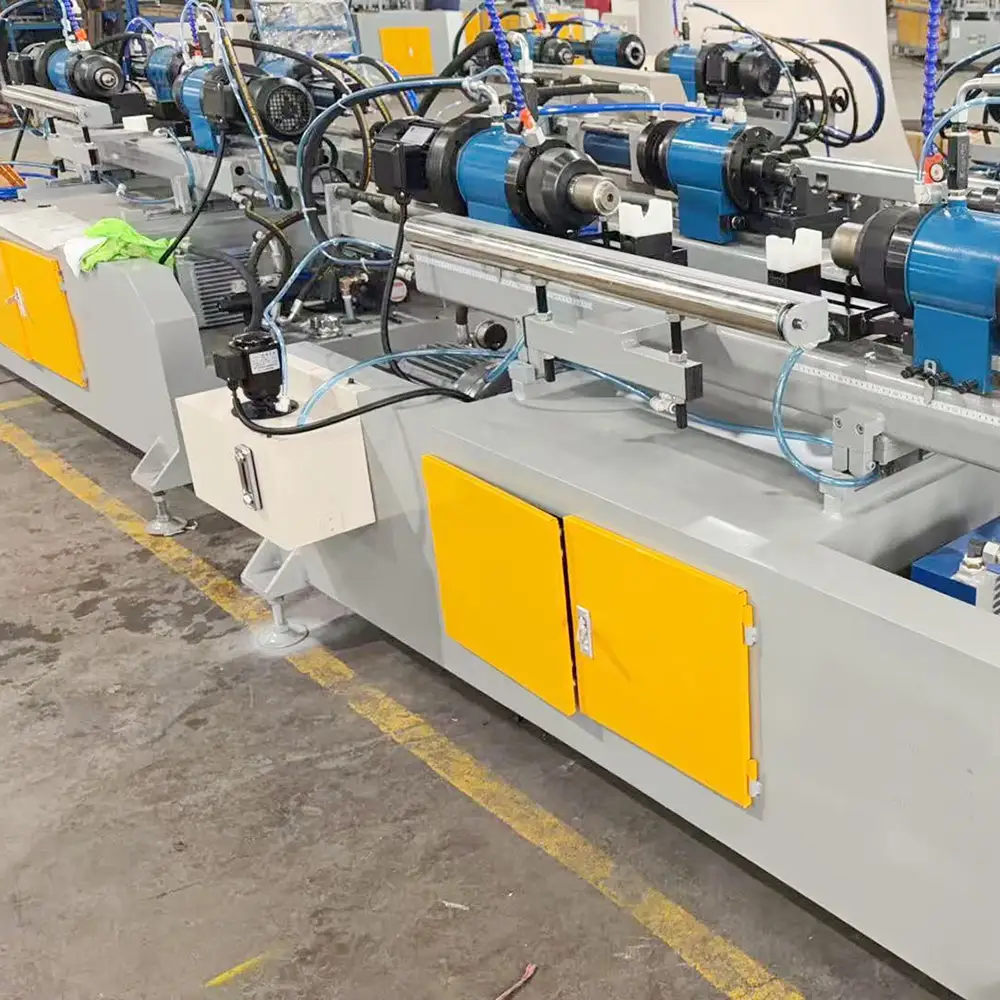
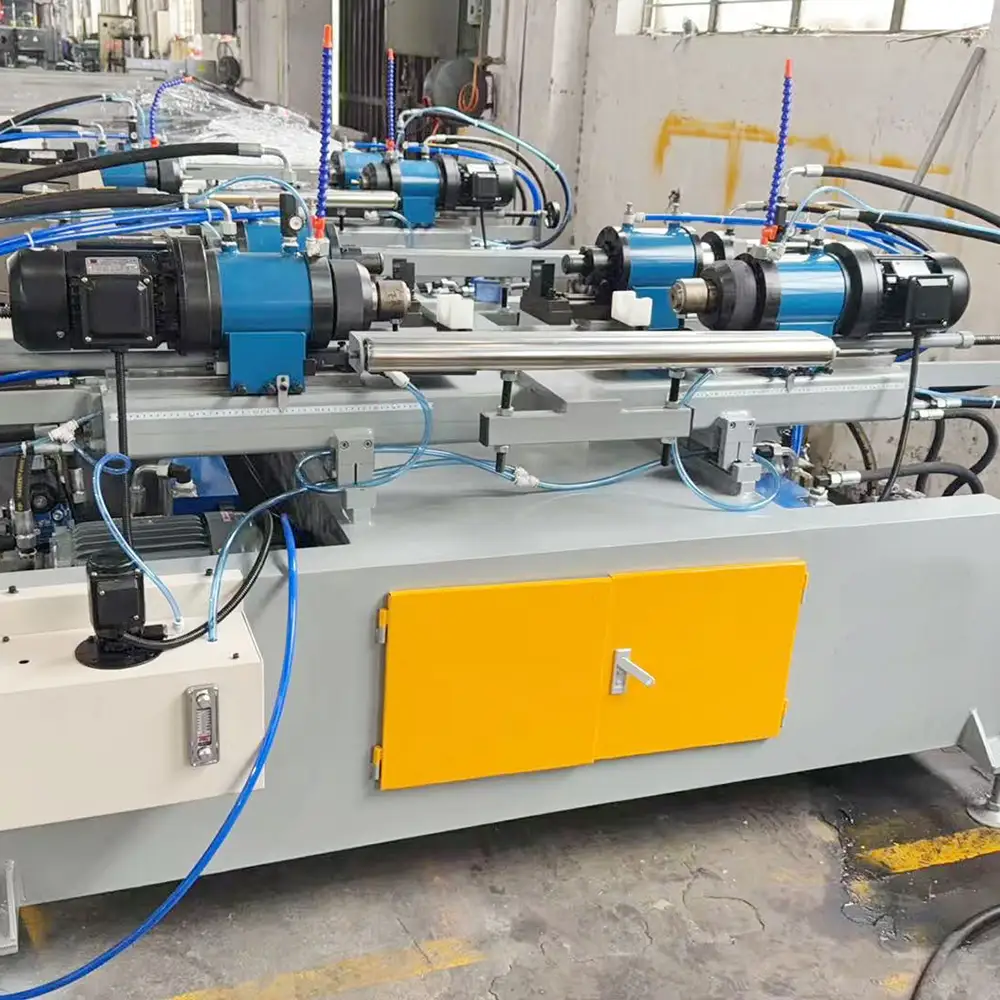
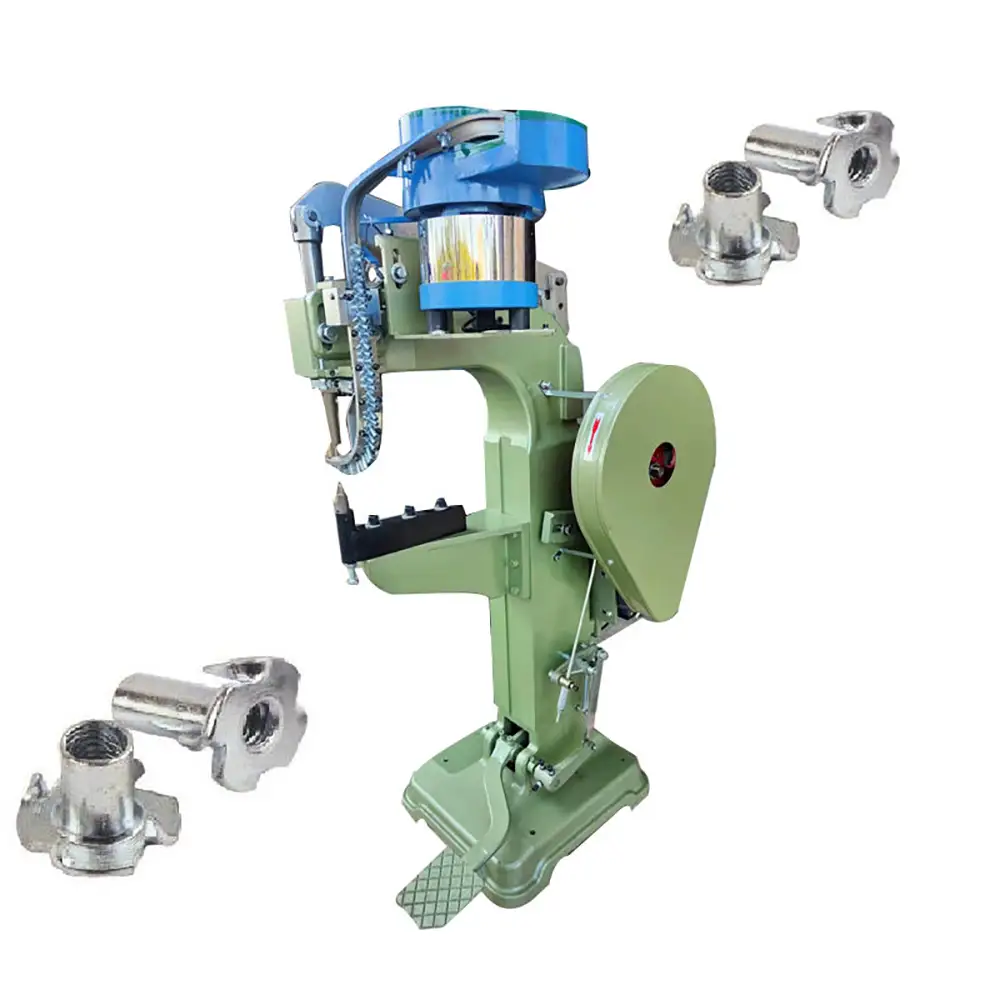
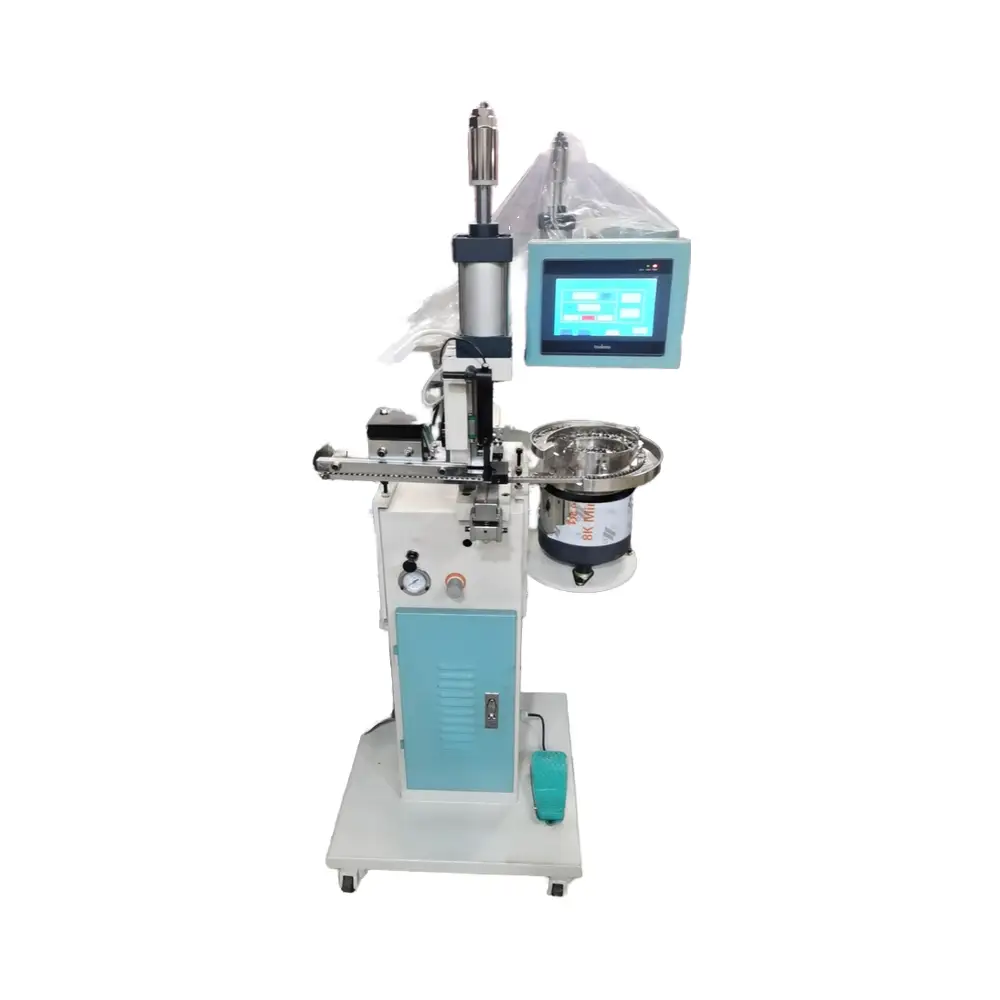
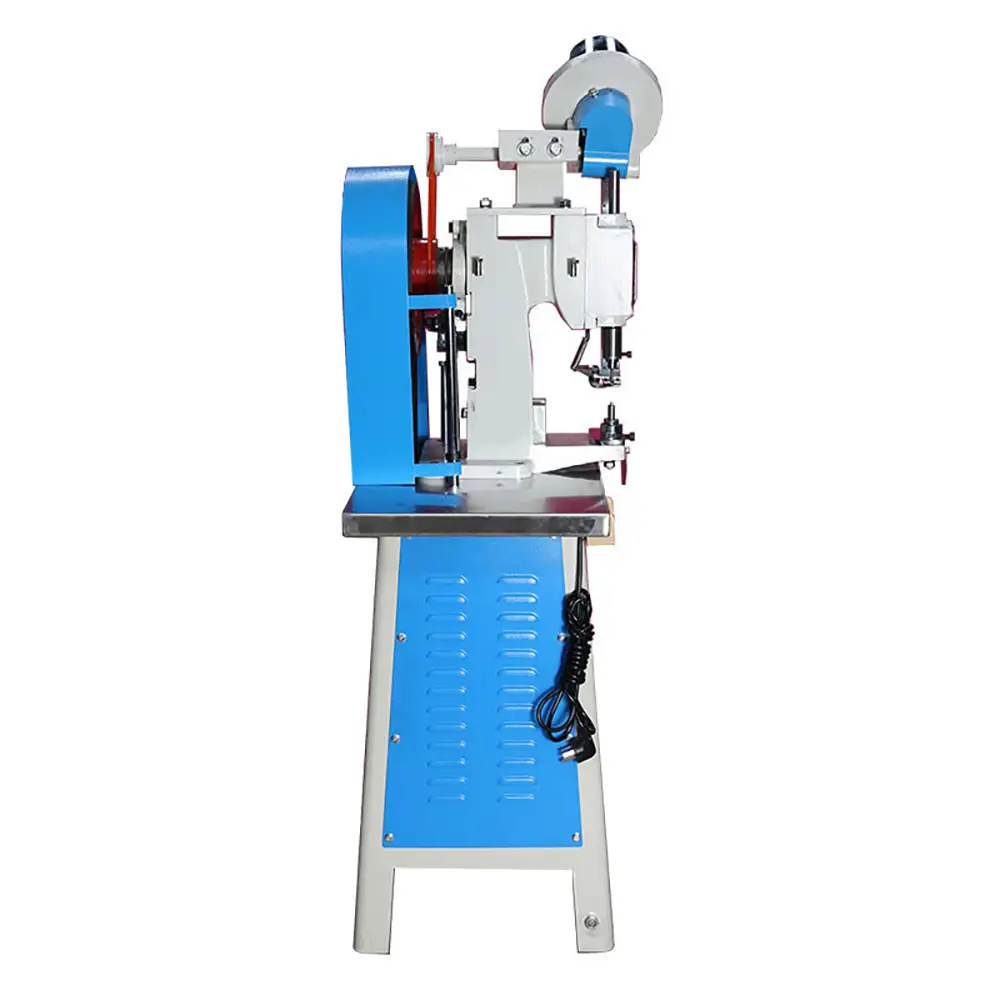
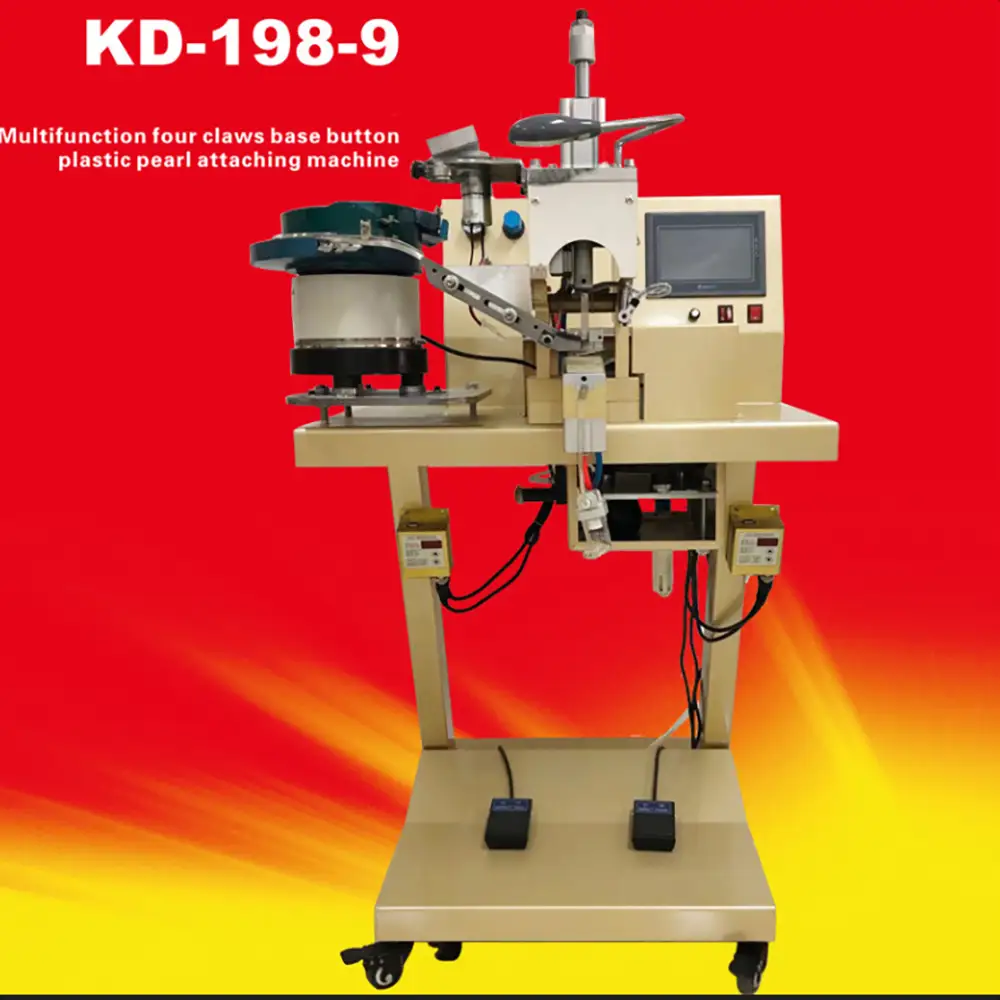
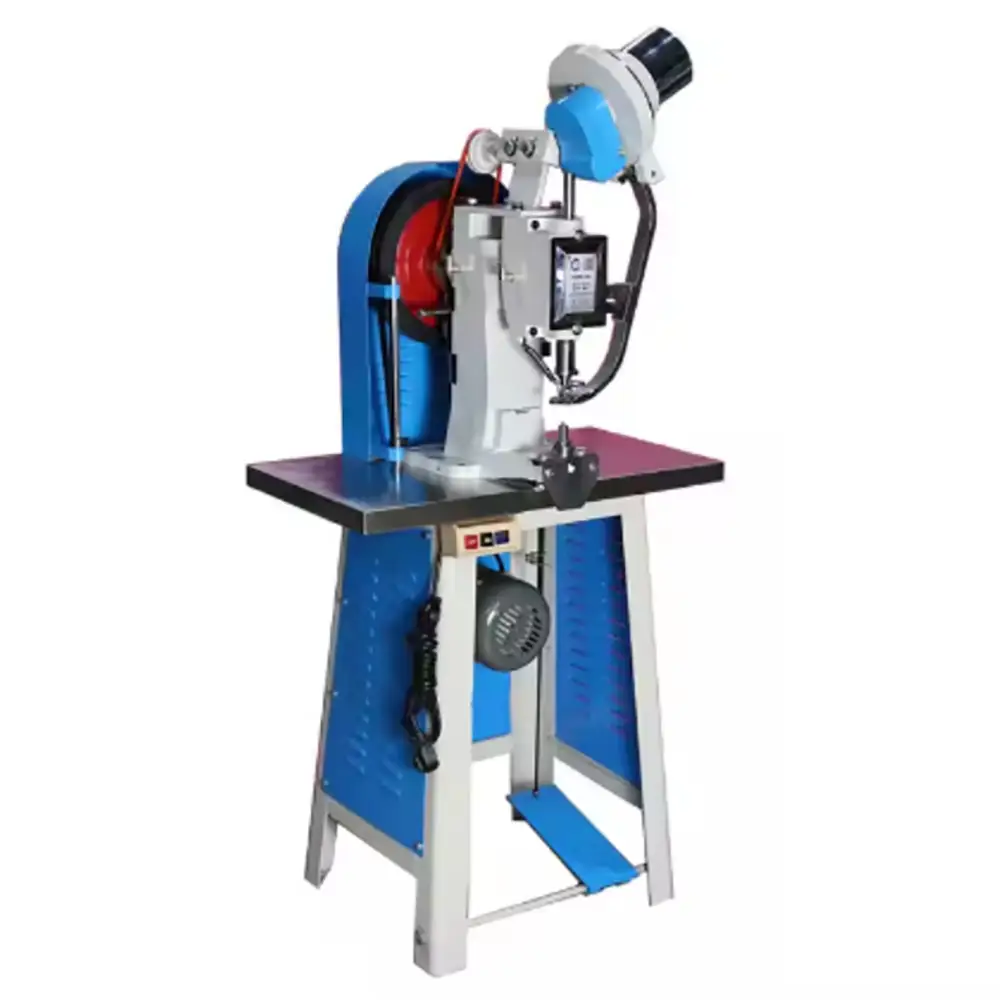
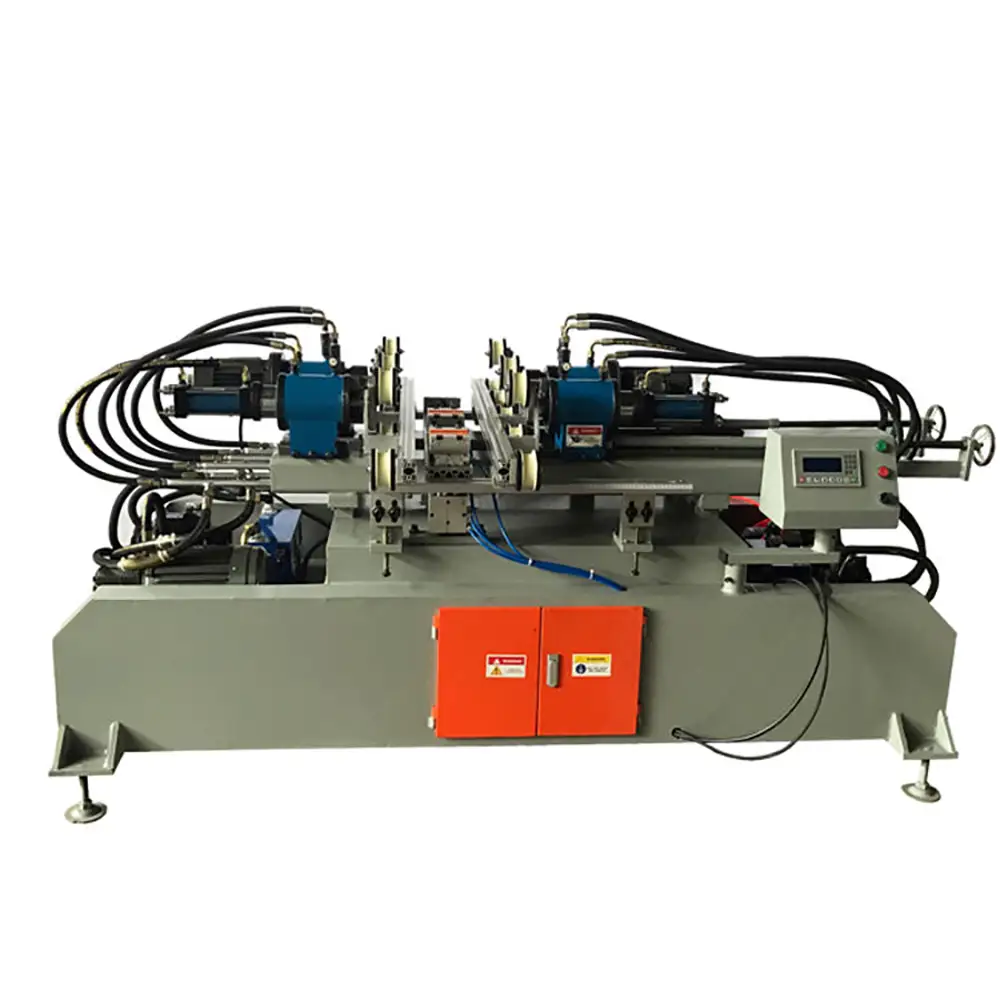
Integrates expanding, riveting in one machine: high efficiency, strong joints, and stable performance. Perfect choice for ladder manufacturers and aluminum product workshops.
2-in-1 Function: Expanding + Riveting at same time * Automatic Control System: PLC & touch screen operation
High Efficiency: Save time and labor, suitable for mass production * Precision Riveting: Uniform ladder width and firm connection
Strong Frame Design: Heavy-duty steel structure, durable and stable
Customizable Molds: For different ladder models and steps, one two or three stations can be chosed
Step Ladders, Extension Ladders, Folding Ladders,Multi-purpose Aluminum Ladders, Joint Ladders, etc.
One machine compatible with multiple ladder types: straight ladders, stepladders, multi-purpose ladders, folding ladders, telescopic ladders, platform ladders and extension ladders
Material compatibility: Suitable for aluminium alloy, fibreglass and other materials; simply replace the mold for different materials
Crossbar Step type: Compatible with D-tube, square tube, round tube and rectangular tube crossbars, Quick-change mould design
Adjustment settings: Quick adjustment of ladder width and step spacing
CE & RoHS certified. SGS audited factory. 1-year warranty + overseas engineer service available. Free sample riveting with video proof before order.
Automatic Aluminum Ladder Expanding and Riveting Machine
The Automatic Aluminum Ladder Expanding and Riveting Machine is specialized equipment designed for aluminum ladder manufacturing and step ladder production lines. It combines ladder expanding, positioning, and riveting operations to help manufacturers improve assembly efficiency, production consistency, and overall manufacturing workflow.
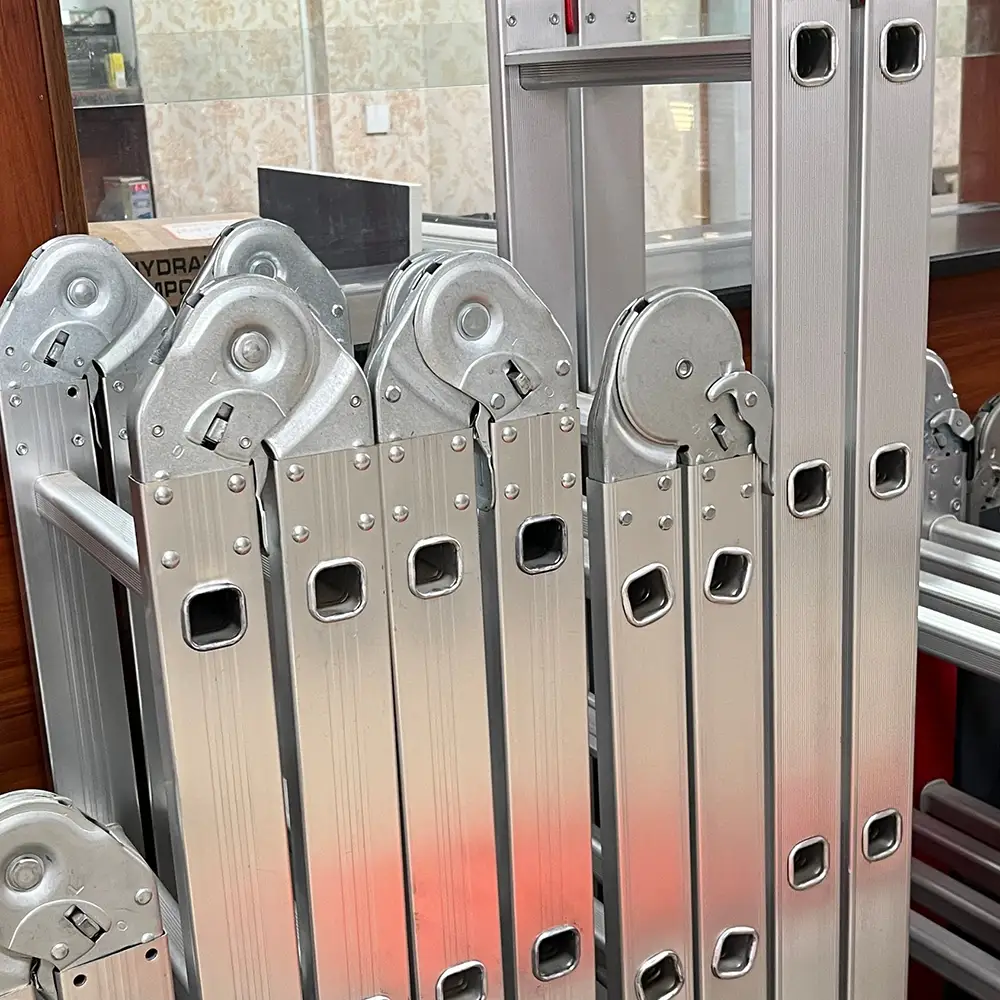
Aluminum ladders are widely used in construction, maintenance, warehousing, household applications, electrical work, commercial facilities, and industrial environments. A typical aluminum step ladder consists of side rails, steps or rungs, support components, hinges, brackets, and other structural parts. Reliable joining of these components is essential for product strength and consistent quality.
Traditional ladder assembly may require multiple manual operations, including component positioning, hole alignment, expansion, riveting, and inspection. These repetitive processes can consume significant labor and may produce variations between operators. An automated ladder expanding and riveting machine provides a more standardized solution for high-volume manufacturing.
Automatic Ladder Expanding and Riveting
The main purpose of this machine is to perform controlled expansion and riveting operations during aluminum ladder assembly. Depending on the production configuration, the machine can be integrated into a dedicated step ladder production line or used as an independent assembly workstation.
The ladder components are positioned using suitable fixtures before the machine performs the required expanding and riveting operations. Controlled positioning helps maintain the relationship between the ladder side rails and rungs, while the riveting process securely joins the components.
Automation helps reduce repetitive manual work and provides a more consistent production process.
Designed for Aluminum Step Ladders
Aluminum is widely used in ladder manufacturing because of its relatively low weight, corrosion resistance, and practical strength-to-weight characteristics. However, aluminum components require appropriate forming and joining processes to achieve reliable finished products.
The machine can be configured around the dimensions and construction of the ladder being manufactured. Different ladder models may vary in width, rung spacing, rail profile, rung dimensions, and joint structure.
Customized fixtures and tooling can therefore be important when a factory produces several ladder models.
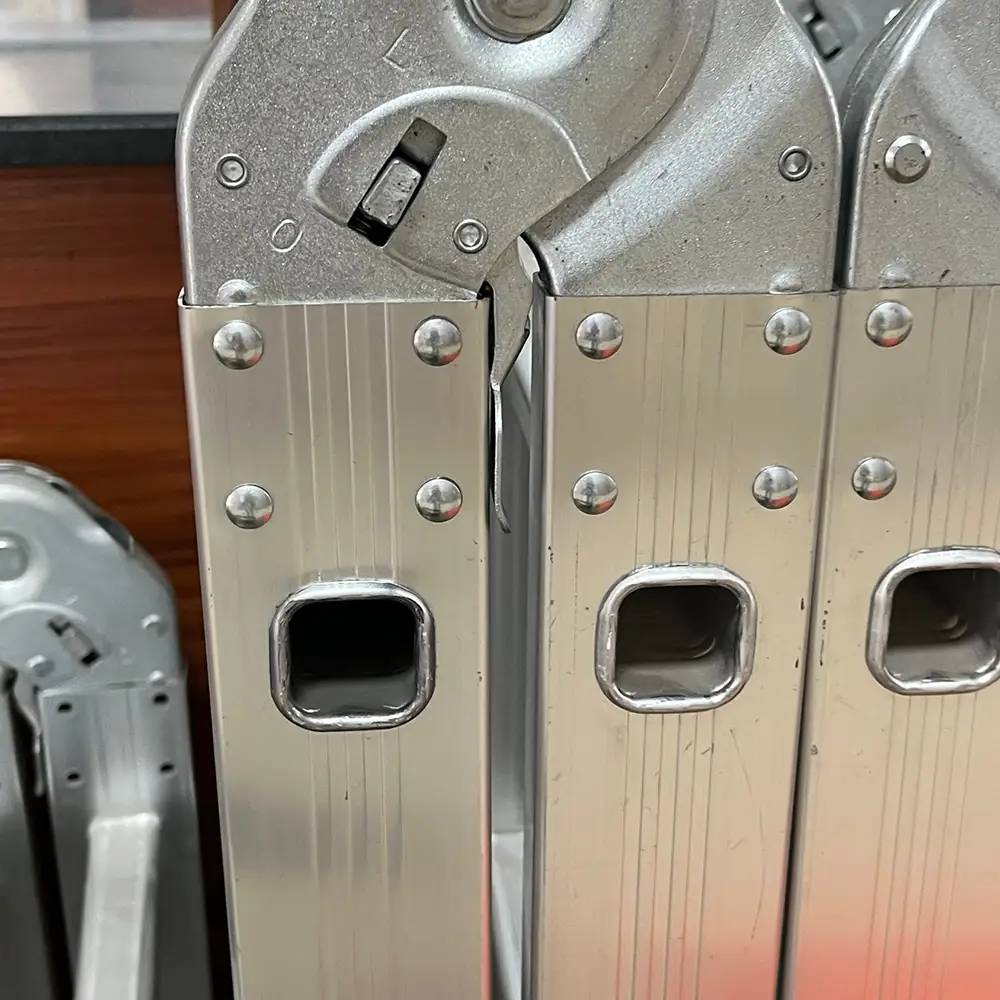
Ladder Rung Riveting
Riveting is a common joining method for aluminum ladder components. During the assembly process, ladder rungs or steps need to be positioned accurately between the side rails before they are permanently fastened.
A dedicated ladder riveting machine helps standardize this operation.
The riveting system applies controlled force to form and secure the rivet. Proper tooling can help maintain consistent rivet deformation and reduce the possibility of loose or improperly formed joints.
For production factories, consistent riveting is important not only for appearance but also for the structural performance of the finished ladder.
Ladder Expanding Process
The expanding operation is used in certain ladder manufacturing processes to help establish or secure the connection between ladder components. The exact expanding method depends on the ladder structure, tube or profile design, and joining process.
An automatic expanding system can help reduce manual adjustment and improve repeatability.
Before selecting equipment, manufacturers should evaluate the ladder profile, tube dimensions, material thickness, joint design, and required expansion amount. These factors determine the appropriate tooling and machine configuration.
Step Ladder Production Line
The automatic expanding and riveting machine can be incorporated into a broader step ladder production line.
A typical aluminum ladder manufacturing workflow may include:
Aluminum Profile Preparation
Cutting to Length
Drilling or Punching
Rung or Step Preparation
Component Positioning
Ladder Expanding
Riveting
Hinge or Support Assembly
Quality Inspection
Final Assembly and Packaging
The exact production sequence depends on the ladder design and factory layout.
By integrating the riveting machine into the production process, manufacturers can create a more organized workflow with fewer repetitive manual operations.
Suitable for Different Ladder Designs
Aluminum ladders are manufactured in many configurations, including household step ladders, folding ladders, platform ladders, extension ladders, industrial ladders, and specialty access equipment.
The machine configuration can be evaluated according to the actual ladder structure.
Important parameters may include:
Ladder Width
Side Rail Profile
Rung Diameter
Rung Length
Material Thickness
Rivet Size
Rivet Position
Rung Spacing
Number of Rungs
Required Production Capacity
Customized fixtures can help maintain stable positioning during production.
Improving Production Efficiency
For factories producing large quantities of aluminum ladders, manual riveting and assembly can become a production bottleneck. Operators may need to repeatedly align rails, position rungs, install rivets, and perform fastening operations.
Automation can help improve the overall production rhythm.
Potential benefits include:
Reduced Manual Assembly
Faster Riveting Operations
Consistent Rung Positioning
Stable Rivet Formation
Improved Production Efficiency
Reduced Operator Fatigue
Better Batch Consistency
Easier Production Management
Actual cycle time depends on the ladder design, number of riveting points, machine configuration, loading method, and operator workflow.
Aluminum Ladder Manufacturing Applications
The machine is primarily intended for aluminum ladder manufacturing but may be suitable for related products when the joining structure and tooling are compatible.
Potential applications include:
Aluminum Step Ladders
Folding Step Ladders
Household Ladders
Platform Ladders
Industrial Ladders
Extension Ladders
Lightweight Aluminum Ladders
Commercial Access Ladders
Maintenance Ladders
Special-Purpose Aluminum Ladders
Application suitability should be confirmed through sample testing when the product structure differs from standard ladder designs.
Customized Tooling and Fixtures
Tooling is one of the most important parts of an automatic ladder riveting system. Different ladder profiles and rung structures require different positioning and riveting arrangements.
Customized fixtures can be designed according to the customer's ladder dimensions and assembly process. Tooling may also be developed to improve repeatability when multiple ladder sizes are produced.
For OEM ladder manufacturers, a customized machine configuration can be particularly useful when the factory has proprietary ladder designs or multiple product specifications.
Quality and Production Control
Consistent assembly quality is essential for ladder manufacturers because the finished product must meet the required structural and functional standards.
The machine helps standardize repetitive assembly operations, while manufacturers can establish inspection procedures for:
Rivet Formation
Joint Position
Rung Alignment
Side Rail Alignment
Component Fit
Overall Ladder Geometry
Finished Product Appearance
Automated equipment does not replace quality control, but it can make the manufacturing process more repeatable and easier to standardize.
Why Choose Us
Specialized Ladder Manufacturing Equipment
We provide machinery solutions designed around aluminum ladder production, expanding, riveting, and assembly applications.
Automatic Production
Automation helps reduce repetitive manual operations and improve production consistency.
Customized Fixtures and Tooling
Machine tooling can be developed according to ladder profiles, rung dimensions, rivet specifications, and production requirements.
Production Line Integration
The machine can be used independently or integrated into a complete step ladder production line.
OEM Manufacturing Support
We support ladder manufacturers, aluminum fabrication companies, OEM producers, and industrial equipment suppliers with application-focused solutions.
Flexible Configuration
Machine configuration can be selected according to ladder dimensions, production volume, automation requirements, and assembly structure.
Main Applications
Aluminum Step Ladder Production
Aluminum Ladder Assembly
Ladder Rung Riveting
Ladder Expanding
Step Ladder Manufacturing
Folding Ladder Production
Household Ladder Manufacturing
Industrial Ladder Production
Platform Ladder Assembly
Aluminum Profile Assembly
FAQS
1. What is an aluminum ladder expanding and riveting machine?
It is specialized equipment for performing expanding and riveting operations during aluminum ladder assembly and step ladder production.
2. What type of ladders can it produce?
It is primarily designed for aluminum step ladders and can potentially be adapted to folding, household, platform, industrial, and other ladder designs with compatible tooling.
3. Can it automatically rivet ladder rungs?
Yes. The machine is designed to perform controlled riveting of compatible ladder components, including rung-to-side-rail connections.
4. Is the machine suitable for aluminum profiles?
Yes. It is intended primarily for aluminum ladder components and profiles, subject to the specific material dimensions and machine configuration.
5. Can the machine be integrated into a production line?
Yes. It can be used as part of an aluminum step ladder production line or operated as a dedicated riveting and assembly workstation.
6. Can different ladder sizes be processed?
Different ladder sizes may require different fixtures or tooling. Customized configurations can be considered for multiple ladder specifications.
7. What information is needed for machine customization?
Useful information includes ladder width, rail profile, rung dimensions, material thickness, rivet specifications, joint structure, and required production capacity.
8. Can the machine perform both expanding and riveting?
Yes. The machine is designed around expanding and riveting operations, with the exact process determined by the ladder construction and tooling.
9. Can customized fixtures be provided?
Yes. Fixtures can be customized according to ladder geometry, component dimensions, and production requirements.
10. What are the advantages of automatic ladder riveting?
Automation can reduce repetitive manual work, improve positioning consistency, stabilize riveting quality, and increase production efficiency.
11. Is sample testing available?
Sample testing is recommended to verify tooling compatibility, component positioning, riveting quality, and the overall production process.
12. Can the machine be used for OEM ladder production?
Yes. OEM manufacturers can develop customized machine configurations according to their ladder designs and production requirements.
13. How do I select the correct machine?
Provide ladder drawings or samples, aluminum profile dimensions, rung specifications, rivet information, production capacity, and the required automation level. These details can be used to determine the appropriate machine configuration.
Prev:
Nut Cold Heading Machine | High Speed Nut Making Machine
Next:
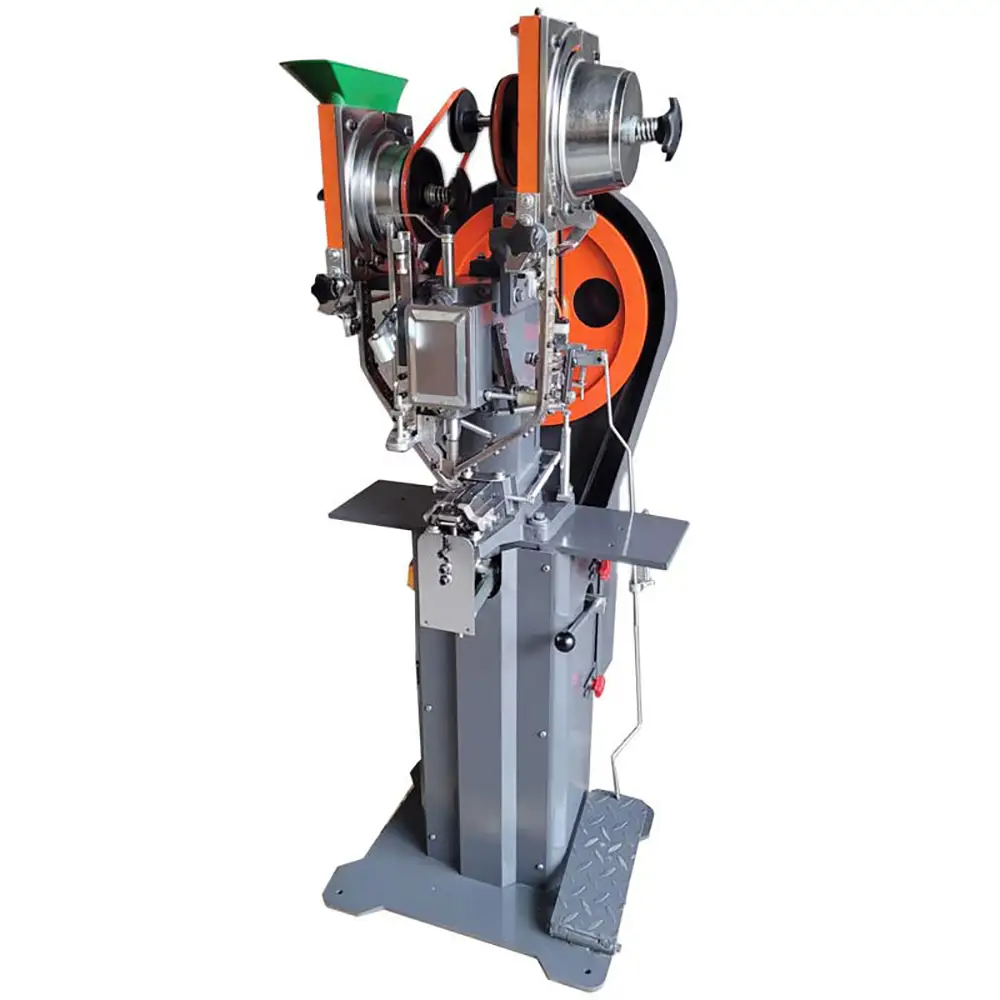
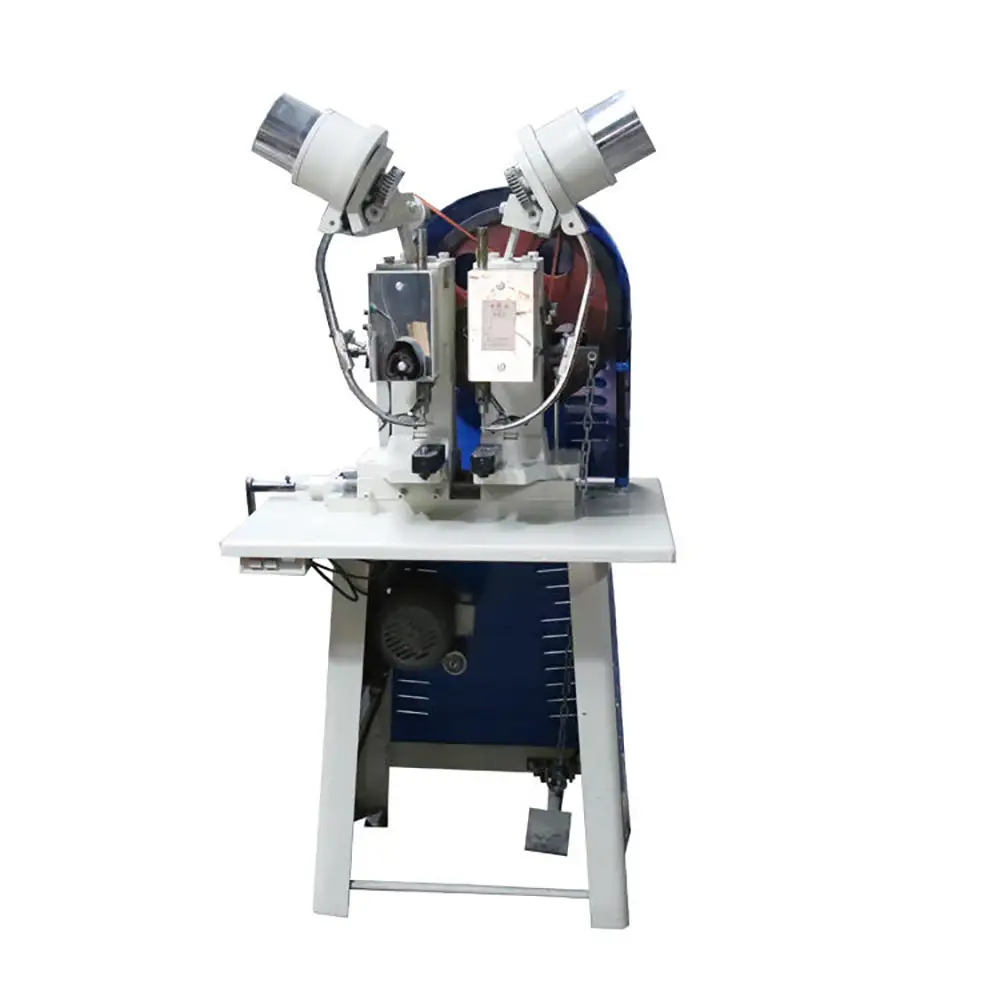
Automatic MultiFunctional Pearl and Bead Attaching Machine Universal Rivet Nailing Machine
TAG:
Step Ladder Production Machine,
Step Ladder Production Equipment,
Aluminum Fabrication Machine,
Aluminum Profile Processing Machine,
Aluminum Ladder Manufacturing Machine,
Automatic Ladder Making Machine,
Aluminum Ladder Production Machine,
Ladder Manufacturing Equipment,
Ladder Making Machine,
Step Ladder Manufacturing Machine,
Automatic Step Ladder Machine,
Aluminum Step Ladder Machine,
Ladder Processing Machine,
Aluminum Folding Ladder Machine,
Industrial Ladder Making Machine,
Ladder Assembly Machine,
Automatic Ladder Processing Machine,
Industrial Riveting Machine,
Industrial Riveting Equipment,
Ladder Rung Riveting Machine,
Aluminum Profile Riveting Machine,
Ladder Rail Riveting Machine,
Automatic Ladder Assembly Equipment,
Automatic Aluminum Ladder Riveting Machine,
Aluminum Ladder Riveting Machine,
Automatic Ladder Riveting Machine,
Ladder Riveting Machine,
Aluminum Ladder Assembly Machine,
Automatic Ladder Assembly Machine,
Ladder Expanding And Riveting Machine,
Related Category:
Automatic Aluminum Ladder Expanding Machine, Aluminum Ladder Riveting Machine China, suppliers, manufacturers, factory, customized, wholesale, quotation, made in China