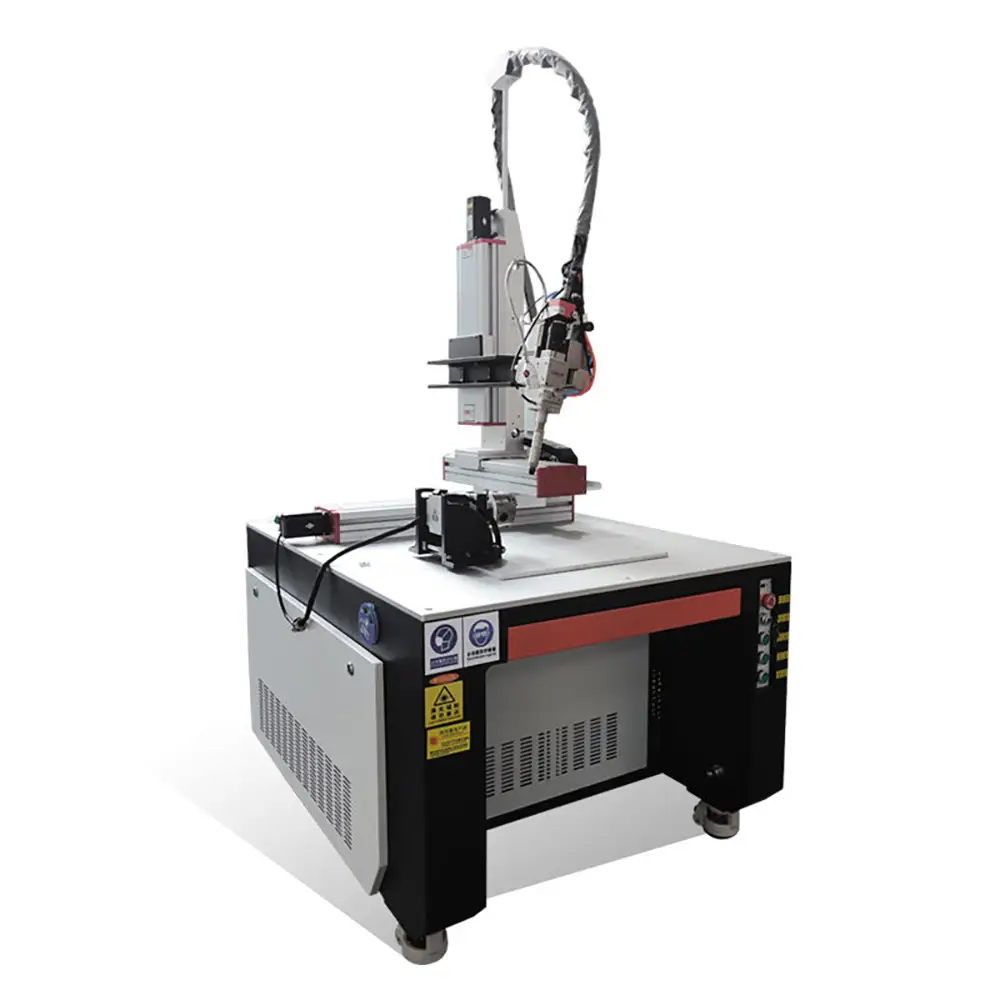
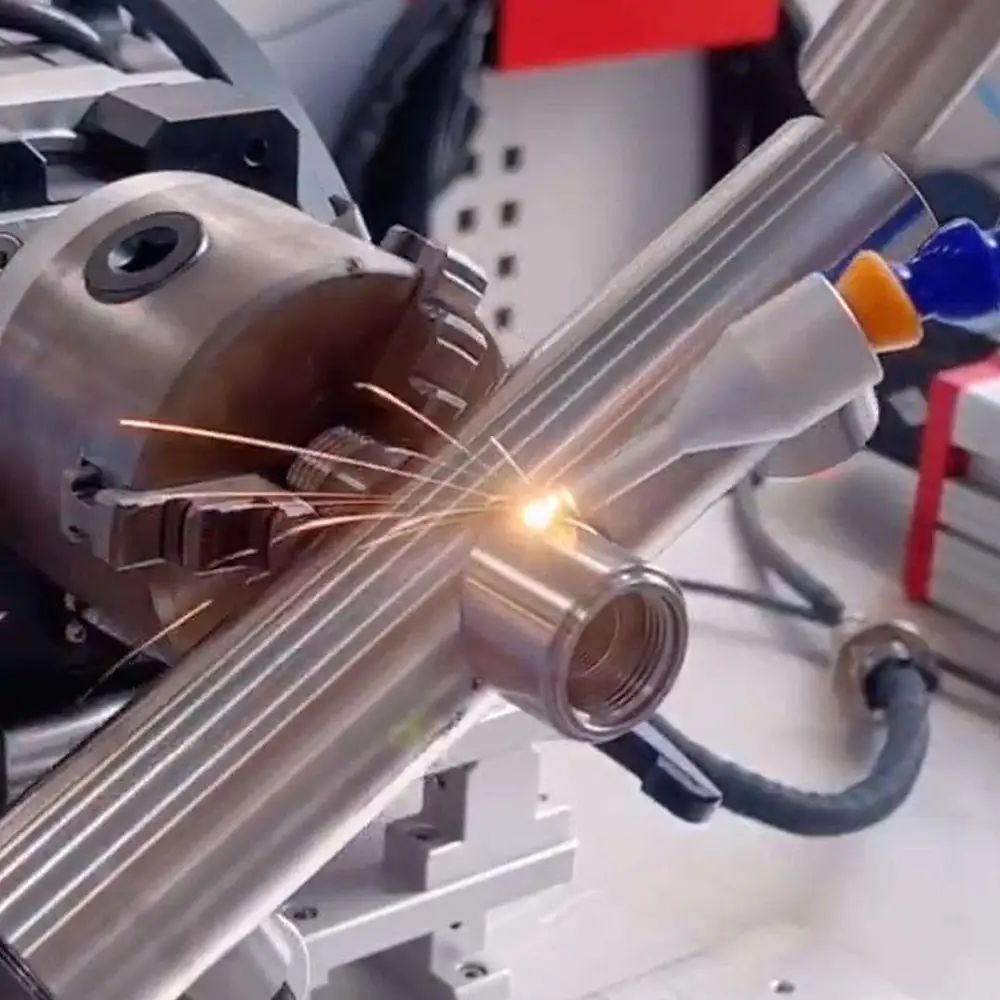
Adopt advanced welding technology, perfect welding effect, automatic welding, welding fast, Almost no consumables, saving labor
and consumables costs, environmental protection and no pollution
1. Computer-controlled, automatic welding, fast welding speed
2. Large platform, suitable for welding workpieces of various sizes
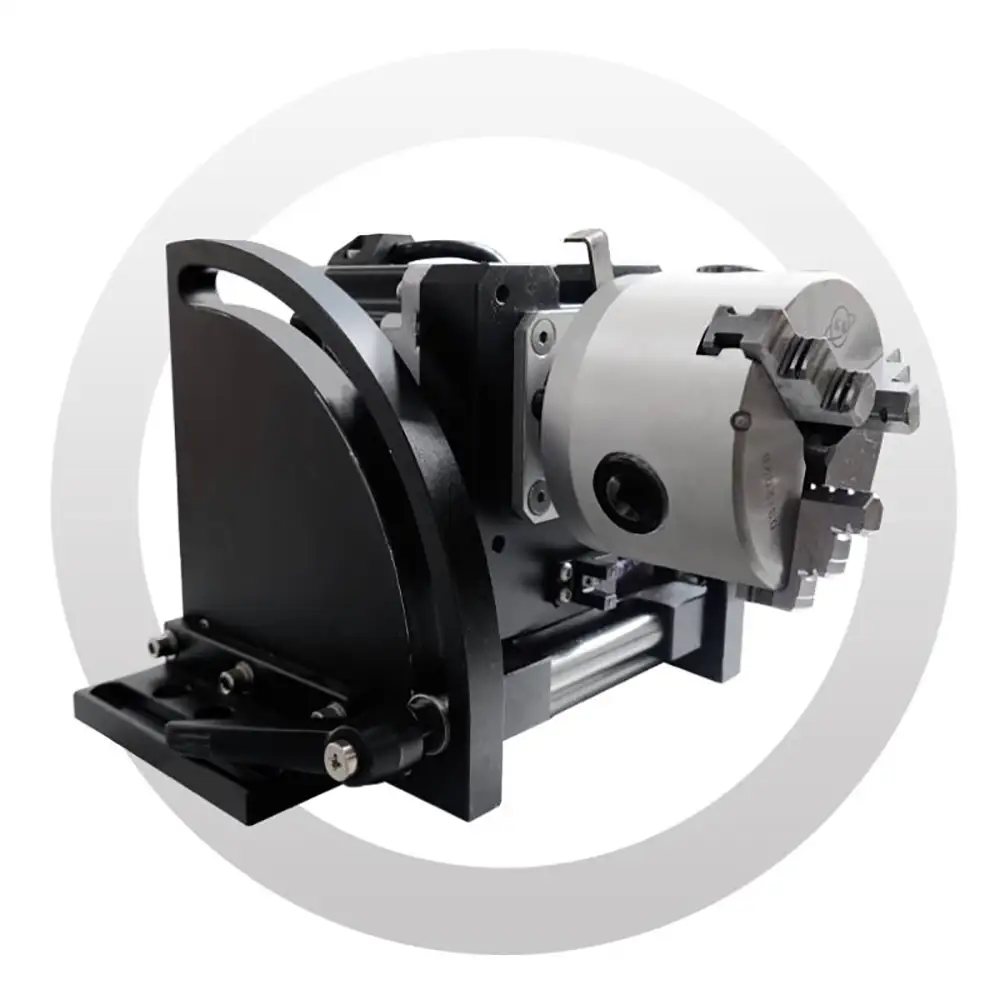
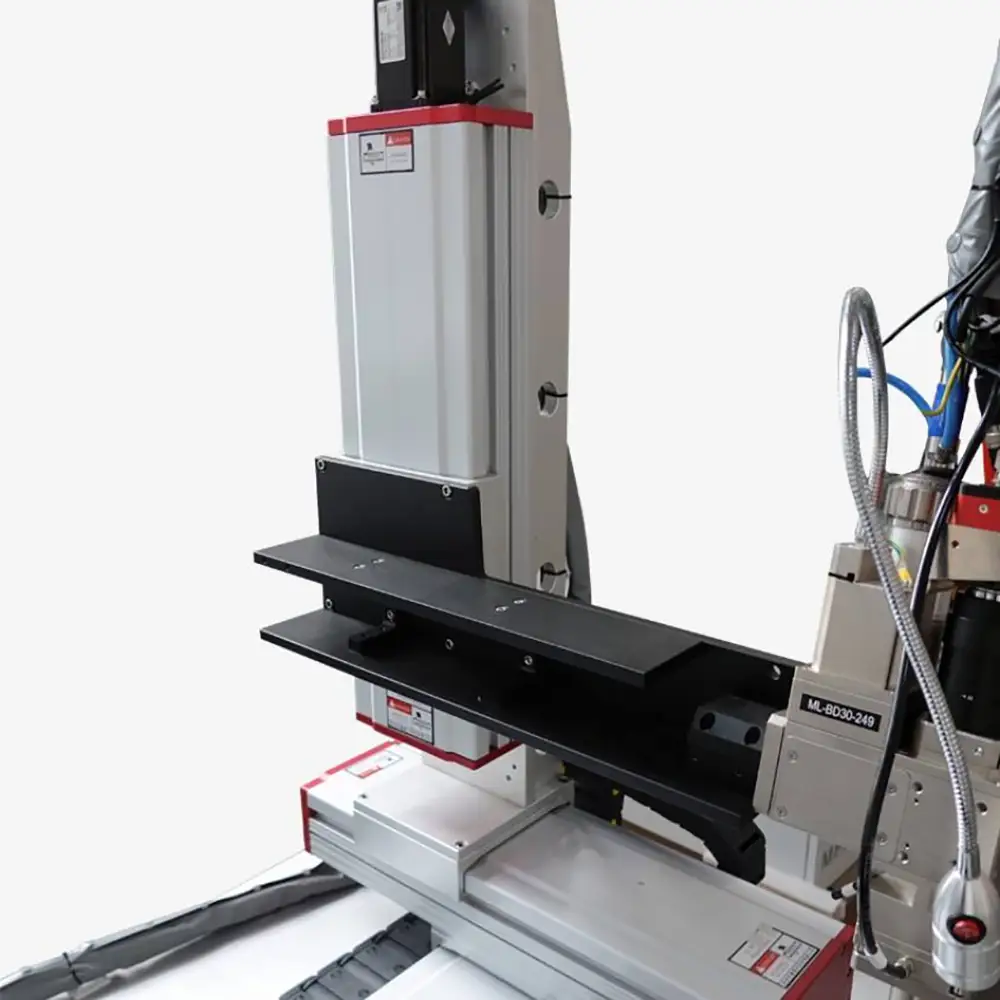
3. 4-D welding platform, XYZ axis control, Fixtures can be flexibly replaced
4. Perfect welding effect, Welding gap smooth and no scars, No blackening and yellowing.
5. Small laser so small heat affected area, Workpiece not deformed after welding
6. 10 times faster than traditional welding, Save labor costs
7. Almost no consumables, Save money
8. Safety and environmental protection
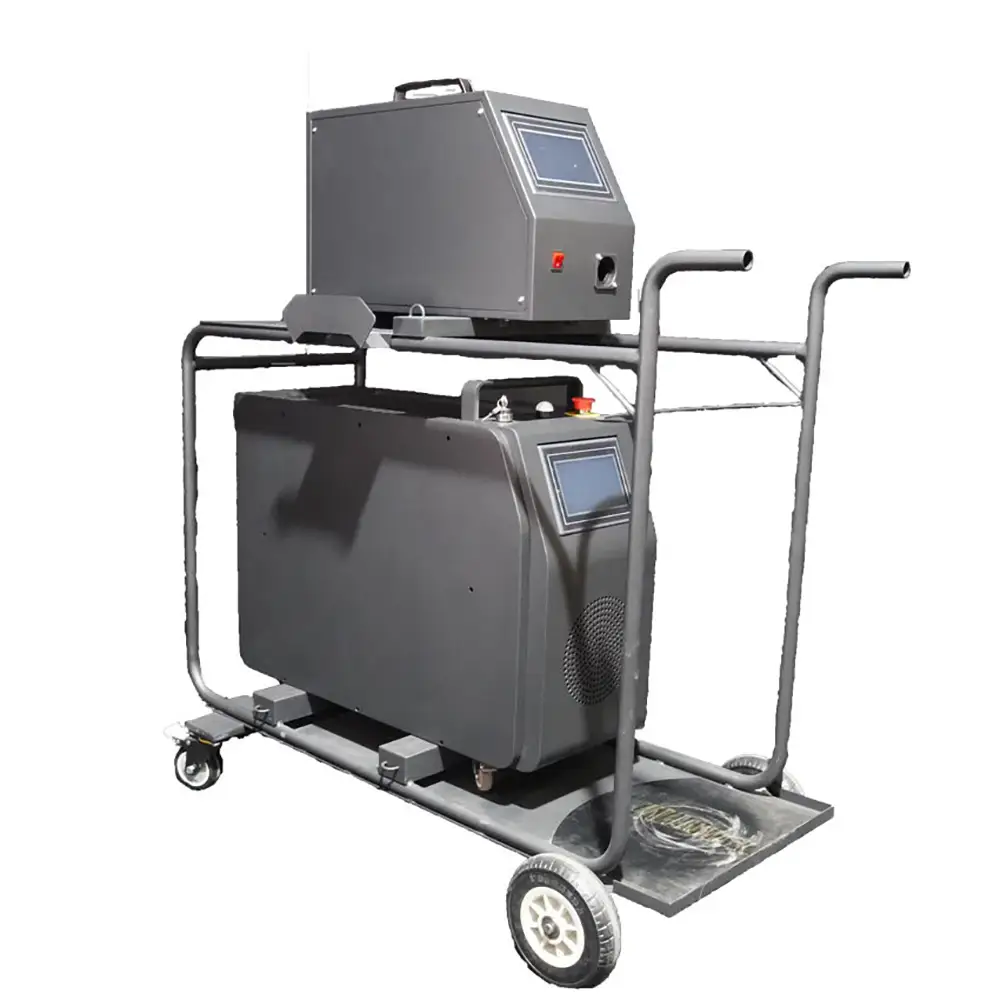
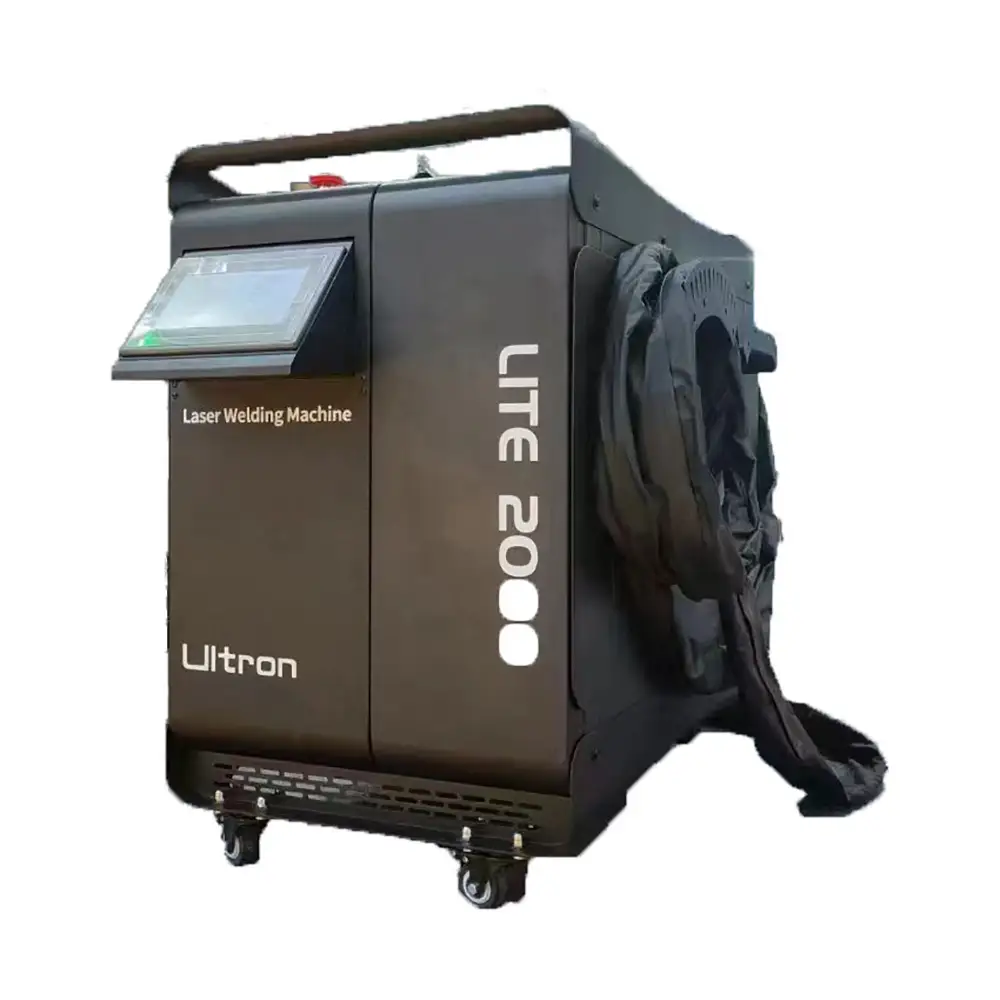
Automatic 4D Laser Welding Machine Handheld Laser Welder
The Automatic 4D Laser Welding Machine Handheld Laser Welder is a modern laser welding solution designed for efficient metal fabrication, repair, assembly, and industrial welding applications. Combining a handheld laser welding head with an advanced 4D laser welding system, this equipment provides a flexible solution for manufacturers that need accurate and efficient welding of different metal components.
The machine is suitable for workshops, fabrication companies, machinery manufacturers, metalworking businesses, and industrial production environments. Its handheld design allows the operator to access different workpieces and welding positions more conveniently than many fixed welding systems, while the automatic functions can help improve process consistency when properly configured.
The exact automation level, laser power, welding head, control system, cooling system, and available accessories depend on the selected machine configuration.
Automatic 4D Laser Welding Technology
The 4D laser welding system is designed to provide controlled laser energy to the welding area. Laser welding uses a concentrated beam to heat and join compatible metal surfaces.
Compared with conventional welding processes, laser welding can provide a concentrated heat source and controlled weld zone for suitable applications. This can help reduce unnecessary heat exposure and support clean, precise weld formation when the material, joint design, laser parameters, and shielding conditions are properly matched.
The automatic functions can assist with repeatable process control depending on the machine configuration. Automatic does not necessarily mean completely unmanned operation; operators may still be required for workpiece positioning, parameter selection, inspection, material handling, and other production tasks.
Handheld Laser Welder Design
The handheld laser welding head provides flexibility for processing workpieces of different shapes and sizes. Operators can position the welding head according to the joint geometry and production requirements.
This design is particularly useful for metal sheets, frames, cabinets, machinery components, stainless steel products, doors, enclosures, brackets, pipes, and other fabricated parts.
The handheld format can also be useful when workpieces are too large, heavy, or irregular to fit conveniently into a fixed welding station.
Depending on the application, the welding head may support different welding modes and process parameters. The appropriate configuration should be selected according to the material, thickness, joint type, and desired weld appearance.
Suitable Metal Materials
The Automatic 4D Laser Welding Machine can be configured for various metal welding applications. Commonly processed materials may include:
Stainless Steel
Carbon Steel
Mild Steel
Galvanized Steel
Aluminum
Copper
Brass
Other Compatible Metal Alloys
Different metals have different thermal and optical characteristics. Aluminum and copper, for example, may require different laser parameters from stainless or carbon steel.
Actual welding performance depends on laser power, material thickness, joint design, welding speed, focal position, shielding gas, wire feeding when required, and other process conditions.
Efficient Metal Laser Welding
Laser welding can provide a concentrated heat source directly at the joint. For suitable materials and joint configurations, this can help create controlled welds while reducing unnecessary heat input around the welding area.
The machine can be used for butt joints, lap joints, corner joints, and other common metal fabrication configurations when the selected welding head and process parameters are appropriate.
For production environments, sample testing is recommended before establishing final welding parameters. A stable welding process should consider material thickness, surface condition, joint gap, laser power, welding speed, gas flow, focal position, and operator technique.
Applications in Metal Fabrication
The handheld laser welder can support a wide range of industrial and commercial applications, including:
Sheet Metal Fabrication
Stainless Steel Products
Machinery Manufacturing
Automotive Components
Agricultural Machinery
Electrical Cabinets
Metal Furniture
Kitchen Equipment
Doors And Windows
Metal Frames
Industrial Equipment
Custom Metal Fabrication
Equipment Repair
Its flexible design makes it suitable for both general-purpose fabrication and specialized production applications.
Automatic Welding for Consistent Production
Automation can be useful when a manufacturer needs to repeat similar welding operations. Properly configured automatic functions can help maintain consistent process parameters and reduce variation caused by manual adjustment.
For repetitive production, automation may be combined with workholding fixtures, positioning systems, programmable controls, or other auxiliary equipment. The appropriate level of automation depends on the workpiece geometry and production requirements.
For custom or low-volume fabrication, the handheld configuration can provide greater flexibility. For repetitive manufacturing, additional automation or positioning equipment may be considered.
Welding Quality and Process Control
Good laser welding results depend on more than laser power alone. Material preparation, joint fit-up, surface cleanliness, shielding gas, welding speed, focal position, and process parameters all affect the final weld.
The workpiece should normally be free from excessive oil, rust, paint, and other contaminants that could interfere with the welding process.
For applications requiring a specific appearance or mechanical performance, sample welding and inspection are recommended before mass production.
Cooling System
Laser welding systems generate heat during operation, so appropriate thermal management is important. Depending on the configuration, the machine may use a water-cooled system or another suitable cooling arrangement.
A properly matched cooling system helps maintain appropriate operating conditions for the laser source and related components. Cooling requirements depend on laser power, duty cycle, ambient temperature, and equipment configuration.
Users should follow the manufacturer's requirements for coolant type, coolant level, cleaning, circulation, and maintenance.
Safety and CE-Related Considerations
Laser welding equipment requires appropriate operator training and workplace safety procedures. Users should follow the machine manufacturer's instructions and applicable laser-safety regulations.
Depending on the machine configuration, safety-oriented features may include emergency stops, electrical protection, protective eyewear, interlocks, warning systems, protective covers, and other safeguards.
The keyword CE should be understood according to the actual machine documentation and supplied conformity information. Buyers should request the applicable CE documentation and product compliance information for the specific machine configuration before purchase.
Appropriate ventilation and fume extraction should also be considered because laser welding can generate fumes and airborne particles depending on the material and process.
Custom & OEM Laser Welding Solutions
Different industries have different requirements for laser welding equipment. We can provide Custom & OEM solutions according to customer application requirements.
Possible configuration options include laser power, laser source, handheld welding head, cooling system, control system, wire feeder, shielding gas system, automatic positioning equipment, workholding fixtures, and other accessories.
Before selecting a machine, buyers should provide information about the material types, material thickness, joint configuration, production volume, required welding speed, workpiece dimensions, and expected operating hours.
This information allows the equipment configuration to be matched more closely to the intended application.
Why Choose Us
Automatic 4D Laser Welding System – Designed for efficient and repeatable metal welding applications with configurable automatic functions.
Handheld Welding Flexibility – The handheld laser head allows convenient access to different workpiece shapes and welding positions.
Fiber Laser Technology – Provides a concentrated laser energy source for suitable industrial metal welding applications.
Wide Material Compatibility – Suitable configurations can process stainless steel, carbon steel, mild steel, aluminum, copper, brass, and other compatible metals.
Flexible Industrial Applications – Suitable for sheet metal, machinery, automotive, agricultural equipment, cabinets, furniture, and custom fabrication.
Production-Oriented Design – Can be configured for repetitive welding operations where consistent process control is important.
Custom & OEM Support – Laser power, welding head, cooling system, automation components, and accessories can be matched to application requirements.
B2B Export Service – We provide product consultation, application-based configuration support, technical communication, and customized machinery solutions for overseas customers.
FAQs
1. What is a 4D laser welding machine?
A 4D laser welding machine is a laser welding system marketed under a 4D configuration or product designation. The exact meaning of 4D functions depends on the specific machine design and control system.
2. Is this machine automatic?
It includes automatic functions according to the selected configuration. The actual automation level should be confirmed with the supplier because handheld systems can still require operator positioning and material handling.
3. Can it weld stainless steel?
Yes. It can be configured for suitable stainless steel welding applications when the laser power and process parameters are correctly selected.
4. Can it weld aluminum?
Yes, suitable configurations can weld aluminum. Aluminum may require specific laser parameters because of its thermal and optical properties.
5. Can it weld carbon steel?
Yes. Carbon and mild steel are common materials for laser welding applications.
6. What is the advantage of a handheld laser welder?
A handheld laser welding head provides greater flexibility for different workpiece sizes, shapes, and welding positions.
7. Does laser welding require shielding gas?
Many laser welding applications use shielding gas to protect the weld area. The appropriate gas type and flow rate depend on the material and welding process.
8. Can welding wire be used?
Depending on the welding application and welding head configuration, wire feeding may be available. Whether wire is required depends on joint gap, material thickness, joint design, and desired weld characteristics.
9. What affects laser welding quality?
Important factors include material type, thickness, joint preparation, surface cleanliness, laser power, welding speed, focal position, shielding gas, and process parameters.
10. Does the machine require water cooling?
Cooling requirements depend on the laser source and machine configuration. Higher-power systems commonly require an appropriate cooling solution.
11. Does CE mean the machine is certified?
CE marking relates to applicable European conformity requirements. Buyers should request the actual CE documentation and conformity information for the specific machine rather than relying only on a product title.
12. Can the machine be customized?
Yes. Laser power, laser source, handheld welding head, cooling system, automation functions, wire feeder, fixtures, and other accessories can be customized according to application requirements.
Prev:Sorry, no information
Next:
Multi-functional Fiber Laser Welder Cutter Cleaner for Metal-Efficient Handheld Water-Cooled 3-in-1 Solution
TAG:
Industrial Laser Welding Machine,
Metal Laser Welding Equipment,
Metal Laser Welding Machine,
Precision Laser Welding Machine,
Fiber Laser Welding Machine,
Automatic Fiber Laser Welding Machine,
Industrial Fiber Laser Welder,
Stainless Steel Laser Welder,
Stainless Steel Laser Welding Machine,
Handheld Laser Welder,
Handheld Fiber Laser Welding Machine,
Portable Laser Welding Machine,
Handheld Fiber Laser Welder,
Carbon Steel Laser Welder,
Sheet Metal Laser Welder,
Portable Fiber Laser Welder,
Water-Cooled Laser Welding Machine,
Portable Metal Laser Welder,
Water-Cooled Fiber Laser Welder,
Automatic Handheld Laser Welder,
4D Fiber Laser Welding Machine,
4D Automatic Laser Welder,
4D Laser Welder,
CE Laser Welding Machine,
CE Fiber Laser Welding Machine,
CE Handheld Laser Welder,
Aluminum Laser Welder,
Handheld Metal Welding Machine,
Carbon Steel Laser Welding Machine,
Aluminum Laser Welding Machine,
Related Category:
Automatic 4D Laser Welding Machine,4D Laser Welding Machine,Handheld Laser Welder,Automatic Handheld Laser Welding Machi China, suppliers, manufacturers, factory, customized, wholesale, quotation, made in China