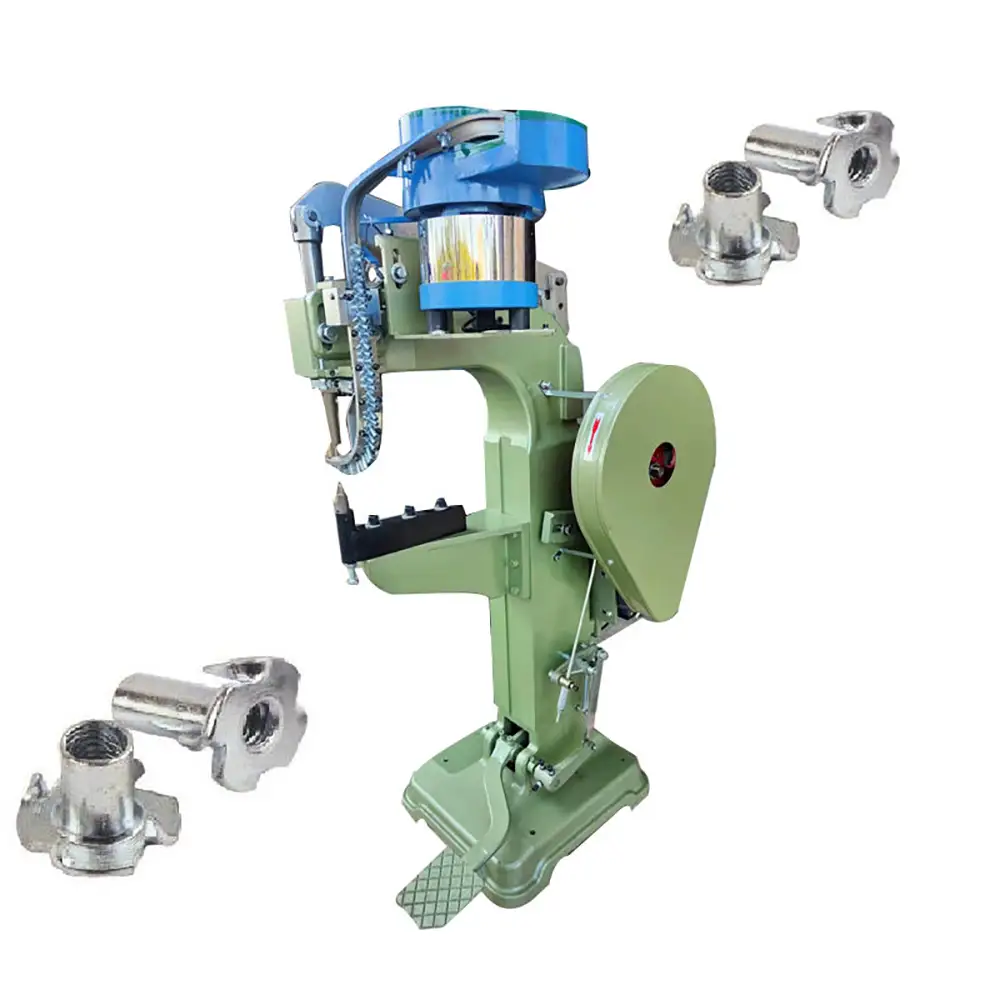
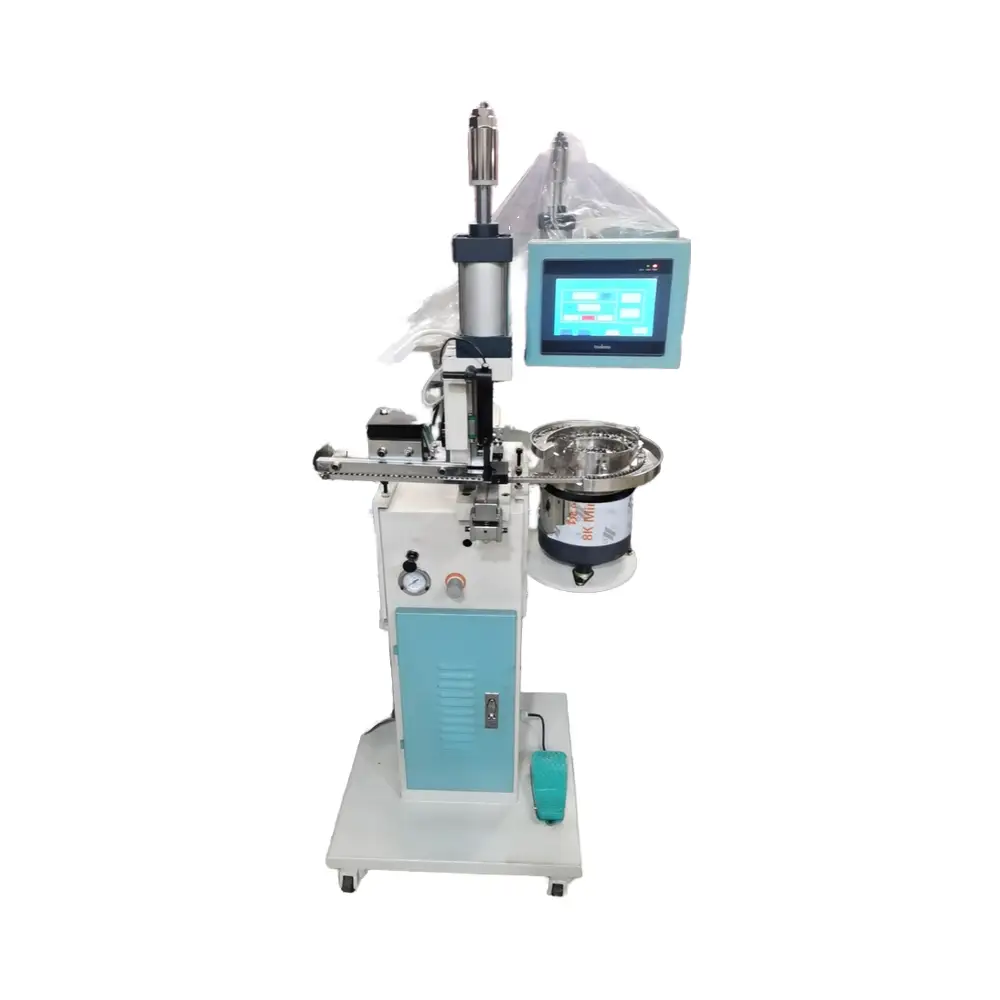
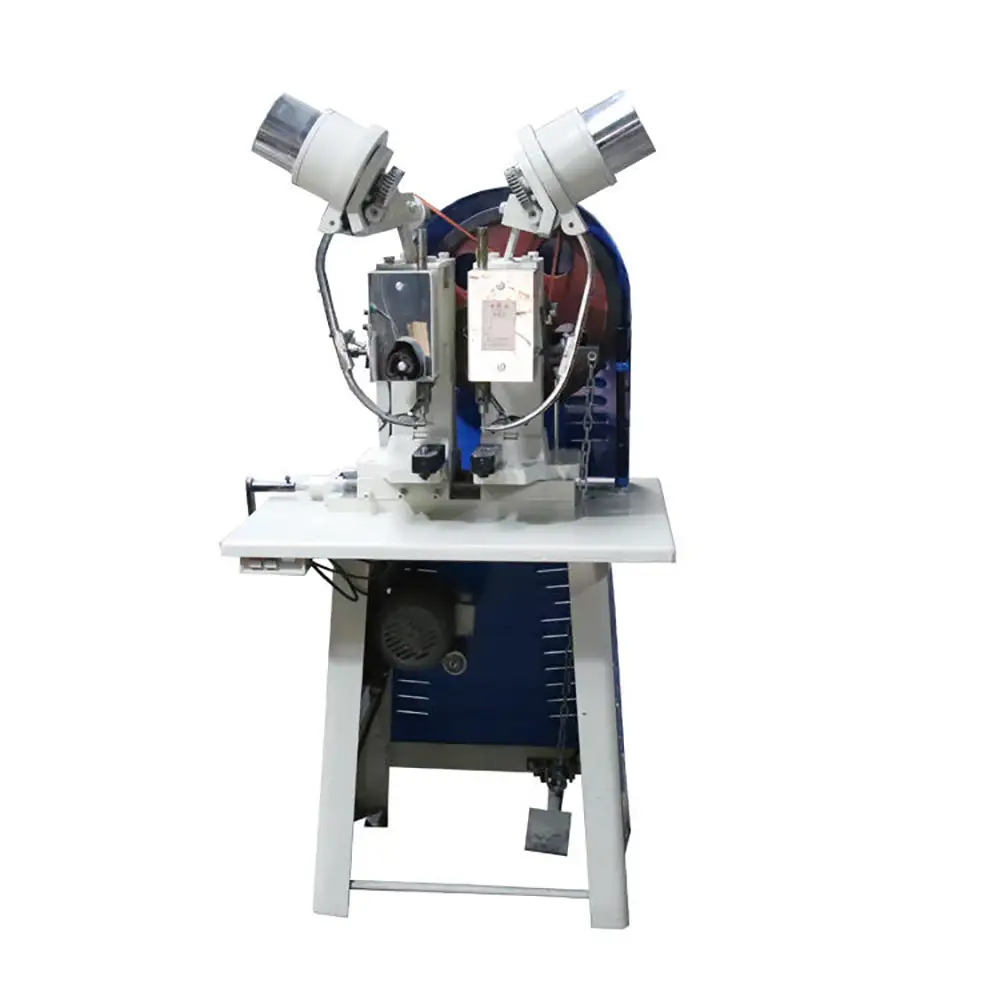
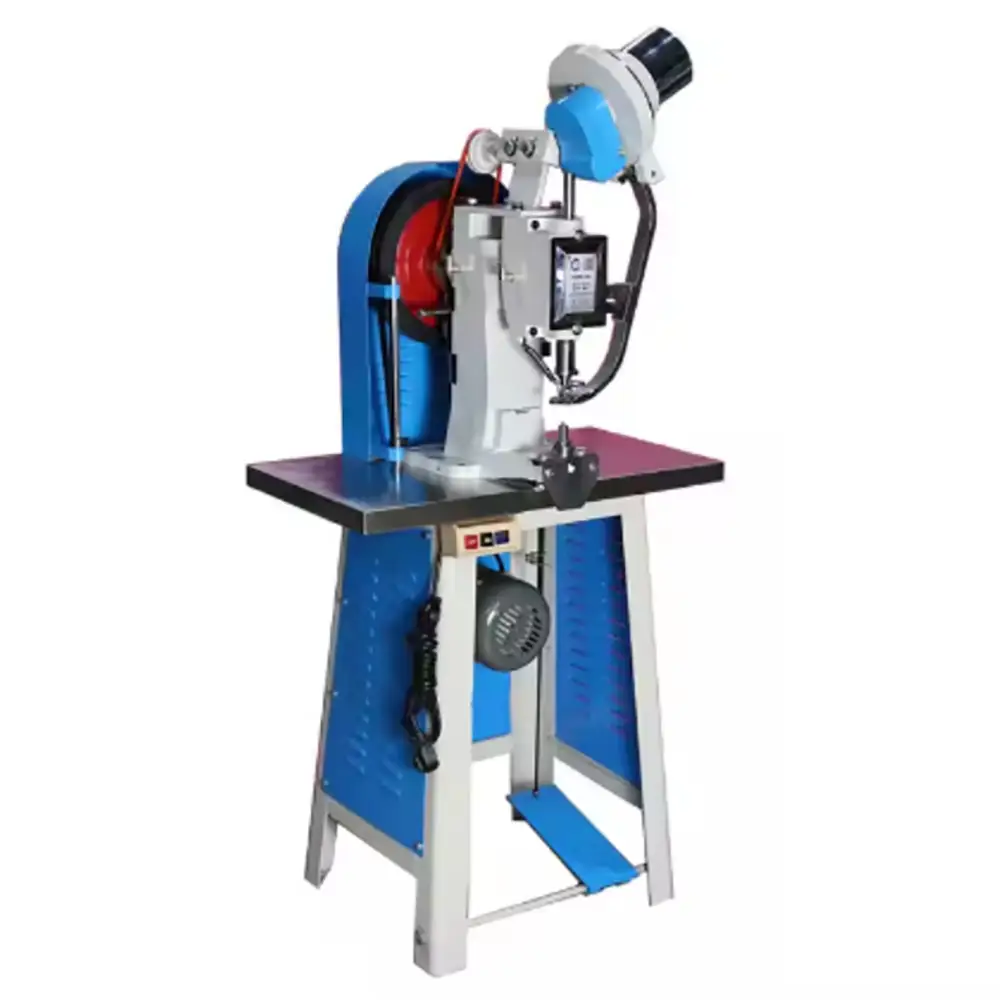
|
Model |
10RPC |
|
riveting diameter |
Φ1-12mm for claw nuts |
|
riveting length |
10-25mm |
|
Machine throat depth |
385mm |
|
Power |
3/4HP |
|
Machine size |
1050x600x1680mm |
|
N W |
350kg |
|
G W |
380kg
|
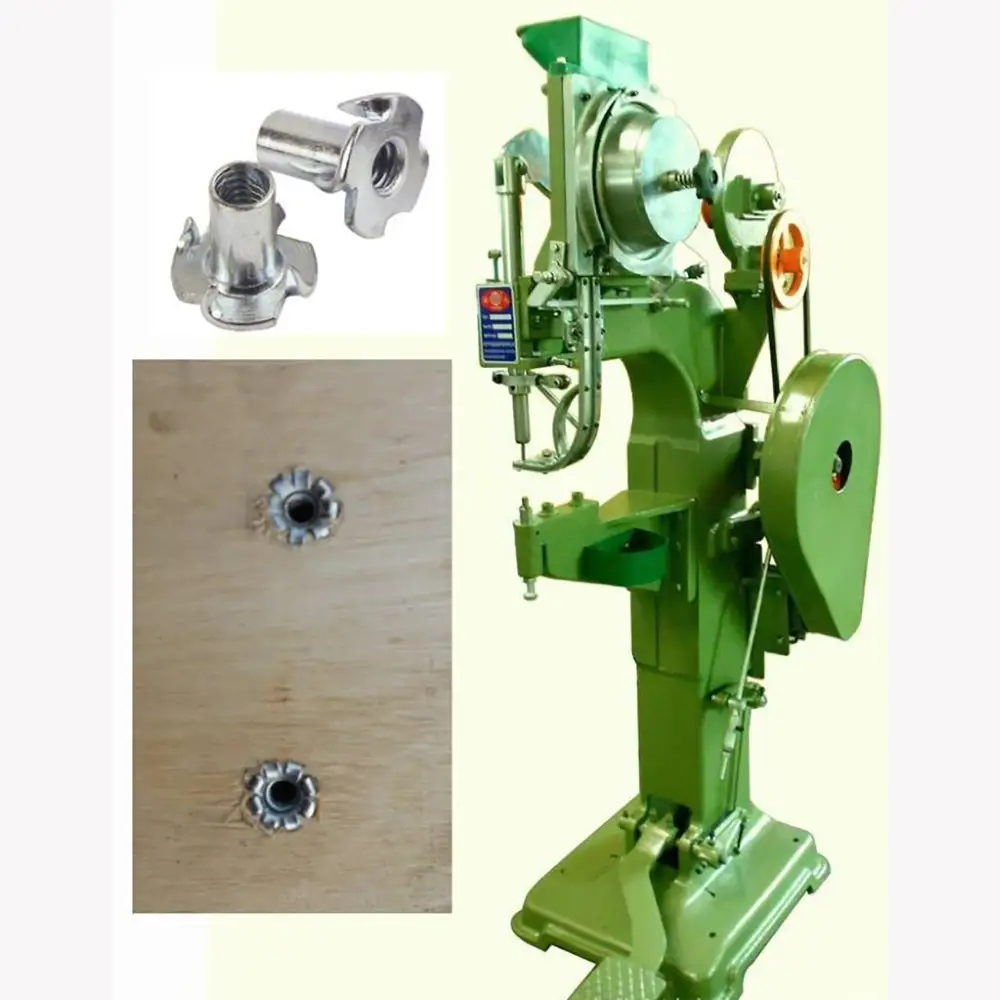
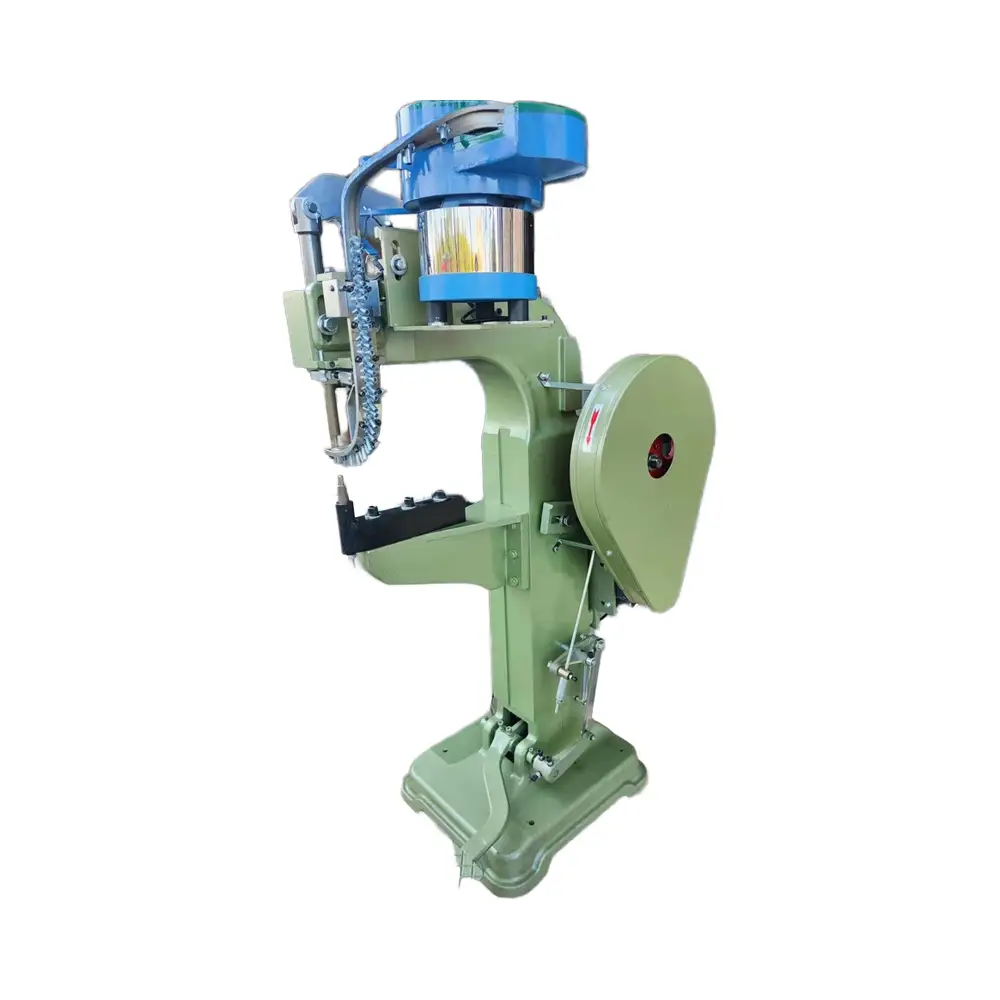
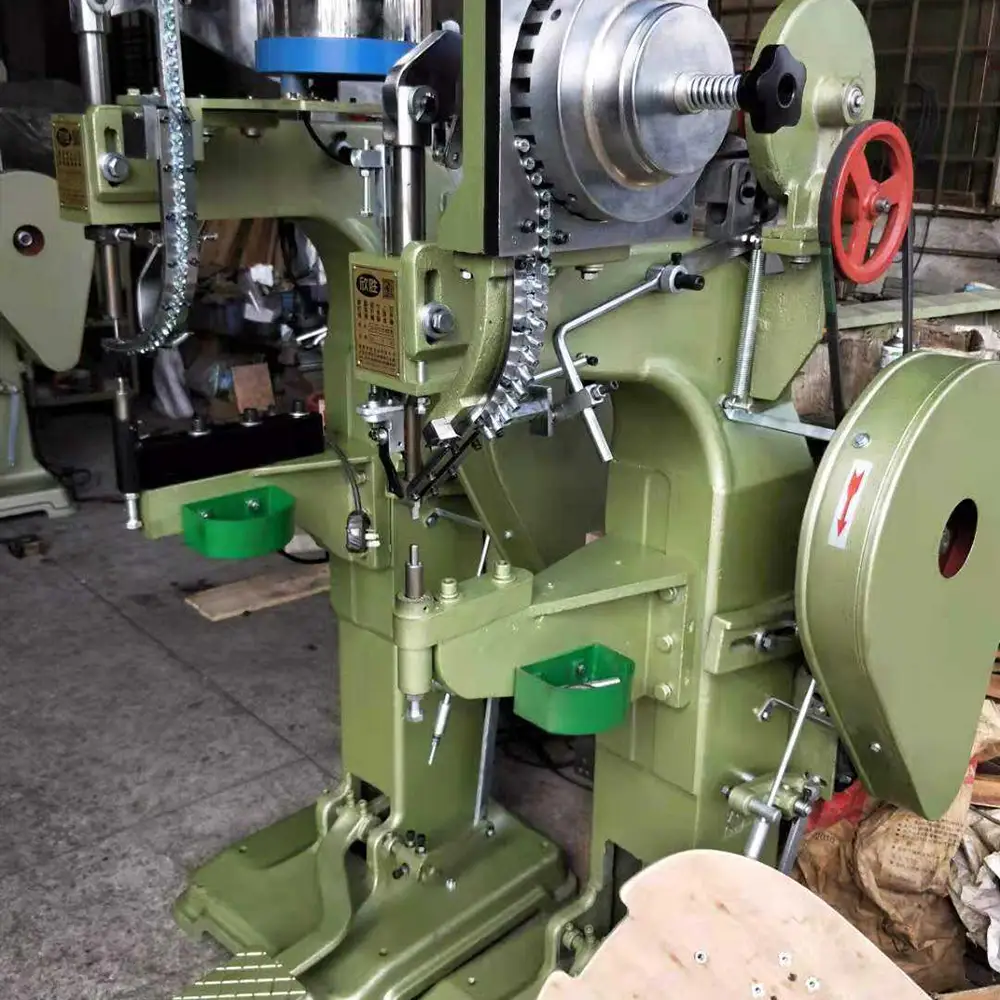
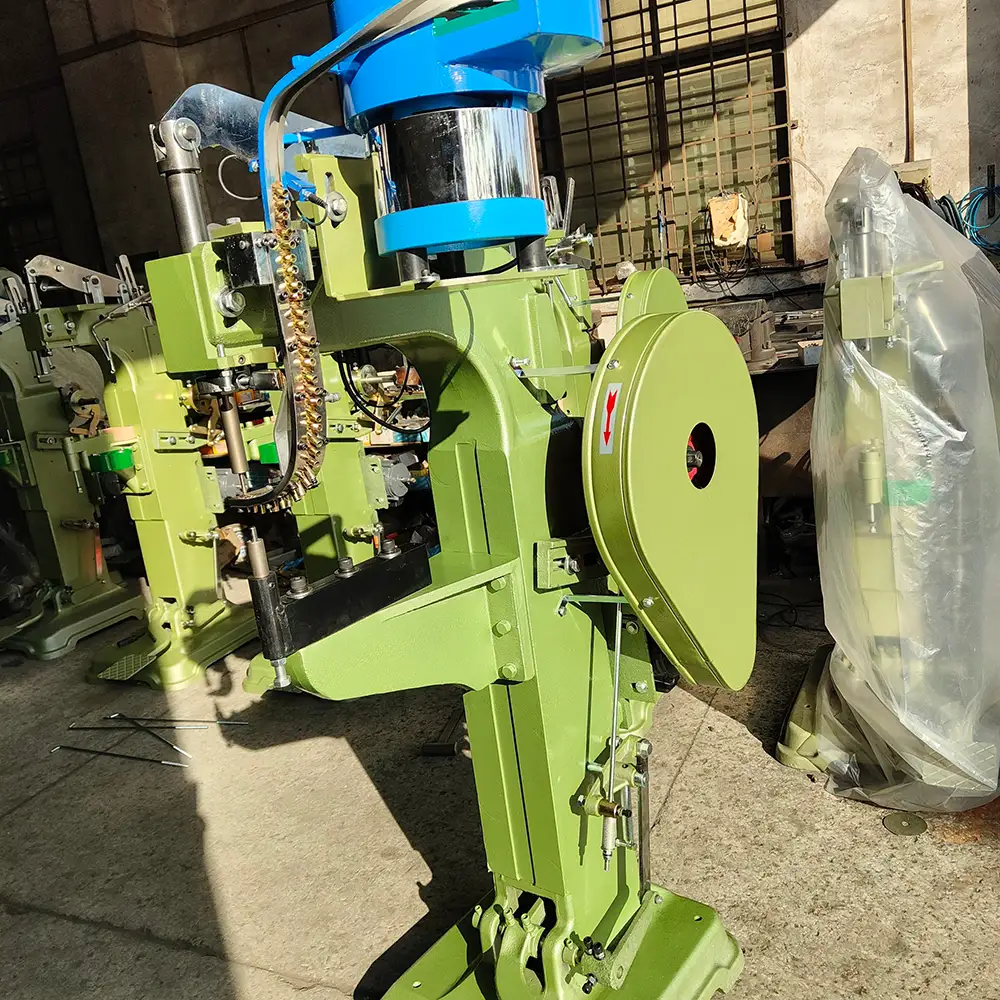
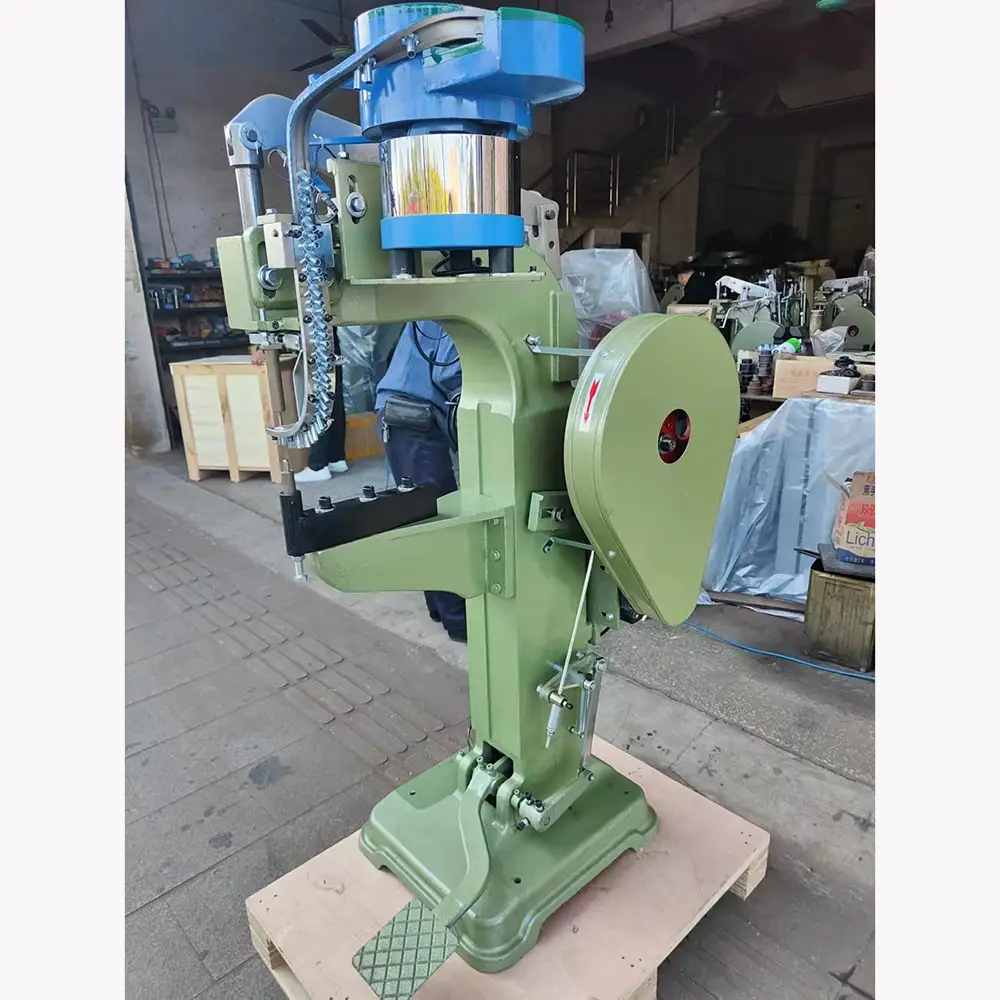
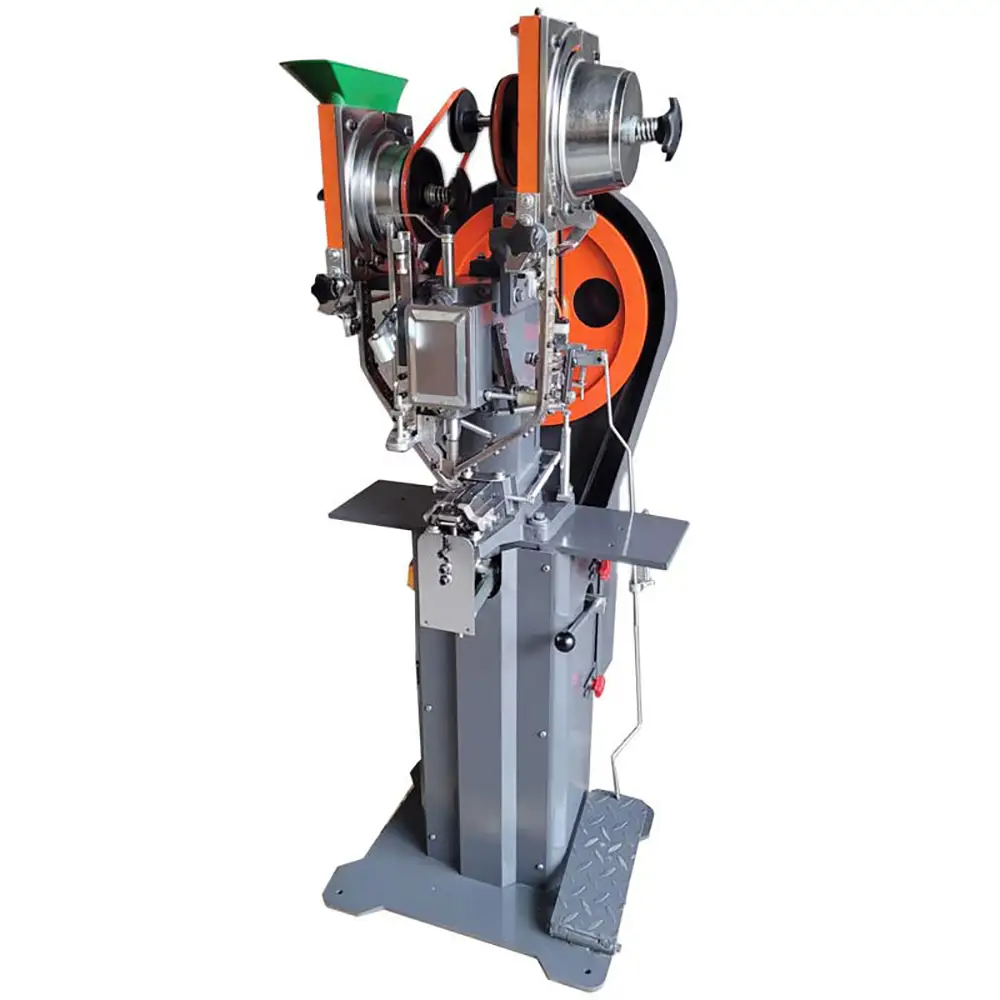
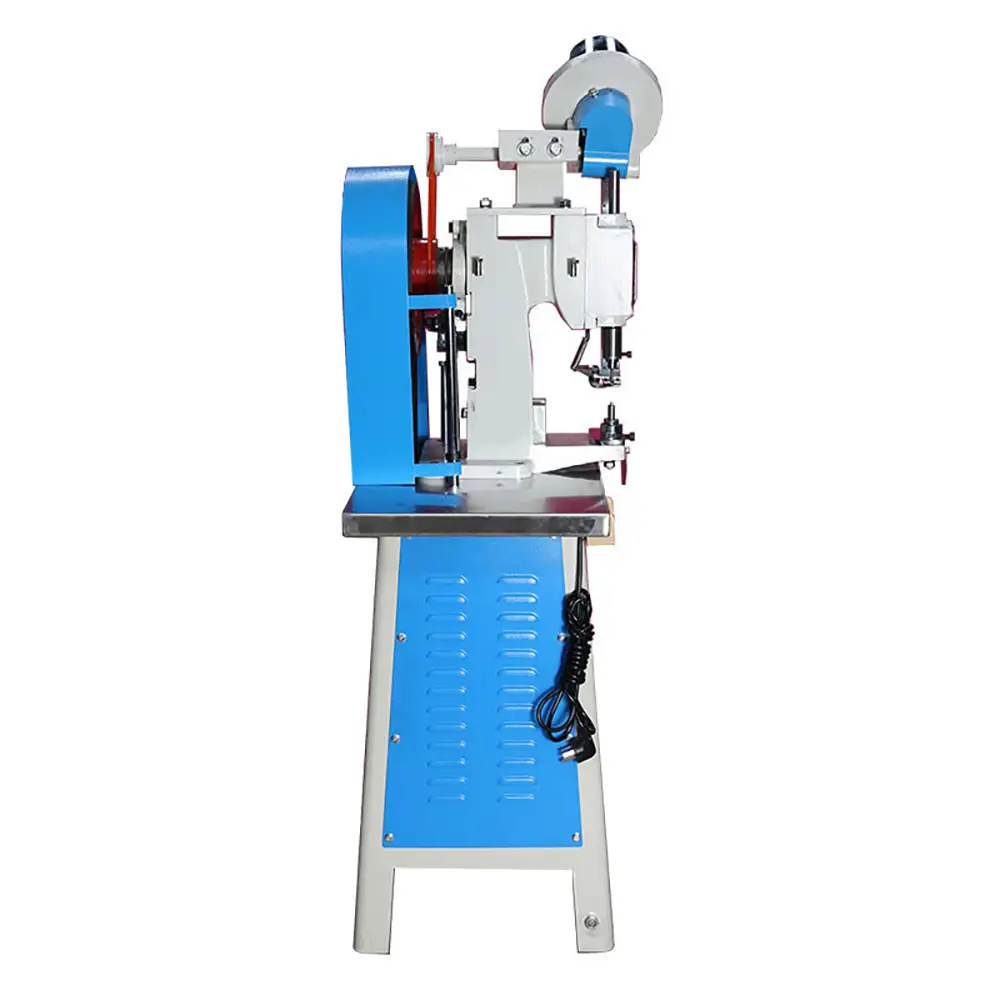
4-Prong T-Nut Automatic Feeding Rivet Machine
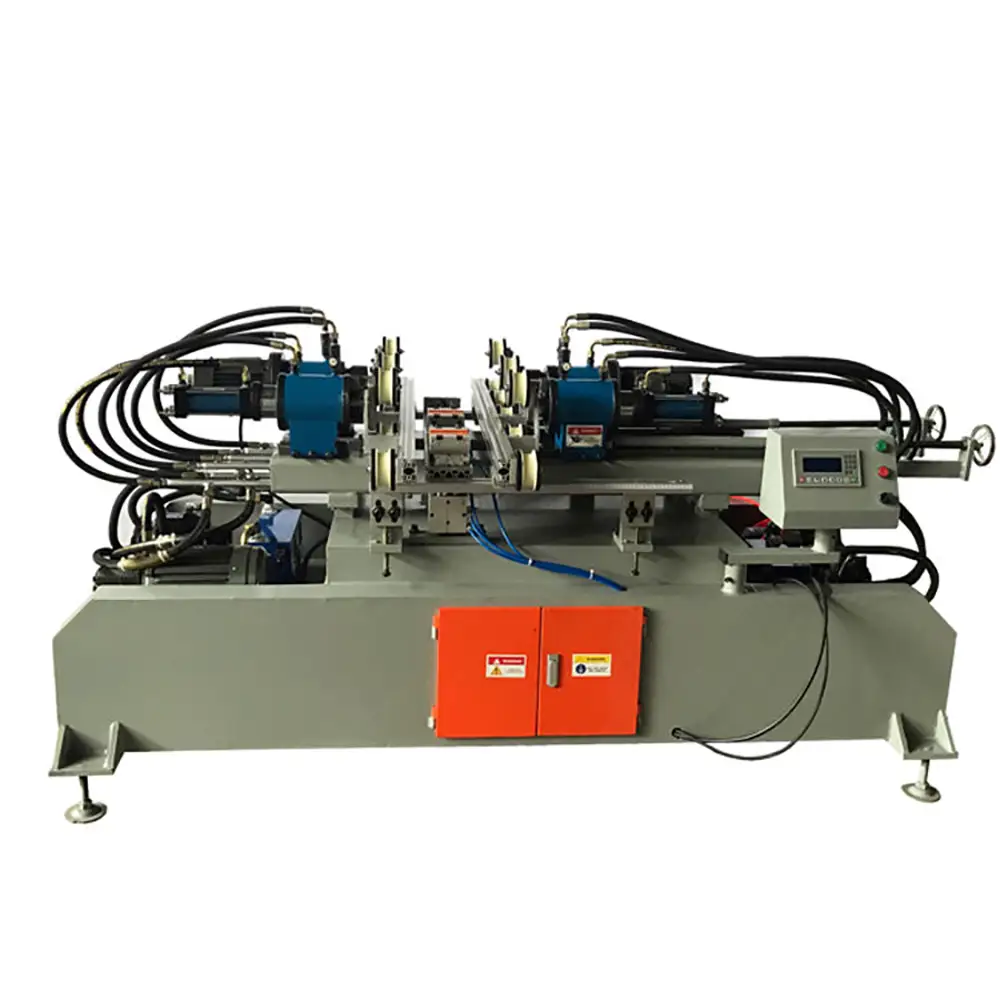
The 4-Prong T-Nut Automatic Feeding Rivet Machine Metal Riveter Press Riveting Machine is an industrial fastening and insertion solution designed for manufacturers that need to install 4-prong T-nuts, threaded T-nuts, and compatible metal inserts efficiently and consistently.
T-nuts are widely used in furniture, woodworking, cabinetry, upholstered products, sporting equipment, fixtures, and other applications where a strong threaded connection is required. Compared with manual installation, an automatic T-nut riveting machine can help standardize feeding, positioning, pressing, and insertion operations.
The machine combines an automatic feeding mechanism with a mechanical pressing or riveting system. The T-nuts can be supplied to the working position automatically, while the workpiece is positioned under the pressing head. The machine then applies controlled force to install the T-nut into the prepared hole or material.
This type of equipment is particularly useful for production environments where hundreds or thousands of identical T-nut installation operations are required.
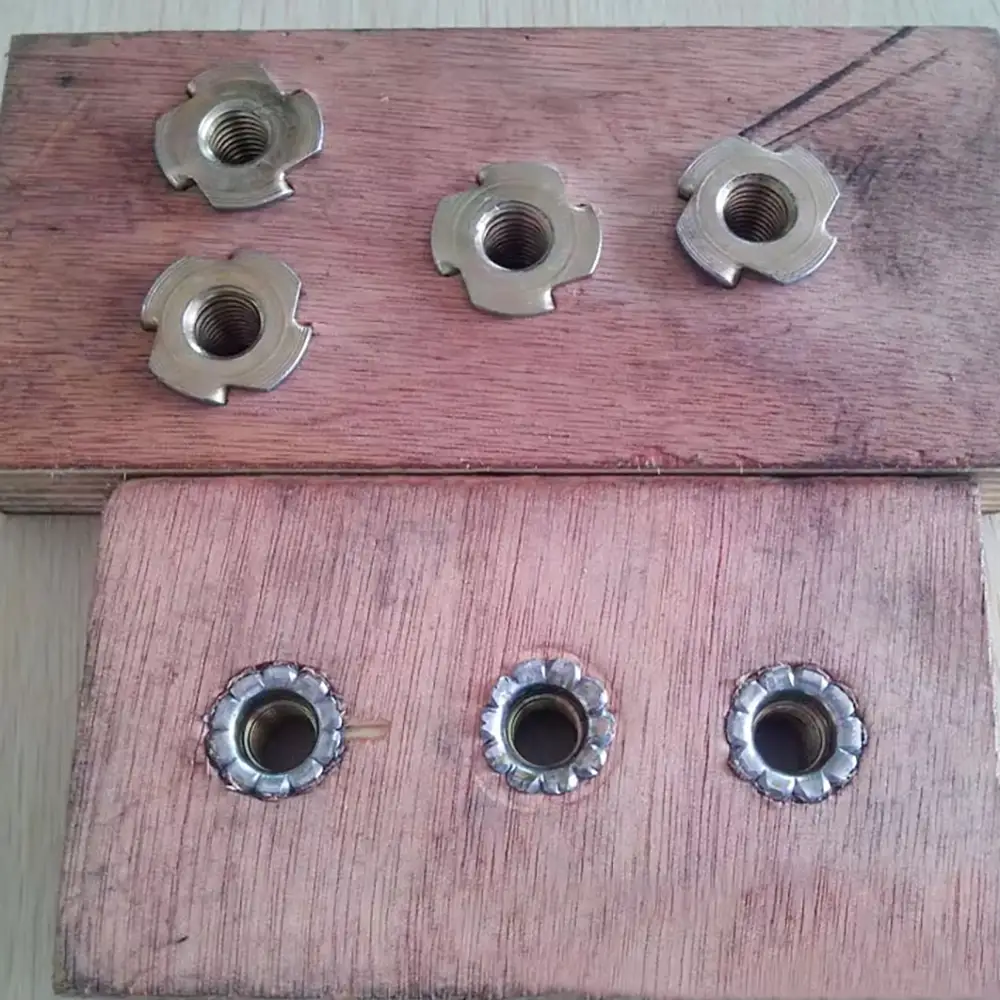
4-Prong T-Nut Installation
A 4-prong T-nut typically features four metal prongs designed to grip or anchor into a compatible material. During installation, the prongs are pressed into the workpiece while the threaded body remains available for a subsequent bolt or screw connection.
The result is a practical threaded mounting point that can be used for removable assemblies.
The riveting or pressing process must be matched to the T-nut dimensions and workpiece characteristics. Correct pressure helps ensure that the prongs are properly seated without damaging the surrounding material.
Automatic T-Nut Feeding
One of the main advantages of the machine is its automatic feeding system.
Instead of manually placing each T-nut into the working position, compatible T-nuts can be supplied through an automatic feeding mechanism. This reduces repetitive manual operations and helps maintain a consistent production rhythm.
Automatic feeding is particularly beneficial for high-volume production because operators can focus more on workpiece loading, inspection, and material handling rather than manually positioning every individual T-nut.
The actual feeding method depends on the shape, dimensions, material, and orientation requirements of the T-nut.
T-Nut Press Riveting Process
The machine uses controlled mechanical pressure to install the T-nut into the prepared workpiece.
A typical production cycle can include:
Loading or positioning the workpiece.
Feeding the T-nut into the working area.
Aligning the T-nut with the installation hole.
Activating the pressing or riveting mechanism.
Seating the T-nut into the material.
Releasing the finished workpiece.
The exact operating sequence depends on the machine configuration and automation level.
A stable fixture is important because accurate alignment between the T-nut and workpiece directly affects the finished installation.
Applications in Furniture Manufacturing
T-nuts are commonly used to create threaded mounting points in furniture components.
Potential applications include:
Wooden Furniture
Office Furniture
Tables
Chairs
Cabinets
Sofas
Bed Frames
Furniture Panels
Shelving Systems
Modular Furniture
For furniture manufacturers, installing T-nuts automatically can help standardize the position of threaded mounting points across large production batches.
This can be particularly useful for knock-down furniture, where components need to be assembled and disassembled repeatedly.
Wood and Board Applications
The 4-prong T-nut machine can be suitable for compatible wood-based materials, including selected:
Solid Wood
Plywood
MDF
Particle Board
Wood Panels
Composite Boards
Furniture Boards
Material thickness, density, hole diameter, and T-nut dimensions all influence the installation result.
For thin or fragile boards, suitable pressure control and workholding are especially important to reduce the risk of material damage.
Metal T-Nut and Insert Applications
T-nuts are manufactured from metal materials such as steel or stainless steel, depending on the intended application.
The machine is designed to work with compatible metal T-nuts and inserts rather than functioning as a general-purpose metal cutting machine.
The pressing force and tooling should be selected according to the specific fastener. Different T-nut sizes may require different pressing heads, dies, or fixtures.
Production Efficiency
Manual T-nut installation can involve repeated picking, positioning, pressing, and inspection operations. In larger factories, these repetitive tasks can consume considerable labor time.
Automatic feeding and pressing can simplify the workflow.
The machine can help manufacturers achieve:
Faster T-Nut Installation
Reduced Manual Handling
Consistent Fastener Positioning
Repeatable Pressing Force
Improved Production Rhythm
Reduced Operator Fatigue
Better Production Standardization
Actual production speed depends on the T-nut design, material, feeding system, workpiece size, operator workflow, and machine configuration.
Accurate Positioning
Accurate positioning is essential for T-nut installation because the threaded connection must align with the corresponding screw, bolt, or component during final assembly.
A dedicated fixture can hold the workpiece in the correct location while the T-nut is inserted.
For products with multiple T-nuts, positioning guides or customized fixtures can help maintain consistent spacing and alignment.
Customized tooling is especially useful when the workpiece has an irregular shape or multiple installation locations.
Flexible Tooling
Different T-nuts may vary in:
Thread Size
Outer Diameter
Prong Length
Overall Height
Material
Head Shape
Installation Method
The machine can therefore be equipped with suitable pressing heads, dies, feeding components, and workholding fixtures according to the selected fastener.
For manufacturers producing several product models, interchangeable tooling can improve machine flexibility.
Industrial Production Applications
The automatic T-nut riveting machine can be used in various industries where threaded inserts or 4-prong T-nuts are required.
Furniture Manufacturing: Tables, chairs, cabinets, sofas, beds, and modular furniture.
Woodworking: Panels, boards, fixtures, workbenches, and custom wood products.
Upholstery: Furniture frames and components requiring embedded threaded mounting points.
Sporting Equipment: Selected equipment components where threaded inserts are required.
Industrial Components: Panels, enclosures, fixtures, and assemblies using compatible T-nuts.
DIY and Hardware Products: Components designed for repeated mechanical assembly.
Production Line Integration
For larger manufacturing operations, the T-nut riveting machine can be integrated into a broader assembly line.
Upstream processes may include CNC cutting, drilling, punching, sanding, or panel preparation. The T-nut installation station can then install the required threaded fasteners before final assembly.
Downstream processes may include quality inspection, component assembly, packaging, and shipment.
Automatic feeding can help reduce manual handling between these stages.
How to Choose a T-Nut Riveting Machine
Before purchasing an automatic T-nut riveting machine, manufacturers should consider:
T-Nut Type
Thread Size
T-Nut Dimensions
Prong Design
Workpiece Material
Workpiece Thickness
Installation Hole Diameter
Fastener Position
Production Volume
Required Automation Level
Feeding Requirements
Tooling Requirements
Providing samples of both the T-nut and workpiece is recommended when determining the correct tooling and pressing configuration.
Why Choose Our 4-Prong T-Nut Riveting Machine?
Automatic T-Nut Feeding: Helps reduce manual fastener positioning and repetitive handling.
4-Prong T-Nut Applications: Designed for compatible four-prong T-nut installation requirements.
Consistent Pressing: Controlled mechanical pressing helps achieve repeatable installation results.
High Production Efficiency: Suitable for repetitive T-nut insertion and fastening operations.
Flexible Tooling: Pressing heads, dies, and fixtures can be configured for different T-nut specifications.
Wide Material Compatibility: Suitable for compatible wood, plywood, MDF, particle board, composite panels, and other materials.
Accurate Positioning: Customized fixtures can help maintain consistent T-nut locations.
Reduced Labor: Automatic feeding and pressing can reduce repetitive manual operations.
OEM Customization: Machine configuration, tooling, feeders, and fixtures can be developed according to specific production requirements.
Industrial B2B Solution: Suitable for furniture factories, woodworking manufacturers, hardware producers, and other industrial users.
Main Applications
4-Prong T-Nut Installation
Automatic T-Nut Riveting
T-Nut Insertion
Furniture T-Nut Installation
Wood Panel T-Nut Pressing
MDF T-Nut Installation
Plywood T-Nut Riveting
Cabinet Hardware Installation
Furniture Threaded Insert Installation
Woodworking Fastener Installation
Automatic Metal Insert Pressing
Industrial T-Nut Fastening
Threaded Insert Assembly
FAQS
1. What is a 4-prong T-nut riveting machine?
It is an industrial machine designed to automatically or semi-automatically install compatible four-prong T-nuts into prepared workpieces using controlled pressing or riveting force.
2. What is a 4-prong T-nut used for?
A 4-prong T-nut provides a threaded mounting point in materials such as wood and furniture boards. The threaded section can then accept a compatible bolt or screw.
3. Can this machine automatically feed T-nuts?
Yes. The machine can be equipped with an automatic feeding system designed around the specific T-nut dimensions and shape.
4. What materials can be processed?
Depending on the application, the machine may be suitable for solid wood, plywood, MDF, particle board, composite boards, and other compatible materials.
5. Can it be used for furniture production?
Yes. Furniture manufacturing is one of the main applications for T-nut installation, including tables, chairs, cabinets, beds, sofas, and modular furniture.
6. Can different T-nut sizes be installed?
Different T-nut sizes generally require corresponding tooling, dies, or feeding adjustments. The compatible range depends on the machine configuration.
7. Does the machine require a pre-drilled hole?
Many T-nut applications use a prepared installation hole. The exact hole size and preparation method depend on the T-nut and workpiece specifications.
8. Can the T-nut position be customized?
Yes. Customized fixtures and positioning systems can be designed according to the required installation location and product dimensions.
9. Is the machine suitable for high-volume production?
Yes. Automatic feeding and pressing can make the machine suitable for repetitive and high-volume T-nut installation applications.
10. Can the same machine handle multiple products?
Potentially yes. Interchangeable fixtures and tooling can allow the machine to process different compatible workpieces.
11. What affects T-nut installation quality?
Important factors include T-nut dimensions, material hardness, workpiece thickness, hole size, pressing force, alignment, tooling, and fixture stability.
12. How can I select the correct machine configuration?
Manufacturers should provide the T-nut sample or specifications, workpiece material and thickness, installation hole dimensions, fastening position, and expected production volume.
13. Do you provide customized T-nut riveting machines?
Yes. Customized feeding systems, pressing dies, fixtures, tooling, and machine configurations can be developed according to customer products and production requirements.
Prev:
Automatic Double Head Twin Eyelet Rivets Clipboard File Folder Riveting Machine
Next:
Automatic Double-Sided Snap Button Fastener Rivet Riveting Machine for Belts Gift Bag
TAG:
Industrial Riveting Machine,
Metal Riveting Machine,
Automatic Rivet Machine,
Automatic Feeding Riveting Machine,
Automatic T-Nut Riveting Machine,
Automatic T-Nut Feeding Machine,
T-Nut Insertion Machine,
T-Nut Installation Machine,
T-Nut Fastening Machine,
Threaded Insert Machine,
Furniture Riveting Machine,
Threaded Insert Press,
Metal Riveter Machine,
Automatic Metal Riveter,
Automatic Fastener Installation Machine,
4-Prong T-Nut Riveting Machine,
4-Prong T-Nut Machine,
T-Nut Press Machine,
T-Nut Insertion Press,
T-Nut Riveter,
Furniture T-Nut Machine,
Wood T-Nut Installation,
MDF T-Nut Machine,
Plywood T-Nut Riveting,
Woodworking Riveting Machine,
Automatic Insert Machine,
Metal Insert Riveting Machine,
T-Nut Fastener Machine,
4-Prong Rivet Machine,
Industrial T-Nut Installation,
Related Category:
4-Prong T-Nut Riveting Machine, Automatic T-Nut Riveting Machine, T-Nut Insertion Machine, 4-Prong T-Nut Machine, Automa China, suppliers, manufacturers, factory, customized, wholesale, quotation, made in China