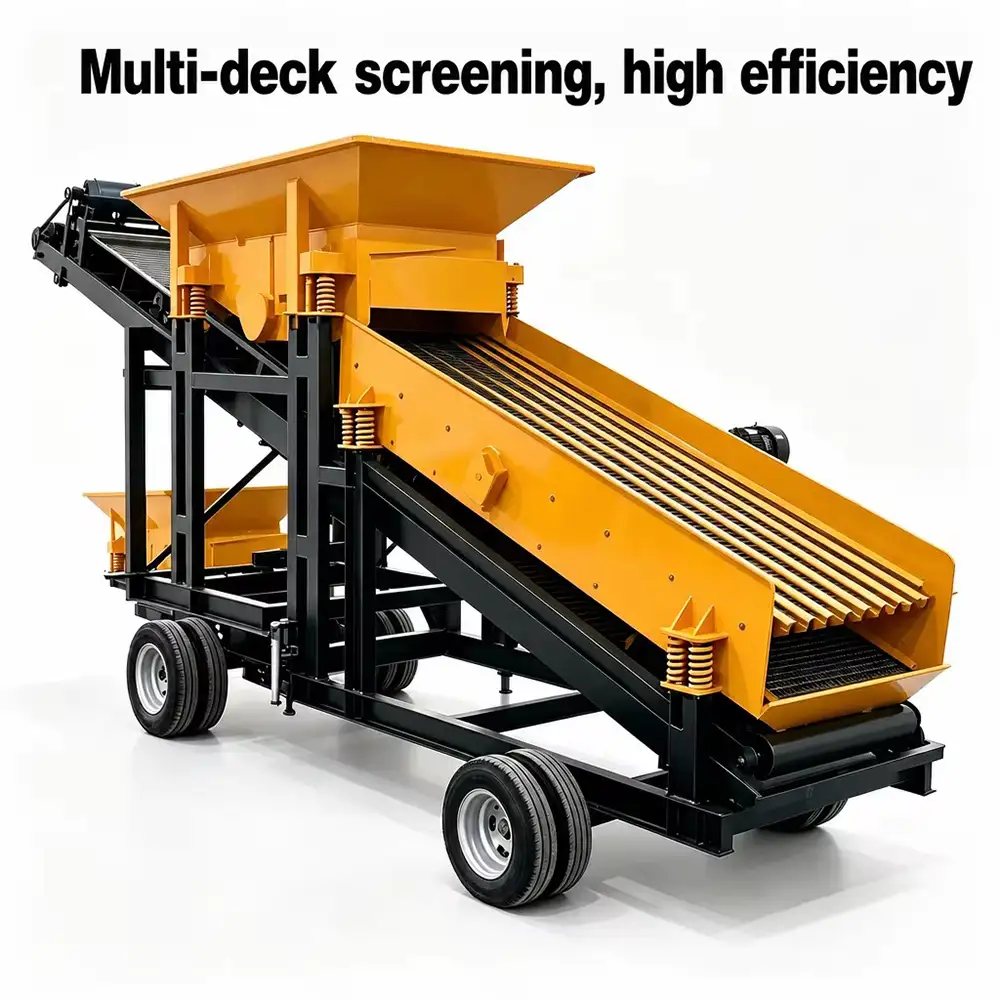
Vibrating Screen ZD800*3500 ZD1000*3500 ZD1200*3500
Fully Customizable Decks: 1-4 layers available with tailor-made mesh sizes to meet specific production requirements.
Efficient Vibration Separation: High-frequency exciter ensures fast material flow and zero mesh clogging.
Automatic Fine Material Discharge: Integrated bottom belt conveyor automatically removes fines, saving labor costs.
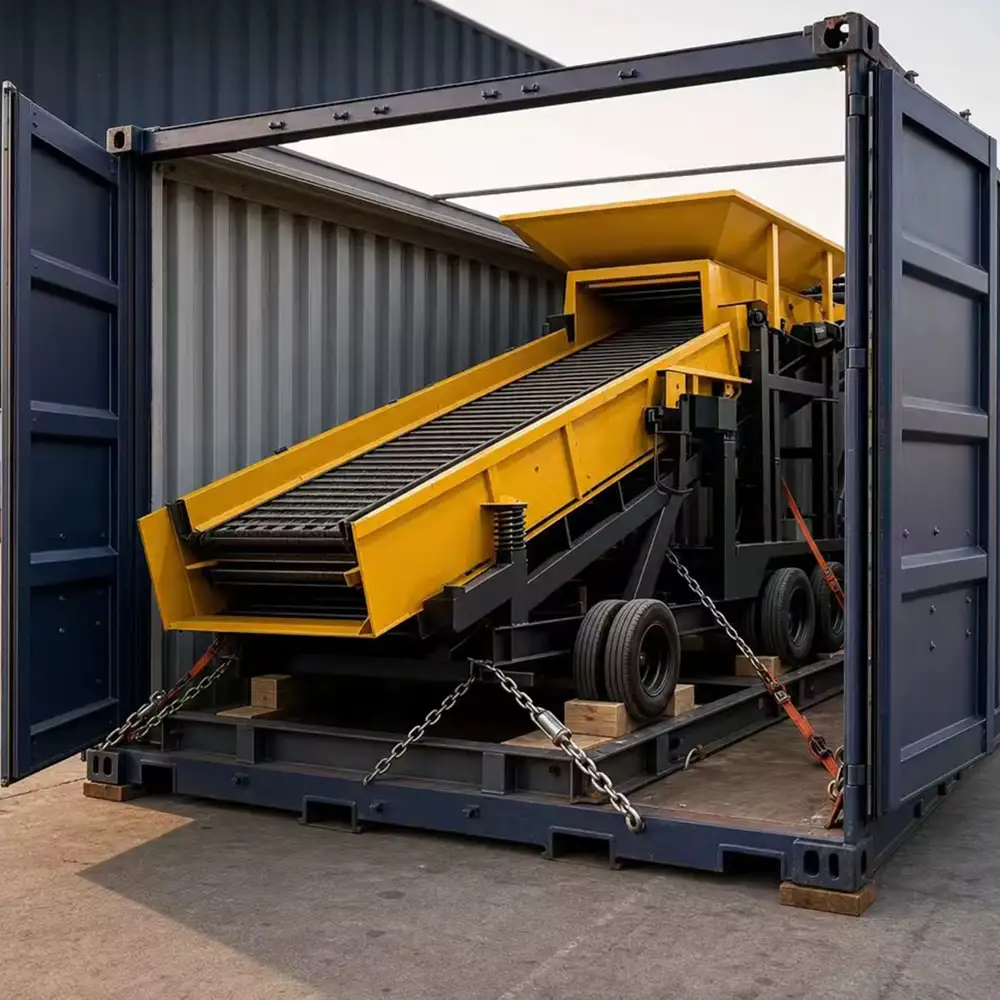
Flexible Mobility: Optional heavy-duty tires or tracks for rapid site transfer; stationary frames also available.
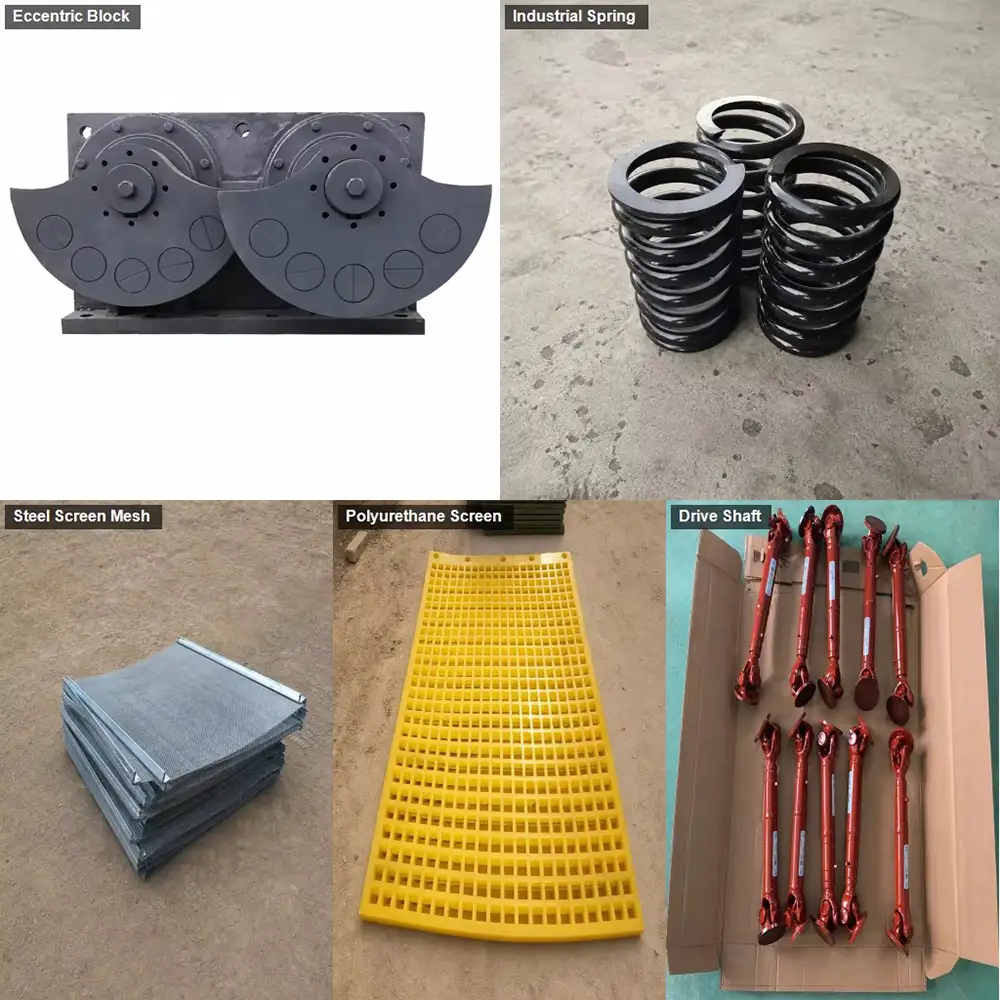
Durable Suspension System: Industrial-grade steel springs effectively absorb impact and ensure stable long-term operation.
Vibrating Screen Machine, Mobile Vibrating Screen for Construction Waste
The Vibrating Screen Machine, Mobile Vibrating Screen for Construction Waste is a flexible material screening solution designed for construction and demolition waste recycling, aggregate processing, crushed concrete separation, sand and gravel classification, and other bulk-material applications. By combining a vibrating screen with a mobile chassis, feeder, conveyors, and supporting systems, the machine can perform material classification directly at the job site.
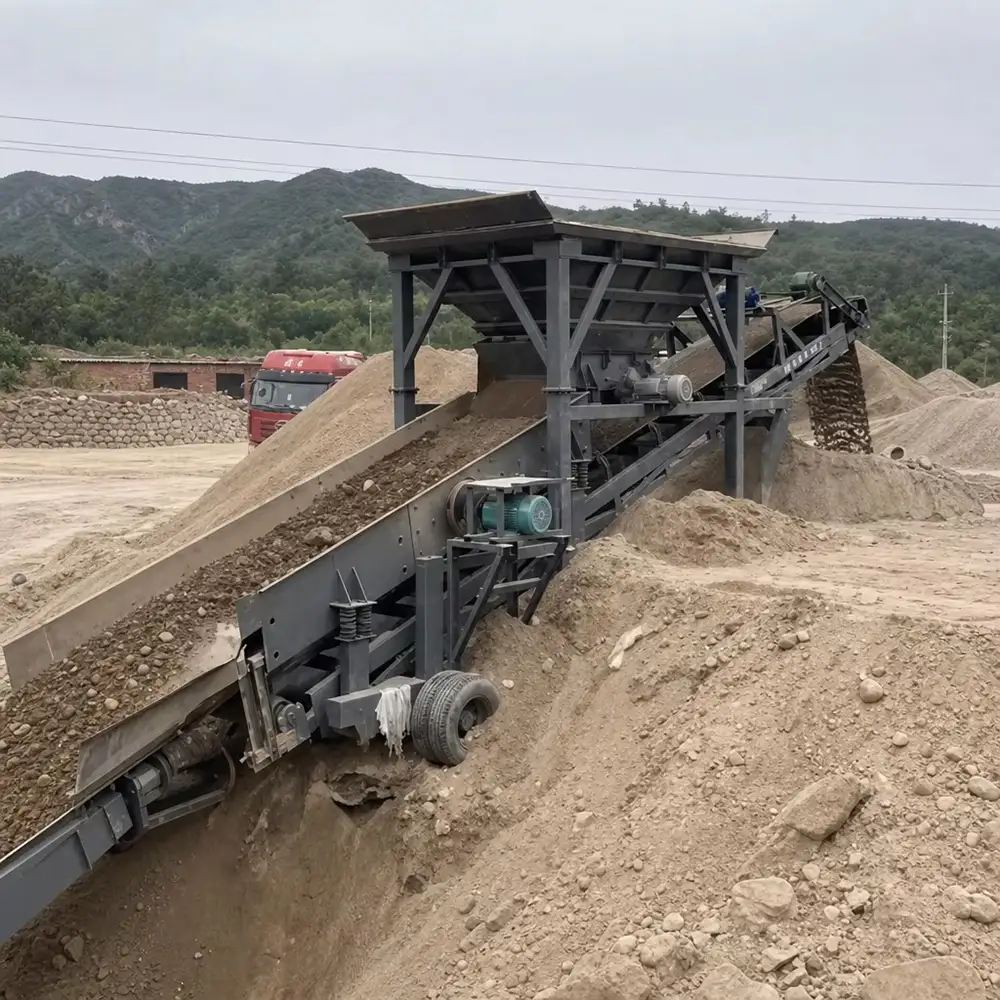
Mobile screening equipment is particularly valuable for construction waste recycling because materials can be processed close to demolition or construction sites rather than being transported to a fixed screening plant. Portable and tracked screening systems are commonly used for construction and demolition debris, crushed concrete, recycled aggregate, soil, sand, gravel, and other materials.
The machine can be configured as a wheeled or tracked mobile vibrating screen according to site conditions, transportation requirements, production capacity, and project duration. A tracked configuration can move around a job site under its own power, while a towable or wheel-mounted configuration can provide convenient relocation between sites.
What Is a Mobile Vibrating Screen?
A mobile vibrating screen is a screening machine mounted on a mobile chassis. Unlike a traditional stationary vibrating screen that requires a fixed foundation and permanent installation, a mobile unit can be transported or relocated as the project changes.
A typical mobile screening process is:
Feeding → Vibrating Screening → Size Separation → Conveying → Stockpiling
The incoming material is fed onto the screen deck. Vibration causes the material to move, stratify, and separate according to particle size. Smaller particles pass through the openings in the screen media, while larger particles remain on the deck and discharge from the end.
A multi-deck vibrating screen can divide the feed material into several size fractions during one screening process. For example, a construction-waste recycling operation may separate fine material, medium recycled aggregate, and oversize material for further crushing or processing.
Construction Waste Screening
Construction and demolition waste often contains a mixture of concrete, bricks, stones, soil, asphalt, wood, metal, and other materials. Screening is an important stage in recycling systems because it separates material into useful particle-size fractions.
The mobile vibrating screen can be integrated into a complete construction waste recycling line such as:
Construction Waste → Primary Crushing → Magnetic Separation → Vibrating Screening → Recycled Aggregate
Depending on the feed composition and final product requirements, additional equipment such as impact crushers, jaw crushers, magnetic separators, air classifiers, conveyors, or dust suppression systems may be incorporated.
For reinforced concrete recycling, screening can be combined with crushing and magnetic separation to produce recycled aggregate while recovering ferrous metal.
Vibrating Screening Working Principle
The vibrating screen uses a vibrating mechanism to generate controlled movement of the screen box.
After the material enters the screen:
The feeder delivers material evenly onto the screen.
The vibrating mechanism generates the required vibration.
Material spreads across the screen surface.
Particles are stratified according to size.
Fine particles pass through the screen openings.
Oversized particles travel toward the discharge end.
Different fractions are collected by separate conveyors or discharge outlets.
The screening angle, vibration characteristics, screen media, feed rate, material moisture, particle shape, and deck configuration all influence screening performance.
For construction waste and recycled aggregate, the screen should be selected according to the actual material characteristics rather than relying only on nominal capacity.
Mobile Screen Configuration
A mobile vibrating screen can be supplied in different configurations depending on the application.
Tracked Mobile Vibrating Screen
Tracked screeners are mounted on crawler tracks and can move directly around construction sites, demolition projects, recycling yards, and difficult terrain.
They are especially useful when the machine needs to move frequently between different working positions. Some tracked screening systems integrate the screen, feeder, conveyors, and travel system into a single self-contained unit.
Wheel-Mounted Vibrating Screen
Wheel-mounted or towable vibrating screens can be transported between sites using suitable transport equipment. They can be useful for temporary projects, aggregate yards, construction sites, and applications where frequent relocation is required.
Portable Screening Plant
A portable screening plant can integrate the vibrating screen with a hopper, feeder, discharge conveyors, and mobile chassis. This configuration allows material to be processed and stockpiled at the same location.
Multi-Deck Screening
The screen deck configuration determines how many material fractions can be produced.
A single-deck screen is suitable when the material only needs to be separated into two basic fractions.
A double-deck screen can create three basic fractions, while a triple-deck configuration can produce additional size classifications.
For example:
Feed Material → Top Deck → Middle Deck → Bottom Deck
Each deck can use a different screen opening according to the required product sizes.
This makes multi-deck vibrating screens suitable for recycled concrete aggregate, crushed stone, sand, gravel, and other applications where several finished sizes are required. Mobile screening systems are commonly offered with multiple deck configurations for different classification requirements.
Screen Media Options
The screen surface can be selected according to material characteristics and required separation.
Possible screen media include:
Woven Wire Mesh
Welded Screen Mesh
Perforated Plate
Rubber Screen Panels
Polyurethane Screen Panels
Heavy-Duty Screen Plates
Rubber and polyurethane media can be useful in demanding applications where impact resistance, noise reduction, or resistance to certain abrasive conditions is important.
The correct screen opening should be selected according to the desired product size. A smaller opening provides finer classification, while a larger opening allows higher material throughput under appropriate conditions.
Key Features
1. Mobile Operation
The mobile chassis allows the screening machine to move between working areas without constructing a permanent foundation.
2. Construction Waste Recycling
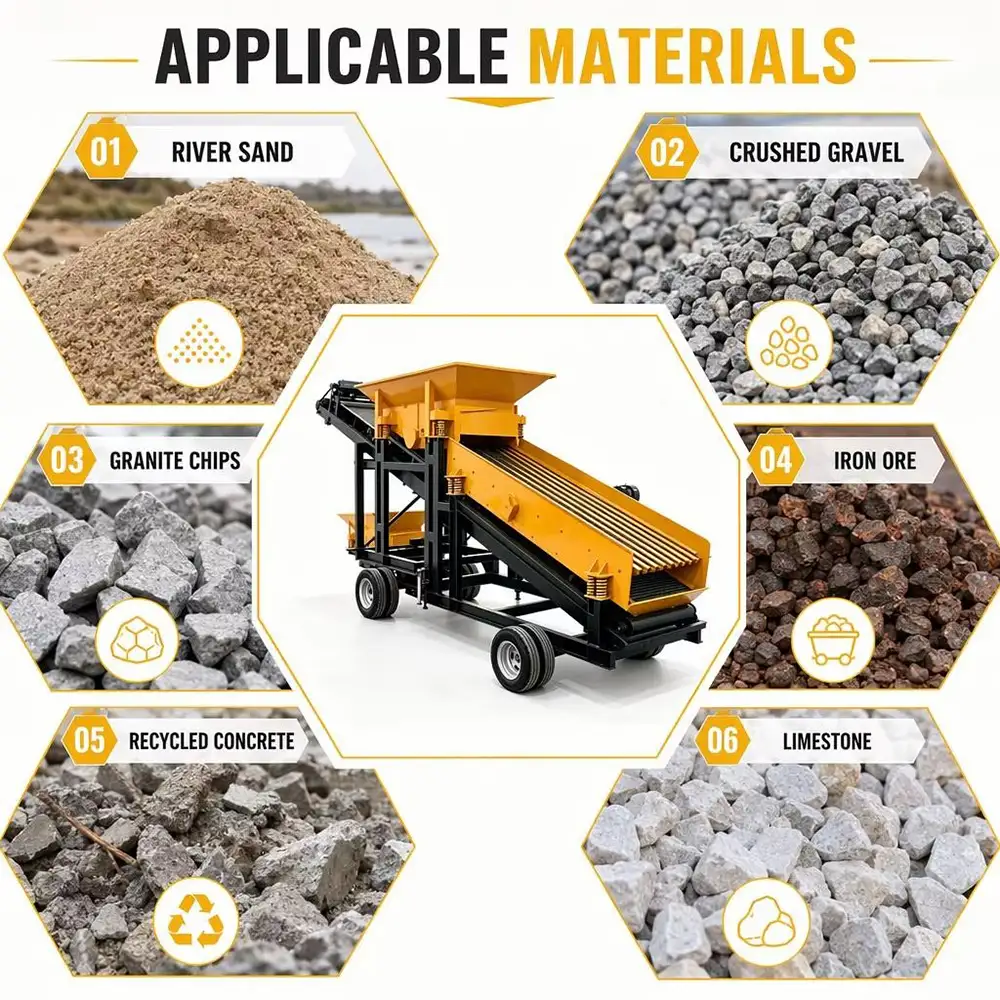
The machine can screen crushed concrete, bricks, demolition debris, recycled aggregate, soil, and other construction materials.
3. Multi-Size Classification
Multiple screen decks can separate material into several particle-size fractions during one operation.
4. Integrated Conveyors
Discharge conveyors can transport different material fractions away from the screen and create separate stockpiles.
5. Flexible Screen Media
Different mesh, rubber, polyurethane, or perforated screen media can be selected according to material characteristics.
6. Simple Site Deployment
Mobile screening systems are designed for rapid deployment and relocation, reducing the installation requirements associated with permanent screening plants.
7. Customizable Configuration
Screen size, number of decks, feed hopper, feeder, chassis type, conveyors, screen media, and power configuration can be customized.
Applications
The mobile vibrating screen can be used for:
Construction Waste Recycling
Demolition Waste Screening
Concrete Recycling
Recycled Concrete Aggregate
Brick Recycling
Asphalt Recycling
Sand Screening
Gravel Screening
Crushed Stone Classification
Aggregate Production
Quarry Screening
Soil Screening
Topsoil Processing
Compost Screening
Mining Material Screening
Slag Screening
Road Construction
Infrastructure Projects
Recycling Facilities
Mobile screeners are also used for topsoil, compost, crushed concrete, recycled material, aggregate, and construction and demolition waste.
Advantages for Construction Sites
For construction and demolition contractors, mobility can be one of the most important advantages.
Instead of transporting large quantities of unprocessed material to a centralized facility, a mobile screening plant can be positioned closer to where the material is generated. This can reduce material handling and allow useful fractions to be separated directly at the project location.
The screened material can then be:
Reused as Construction Aggregate
Used for Road Base
Used for Backfilling
Sent to Further Crushing
Stockpiled for Later Processing
Transported as a More Consistent Product
The exact economic benefit depends on transportation distance, material composition, local regulations, fuel costs, and project conditions.
Selection Guide
When selecting a mobile vibrating screen, consider:
Material Type:
Concrete, brick, asphalt, aggregate, soil, gravel, compost, or mixed C&D waste.
Feed Size:
Determine the maximum particle size entering the screen.
Required Capacity:
Specify the desired tons per hour under actual operating conditions.
Final Product Sizes:
Define the required screening cuts before selecting screen decks.
Mobility:
Choose tracked, wheel-mounted, or towable equipment according to the site.
Screen Media:
Select mesh, rubber, polyurethane, or other media according to material characteristics.
Wet or Dry Screening:
Moist or sticky materials may require specialized screen configurations.
Maintenance
Regular inspection helps maintain stable screening performance.
Operators should inspect:
Screen Panels
Vibrating Mechanism
Bearings
Springs
Motor
Drive Components
Feed Hopper
Conveyors
Belt Alignment
Chassis
Hydraulic System
Fasteners
Screen media should be checked for wear, deformation, blockage, and damage. Worn screen panels should be replaced before they significantly affect product sizing.
Bearings and other rotating components should be lubricated according to the manufacturer's maintenance schedule.
For tracked machines, the crawler system, hydraulic components, and travel mechanism should also be inspected regularly.
Why Choose Us?
As an experienced Vibrating Screen Machine Manufacturer and Mobile Screening Equipment Supplier, we provide customized screening solutions for construction waste recycling, aggregate production, quarrying, mining, and other material-processing applications.
Our advantages include:
Mobile And Stationary Screening Solutions
Tracked And Wheel-Mounted Configurations
Single, Double, And Triple Deck Options
Construction Waste Recycling Applications
Custom Screen Media
Integrated Feeding And Conveying Systems
Adjustable Screening Configuration
Heavy-Duty Structural Design
Customized Capacity And Screen Size
OEM And ODM Manufacturing
Complete Crushing And Screening Line Integration
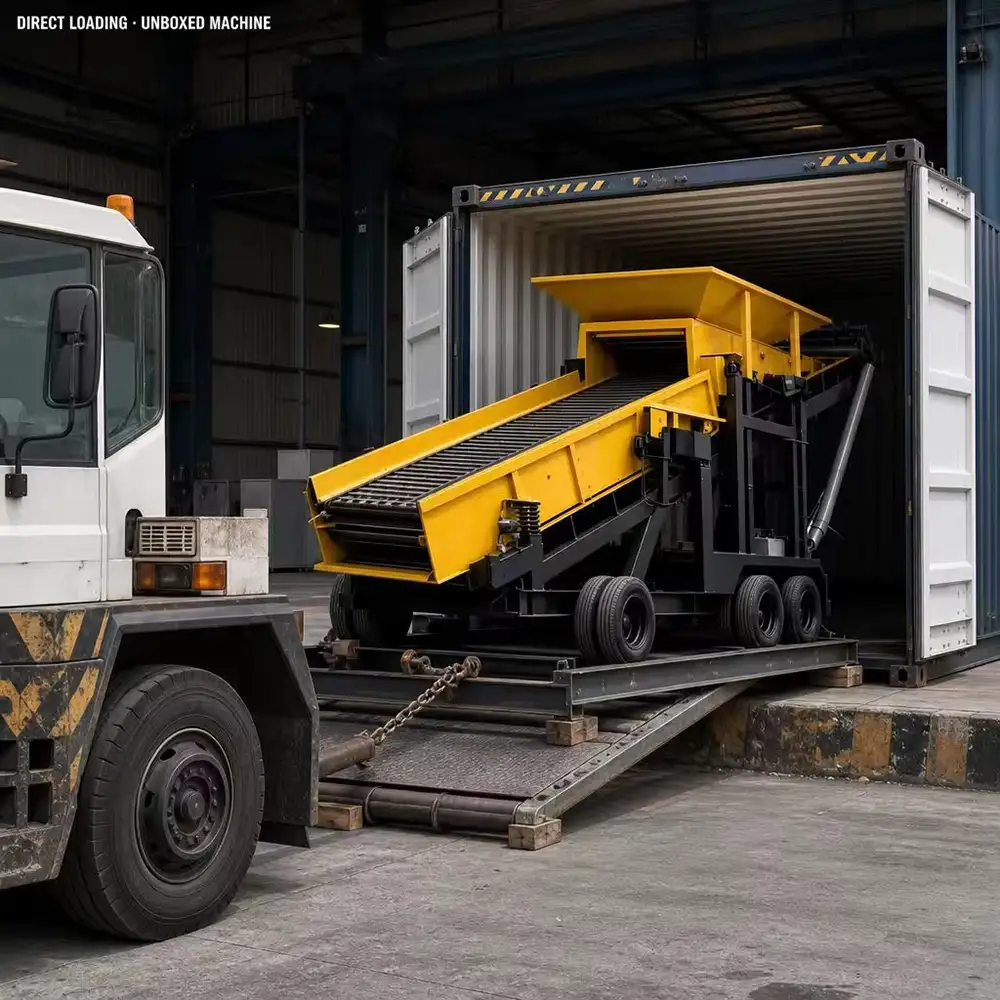
Export-Oriented Technical Support
We can recommend a suitable vibrating screen according to your material type, maximum feed size, required capacity, final product sizes, site conditions, mobility requirements, and budget.
Frequently Asked Questions
1. What is a vibrating screen machine?
A vibrating screen machine is mechanical screening equipment that uses vibration to separate bulk materials according to particle size.
2. Can a mobile vibrating screen process construction waste?
Yes. Mobile vibrating screens are widely used for construction and demolition waste, crushed concrete, recycled aggregate, soil, and other recycling applications.
3. What is the difference between a mobile and stationary vibrating screen?
A mobile screen is mounted on a movable chassis and can be relocated between working areas, while a stationary screen is normally installed permanently as part of a fixed processing plant.
4. Can the machine screen crushed concrete?
Yes. Crushed concrete and recycled aggregate are common applications for mobile screening equipment.
5. Can it separate different aggregate sizes?
Yes. Multi-deck vibrating screens can produce multiple particle-size fractions simultaneously.
6. Is a tracked screen better than a wheel-mounted screen?
Neither is universally better. Tracked screens are advantageous for self-propelled movement around challenging sites, while wheel-mounted units can be convenient when road transport and towing between sites are important.
7. How many screen decks can be used?
The number of decks depends on the machine design. Single-, double-, and triple-deck configurations are commonly available, with customized configurations possible for specific applications.
8. Can the screen media be changed?
Yes. Screen panels can generally be selected or replaced according to the required separation size and material characteristics.
9. Can it screen wet construction waste?
It depends on the moisture level and material composition. Sticky or wet material may require specialized screen media, deck design, vibration parameters, or a different screening technology.
10. Can the vibrating screen work with a crusher?
Yes. A mobile crusher and mobile vibrating screen can be combined into a complete crushing and screening system. The crusher reduces the feed size while the screen separates the crushed material into required fractions.
11. Can a magnetic separator be added?
Yes. For reinforced concrete and mixed construction waste containing ferrous metal, a magnetic separator can be integrated into the recycling line to recover steel and improve material purity.
12. How do I choose the correct vibrating screen?
You should provide the material type, maximum feed size, required capacity, desired output sizes, moisture content, number of products, and whether the machine needs to be tracked, wheeled, or stationary.
13. Can you customize the mobile vibrating screen?
Yes. Screen dimensions, number of decks, screen media, feeder, conveyors, chassis, power system, control system, and other components can be customized according to the project.
Prev:
Spot Welding Machine, Foot-operated Spot Welder for Easy Operation
Next:Sorry, no information
TAG:
Industrial Screening Machine,
Aggregate Vibrating Screen,
Quarry Vibrating Screen,
Aggregate Separation Equipment,
Aggregate Classification Equipment,
Stone Separation Machine,
Gravel Screening Plant,
Sand And Gravel Screening Equipment,
Aggregate Vibratory Screen,
Mining Vibratory Screen,
Heavy Duty Screening Equipment,
Linear Motion Vibrating Screen,
High Capacity Vibrating Screen,
High Efficiency Vibrating Screen,
Material Classification Machine,
Demolition Waste Screening Equipment,
Inclined Vibrating Screen,
Horizontal Vibrating Screen,
Mobile Screening Station,
Mobile Vibrating Screening Plant,
Portable Screening Station,
Mobile Aggregate Screening Equipment,
Mobile Recycling Screen,
Mobile Recycling Screening Plant,
Construction Recycling Screening Equipment,
Construction Waste Screening Plant,
Construction Debris Screening Equipment,
Recycled Material Screening Machine,
Material Separation Machine,
Circular Vibrating Screen,
Related Category:
Vibrating Screen Machine,Mobile Vibrating Screen,Mobile Screening Machine,Construction Waste Screening Machine,Mobile Sc China, suppliers, manufacturers, factory, customized, wholesale, quotation, made in China