Intelligent Automatic Welding Robot for Ground Rail Crane
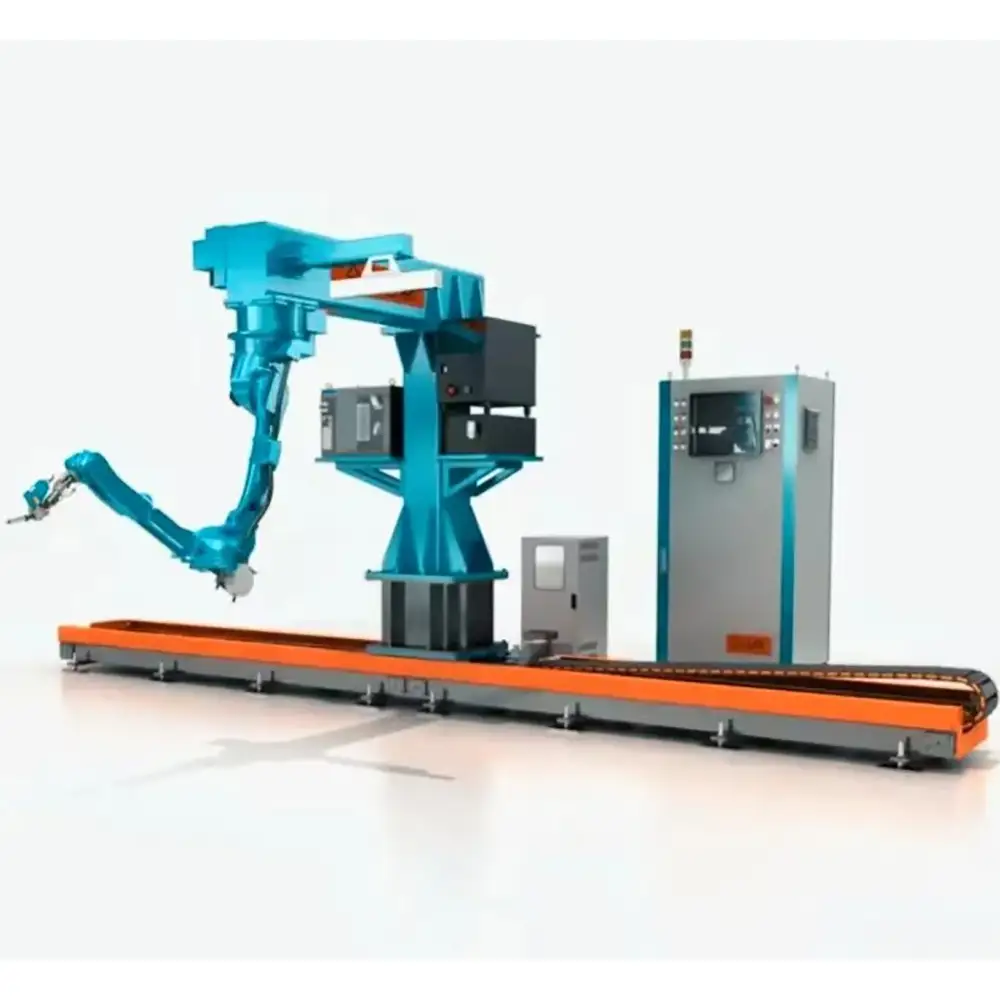
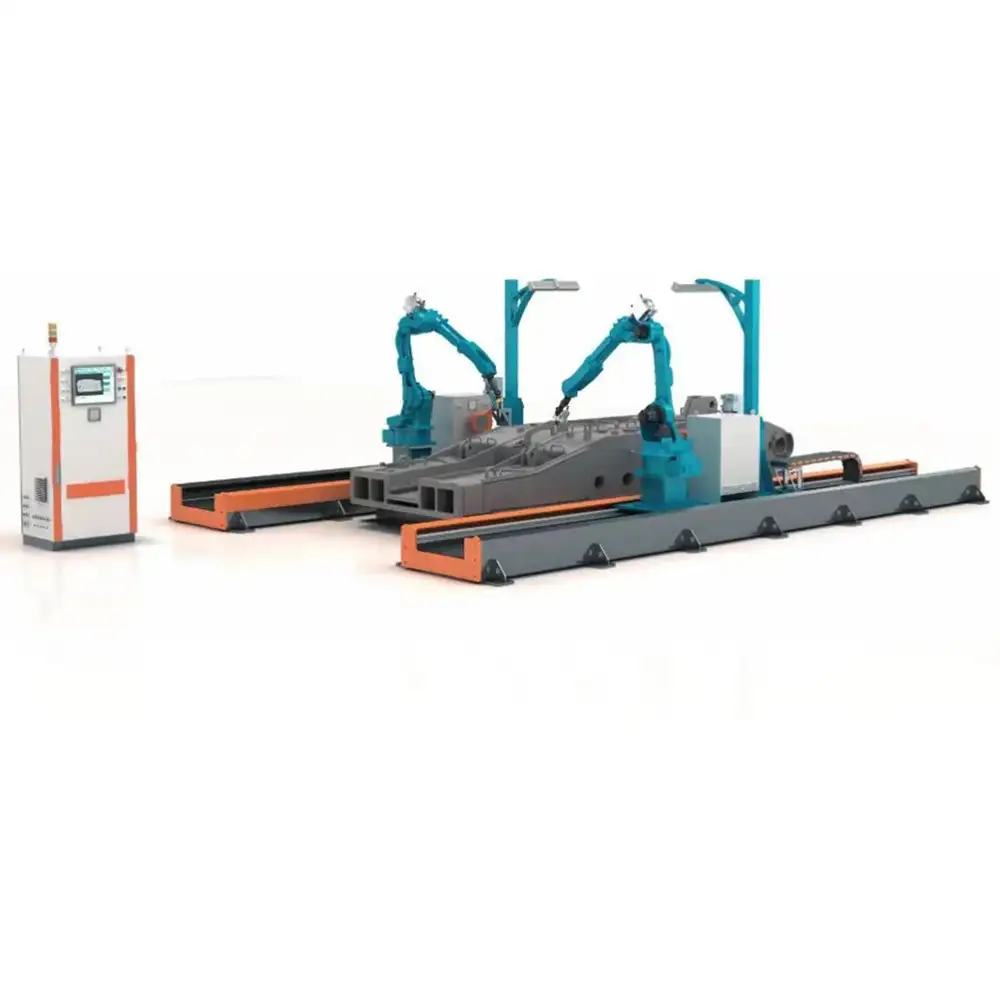
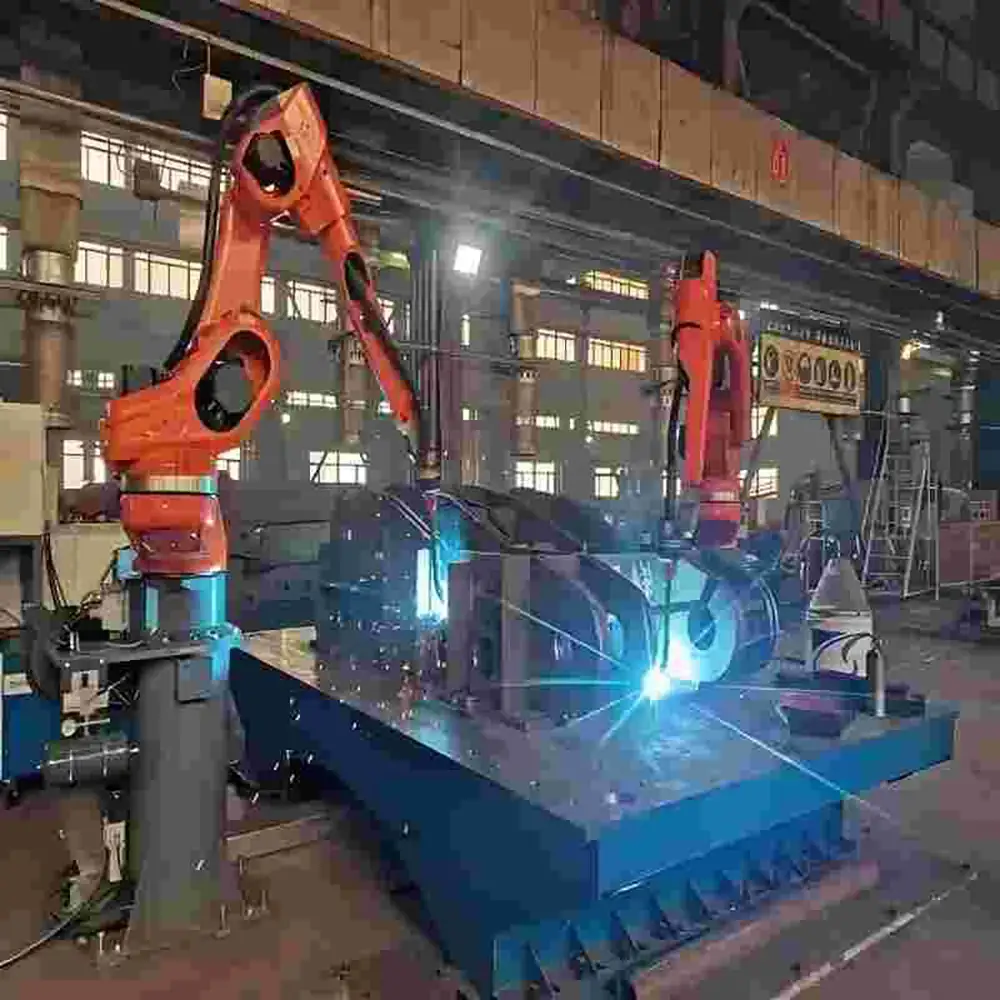
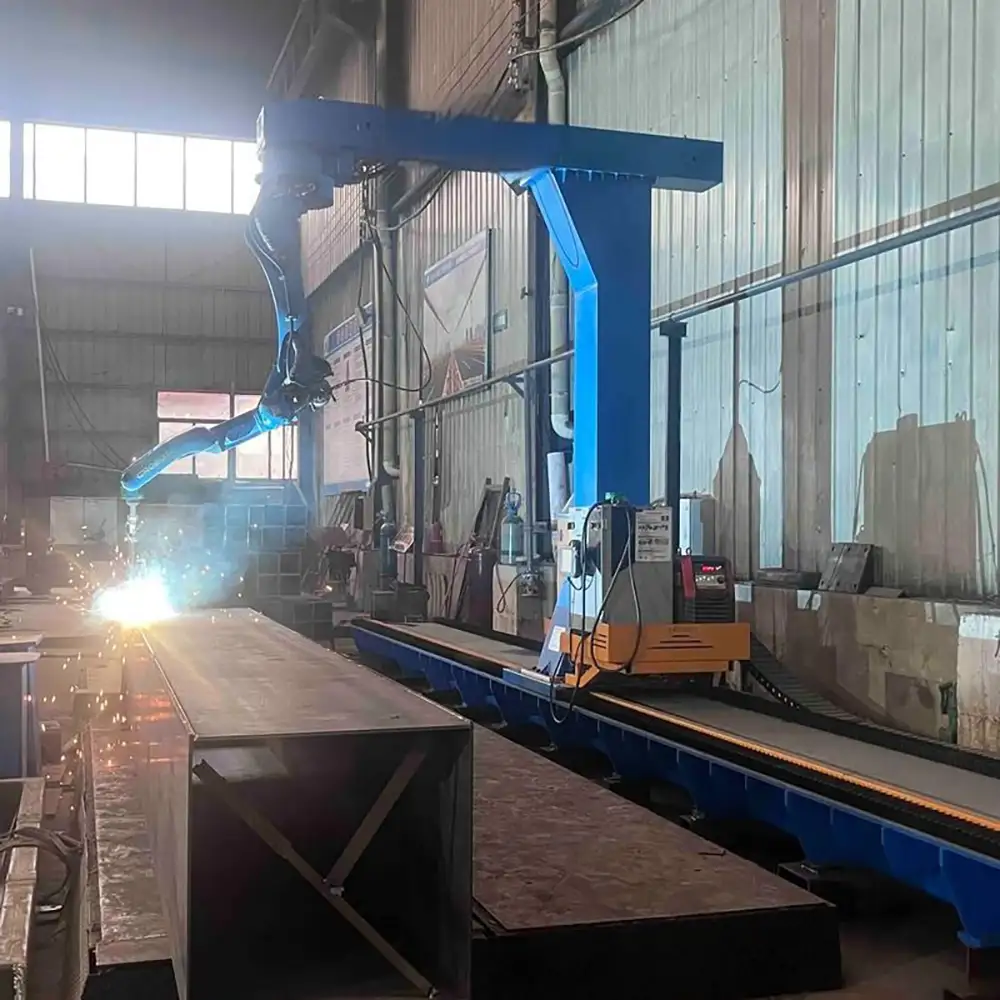
The Intelligent Automatic Welding Robot for Ground Rail Crane is an advanced robotic welding solution designed for automated fabrication and welding of ground rail crane structures and heavy-duty steel components. By combining an industrial welding robot, intelligent control system, welding power source, positioning equipment, and automated motion technology, the system helps improve welding consistency, production efficiency, and overall fabrication quality.
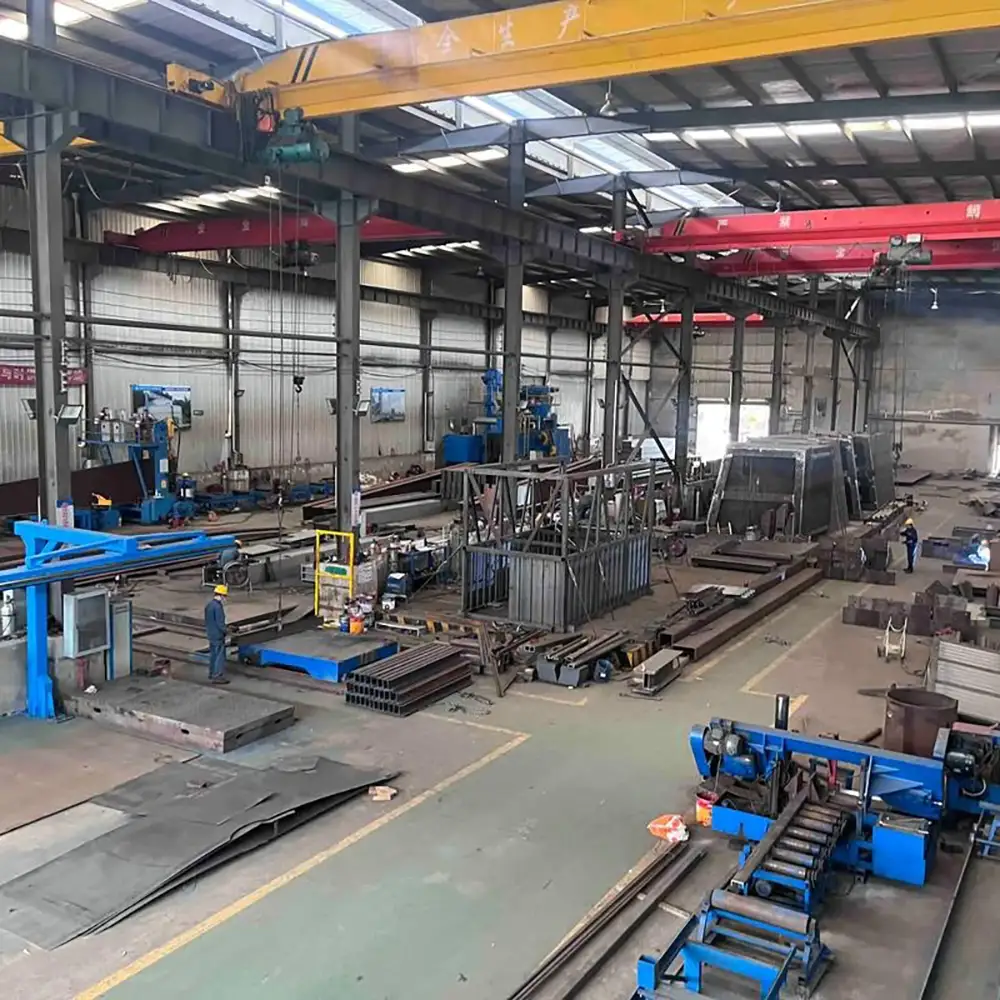
Ground rail cranes commonly contain long structural beams, brackets, support assemblies, connection plates, reinforcing components, and other welded steel parts. These components require accurate positioning and reliable weld quality to ensure structural strength and long-term operating performance.
Automating repetitive welding operations allows manufacturers to reduce dependence on manual welding while creating a more stable and repeatable production process.
Intelligent Robotic Welding Technology
The welding robot is designed to perform programmed welding movements with high repeatability. Once the welding path, parameters, and workpiece position have been properly configured, the robot can repeat the same operation across multiple workpieces.
This is particularly useful for crane manufacturing, where similar structural components may be produced in batches. Automated movement can help maintain consistent torch angle, welding speed, travel path, and deposition conditions.
The intelligent control system can coordinate robot movement, welding parameters, positioning equipment, and auxiliary devices to create an integrated robotic welding workstation.
Ground Rail Crane Welding Applications
Ground rail cranes are widely used in factories, warehouses, logistics facilities, workshops, shipyards, steel plants, and material-handling operations. Their structural components must withstand repeated loads and demanding working conditions.
The welding robot can be applied to the fabrication of crane beams, support structures, brackets, reinforcement plates, connection components, and other suitable steel assemblies.
Depending on the workpiece design, the robotic system can perform different welding operations along horizontal, vertical, longitudinal, or other programmed welding paths.
Automated Welding of Heavy Steel Structures
Manual welding of large crane components can require significant labor and may involve repetitive operations, long welding distances, and demanding working positions.
A robotic welding system provides a controlled alternative for suitable repetitive welding tasks. The robot can maintain a programmed welding trajectory while the workpiece is accurately positioned.
This helps reduce variations caused by operator fatigue, inconsistent travel speed, or changes in welding position. It can also improve production repeatability when the same crane component needs to be fabricated many times.
High Welding Consistency
Welding quality is closely related to welding current, voltage, wire feeding speed, travel speed, torch angle, arc length, and shielding gas conditions.
A robotic system can execute programmed welding parameters with consistent movement. This supports stable weld formation and helps reduce common inconsistencies associated with repetitive manual welding.
For crane structures, consistent weld quality is especially important because structural components may experience vibration, dynamic loading, impact, and repeated mechanical stress during operation.
Proper welding procedures, material preparation, joint design, inspection, and process qualification should still be applied according to the applicable production standards.
|
Weld gap |
Adaptive welding seam ≤3mm |
|
Basic functions |
Autonomous planning; arc tracking; pulse welding; circumferential welding; weaving welding; intermittent welding; fillet welding; multi-layer and multi-pass welding |
|
Wire diameter |
¢0.8mm/¢1.0mm/¢1.2mm/¢1.6mm |
|
Wire Type |
Solid welding wire (barrel/reel)/flux-cored welding wire (barrel/reel) |
|
Welding current |
350A/500A/630A |
|
Robotic arm brand |
Self-owned brands/Other mainstream brands such as Yaskawa, Fanuc, Kawasaki, Kuka, etc. are all acceptable |
|
Welding machine brand |
Magmet/Otai/Kelda, etc. |
|
Intelligent welding software |
Independently developed visual intelligent welding software system |
|
Intelligent welding hardware |
Visual camera, guide pen, industrial computer |
|
Free customization |
Customization is acceptable (ground rail length range, robot arm brand selection, welding machine selection) |
|
The visual guidance system can be grafted and sold separately |
Flexible Welding System
The robotic welding workstation can be configured with different auxiliary equipment according to workpiece size and welding requirements.
Possible components include:
Industrial Welding Robot
Welding Power Source
Positioner
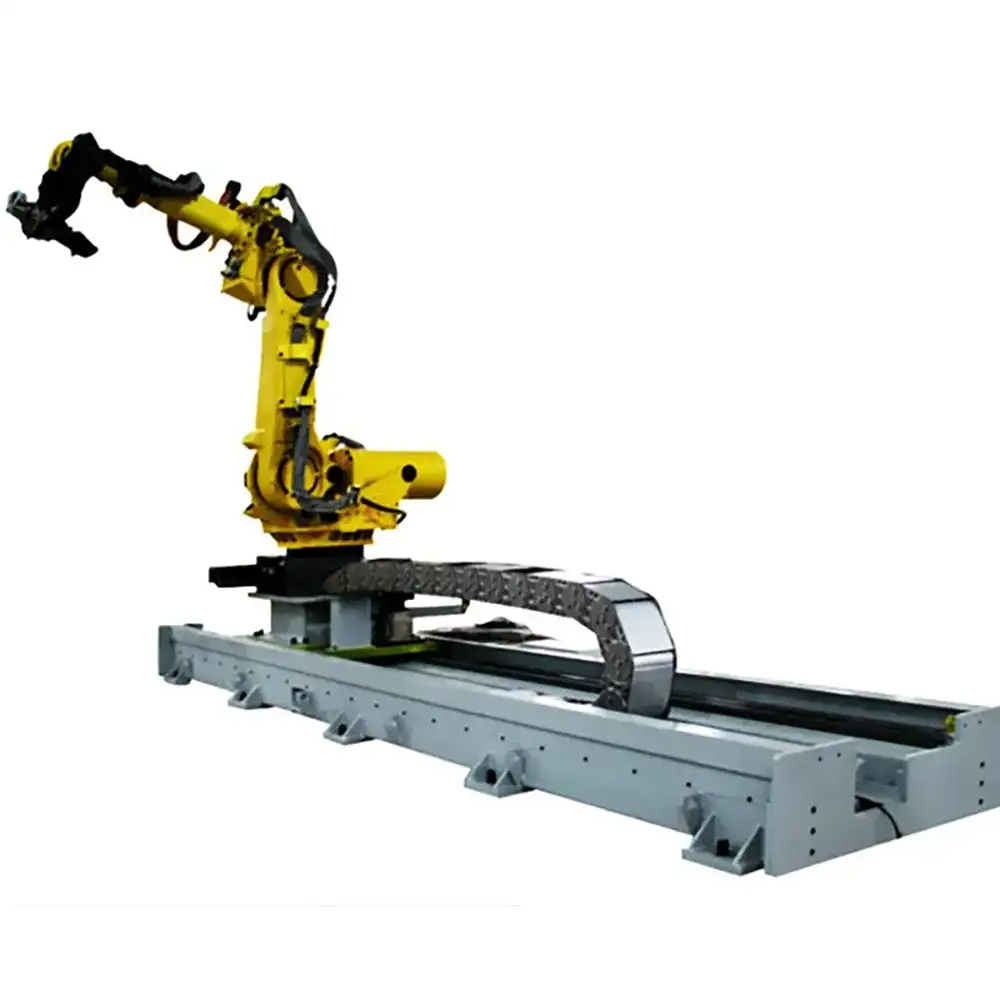
Ground Rail or Linear Track
Welding Torch
Wire Feeder
Welding Fixture
Safety Fence
Automatic Control Cabinet
Welding Fume Extraction System
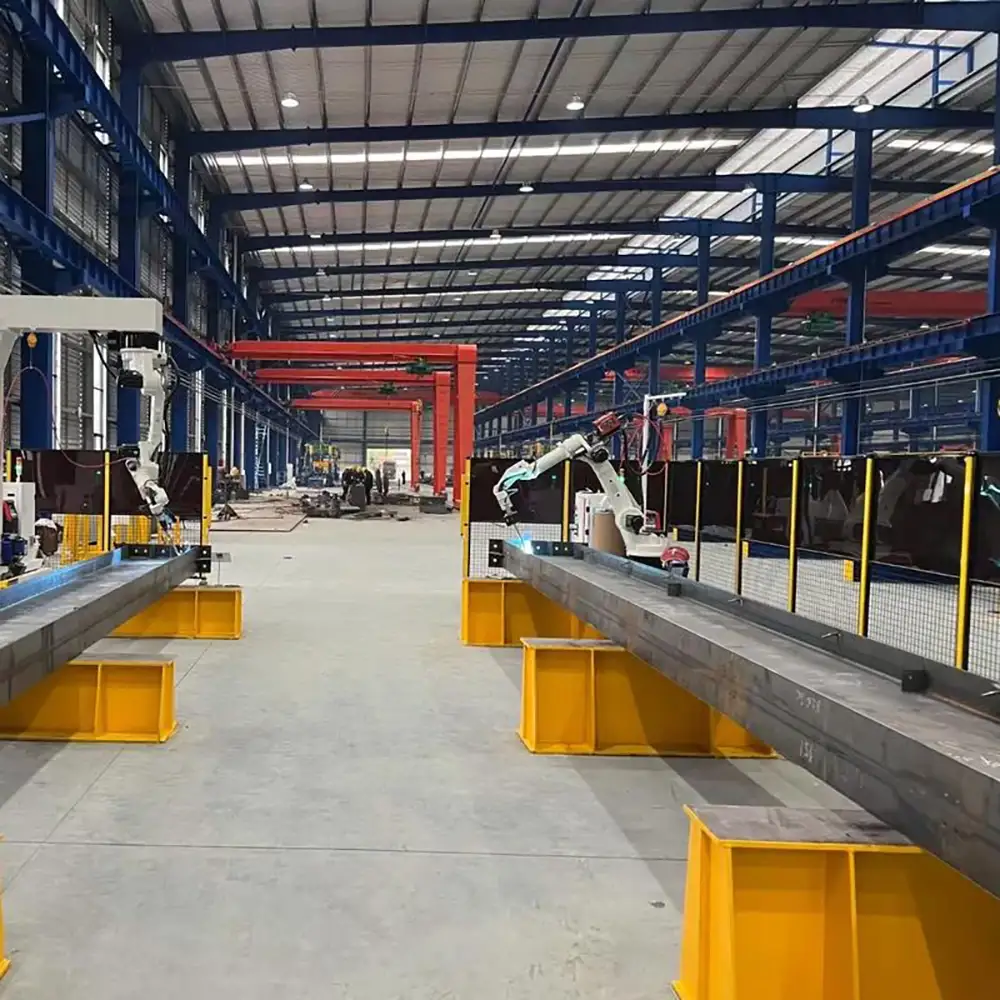
A ground rail can provide additional robot movement for long crane components. This allows the robot to travel along an extended working area while maintaining a suitable welding position.
Automatic Positioning and Motion Control
Accurate workpiece positioning is essential for robotic welding. Fixtures and positioners can help hold crane components securely during welding.
A positioner can rotate or reposition the workpiece so that the welding robot can access different joints from more favorable welding angles. This can improve welding accessibility and reduce unnecessary robot movements.
The combination of robot motion, ground rail travel, and workpiece positioning creates a coordinated welding cell suitable for complex crane fabrication operations.
Improved Production Efficiency
Automation can significantly improve productivity when welding operations are repetitive and production volumes justify robotic integration.
The robot can operate continuously within defined production cycles, reducing setup time and repetitive manual welding work. Consistent welding speed can also make production planning more predictable.
For manufacturers producing multiple ground rail cranes or similar steel structures, robotic welding can help improve throughput while maintaining stable production quality.
Welding Safety and Working Environment
Robotic welding can help reduce direct operator exposure to welding arc radiation, heat, sparks, fumes, and repetitive welding positions.
Operators can supervise the automated welding cell, perform setup and inspection tasks, and intervene when necessary rather than continuously holding the welding torch throughout the production cycle.
A complete robotic welding cell should include appropriate guarding, emergency stops, interlocks, ventilation, fume extraction, and other safety measures based on the installation environment and applicable regulations.
Applications Beyond Ground Rail Cranes
Although designed for ground rail crane fabrication, the robotic welding system can also be adapted to other heavy steel structures and industrial components.
Potential applications include:
Overhead Crane Structures
Gantry Crane Components
Steel Beams
Industrial Frames
Structural Brackets
Reinforcement Assemblies
Heavy Machinery Frames
Material Handling Equipment
Steel Fabrication
Industrial Welding Production Lines
The actual application depends on workpiece dimensions, joint configuration, material type, welding process, and required production cycle.
Why Choose Us
Selecting a robotic welding system requires consideration of robot reach, payload, workpiece dimensions, welding process, positioning accuracy, production volume, and available factory space.
Our automated welding solutions focus on:
Intelligent Automation: Coordinated robot and welding control supports repeatable production.
High Welding Consistency: Programmed movement helps maintain stable welding parameters and torch paths.
Ground Rail Integration: Extended robot travel is suitable for long crane structures.
Heavy Steel Fabrication: Designed for suitable crane beams, brackets, frames, and structural components.
Flexible Configuration: Positioners, fixtures, welding power sources, and safety systems can be integrated.
Improved Productivity: Automated repetitive welding can increase production efficiency.
Reduced Manual Welding: Operators can focus more on setup, supervision, inspection, and quality control.
Better Working Environment: Automation can reduce direct exposure to welding heat, arc radiation, and fumes.
Repeatable Production: Stored welding programs support consistent processing of similar components.
Frequently Asked Questions
1. What is an automatic welding robot for ground rail cranes?
It is a robotic welding system designed to automatically weld suitable structural components used in ground rail cranes and other heavy steel structures.
2. What crane components can be welded?
Depending on the robot configuration and fixtures, the system can weld crane beams, brackets, reinforcement plates, structural frames, connection components, and other suitable steel parts.
3. Why use a ground rail for the welding robot?
A ground rail allows the robot to travel along a longer working area, making it suitable for long crane beams and large structural components.
4. Can the robot weld thick steel?
Yes, robotic welding can be used for suitable thick steel components when the welding power source, process, torch, wire, joint preparation, and welding parameters are correctly selected.
5. What welding processes can be used?
Depending on the configuration, processes such as MIG, MAG, or other suitable arc welding methods may be integrated into the robotic welding cell.
6. Does the system require a welding positioner?
A positioner is not required for every application, but it can significantly improve accessibility and welding position when components contain multiple joints or complex geometries.
7. Can the robot weld different crane models?
Yes, multiple welding programs can be stored and selected for different workpieces when the robot's reach, fixtures, and system configuration are suitable.
8. Does robotic welding improve production efficiency?
For repetitive welding applications, automation can improve cycle consistency, reduce manual welding time, and increase overall production efficiency.
9. Is robotic welding safer than manual welding?
Automation can reduce direct operator exposure to welding arc radiation, heat, sparks, and fumes, but the robotic cell still requires appropriate guarding, ventilation, safety controls, and operating procedures.
10. What information is needed to design a robotic welding system?
Important information includes crane component dimensions, steel material, thickness, weld joint types, weld lengths, production volume, welding process, workpiece weight, required cycle time, and available installation space.
Prev:
Ground Rail Visual Welding Robot
Next:Sorry, no information
TAG:
Gantry Crane Welding Robot,
Steel Fabrication Welding System,
Crane Welding Robot,
Crane Welding System,
Heavy Steel Welding Robot,
Heavy Steel Structure Welding,
Structural Steel Welding Robot,
Heavy Duty Welding Robot,
Steel Structure Welding Robot,
Steel Structure Welding Machine,
Steel Structure Welding System,
Automatic Steel Welding Machine,
Automated Steel Welding System,
MAG Welding Robot,
Robotic MAG Welding System,
Automatic MAG Welding Equipment,
Arc Welding Robot,
Automatic Arc Welding Robot,
Robotic Arc Welding System,
Automatic MIG Welding Robot,
Robotic MIG Welding Machine,
Arc Welding System,
Welding Automation Equipment,
Automatic Welding Cell,
Robot Welding Workstation,
Automated Welding Workstation,
Welding Automation System,
Welding Automation Machine,
Robotic Welding Cell,
Automated Welding Cell,
Related Category:
Intelligent Welding Robot, Automatic Welding Robot, Ground Rail Crane Welding Robot, Crane Welding Robot, Automated Cran China, suppliers, manufacturers, factory, customized, wholesale, quotation, made in China