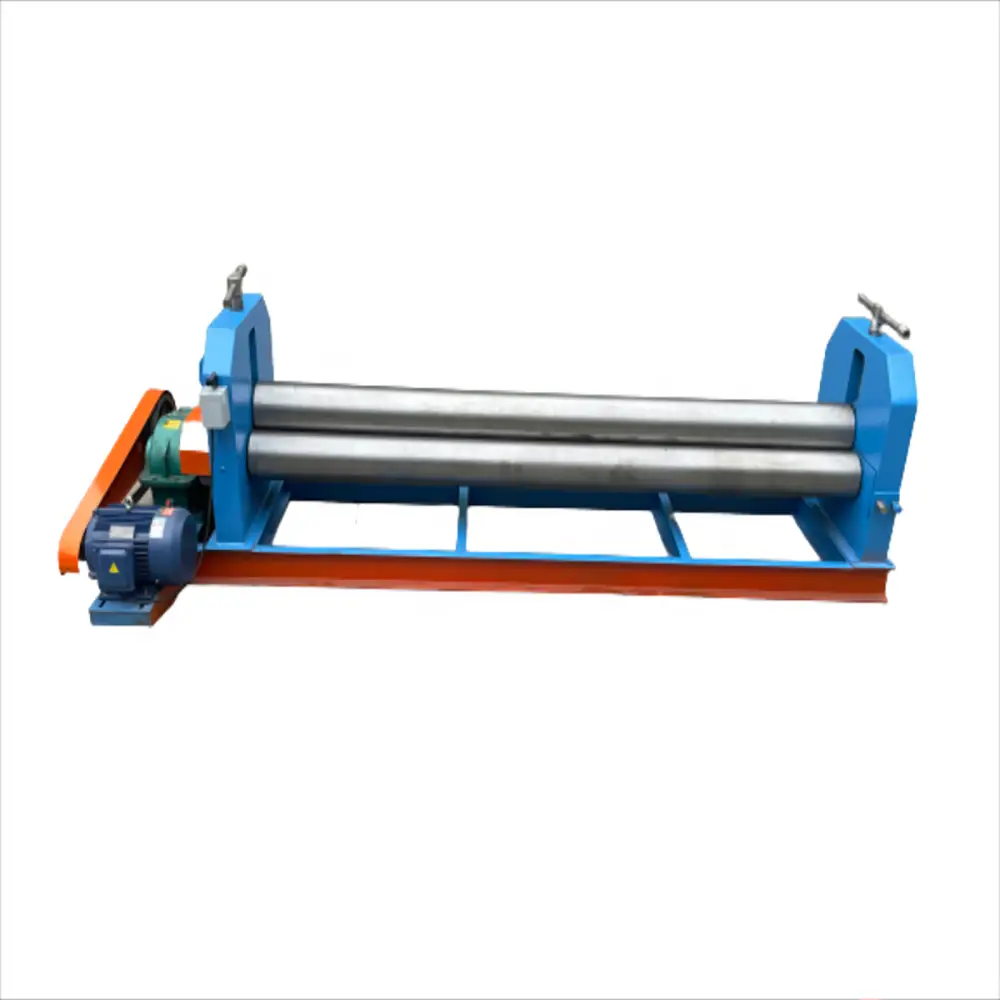
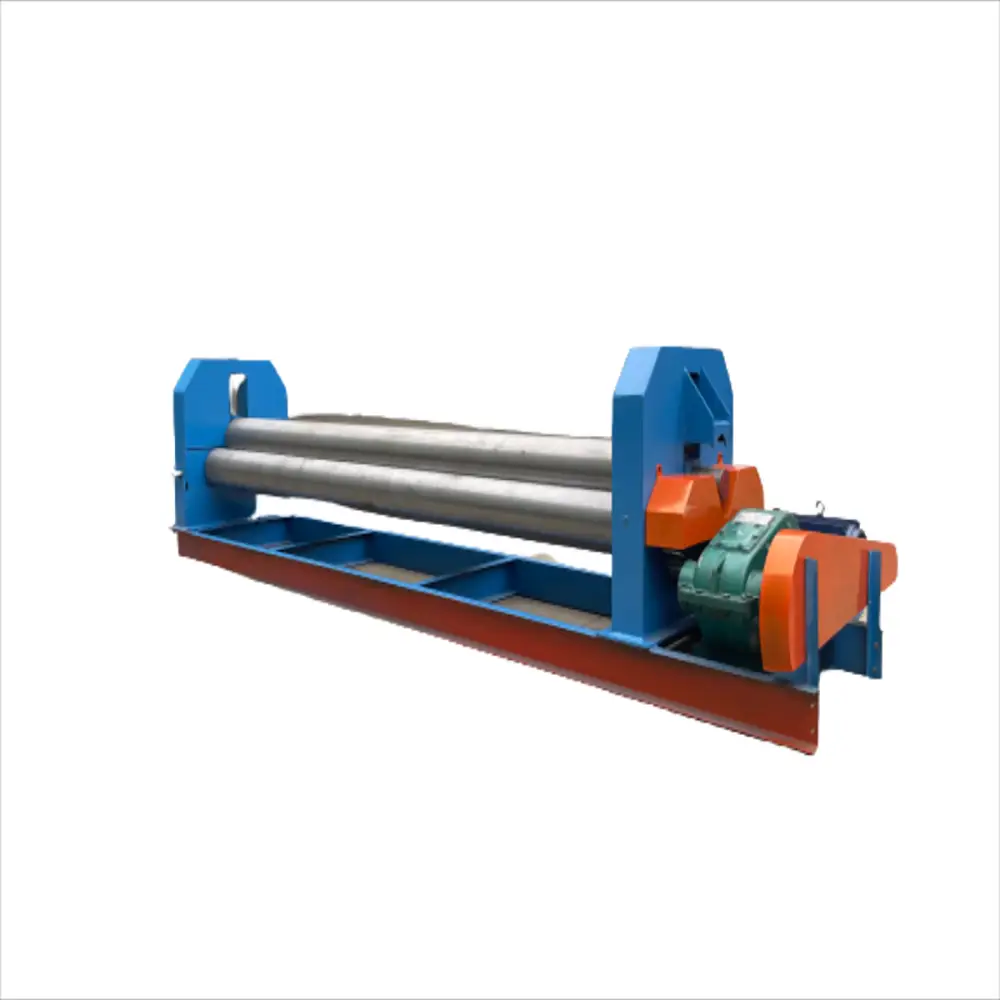
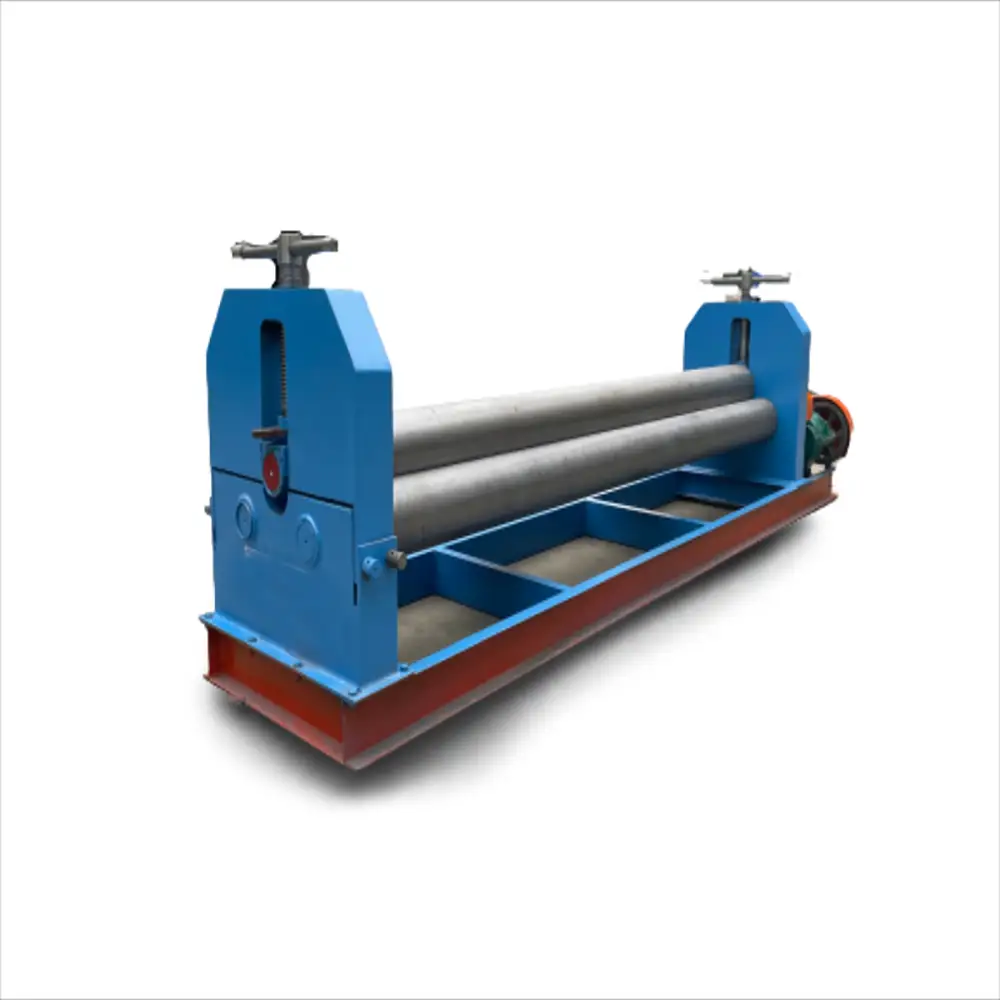
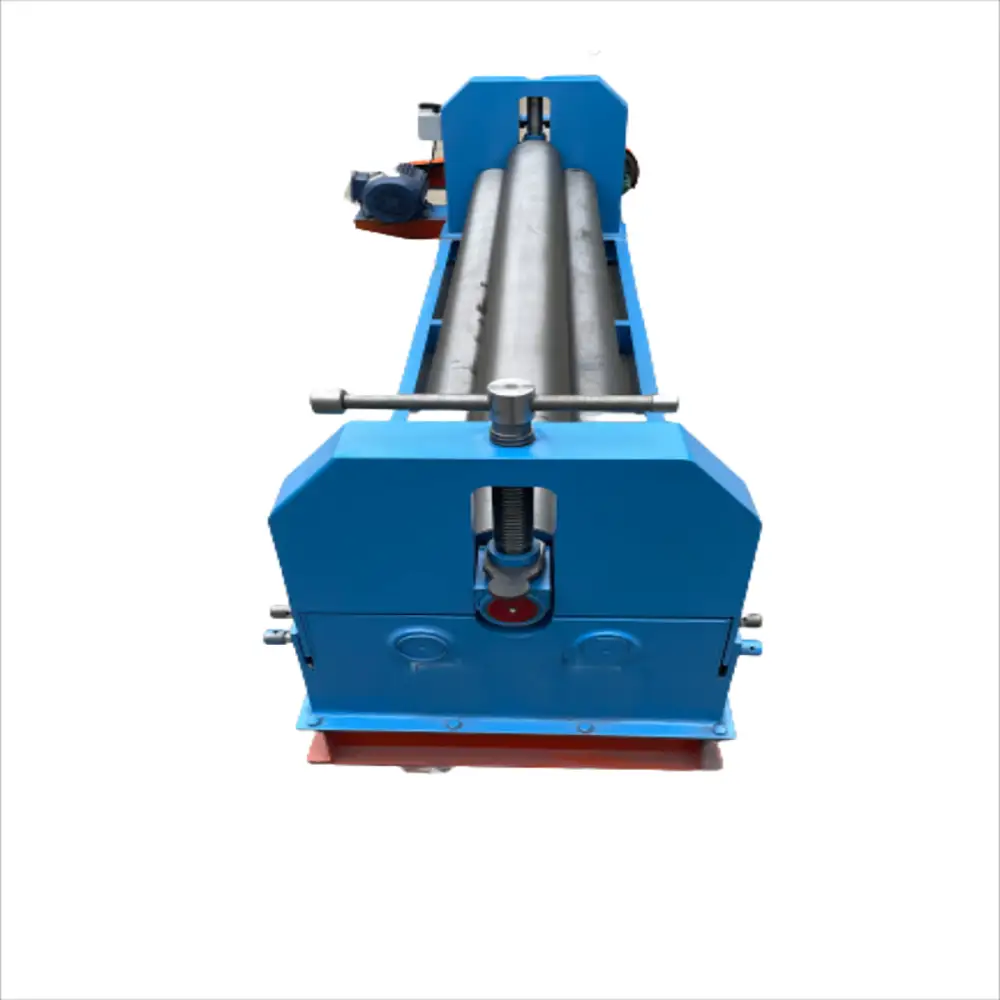
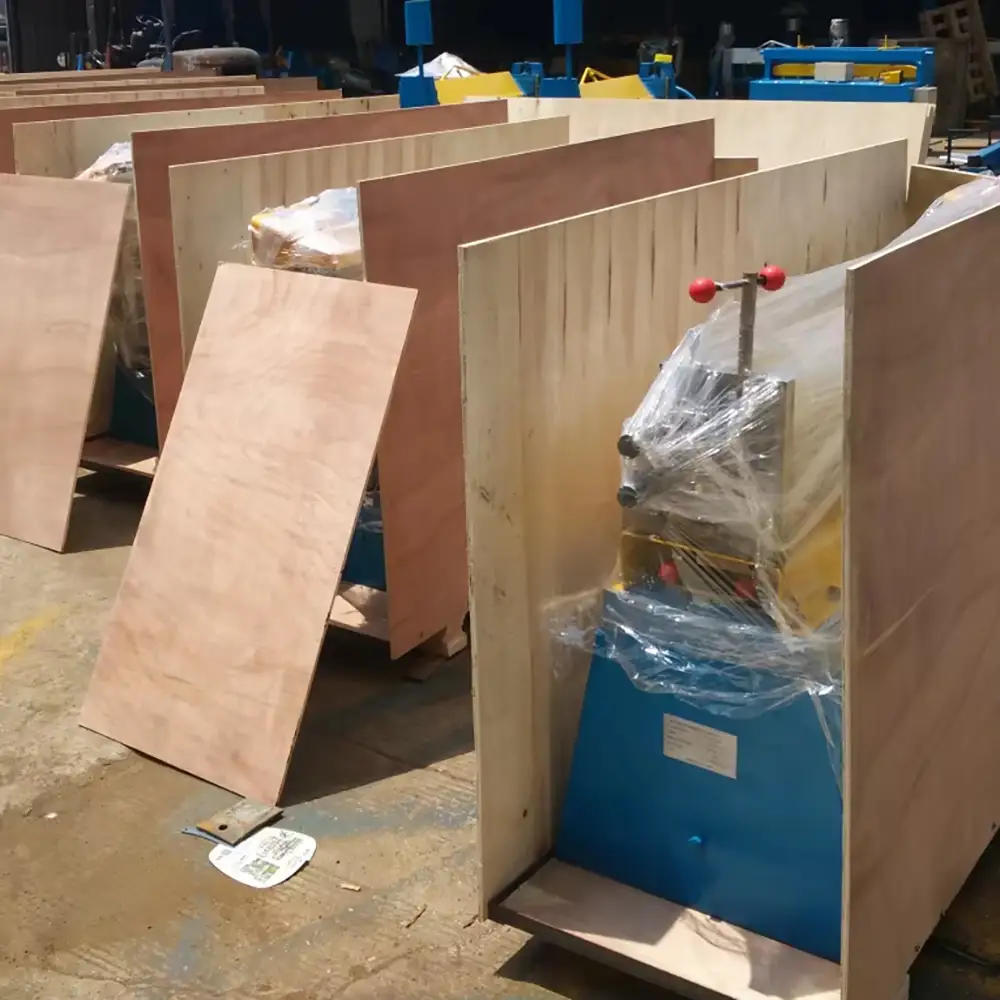
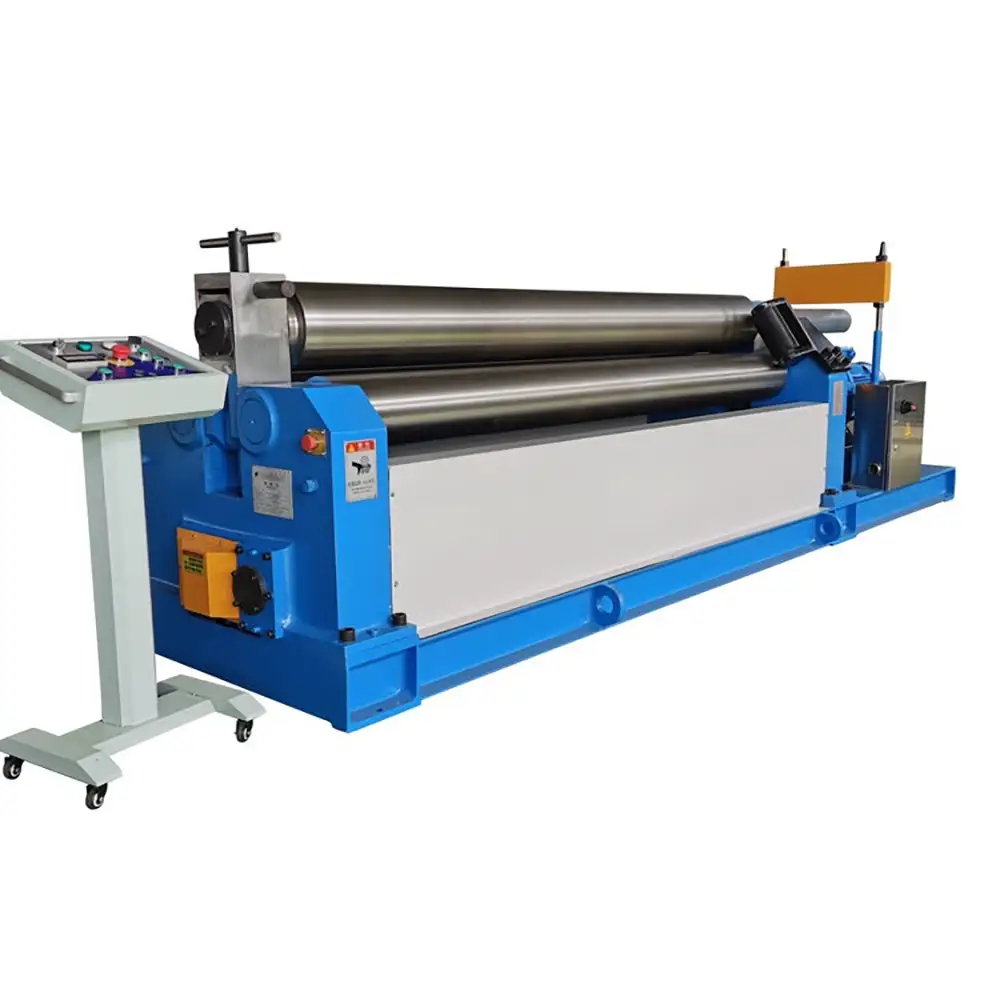
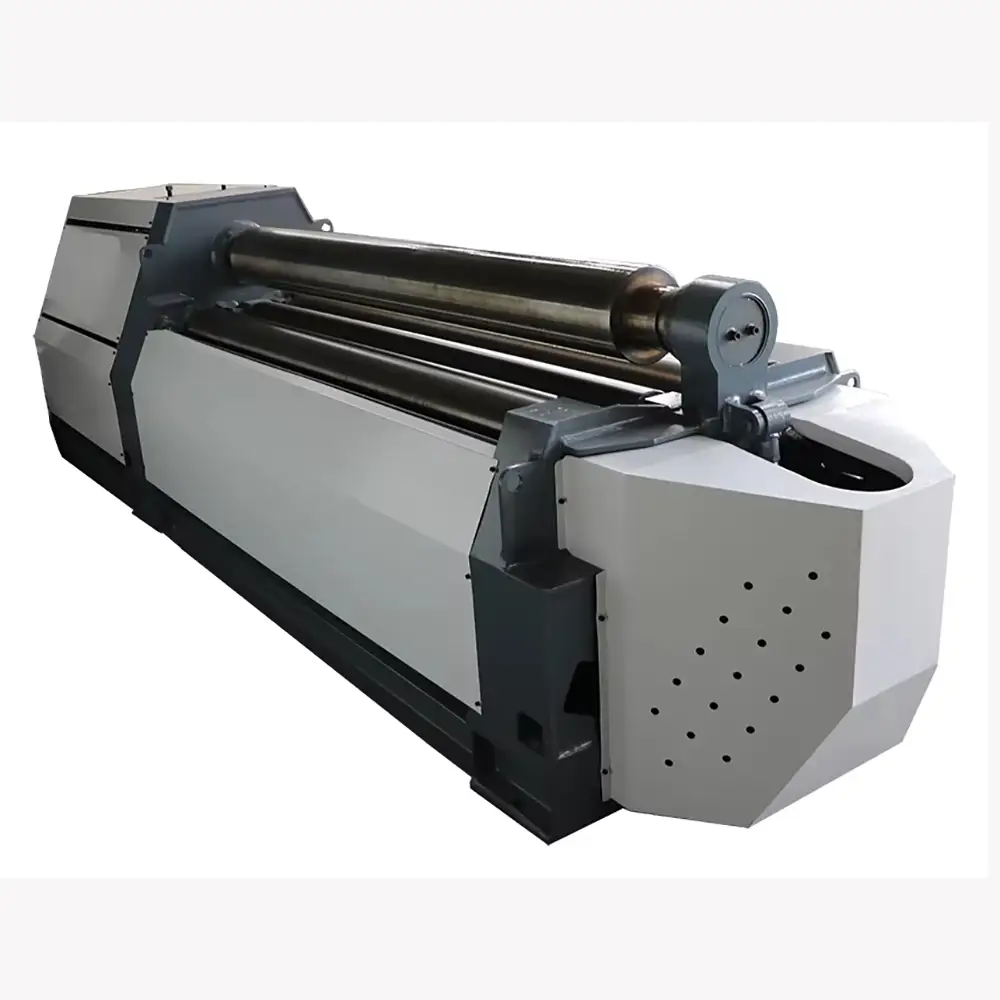
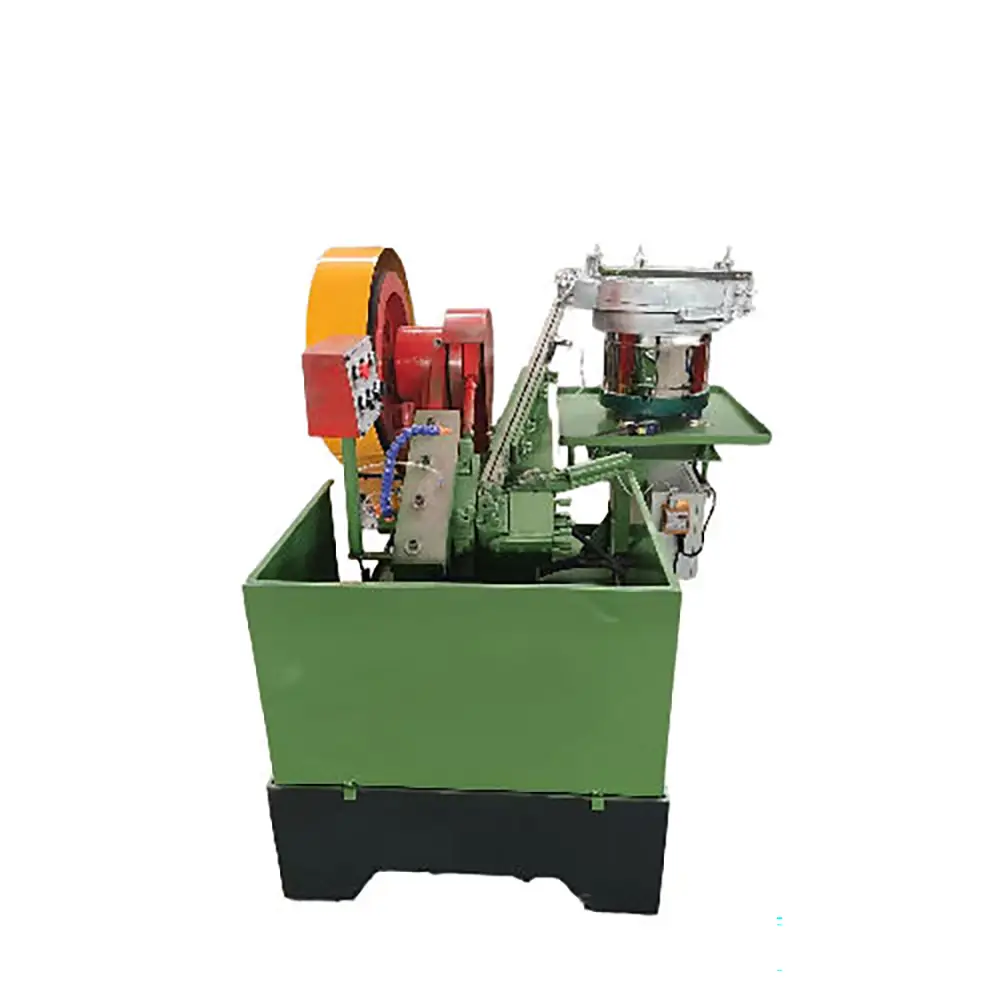
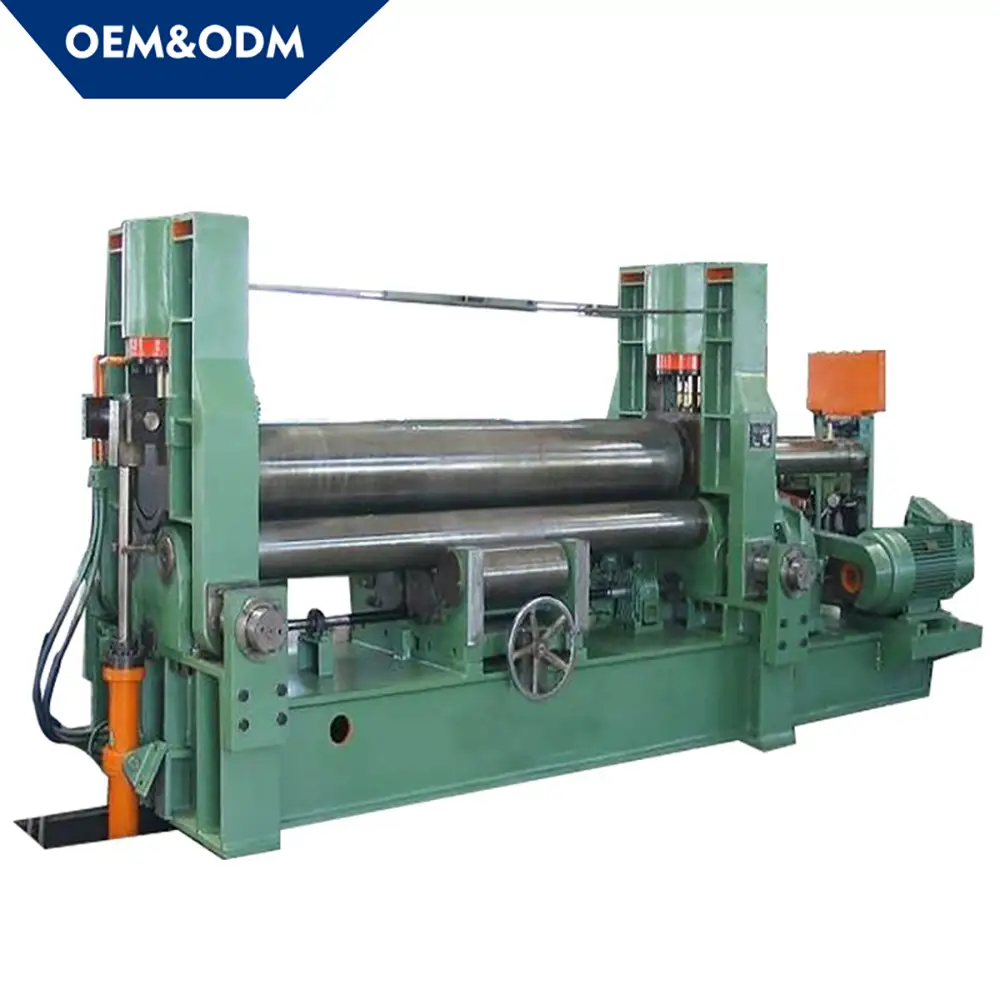
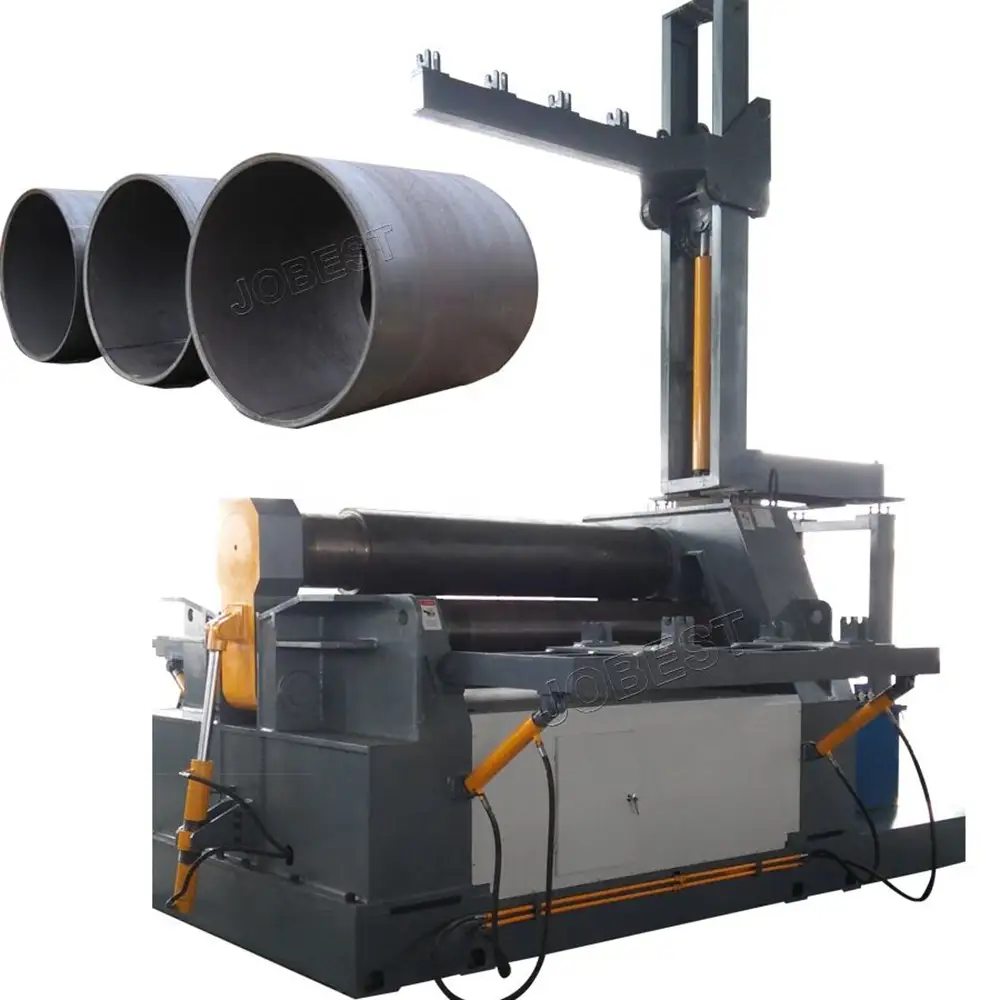
Electric Mechanical Plate Rolling Machine
The use of the overall frame welding and annealing treatment;
Three-roller symmetric structure; driven by screw lever and turbine worm, the upper roller moves in vertical direction in the center symmetrical position between the lower two rollers; As the main drive roller for rotary motion, two lower rollers are engaged with the output gear of the reducer to provide torque for rolling plate.
The machine is compact, easy operation and maintenance; besides, the roller is suitable for installation of profile dies for easy rolling of various profiles.
Easy-to-use removable console.
Two sets of digital output for easy positioning of two lower rollers.
Upper roller lifting motion principle: auxiliary motor and auxiliary reducer drive the worm and turbine under lateral bearing seats to move, consequently rotate the screw nut on the turbine to lift screw lever.
Unloading device: when finishing rolling work, the upper roller rises up, the pull rod on the end of upper roller holding the roller, then disconnects the left bearing seat namely tiltable bearing seat and extracts the pin shaft, turnover the tiltable bearing seat, finally, the finished ferrule will be released from the other end of the upper roller.
High Safety Level Automatic Steel Three Roller Plate Rolling Machine
The High Safety Level Plate Rolling Machine Automatic Steel Three Rollers Plate Rolling Machine is designed for efficient and reliable bending of steel and metal plates into cylindrical, curved and conical shapes. Using a three-roller forming configuration, the machine provides a practical solution for industrial metal fabrication, tank manufacturing, pressure vessel production, structural steel processing and other applications requiring plate rolling.
Plate rolling is a cold-forming process in which a flat metal plate passes through multiple rollers to gradually achieve the required radius. The three-roller configuration provides controlled plate movement and forming while allowing manufacturers to produce different cylindrical or curved workpieces according to material thickness, plate width and machine configuration.
The automatic configuration can reduce repetitive manual operations and improve production consistency. Safety features, controlled roller movement, emergency stopping systems and appropriate machine guarding can be incorporated according to the equipment configuration and applicable requirements.
Automatic Three-Roller Plate Rolling
The three-roller plate rolling machine uses three rollers to guide and progressively bend the workpiece. Depending on the machine design, the upper and lower or side rollers provide the forming force while the plate moves through the rolling area.
A typical production process includes:
Plate Loading → Pre-Bending → Roller Adjustment → Plate Rolling → Final Forming → Workpiece Removal
The actual sequence depends on the machine structure and rolling method.
Automatic roller positioning and controlled operation can help improve repeatability when producing multiple workpieces with similar dimensions.
Steel Plate Rolling Machine
Steel is one of the most common materials processed using plate rolling equipment. The machine can be configured for different grades and thicknesses of carbon steel, stainless steel and other suitable metals.
The correct machine must be selected according to:
Plate Thickness
Plate Width
Material Strength
Rolling Diameter
Minimum Forming Diameter
Production Volume
Required Shape
Heavy-duty configurations are available for applications requiring higher forming capacity. Lighter configurations can be suitable for thinner sheet metal and general fabrication.
Three-Roller Plate Bending Technology
Three-roller plate rolling provides flexibility for cylindrical and curved components. By controlling roller positions and plate movement, manufacturers can gradually form a flat plate into a circular or curved profile.
Typical products may include:
Cylindrical Shells
Storage Tanks
Metal Cylinders
Pipe Sections
Pressure Vessel Components
Conical Sections
Curved Steel Panels
Structural Components
Machine Housings
The final forming capability depends on the machine specifications, roller dimensions, plate thickness and material characteristics.
Pre-Bending and Cylindrical Forming
Pre-bending is an important operation when producing cylindrical workpieces. Proper plate preparation can reduce flat ends and help achieve the desired final shape.
Three-roller plate rolling machines can be configured for different forming procedures depending on the machine design.
For repetitive manufacturing, controlled roller positioning can help operators reproduce similar bending conditions between workpieces.
When selecting a machine, manufacturers should consider the required minimum rolling diameter and plate thickness rather than relying only on maximum plate width.
Conical Plate Rolling
In addition to cylindrical rolling, suitable three-roller configurations can be used for conical plate forming.
Conical rolling requires controlled positioning of the plate and rollers because the two sides of the workpiece travel different distances during forming.
Applications may include:
Conical Tanks
Reducers
Hoppers
Funnels
Transition Sections
Industrial Duct Components
Conical Vessel Parts
The machine configuration and roller adjustment system should be selected according to the required cone angle, material thickness and workpiece dimensions.
Automatic Operation
Automatic operation can help simplify repetitive plate rolling processes. Depending on the selected machine configuration, automation may be applied to roller positioning, plate movement, operating sequences and other functions.
Automatic operation can provide several potential benefits:
Reduced Manual Adjustment
Improved Repeatability
Easier Production Control
Reduced Operator Workload
More Consistent Processing
Improved Production Efficiency
For high-volume production, automation can be combined with material handling equipment and upstream/downstream fabrication processes.
High Safety Level Design
Safety is an important consideration when operating heavy plate rolling equipment.
A properly configured plate rolling machine may incorporate safety-related features such as emergency stop systems, protective devices, controlled roller movement and appropriate operating controls.
Because plate rolling involves heavy workpieces and powerful forming forces, operators should follow the manufacturer's operating procedures and applicable workplace safety regulations.
Safety requirements should be considered during machine selection, installation, commissioning and daily operation.
Hydraulic Plate Rolling System
Hydraulic systems can be incorporated into plate rolling equipment to provide controlled roller movement and forming force.
Hydraulic control can support adjustment of roller positions and facilitate the handling of heavy plates.
The specific hydraulic configuration depends on the machine design and required capacity.
For heavy-duty applications, the hydraulic system should be matched to the required plate thickness, material strength and forming load.
CNC and Controlled Plate Rolling
For applications requiring repeatable production, CNC or programmable control systems can be incorporated into suitable plate rolling machines.
A controlled system can help manage roller positions and repeat production parameters for different workpiece designs.
For manufacturers producing multiple plate sizes and shapes, programmable operation can reduce setup time and improve production consistency.
The appropriate control system should be selected based on the complexity of the production process and the required automation level.
Applications
The Automatic Three-Roller Plate Rolling Machine is suitable for a wide range of industrial applications, including:
Steel Tank Manufacturing
Storage Tank Production
Pressure Vessel Manufacturing
Boiler Component Production
Pipe Manufacturing
Metal Cylinder Production
HVAC Duct Manufacturing
Structural Steel Fabrication
Chemical Equipment Manufacturing
Oil And Gas Equipment
Industrial Machinery Manufacturing
Metal Fabrication
The machine can be used by metal fabrication companies, steel processing factories, equipment manufacturers and OEM production facilities.
How to Select the Right Plate Rolling Machine
Choosing the correct plate rolling machine requires more than simply checking the maximum plate width.
Manufacturers should consider the maximum plate thickness, maximum plate width, material type, minimum rolling diameter and required forming shape.
For example, stainless steel and high-strength steel may require different forming capacities than mild steel of the same thickness.
Production volume should also be considered. A manually operated machine may be suitable for low-volume fabrication, while an automatic or CNC-controlled machine may provide greater efficiency for repetitive production.
Other considerations include roller diameter, working length, motor or hydraulic capacity, control system, safety configuration and available tooling.
Why Choose Us
High-Safety Machine Configuration
Safety-related controls and protective features can be incorporated according to the machine design and applicable operating requirements.
Automatic Three-Roller Design
The three-roller configuration provides an efficient solution for cylindrical and curved metal plate forming.
Wide Industrial Applications
The equipment is suitable for tanks, pressure vessels, pipes, structural components and general metal fabrication.
Flexible Machine Configuration
Machine capacity and configuration can be selected according to plate thickness, width, material and required rolling diameter.
Hydraulic and CNC Options
Hydraulic and programmable control configurations can be selected for different production requirements.
Consistent Production
Controlled roller movement and appropriate tooling can help improve repeatability during batch manufacturing.
OEM & Custom Solutions
Machine configurations can be developed according to customer requirements, product dimensions and factory production processes.
Main Applications
The machine is suitable for steel plate bending, cylindrical shell manufacturing, tank production, pressure vessel fabrication, pipe forming, conical plate rolling, structural steel fabrication and industrial metalworking.
FAQS
1. What is a three-roller plate rolling machine?
It is a metal forming machine that uses three rollers to progressively bend flat plates into cylindrical, curved or suitable conical shapes.
2. What materials can the machine roll?
Depending on the configuration, the machine can process carbon steel, stainless steel and other suitable metal plates.
3. Can the machine roll steel plates?
Yes. Steel plate rolling is one of the primary applications of this type of equipment.
4. Can it produce cylindrical shapes?
Yes. Three-roller plate rolling machines are commonly used for cylindrical shell and curved plate forming.
5. Can it roll conical plates?
Suitable configurations can support conical plate rolling when the roller adjustment system and machine capacity are appropriate for the required cone geometry.
6. Is the machine fully automatic?
Automatic configurations are available. The exact level of automation depends on the selected machine and control system.
7. Does the machine use hydraulic control?
Hydraulic roller adjustment and other hydraulic functions can be incorporated depending on the machine configuration.
8. Can a CNC control system be used?
CNC or programmable control can be available for suitable machine configurations requiring repeatable roller positioning and production parameters.
9. What determines the rolling capacity?
Important factors include plate thickness, plate width, material strength, roller diameter and required minimum rolling diameter.
10. Is the machine suitable for pressure vessel production?
Yes. Suitable heavy-duty configurations can be used for pressure vessel components when the machine capacity meets the required material and dimensions.
11. What safety features can be included?
Depending on the machine design, safety features may include emergency stops, protective devices, controlled roller movement and appropriate operating controls.
12. Can the machine be customized?
Yes. Machine capacity, control system, roller configuration and other options can be selected according to production requirements.
13. What information is needed for a quotation?
Please provide plate material, maximum thickness, maximum width, minimum rolling diameter, required shapes and expected production volume.
Prev:
Sheet Metal Bend Rolling Machine Roll Bending Machine
Next:
Long Term Fully Automatic Thread Rolling Machine
TAG:
Automatic Metal Forming Machine,
Sheet Metal Rolling Machine,
Metal Rolling Equipment,
Pipe Rolling Machine,
Steel Plate Rolling Machine,
Plate Rolling Equipment,
Three Roller Plate Rolling Machine,
Metal Rolling Machine,
Hydraulic Metal Rolling Machine,
Metal Plate Bending Machine,
Hydraulic Plate Rolling Machine,
CNC Plate Rolling Machine,
Cone Rolling Machine,
Conical Plate Bending Machine,
Steel Pipe Rolling Machine,
Three Roller Rolling Machine,
Steel Plate Rolling Equipment,
Heavy Duty Plate Rolling Machine,
Automatic Steel Plate Rolling Machine,
Automatic Metal Rolling Machine,
Conical Plate Rolling Machine,
Steel Plate Bending Machine,
Metal Plate Rolling Machine,
Industrial Plate Rolling Machine,
Industrial Metal Rolling Machine,
Metal Sheet Rolling Machine,
Hydraulic Plate Bending Machine,
Three Roll Plate Rolling Machine,
Three Roller Plate Bending Machine,
Automatic Plate Bending Machine,
Related Category:
Automatic Plate Rolling Machine, Three Roller Plate Rolling Machine, Three Roll Plate Rolling Machine, Steel Plate Rolli China, suppliers, manufacturers, factory, customized, wholesale, quotation, made in China