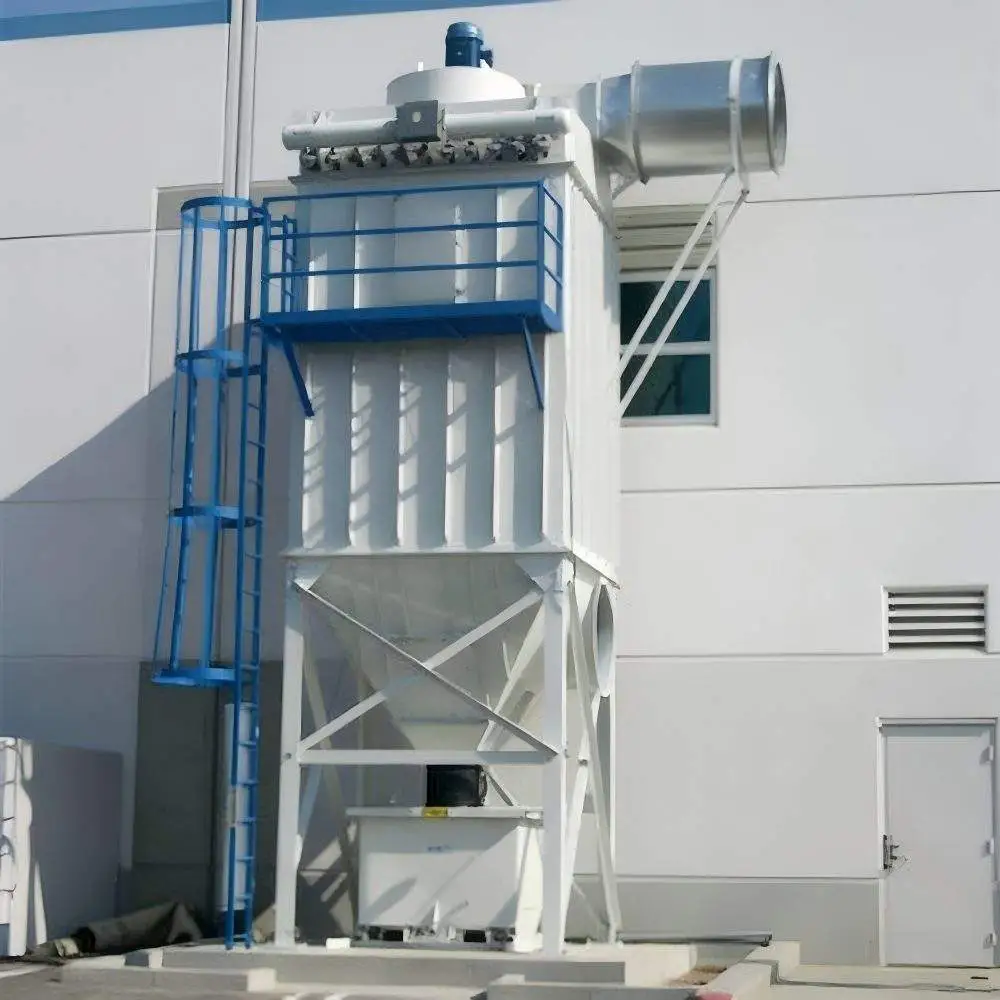
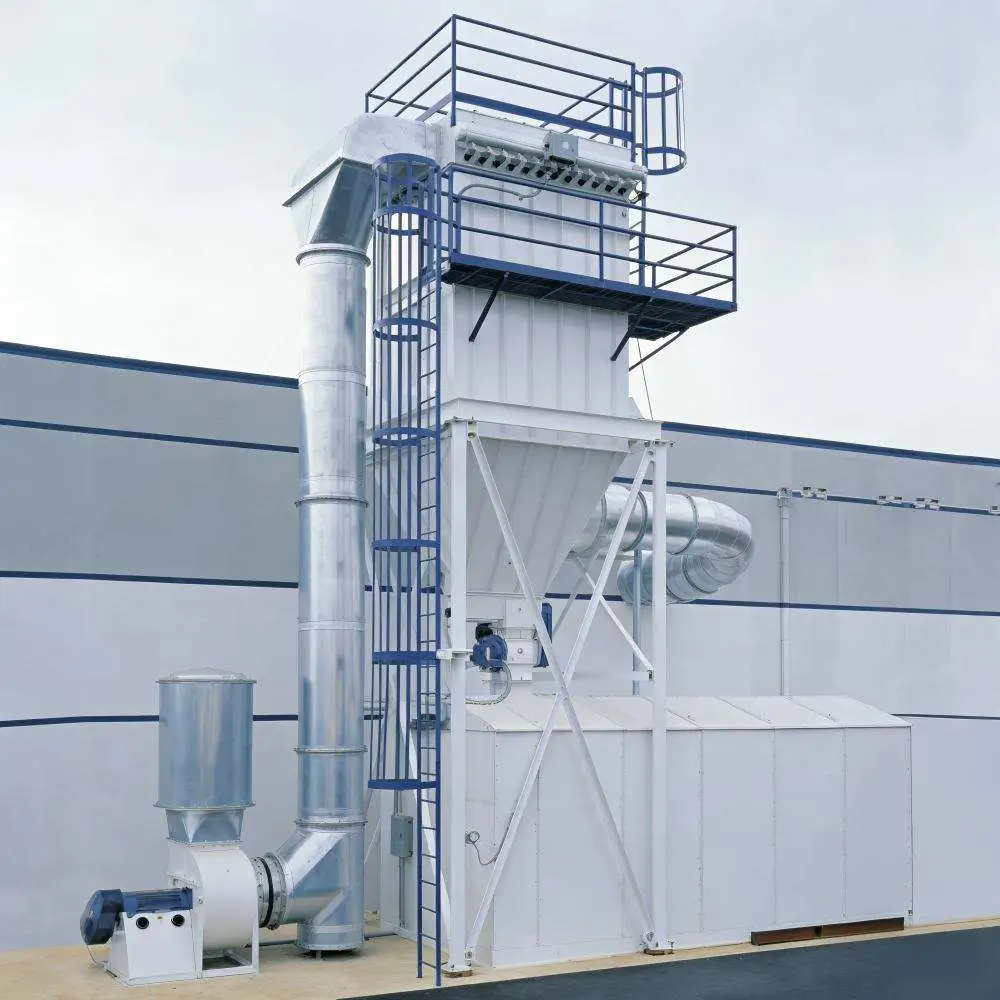
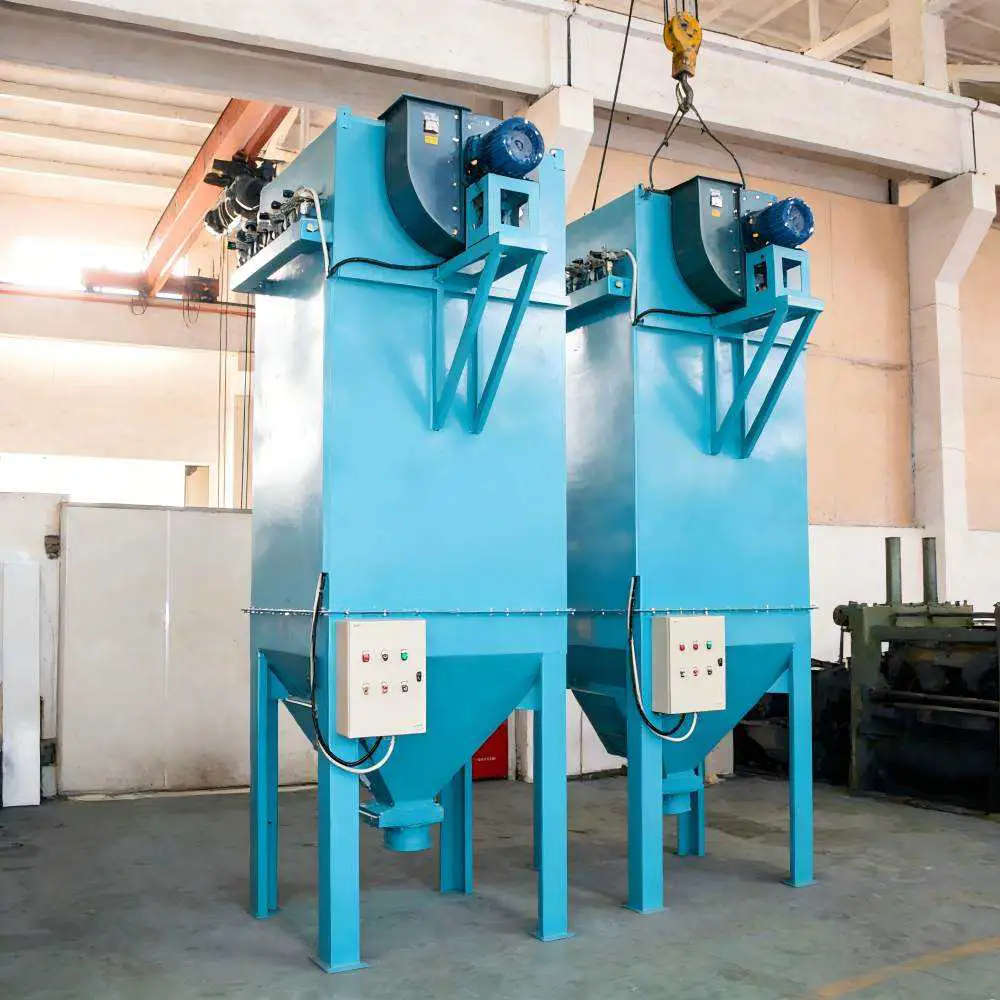
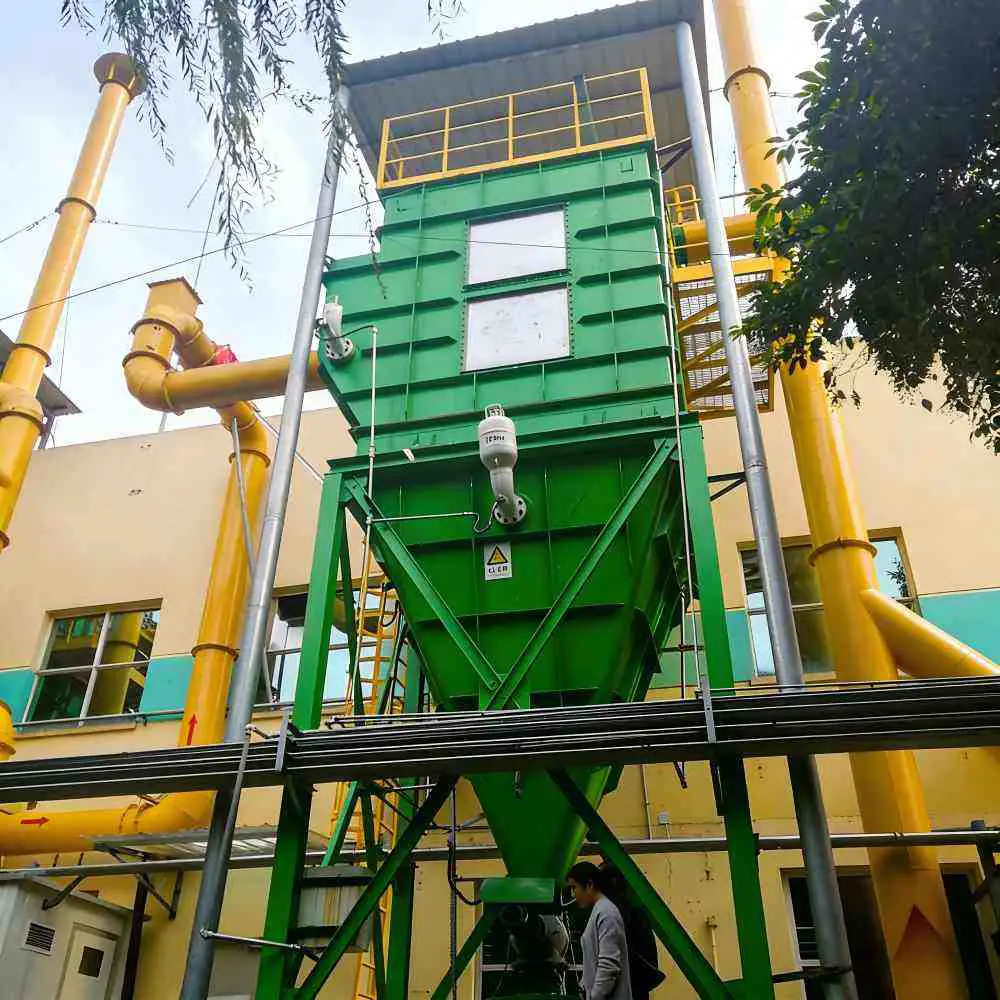
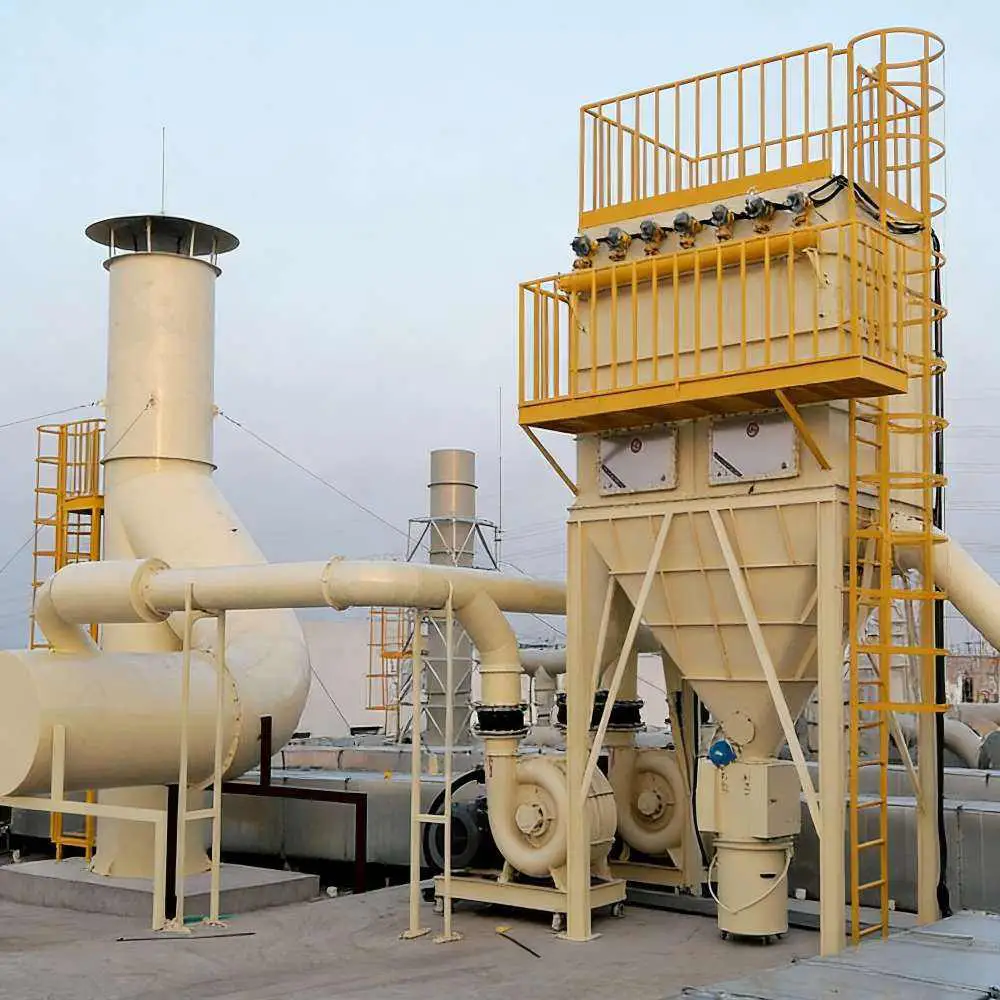
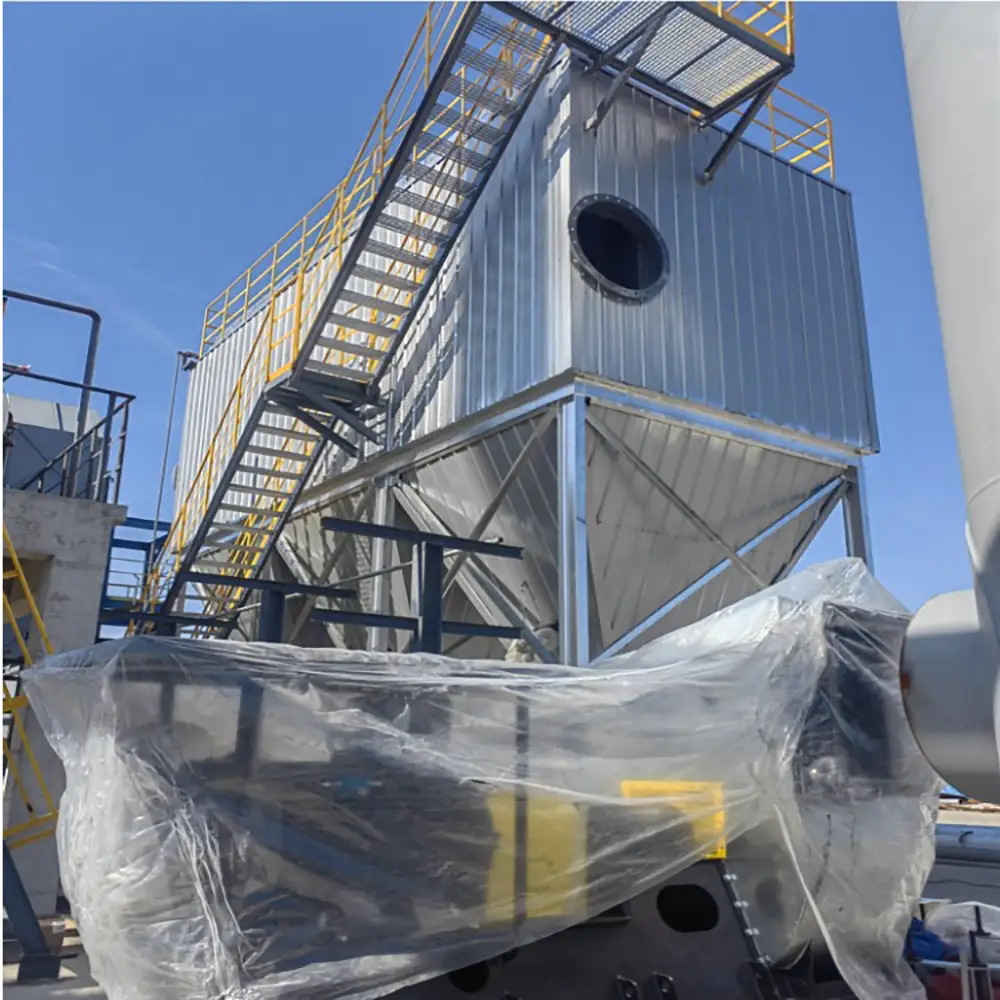
Dust Collector/Dust Catcher/ Dust Remover
Introduction:
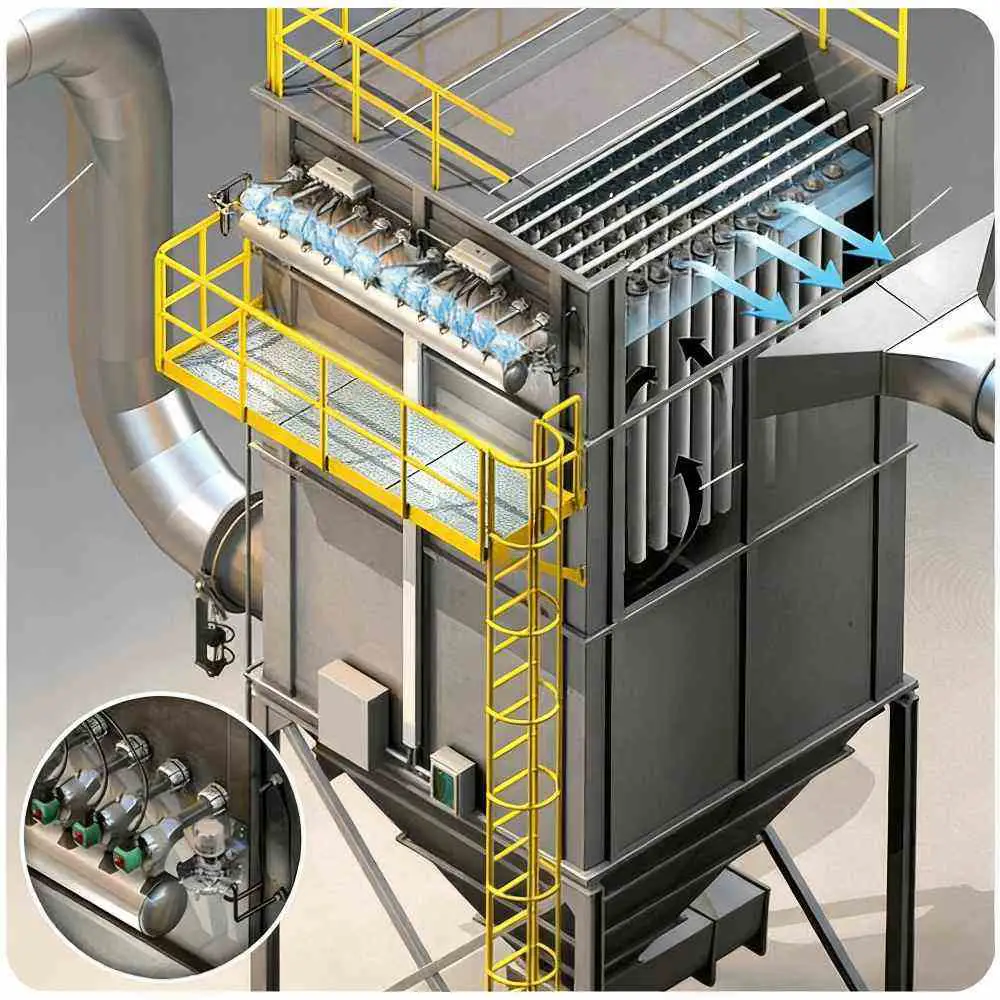
DMC Pulse Dust Collector is a kind of highly efficient collector which is designed on the base of overseas advanced technology. It combines advantage of locellus blowback dust collector and jetting pulse cleaning dust collector, avoids less strength of locellus blowback and simultaneous re-absorbing of jetting pulse cleaning dust and filter. It adopts highly efficient off-line method, so it can clean dust with larger capacity, higher efficiency, lower system resistance, longer life of filter-bag, etc. It is widely used to collect dust in grinder, crusher, packing machine, silo top, matching materials of cement industry. It can clean not only air with common dust, but air with high density (even 1300g/Nm³ ), so it can collect final product of vertical mill and 0-sepa separator. It can be also widely used in grain, light industry, electric power, chemical industry, metallurgy, etc.
Features:
1. Off-line method cleans dust and dust collecting efficiency can reach 99.99%, there is no second dust absorbing, so it is suitable to deal with smoke with high density, and can directly collect product with high density.
2. Filter material with high quality can meet any working condition.
3. PLC intelligent controlling system can be operated easily, precisely and reliably.
4. Gas tank structure and module manufacturing make installation much easier.
5. Advanced balancing wind design reduces operating resistance of dust collector.
Working Priciple:
Making use of the pressure of gas which inside and outside of dust bags, the gas through the bag into cleaning gas, and dust left on the bag surface. With the increase of dust on the bag surface, the filtration resistance will increase, according to the timecontrolled procedures injection system will make use of certain pressure and flow of air to clear the surface dust of each bag.
Main Technical Parameters:
|
Model |
DMC64 |
DMC72 |
DMC84 |
DMC96 |
DMC108 |
DMC120 |
DMC160 |
|
Filter Area (m2) |
45 |
54 |
63 |
72 |
81 |
90 |
126 |
|
Filter Bag Quantity (PCS) |
64 |
72 |
84 |
96 |
108 |
120 |
160 |
|
Filter Bag Size (mm) |
φ130x2000 |
|
Air Volume (m3/h) |
5400-10800 |
6480-12960 |
7560-12960 |
8640-17280 |
9270-19440 |
10800-21600 |
11000-21600 |
Temperature
(Celsius) |
@ <120 degree centigrade s
|
|
Device Resistance (Pa) |
1200Pa-1500Pa |
|
Dust Collector Efficiency (%) |
99%-99.5% |
|
Pulse Pressure (MPa) |
2-4m/min |
|
Air Compressed Volume (m3/min) |
0.5-0.7 |
|
Filter Wind Velocity (m/min) |
0.2-0.8 |
0.25-1 |
0.3-1.2 |
0.3-1.3 |
0.4-1.5 |
0.4-1.7 |
0.165-1.7 |
|
Electromagnet Pulse Valve Quantity (PCS) |
10 |
12 |
14 |
16 |
18 |
20 |
20 |
|
Measurement (mm) |
1700*1700* 4750 |
1900*1700* 4750 |
2400*1550*
4750 |
2400*1700* 4750 |
2400*1850*
4750 |
2400*2000*
4750 |
3230x2100x4750 |
|
Discharge Valve Motor (Power) |
0.75KW |
Dust Remover System, Dust Reduction System & Industrial Dust Removal Equipment
1. Industrial Dust Remover System Overview
Dust is a common challenge in manufacturing plants, construction sites, mining operations, cement production, woodworking facilities, metal processing, and material handling industries. Cutting, grinding, crushing, conveying, mixing, and packaging can release airborne particles that affect workplace cleanliness, equipment operation, production efficiency, and environmental performance.
An industrial dust remover system is designed to capture, collect, extract, or suppress dust generated during production. Depending on the application, a dust reduction system may use industrial dust collectors, bag filters, cartridge filters, wet scrubbers, local exhaust ventilation, or dust suppression equipment.
Our dust removal solutions can be configured for individual machines, production lines, workshops, and large industrial facilities. By considering dust characteristics, airflow, production processes, and installation conditions, businesses can select a system that supports effective dust control and stable operation.
2. What Is a Dust Removal System?
A dust removal system is equipment or an integrated set of devices used to reduce airborne particulate matter and prevent dust from spreading throughout a workplace or industrial environment.
Most industrial systems include several main components:
Dust Collection Hood: Captures dust near the point where it is generated.
Ductwork: Transfers dust-laden air from extraction points to the filtration equipment.
Dust Collector: Separates particles from the airflow using an appropriate filtration or separation method.
Air Filtration Unit: Removes particles from the process air before discharge or recirculation, where permitted.
Industrial Fan: Provides the airflow and pressure required for dust extraction.
Dust Discharge Equipment: Collects and removes separated dust from the system.
Control System: Coordinates equipment operation and monitors selected operating parameters.
The configuration varies according to the production process, dust concentration, particle size, temperature, and required collection performance.
3. Main Types of Industrial Dust Reduction Systems
Different dust-generating processes require different dust control technologies. Selecting the correct method is essential for achieving the required performance.
Bag Filter Dust Collector
Bag filter dust collectors use fabric filter bags to capture airborne particles. Dust accumulates on the filter media and is periodically removed using a cleaning mechanism, such as pulse jet compressed air.
Baghouse systems are commonly used in cement plants, mineral processing, metallurgy, building materials, and other applications involving substantial dust loads.
Cartridge Dust Collector
Cartridge dust collectors use pleated filter elements to provide a large filtration surface within a relatively compact housing. They are suitable for selected applications involving fine dry dust, including some metalworking, fabrication, and industrial finishing processes.
The filter media and cleaning configuration should match the dust properties and operating conditions.
Wet Dust Collection System
Wet dust collectors use liquid to capture or remove particles from an airflow. They may be suitable for certain processes involving combustible or difficult-to-filter dust, subject to proper engineering and safety assessment.
Water management, wastewater treatment, corrosion resistance, and the characteristics of the dust must be considered.
Dust Suppression System
Dust suppression systems reduce airborne dust by applying water mist, sprays, foam, or other suitable control methods at dust-generating points.
They are frequently considered for material transfer, crushing, demolition, mining, and bulk material handling. Moisture sensitivity and product quality must be evaluated before selecting a suppression method.
Centralized Dust Extraction System
A centralized dust extraction system connects multiple production machines or extraction points to a shared collection unit. It can help coordinate dust control across a workshop or manufacturing facility.
System design must account for simultaneous machine operation, duct sizing, airflow balancing, and pressure losses.
4. Applications of Dust Remover Systems
Industrial dust removal equipment can support a wide range of manufacturing and material processing operations.
Cement and Building Materials
Dust collection can be installed at crushers, mills, silos, conveyor transfer points, mixers, and packaging equipment to control airborne cement, limestone, and other mineral particles.
Metal Processing and Fabrication
Grinding, polishing, cutting, welding, and surface finishing can generate metal dust, fumes, and other airborne contaminants. The collection system must be selected for the specific contaminant, particle characteristics, and process hazards.
Mining and Mineral Processing
Crushing, screening, conveying, and loading operations may generate substantial dust. Extraction and suppression solutions can be designed around the material, moisture conditions, and production layout.
Woodworking and Furniture Manufacturing
Sanding, sawing, routing, and machining generate wood dust and chips. Appropriate extraction equipment helps capture material at the machine and transport it to suitable collection equipment.
Chemical and Pharmaceutical Manufacturing
Powder handling, blending, weighing, and packaging can release fine particulate matter. Systems may require specialized filtration, containment, and material compatibility according to the product and process risks.
Food Processing and Agriculture
Grain handling, milling, conveying, and powder packaging can produce airborne dust. Equipment selection should account for hygiene, product contamination, and combustible dust considerations.
5. How an Industrial Dust Removal System Works
An industrial dust removal system generally follows several stages.
Step 1: Dust Generation and Capture
Dust is produced during a process such as grinding, crushing, cutting, or transferring materials. A collection hood or enclosure is positioned to capture the dust before it spreads into the surrounding environment.
Step 2: Airflow Transportation
Ductwork transports dust-laden air to the dust collection equipment. Correct duct diameter, airflow velocity, and system layout help reduce unwanted dust settling and excessive pressure losses.
Step 3: Dust Separation
The collected air enters a dust removal unit. Depending on the equipment, particles may be separated using filter media, centrifugal forces, liquid contact, or another suitable mechanism.
Step 4: Filter Cleaning and Dust Discharge
In systems with cleanable filters, accumulated dust is removed periodically or automatically. The separated material is then collected in a hopper, bin, or discharge arrangement.
Step 5: Filtered Air Handling
Filtered air is discharged or, where suitable and permitted, returned to the facility. The air handling arrangement should be determined according to the contaminant, filtration performance, and applicable requirements.
6. Benefits of a Dust Reduction System
Installing an appropriately designed dust reduction system can provide several operational benefits.
Improved Workplace Cleanliness: Capturing dust at its source helps reduce dust accumulation around machinery, workstations, and material handling areas.
Equipment Protection: Dust control can reduce particulate buildup on selected mechanical and electrical components.
Better Production Management: Proper extraction helps control dust migration between processes and can support more organized production areas.
Material Recovery: Some collected dust can be recovered and reused if its composition and quality meet production specifications.
Reduced Housekeeping: Effective source capture can reduce the amount of dust that settles on floors, equipment, and other surfaces.
Environmental Management: Properly designed collection and filtration equipment can help control particulate emissions as part of an industrial environmental management program.
The actual benefits depend on the equipment design, installation, operating practices, and characteristics of the dust.
7. How to Choose the Right Dust Remover System
Choosing suitable dust removal equipment requires an evaluation of the process rather than simply selecting a machine by name.
Dust Type and Particle Size
Determine whether the dust is coarse, fine, fibrous, sticky, abrasive, toxic, or potentially combustible. These characteristics influence the appropriate collection method and filter material.
Required Airflow
Calculate the extraction airflow needed at each collection point, taking into account the hood design, enclosure, ductwork, and number of machines operating simultaneously.
Operating Temperature and Humidity
High temperatures, condensation, and moisture can affect filter performance and equipment life. Filter media and system configuration should be selected for actual operating conditions.
Dust Concentration and Production Capacity
High dust loads may require a larger filtration area, pre-separation, specialized cleaning arrangements, or a different collection technology.
Installation Space
Consider the available space for the collector, duct routing, maintenance access, dust discharge, and supporting equipment.
Maintenance Requirements
Evaluate filter replacement, cleaning system accessibility, compressed-air requirements, waste handling, and the availability of spare parts.
Safety and Compliance
Assess fire, explosion, exposure, and environmental risks as applicable. Combustible dust applications may require specialized protection, isolation, and engineering review.
8. Installation and Maintenance
Correct installation and routine maintenance are important for maintaining dust removal performance.
Before commissioning, inspect the collector foundation, duct connections, hood positioning, fan rotation, electrical connections, control settings, and dust discharge equipment. Verify that the system achieves the intended airflow at each collection point.
During normal operation, monitor airflow, pressure drop, filter condition, fan performance, and dust accumulation. A sudden change in differential pressure may indicate filter blockage, damaged filter media, or a problem with the cleaning system.
A practical maintenance program should include:
Inspecting and cleaning extraction hoods and ductwork as required.
Checking filter bags or cartridges for wear, damage, and leakage.
Inspecting fans, bearings, motors, and drive components.
Testing automatic cleaning systems and compressed-air supplies.
Emptying dust collection bins and checking discharge equipment.
Reviewing system airflow and operating parameters.
Replacing consumable components according to their condition.
For dusty or hazardous processes, maintenance procedures should include appropriate isolation, personal protective equipment, and safe material handling.
9. Custom Dust Removal Equipment and OEM Solutions
Industrial dust removal requirements vary according to production capacity, facility layout, process technology, and dust characteristics. Custom dust reduction systems can be developed for new production lines or upgrades to existing facilities.
Available design considerations include collection hood geometry, duct arrangements, filtration area, filter media, fan capacity, cleaning mechanisms, dust discharge equipment, control panels, and supporting structures.
OEM solutions can also be coordinated with existing machinery, production equipment, and centralized ventilation systems. Customers can provide process drawings, airflow requirements, dust samples or specifications, operating temperatures, and installation dimensions to support equipment selection.
An application-based design helps match the system to the actual production requirements and maintenance capabilities.
10. Why Choose Us?
Industrial Dust Control Solutions
We provide equipment options for industrial dust collection, dust extraction, and dust reduction across different production and material handling applications.
Flexible Equipment Configurations
Systems can be considered in different capacities and arrangements, including standalone collectors, centralized extraction equipment, and integrated filtration solutions.
Application-Based Equipment Selection
We consider dust characteristics, airflow, operating temperature, process requirements, and installation conditions when evaluating suitable configurations.
Custom Manufacturing and OEM Support
Customized equipment arrangements can be discussed for different production lines, factory layouts, and project specifications.
Technical Coordination
We can coordinate equipment specifications, system configuration, installation requirements, and operating considerations to support project planning.
Long-Term Maintenance Considerations
Filter accessibility, consumable replacement, dust discharge, and routine inspection requirements can be included in the equipment selection process.
5. FAQs
Q1: What Is an Industrial Dust Remover System?
An industrial dust remover system is equipment designed to capture, collect, extract, or suppress airborne particles generated by manufacturing and material handling processes. It may include hoods, ductwork, fans, filters, and dust discharge equipment.
Q2: What Is the Difference Between Dust Removal and Dust Suppression?
Dust removal captures airborne particles and separates them from the air, typically using filtration or another separation method. Dust suppression reduces the amount of dust that becomes airborne, often using water mist, sprays, foam, or process enclosures.
Q3: Which Industries Need Dust Reduction Systems?
Common applications include cement manufacturing, mining, metalworking, woodworking, chemical processing, food production, agriculture, and construction material handling.
Q4: How Do I Select a Dust Removal Machine?
Consider dust type, particle size, concentration, airflow, temperature, humidity, production capacity, installation space, maintenance requirements, and relevant safety considerations. These factors help determine the appropriate equipment and filtration technology.
Q5: Can One Dust Collector Serve Multiple Machines?
Yes. A centralized dust collection system can serve several machines if it is correctly sized and designed for the required simultaneous airflow, duct pressure losses, and dust characteristics.
Q6: How Often Should Dust Collector Filters Be Replaced?
Replacement frequency depends on filter media, dust properties, operating conditions, cleaning performance, and maintenance. Differential pressure, leakage, visible emissions, and inspection results can help determine when replacement is necessary.
Q7: Can Dust Removal Equipment Be Customized?
Yes. Equipment can be configured according to required airflow, filtration area, filter type, fan capacity, dust discharge method, control system, and installation layout.
Q8: Does a Dust Removal System Improve Air Quality?
A correctly designed and maintained system can reduce airborne particulate concentrations in the areas where it effectively captures dust. Results depend on source capture, airflow, filtration, system integrity, and operating practices.
Q9: What Information Is Needed for a Dust Collector Quote?
Provide the dust type, process description, required airflow, dust concentration, operating temperature, humidity, working hours, available installation space, and any specific filtration or safety requirements.
Q10: Can Industrial Dust Collectors Handle Fine Dust?
Yes, many industrial collectors are designed for fine particulate matter. The appropriate filter media, equipment configuration, and safety controls depend on particle characteristics and the specific application.
Prev:Sorry, no information
Next:
Cement Dust Collector, Quality Bag Dust Collector, Dust Collectors & Air Filtration
TAG:
Dust Removal Equipment,
Air Pollution Control Equipment,
Industrial Dust Collector,
Industrial Dust Control,
Dust Extraction Equipment,
Dust Extraction System,
Dust Control Equipment,
Dust Filtration System,
Cement Dust Collector,
High Efficiency Dust Collector,
Workshop Dust Collector,
Wood Dust Collection System,
Metal Dust Collector,
Industrial Ventilation System,
Dust Control System,
Industrial Air Cleaning System,
Baghouse Dust Collector,
Industrial Air Filtration,
Dust Collection System,
Bag Filter Dust Collector,
Pulse Jet Dust Collector,
Dust Suppression System,
Industrial Dust Extraction,
Dust Collector Machine,
Dust Removal Machine,
Central Dust Collection System,
Cartridge Dust Collector,
Dust Remover System,
Dust Reduction System,
Dust Removal,
Related Category:
Dust Collector, Dust Catcher,Dust Remover System, Dust Reduction System, Dust Removal, Industrial Dust Removal System, I China, suppliers, manufacturers, factory, customized, wholesale, quotation, made in China