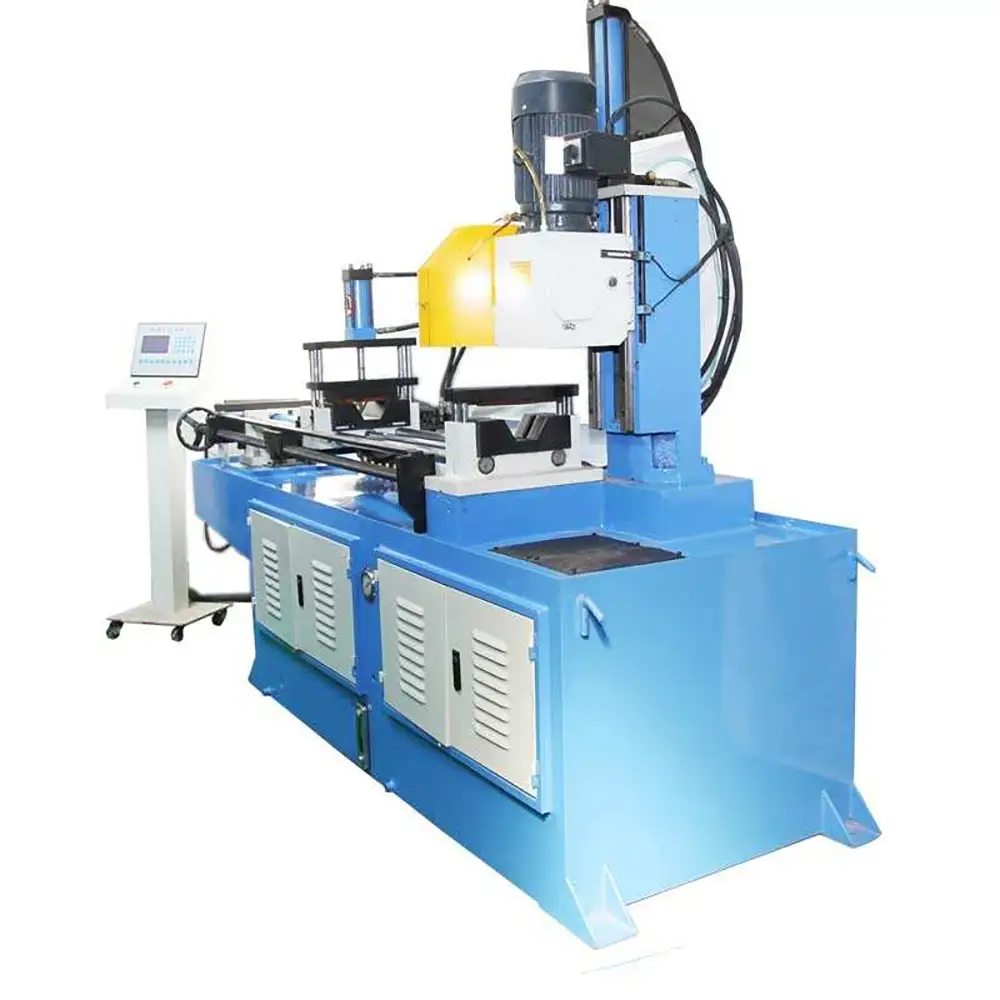
Automatic Plasma Pipe Cutting Machine for Large Metal Tubes
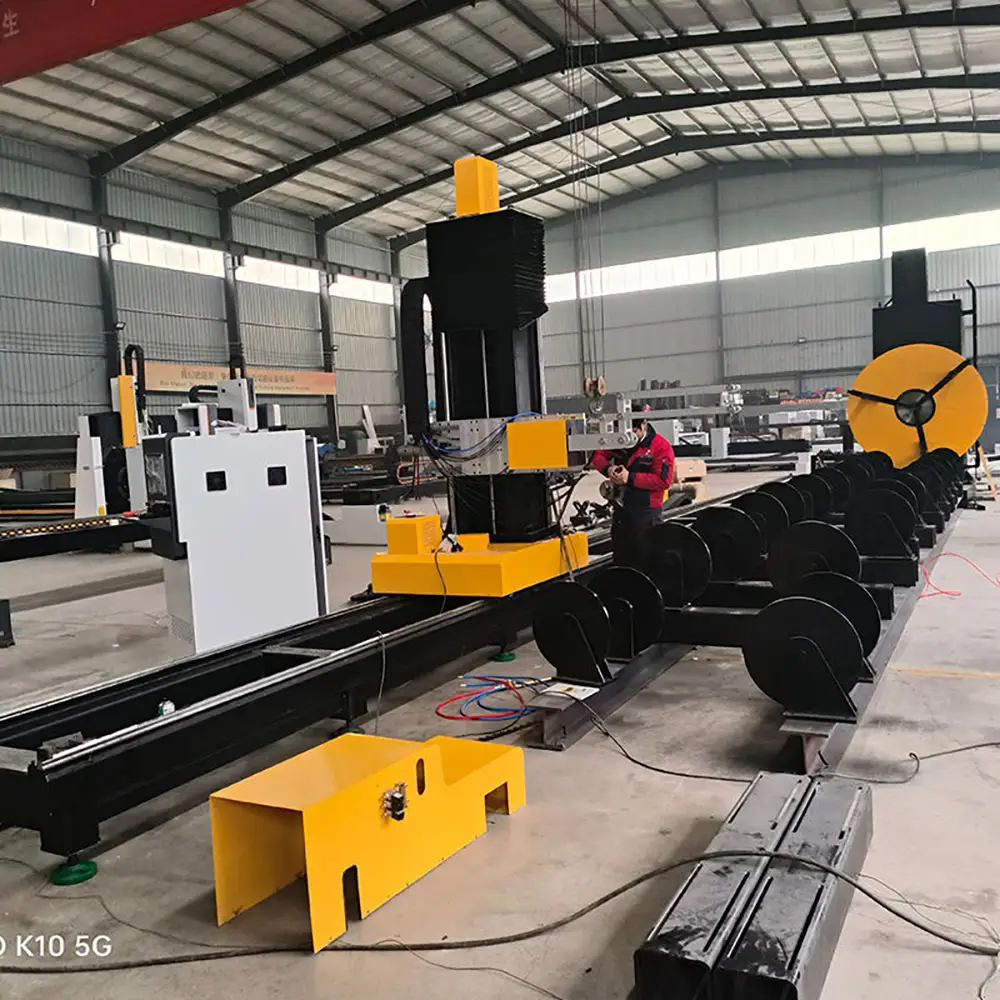
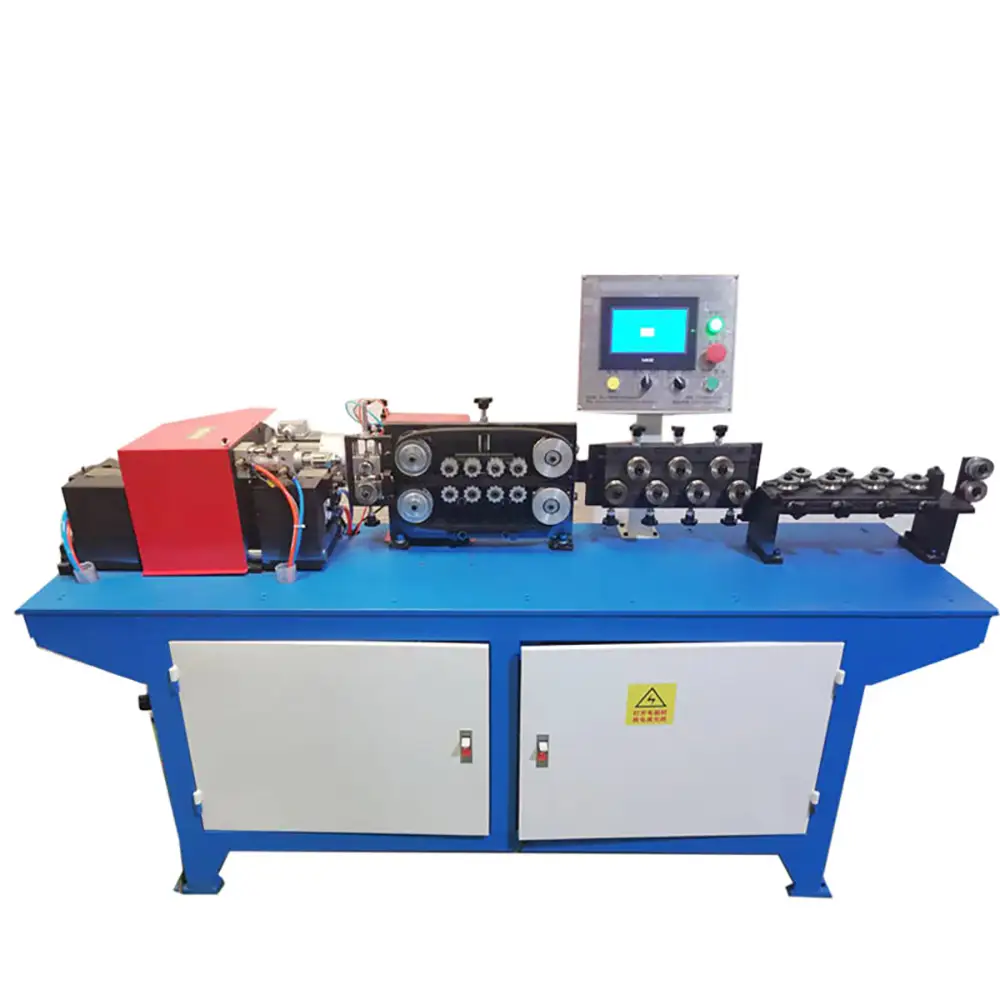
The Automatic Plasma Pipe Cutting Machine Stainless Steel Aluminum Large Tube Roller Cutter is designed for efficient cutting of large-diameter pipes, tubes, and metal sections used in industrial fabrication and manufacturing. By combining plasma cutting technology with a roller-supported pipe handling system, the machine provides a practical solution for processing cylindrical metal workpieces that are difficult to handle with conventional sheet metal cutting equipment.
The system can be configured for materials such as stainless steel, aluminum, carbon steel, and other electrically conductive metals. Material compatibility, maximum tube diameter, wall thickness, cutting speed, torch configuration, and cutting accuracy depend on the specific machine design and plasma power source.
For B2B customers, this type of equipment is particularly useful when production requires repeated pipe cutting, preparation of tube sections, or integration with downstream welding and fabrication processes.
Plasma Cutting for Pipes and Tubes
Plasma cutting uses a high-temperature ionized gas arc to melt and remove electrically conductive metal. Unlike conventional mechanical saw cutting, plasma technology does not require a rotating saw blade to pass through the material.
When adapted for pipe and tube processing, the plasma torch can be positioned around the workpiece to produce controlled cuts. Depending on the machine configuration, it can perform straight cuts and may also be configured for openings, profiles, notches, or other pipe-processing operations.
Plasma cutting is suitable for conductive metals including carbon steel, stainless steel, and aluminum. Each material requires appropriate plasma power, consumables, gas settings, torch height, cutting speed, and process parameters.
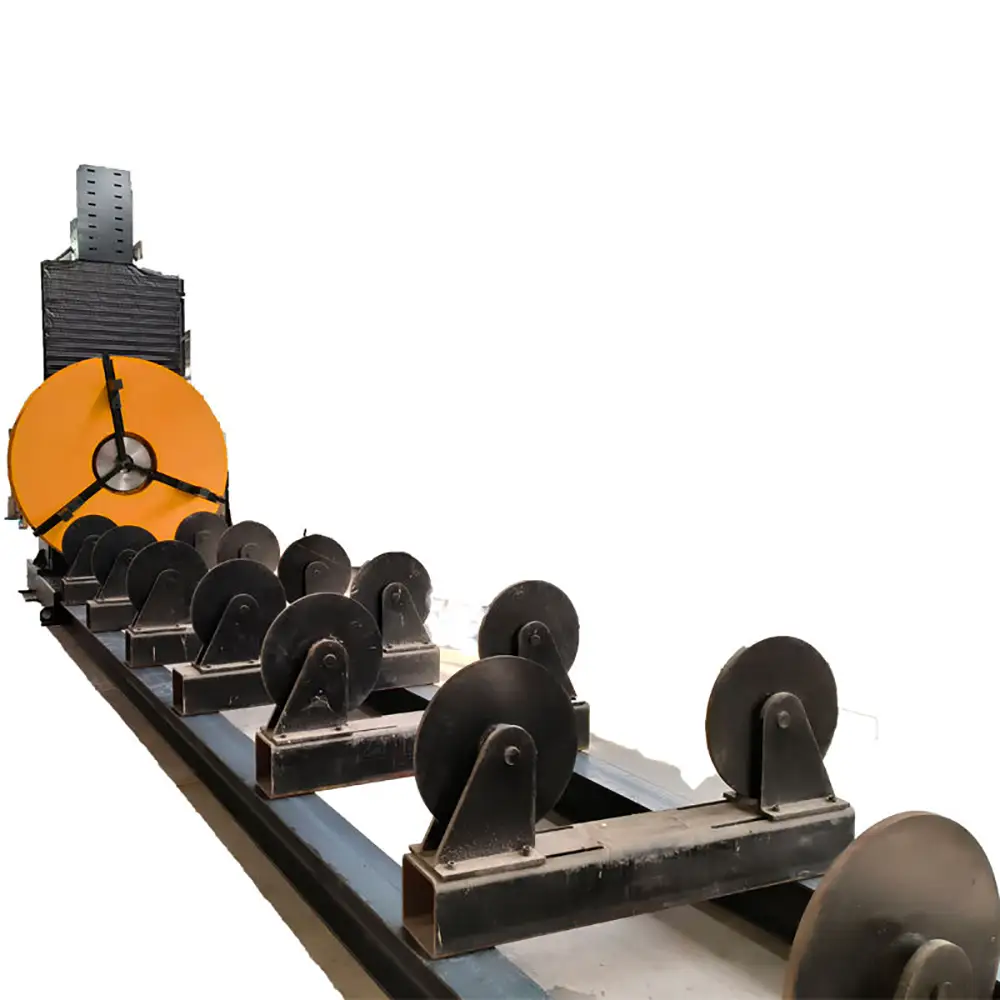
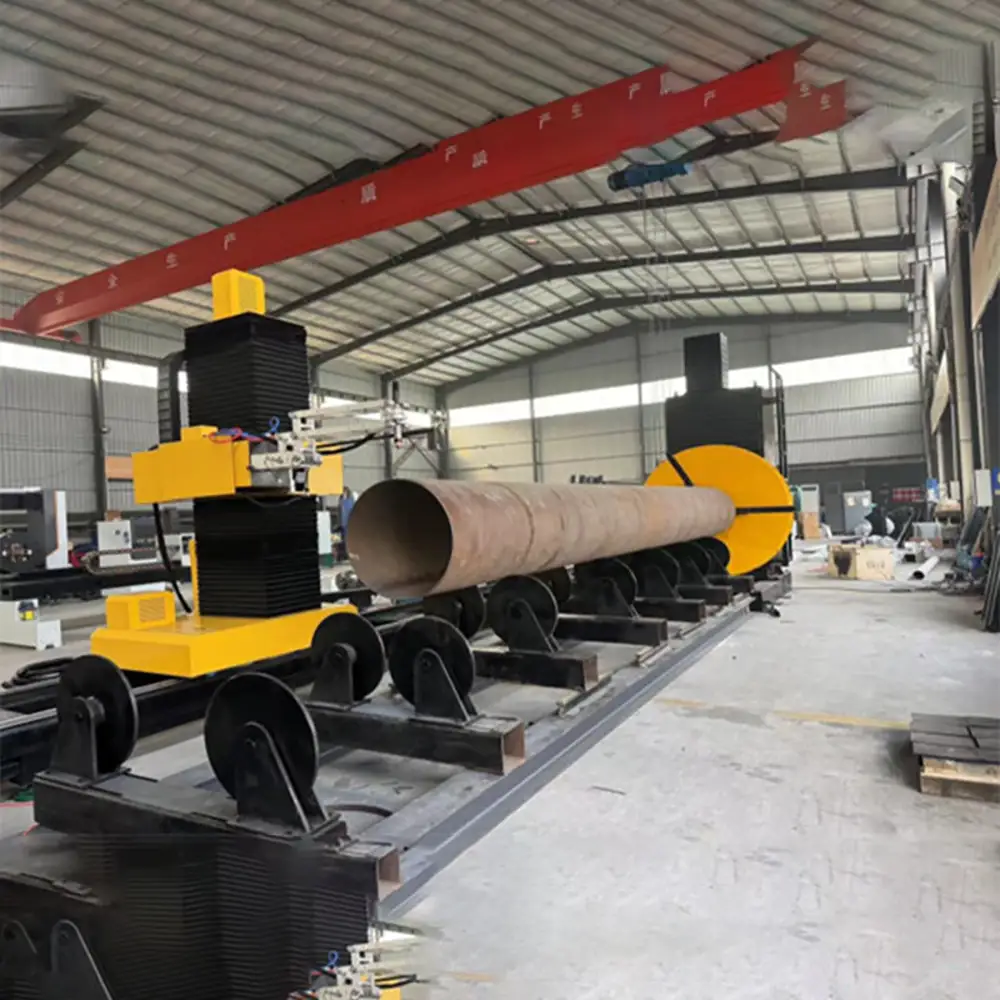
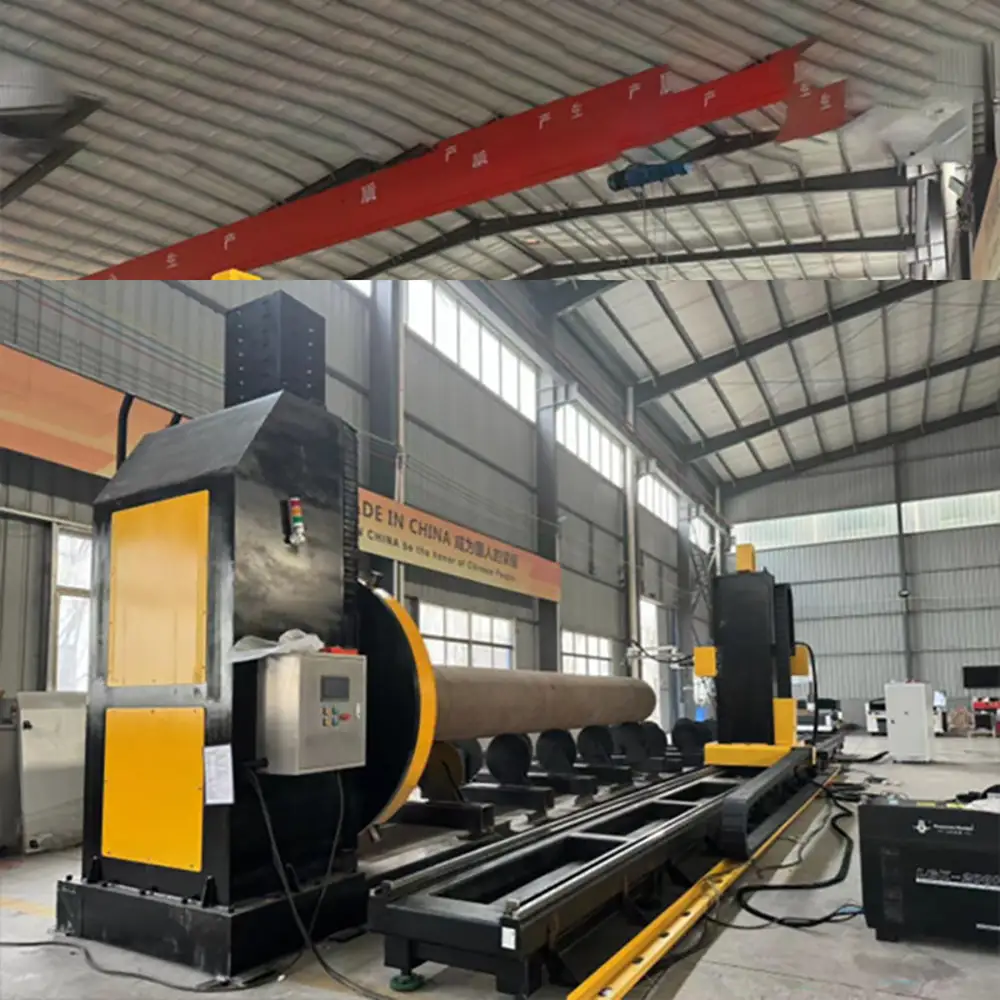
Large Tube Roller Support System
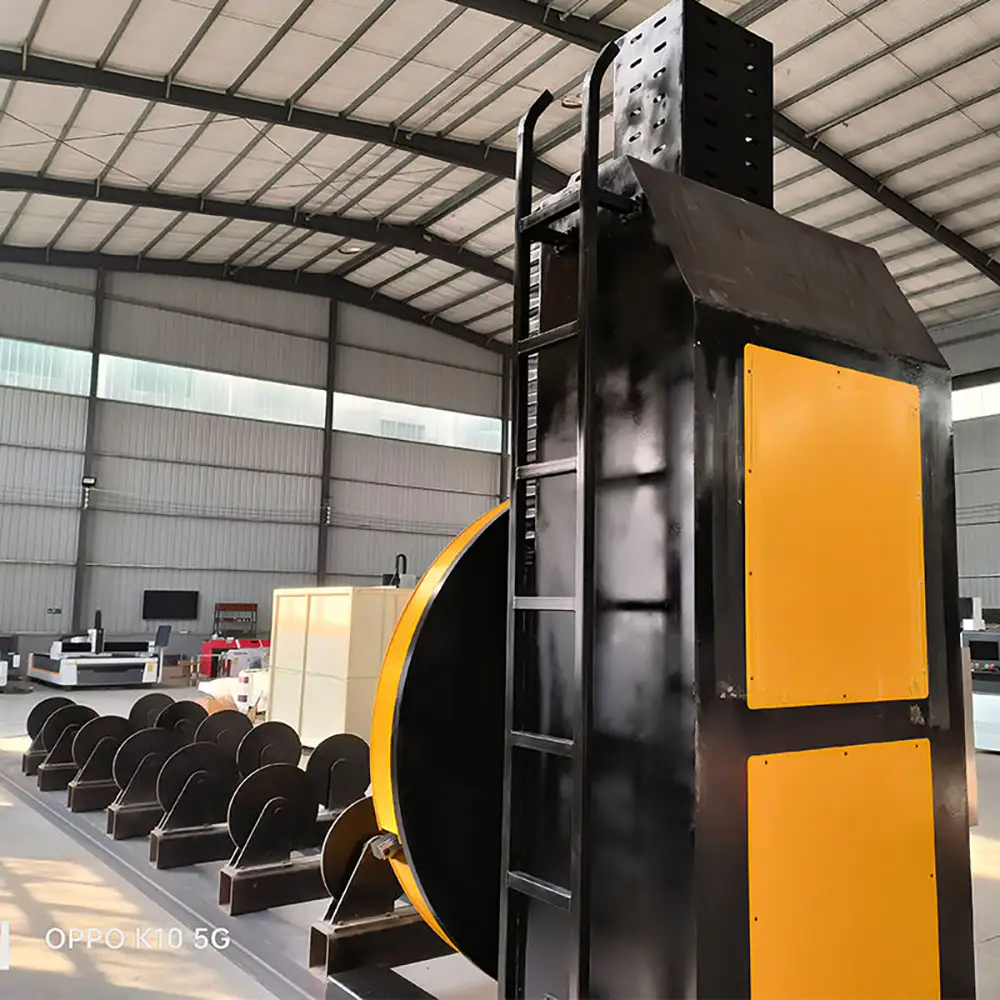
Large pipes and tubes can be difficult to rotate and position because of their diameter and weight. A roller-supported design provides a practical method for supporting cylindrical workpieces during cutting.
The rollers can help maintain stable workpiece positioning and facilitate controlled rotation when the cutting process requires the tube to move relative to the plasma torch.
A suitable roller arrangement can help reduce:
Workpiece movement during cutting
Manual positioning requirements
Operator handling effort
Cutting setup time
Alignment problems
Instability with larger cylindrical materials
The actual roller capacity, pipe diameter range, number of rollers, and drive configuration should be confirmed according to the selected machine.
Stainless Steel Pipe Cutting
Stainless steel is widely used in food processing equipment, chemical equipment, architectural structures, industrial piping, automotive components, and machinery.
Plasma cutting can be used to process stainless steel tubes and pipes when the machine is properly configured. Stainless steel has different thermal and cutting characteristics from carbon steel, so appropriate consumables and process parameters are important.
For stainless steel applications, buyers should provide the grade, tube diameter, wall thickness, cutting length, and desired edge quality when requesting a machine configuration.
Aluminum Tube and Pipe Cutting
Aluminum is lightweight and widely used in transportation equipment, construction, industrial structures, heat exchangers, frames, and machinery.
Because aluminum is electrically conductive and has different thermal properties from steel, plasma cutting parameters need to be selected specifically for the material.
The machine can be configured for aluminum tube processing when the plasma system, torch, consumables, roller support, and control parameters are suitable for the application.
For high-quality production, the recommended cutting settings should be established through material testing and process optimization.
Automatic Pipe Cutting Operation
Automatic operation can simplify repeated tube-cutting processes. Depending on the machine configuration, the system may include automatic positioning, pipe rotation, torch movement, cutting-cycle control, and programmable cutting parameters.
A typical production workflow includes:
Loading the pipe or tube onto the roller support.
Positioning and aligning the workpiece.
Securing the pipe according to the machine design.
Entering or selecting the required cutting parameters.
Starting the plasma cutting cycle.
Coordinating torch movement and workpiece rotation.
Completing the cut.
Removing the finished section and preparing for the next cycle.
Automation can improve repeatability and reduce repetitive manual operations.
However, automatic cutting does not necessarily mean completely unmanned production. Loading, unloading, inspection, consumable replacement, and material handling may still require operator involvement.
Engine and Gear Drive Components
The engine and gear core wording in the product keyword can refer to the machine's drive and transmission components used for pipe rotation or material handling. In an industrial pipe cutting system, the drive mechanism plays an important role in controlling the movement of the workpiece.
A properly configured gear-driven or motor-driven roller system can provide controlled rotational movement during pipe cutting.
The exact motor power, gearbox specification, transmission ratio, roller diameter, and load capacity depend on the machine model. These specifications should be matched to the diameter, weight, length, and material of the pipes being processed.
Cutting Large Pipes Efficiently
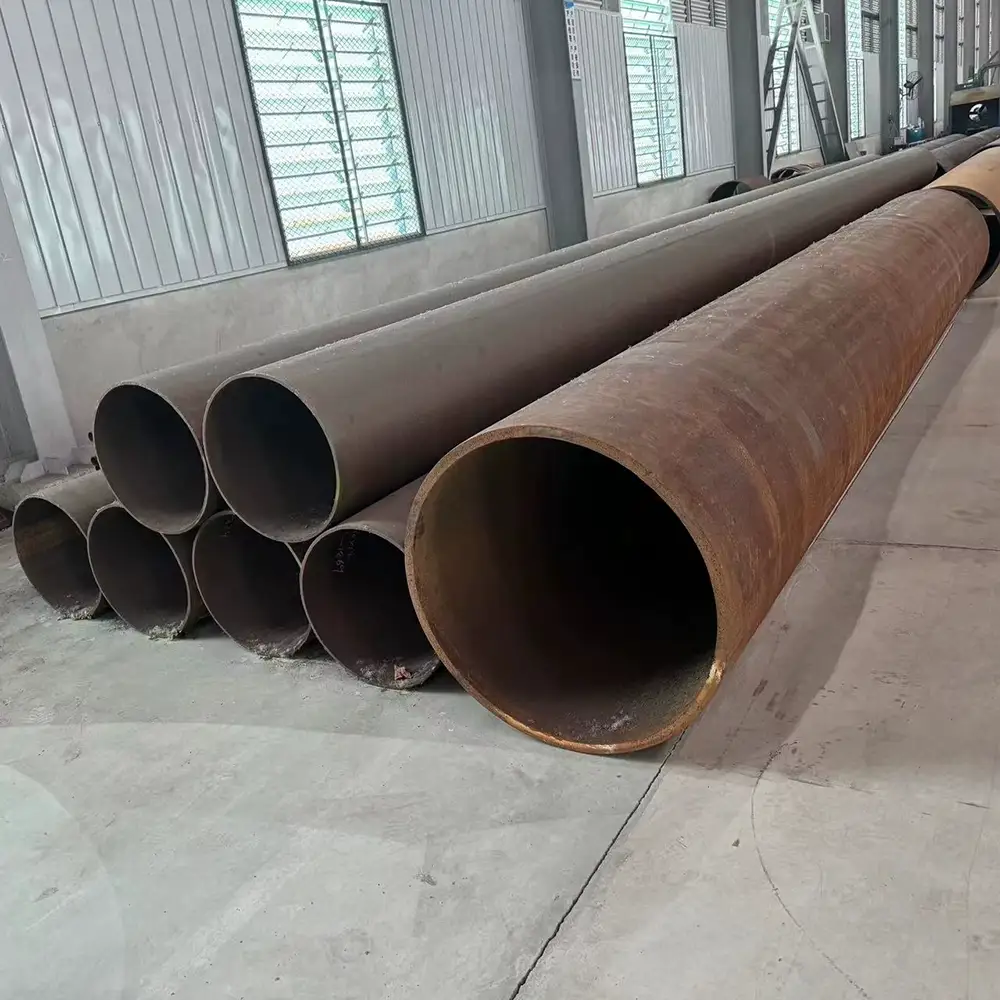
Large-diameter pipes often require additional support compared with small tubes. A roller cutting system provides a more suitable material-handling arrangement for these applications.
The machine can be used for:
Large steel pipes
Stainless steel tubes
Aluminum tubes
Structural tubular sections
Industrial pipelines
Fabricated pipe components
Metal cylinders
Large-diameter tubular profiles
The actual maximum diameter and wall thickness should be confirmed from the machine's technical specifications.
Cutting Accuracy and Repeatability
For industrial pipe fabrication, consistent cutting is important because cut pipe sections may be used directly in welding, assembly, structural fabrication, or further machining.
Automatic control can improve repeatability by maintaining consistent cutting parameters and movement. Roller support can also help maintain stable positioning of cylindrical workpieces.
Actual cutting accuracy depends on the machine structure, plasma power source, torch condition, workpiece geometry, material properties, roller alignment, cutting parameters, and control system.
If the application requires a specific tolerance, buyers should provide the target tolerance before selecting the machine.
Pipe Fabrication Applications
The Automatic Plasma Pipe Cutting Machine can serve many industries, including:
Industrial Pipe Fabrication
Used for preparing pipe sections and components for industrial installations.
Structural Steel Fabrication
Suitable for tubular structures, frames, supports, and fabricated steel components.
Stainless Steel Processing
Used for stainless steel pipe and tube preparation in industrial and architectural applications.
Aluminum Fabrication
Suitable for aluminum tube processing when configured with appropriate plasma parameters.
Construction Equipment
Can be used to prepare tubular components for machinery and construction structures.
Automotive and Transportation
Applicable to suitable tubular components, frames, exhaust-related parts, and structural assemblies.
General Metalworking
Useful for workshops that require repeatable cutting of conductive metal tubes and pipes.
Plasma Power Source and Consumables
The plasma power source is a key part of the complete cutting system. Required power depends on the material, wall thickness, desired cutting speed, and production requirements.
Consumables such as electrodes, nozzles, shields, and other torch components gradually wear during normal operation. Their condition directly affects cutting quality and process stability.
Using appropriate consumables and maintaining the torch according to manufacturer recommendations can help reduce downtime and maintain consistent cutting performance.
Production Efficiency
Automated pipe cutting can reduce repetitive manual work and make production easier to standardize. Roller-supported handling is especially useful when the workpieces are long, heavy, or large in diameter.
For larger production volumes, the cutting machine can potentially be integrated with pipe loading systems, material handling equipment, welding stations, or other fabrication machinery.
Actual production output depends on pipe dimensions, material, wall thickness, cut length, cutting pattern, plasma power, cutting parameters, loading method, and operator workflow.
Customization and Machine Configuration
Different customers require different pipe diameters, wall thicknesses, lengths, materials, and cutting patterns. Therefore, machine configuration should be based on the actual application.
Potential configuration factors include:
Maximum pipe diameter
Minimum pipe diameter
Maximum workpiece length
Maximum workpiece weight
Material type
Wall thickness
Plasma power
Roller configuration
Drive system
Torch movement
CNC or digital control
Automatic positioning
Material handling system
Providing detailed workpiece information allows the supplier to recommend a suitable configuration rather than selecting equipment based only on the machine name.
Installation and Maintenance
Before installation, the machine should be placed on a suitable foundation or stable working surface according to the manufacturer's requirements. Adequate working space should be provided around the machine for loading, unloading, maintenance, and safe operation.
Routine maintenance includes cleaning metal dust and slag, inspecting plasma consumables, checking cables and connections, inspecting rollers and drive components, lubricating applicable mechanical parts, and checking the alignment of the workpiece support system.
Operators should also follow appropriate plasma cutting safety procedures, including ventilation, protective equipment, electrical safety, fire prevention, and proper handling of hot metal and cutting fumes.
OEM and B2B Manufacturing Support
For machinery distributors, fabrication companies, industrial manufacturers, and engineering projects, customized configurations can be discussed according to production requirements.
OEM and ODM cooperation may include machine branding, documentation, packaging, control configuration, roller systems, plasma power selection, and other project-specific requirements where available.
The goal is to provide a practical pipe-cutting solution matched to the customer's actual workpieces, production volume, and factory workflow.
Frequently Asked Questions
1. What materials can this plasma pipe cutting machine process?
It can be configured for conductive metals such as carbon steel, stainless steel, and aluminum. Material compatibility depends on the plasma system and machine configuration.
2. Can it cut large-diameter pipes?
Yes. The machine is designed for large tube and pipe applications, with roller support for cylindrical workpieces. The actual diameter and weight capacity depend on the selected model.
3. Can it cut stainless steel?
Yes. Stainless steel can be processed with suitable plasma power, consumables, and cutting parameters.
4. Can it cut aluminum tubes?
Yes, provided the plasma cutting system is configured appropriately for aluminum and the required thickness.
5. What is the purpose of the roller system?
The roller system supports the pipe and can facilitate controlled rotation or positioning during cutting, particularly for large or heavy cylindrical workpieces.
6. Is the machine fully automatic?
The machine can include automatic positioning, rotation, and cutting functions depending on configuration. Loading, unloading, inspection, and maintenance may still require an operator.
7. What pipe sizes can it cut?
The available diameter and wall-thickness range depends on the specific machine model. Buyers should provide their minimum and maximum pipe dimensions for confirmation.
8. What plasma power is required?
Plasma power depends on the material, wall thickness, cutting speed, and production requirements. The appropriate power source should be selected based on the actual application.
9. Can it make holes or notches in pipes?
Some configurations can be equipped for additional pipe profiling operations such as holes, slots, or notches. The required cutting head and control functions should be confirmed before ordering.
10. How accurate is plasma pipe cutting?
Accuracy depends on the machine structure, control system, torch condition, pipe alignment, material, and cutting parameters. A specific tolerance should be discussed with the supplier before purchase.
11. Does plasma cutting require consumables?
Yes. Plasma torches use consumable components that wear during operation. Regular inspection and replacement are part of normal maintenance.
12. Can the machine be customized?
Yes. Pipe diameter, length, roller configuration, plasma power, drive system, automation functions, and other specifications can be evaluated according to project requirements.
Why Choose Us
Pipe Cutting Expertise – We focus on practical metal-processing solutions for tubes, pipes, profiles, and industrial fabrication.
Large Tube Handling – Roller-supported designs provide a practical solution for positioning and processing larger cylindrical workpieces.
Multi-Material Capability – Suitable configurations can be developed for stainless steel, aluminum, carbon steel, and other conductive metals.
Automatic Cutting Functions – Automated movement, rotation, positioning, and cutting functions can reduce repetitive manual operations.
Application-Based Configuration – Machine specifications are selected according to pipe dimensions, material, wall thickness, production volume, and cutting requirements.
Flexible Plasma Solutions – Plasma power sources, torches, consumables, and cutting parameters can be matched to the intended application.
OEM and ODM Support – Customized machine configurations, branding, packaging, and technical requirements can be discussed for B2B projects.
Technical Support – We can assist with machine selection, configuration confirmation, operation guidance, maintenance recommendations, and after-sales technical support.
Prev:
Small Diameter Copper Automatic Pipe Cutting Machine New Condition Feeding Straightening Function Condenser Metal Alloy
Next:Sorry, no information
TAG:
Stainless Steel Pipe Cutting Machine,
Metal Tube Cutting Machine,
Stainless Steel Tube Cutting Machine,
Automatic Tube Cutting Machine,
Automatic Pipe Cutting Machine,
CNC Tube Cutting Machine,
Aluminum Tube Cutting Machine,
Aluminum Pipe Cutting Machine,
Automatic Metal Tube Cutter,
CNC Pipe Cutting Machine,
Steel Pipe Plasma Cutting Machine,
Metal Pipe Plasma Cutter,
Metal Tube Plasma Cutter,
Automatic Plasma Pipe Cutting Machine,
CNC Plasma Pipe Cutting Machine,
Industrial Plasma Cutting Machine,
Plasma Metal Cutting Machine,
Heavy Duty Pipe Cutting Machine,
Industrial Pipe Cutting Machine,
Large Diameter Pipe Cutter,
Large Pipe Cutting Machine,
Plasma Pipe Cutting Machine,
Carbon Steel Pipe Cutting Machine,
Plasma Pipe Cutter,
Automatic Metal Cutting Machine,
Metal Pipe Cutting Equipment,
Industrial Tube Cutter,
Plasma Cutting Equipment,
Stainless Steel Plasma Cutter,
Aluminum Plasma Cutter,
Related Category:
Automatic Plasma Pipe Cutting Machine,Plasma Pipe Cutting Machine,Stainless Steel Pipe Cutting Machine,Aluminum Pipe Cut China, suppliers, manufacturers, factory, customized, wholesale, quotation, made in China