Advantages:
Simple in structure, good effect,easy to use, wide application.
Range of use:
Widely used in coal washing,tailing disposal,alcohol,petroleum,metallurgy,chemicals,fuel,medicine,edible oil,textile,printing,dyeing, paper making,sewage treatment,ceramics,and other fields, etc.
Products details:
Our company produces various models of chamber filter press, plate-frame filter press, mechanical filter press ,hydraulic filter press,membrane filter press and full-automatic filter press and filter press spare parts.
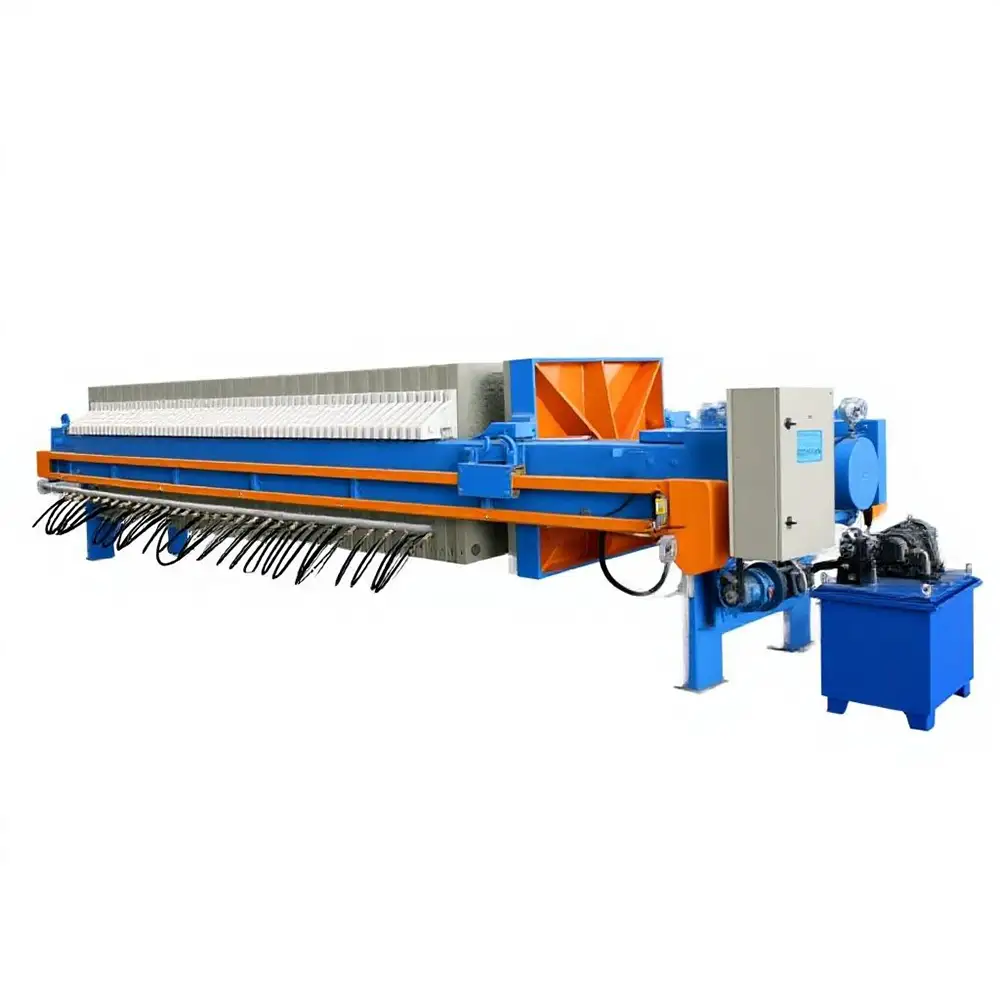
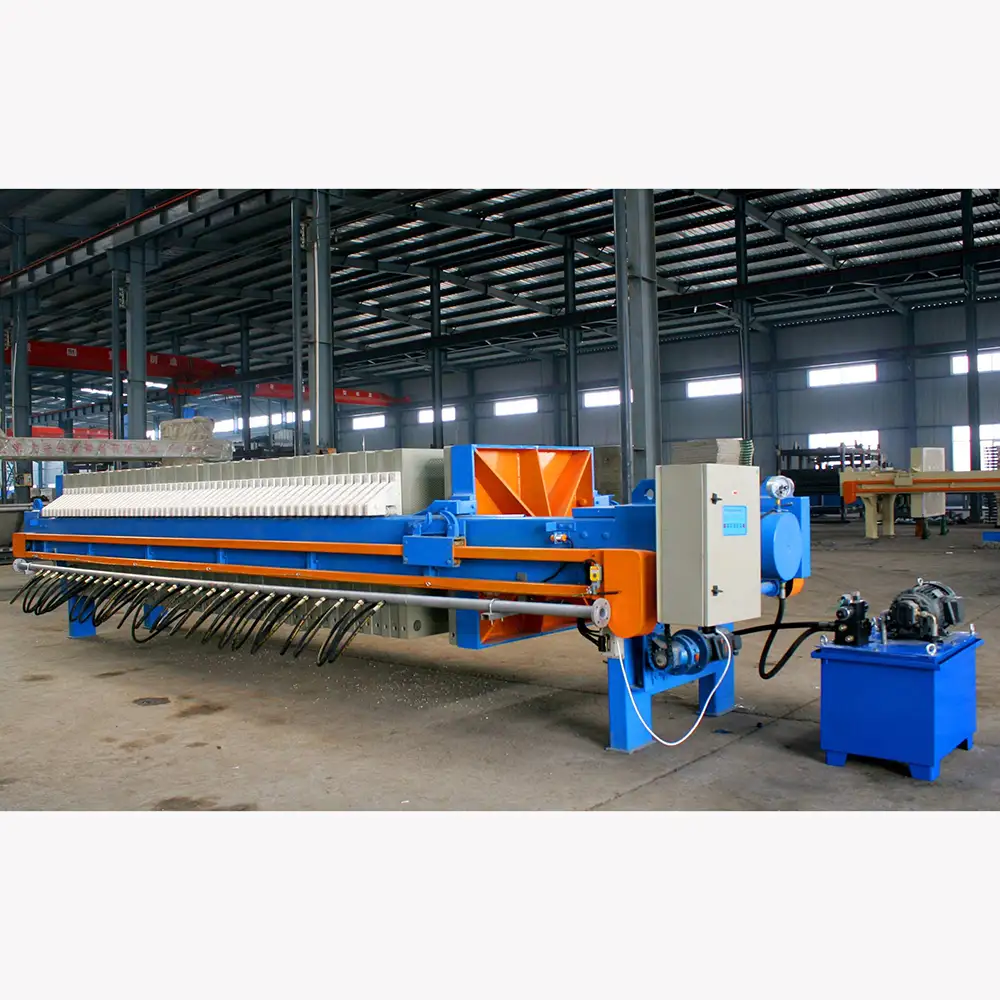
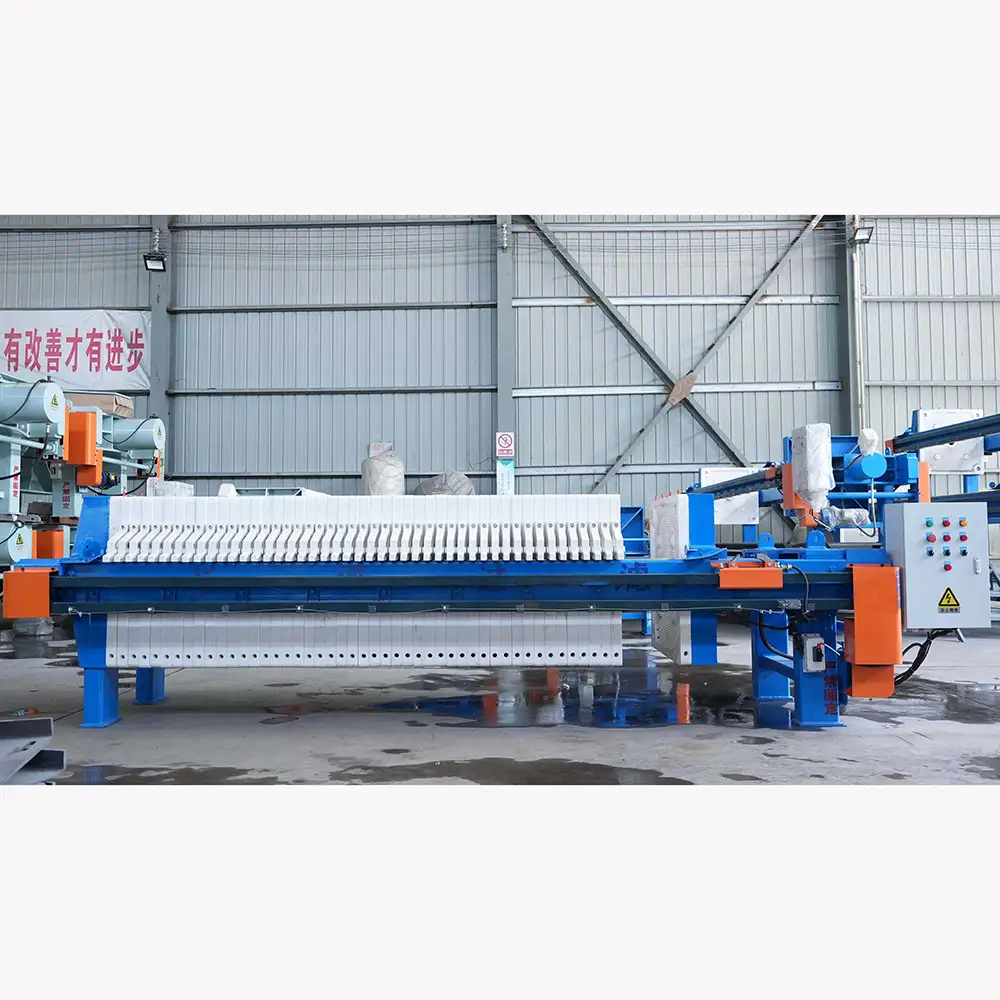
The following is the details of 450 manual clamping Plate-frame filter press:
1 Model:450
2 Filtration area:4~16m2
3 Filter plate material:cast iron, polypropylene,etc
4 Flow in the form: Free flow and undercurrent
5 Clamping modes: Manual clamping
Plate-Frame Pressure Filter With Cast Iron & Polypropylene Filter Plates
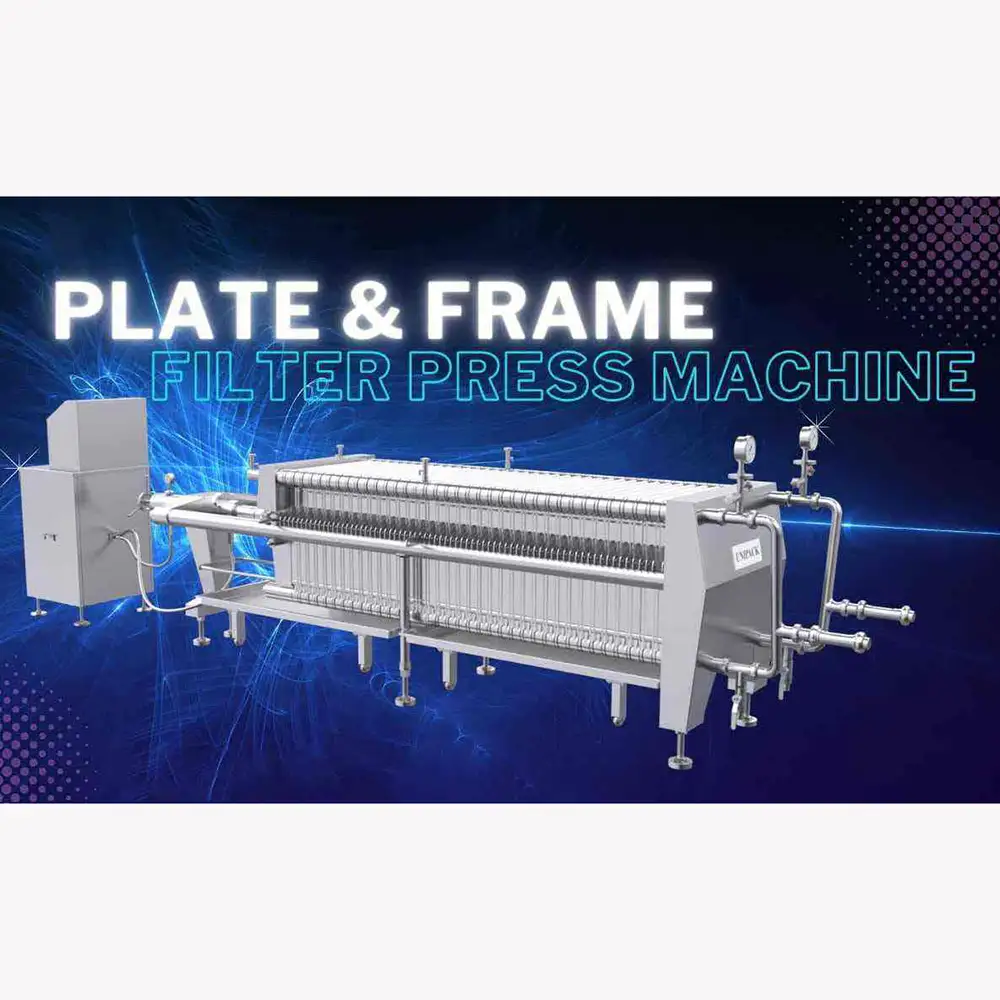
The Plate-Frame Pressure Filter is a reliable batch filtration system designed for pressure-driven solid-liquid separation. Also known as a plate and frame filter press, plate-frame filter press, or pressure filter press, this equipment separates suspended solids from liquid by forcing a slurry through filter cloth under controlled pressure.
The basic plate-and-frame design consists of alternating filter plates and hollow frames, with filter cloth installed between them. When the plate pack is closed, the frames create individual filtration chambers. Slurry is pumped into the chambers, liquid passes through the filter cloth and drainage channels, while solid particles are retained and gradually form filter cakes.
This type of pressure filter can be configured with different filter plate materials according to the process requirements. Cast iron is suitable for demanding applications where mechanical strength and higher-temperature resistance are important, while polypropylene (PP) is widely used where corrosion resistance, lower weight, and chemical compatibility are required.
What Is a Plate-Frame Pressure Filter?
A Plate-Frame Pressure Filter is a mechanical filtration machine that uses a series of filter plates, hollow frames, filter cloths, a closing mechanism, and a slurry feed system.
During operation, the plates and frames are compressed together to create sealed filtration chambers. The feed pump then introduces slurry into the chambers. Pressure forces the liquid phase through the filter cloth and into drainage channels, while solid particles remain inside the chamber.
As filtration continues, the retained solids accumulate and form a filter cake. When the filtration cycle reaches its required endpoint, the feed is stopped, pressure is released, the plate pack is opened, and the filter cake is discharged.
Unlike a continuous filter, a plate-frame pressure filter operates in batches. This makes it particularly useful when high solids capture, controlled cake formation, or flexible batch processing is required.
Cast Iron Filter Plate
Cast iron filter plates provide a robust option for demanding industrial filtration applications.
Cast iron construction offers high mechanical strength and can be suitable for applications involving higher-temperature materials. Published filter press specifications describe cast iron plates as an option for high-temperature filtration and industrial applications.
A cast iron plate-frame pressure filter can be considered for applications such as:
Industrial mineral processing
Metallurgical processing
Chemical processing
High-temperature industrial liquids
Concentrate filtration
Certain viscous slurry applications
Industrial wastewater and sludge processing
The final material selection should always consider slurry chemistry, temperature, pressure, corrosion conditions, and filter cloth compatibility.
Polypropylene Filter Plate
Polypropylene, commonly abbreviated as PP, is another widely used filter plate material.
PP filter plates are valued for their relatively low weight and resistance to many chemical environments. They are commonly used in chemical processing, wastewater treatment, mineral processing, and general industrial filtration. Sources describing plate-and-frame systems list polypropylene alongside cast iron and stainless steel as common plate materials.
A polypropylene filter plate can be particularly useful when corrosion resistance and easy handling are priorities.
Typical applications include:
Chemical industry
Wastewater treatment
Sludge dewatering
Mineral processing
Plating wastewater
Industrial process liquids
Fine chemical filtration
General solid-liquid separation
The specific chemical compatibility of PP should be checked against the actual feed liquid, concentration, and operating temperature before equipment selection.
Cast Iron vs. Polypropylene Filter Plates
The choice between cast iron and polypropylene should be based on the process rather than simply on price or material preference.
Cast Iron Filter Plates
Strong mechanical construction
Suitable for demanding industrial environments
Can be used for certain higher-temperature applications
Suitable for selected viscous and industrial slurries
Heavier than PP plates
Polypropylene Filter Plates
Lower weight
Good resistance to many chemicals
Suitable for many general industrial filtration applications
Easier manual handling
Commonly used for chemical and wastewater filtration
The correct choice depends on temperature, chemical composition, pressure, solids characteristics, operating cycle, and required service life.
Plate-Frame Pressure Filter Working Principle
The filtration process can be divided into several steps.
1. Plate Closing
The filter plates, frames, and filter cloths are arranged in sequence. A hydraulic or mechanical closing system compresses the entire plate pack and seals the filtration chambers.
2. Slurry Feeding
A feed pump introduces slurry into the chambers through the feed manifold. The pump generates the slurry-side filtration pressure; the closing system primarily holds the plate pack securely closed.
3. Filtration
Liquid passes through the filter cloth and travels along the drainage surface of the filter plate toward the filtrate outlet.
Solid particles are retained by the filter cloth and accumulate inside the frame.
4. Filter Cake Formation
As more slurry enters the chamber, the retained solids form a progressively thicker filter cake. The cake itself becomes an additional filtration layer.
5. Filtration Completion
The cycle ends when the selected process endpoint is reached. Depending on the application, this may be determined by feed pressure, declining filtrate flow, cycle time, or another process parameter.
6. Cake Discharge
The feed pump stops, pressure is released, and the plate pack is opened. The filter cake can then be removed manually or through an automated plate-shifting system when such equipment is installed.
7. Filter Cloth Cleaning
The cloth can be inspected, washed, or replaced as required before the next filtration cycle.
Main Components
A typical Plate-Frame Pressure Filter includes:
Fixed head plate
Moving head plate
Filter plates
Hollow filter frames
Filter cloth
Hydraulic or mechanical closing system
Main support beams
Feed manifold
Filtrate channels
Filtrate outlets
Filter cake discharge area
Hydraulic power unit
Optional automatic plate-pulling system
Each component contributes to reliable batch solid-liquid separation.
Industrial Applications
Wastewater Treatment
The filter press can dewater industrial sludge and separate suspended solids from process wastewater.
Mining and Mineral Processing
It can be used for concentrate, tailings, mineral slurry, and other solid-liquid separation processes.
Chemical Processing
PP filter plates are often considered for chemical filtration because of their resistance to many chemical environments.
Metallurgy
Plate-frame filtration can be used to separate solids from metallurgical process slurries and concentrates.
Cement and Building Materials
Suitable slurry streams from cement, ceramics, stone processing, and related industries can be filtered and dewatered.
Food and Process Industries
Where the equipment materials, filter cloth, seals, and overall design meet the applicable process requirements, plate-and-frame filtration can be used for certain liquid clarification and solid-liquid separation duties.
Advantages of Plate-Frame Pressure Filtration
Effective Solid-Liquid Separation
The combination of pressure, filter cloth, and cake formation provides effective separation for many industrial slurries.
Flexible Filter Plate Materials
Cast iron and polypropylene configurations allow the equipment to be adapted to different process environments.
Adjustable Cake Thickness
In a plate-and-frame system, frame thickness determines the available cake chamber volume and therefore influences cake thickness.
Flexible Filtration Capacity
The filtration area and chamber volume can be configured by changing the number and dimensions of plates and frames.
High Solids Recovery
Solid particles are retained in the chambers and collected as filter cake, making the system useful when solid recovery or sludge dewatering is important.
Modular Design
Additional plates and frames can be incorporated in suitable designs to increase filtration area and batch capacity.
How to Choose a Plate-Frame Pressure Filter
Before selecting equipment, provide the following information:
Slurry composition
Liquid viscosity
Solid concentration
Particle size distribution
Required filtration capacity
Required cake moisture
Filtration temperature
Chemical composition and pH
Required filtration pressure
Available installation space
Required automation level
Preferred filter plate material
The filter cloth is also critical. Cloth material, weave, permeability, and pore characteristics influence filtrate clarity, cake formation, and filtration performance.
Maintenance
Regular maintenance helps maintain filtration performance and reduce downtime.
Operators should inspect the filter cloth, plates, frames, sealing surfaces, hydraulic system, feed pump, filtrate outlets, and support structure.
Filter cloths should be cleaned according to the characteristics of the slurry. Excessive cake buildup, damaged cloth, blocked drainage channels, or poor plate alignment can reduce filtration efficiency.
The hydraulic system should also be inspected for leaks and abnormal pressure behavior. Worn seals and damaged components should be replaced according to the manufacturer's maintenance recommendations.
Custom Plate-Frame Pressure Filter
We provide customized plate-frame pressure filtration solutions for industrial solid-liquid separation applications.
The equipment can be configured with cast iron or polypropylene filter plates, different plate sizes, frame thicknesses, filtration areas, chamber volumes, hydraulic systems, filter cloth materials, discharge arrangements, and automation options.
Depending on project requirements, we can provide manual, semi-automatic, or automatic configurations with optional automatic plate pulling and filter cloth washing systems. Automatic plate-pulling and cloth-washing systems are available on some filter press configurations to reduce manual handling and improve operating efficiency.
Why Choose Us?
Professional Filter Press Manufacturing: Industrial plate-frame pressure filtration equipment for a wide range of solid-liquid separation applications.
Cast Iron & PP Options: Filter plate materials can be selected according to temperature, chemical compatibility, mechanical requirements, and process conditions.
Application-Based Engineering: Equipment is designed according to slurry characteristics rather than using a one-size-fits-all configuration.
Custom Filtration Area: Plate size, number of plates, frame thickness, and chamber volume can be configured for different processing requirements.
Flexible Automation: Manual and automated plate-pulling solutions can be provided according to project requirements.
Complete Filtration System: Feed pumps, filter cloths, hydraulic systems, filtrate collection, and cake discharge equipment can be integrated.
OEM Manufacturing: Custom specifications, dimensions, materials, and configurations are available for distributors and engineering projects.
International B2B Support: Technical specifications, spare parts, operating documentation, and after-sales support are available for overseas customers.
Frequently Asked Questions
1. What is a Plate-Frame Pressure Filter?
It is a batch pressure filtration machine that uses alternating plates, hollow frames, and filter cloths to separate solids from liquids.
2. What materials are available for the filter plates?
Common options include polypropylene, cast iron, and stainless steel. For this configuration, cast iron and polypropylene are the primary material choices.
3. What is the advantage of a cast iron filter plate?
Cast iron provides high mechanical strength and can be suitable for certain higher-temperature industrial filtration applications.
4. What is the advantage of a polypropylene filter plate?
PP plates are relatively lightweight and provide good resistance to many chemical environments, making them widely used in industrial and chemical filtration applications.
5. How does a plate and frame filter press work?
Slurry is pumped into the sealed chambers. Liquid passes through the filter cloth while solids remain in the chamber and form a filter cake. After filtration, the plates are opened and the cake is discharged.
6. Does the hydraulic system create filtration pressure?
Not directly. The hydraulic closing system holds the plate pack closed, while the feed pump generates the slurry-side pressure that drives filtration.
7. Can the filter cake thickness be adjusted?
Yes. In a plate-and-frame design, frame thickness affects the available cake chamber volume and therefore the resulting cake thickness.
8. What industries use plate-frame pressure filters?
Applications include wastewater treatment, mining, mineral processing, chemical processing, metallurgy, cement, ceramics, and other industrial solid-liquid separation processes.
9. How do I choose between cast iron and PP?
Consider feed temperature, chemical compatibility, slurry characteristics, pressure, mechanical requirements, and cleaning conditions. Cast iron may be preferred for certain demanding or higher-temperature duties, while PP is commonly selected for many chemically resistant applications.
10. What information is needed for a quotation?
Please provide slurry type, liquid and solid composition, solids concentration, flow rate, particle size, temperature, pH, required cake moisture, filtration area or capacity, and preferred plate material. These parameters allow the appropriate filter press configuration to be determined.
Prev:Sorry, no information
Next:Sorry, no information
TAG:
Slurry Dewatering Equipment,
Mining Filter Press,
Chemical Filter Press,
Pressure Filtration Machine,
Pressure Filtration Equipment,
Pressure Filter Press,
Wastewater Filter Press,
Industrial Wastewater Filter Press,
Industrial Solid Liquid Separation,
Solid Liquid Separation Equipment,
Hydraulic Filter Press,
Sludge Dewatering Filter Press,
Automatic Plate Filter Press,
Sludge Filter Press,
Industrial Filter Press,
Plate Filter Press,
Frame Filter Press,
Plate And Frame Filter Press,
Automatic Filter Press,
Industrial Filtration Equipment,
Industrial Sludge Filter,
Industrial Pressure Filter,
Mining Slurry Filter Press,
Sludge Pressure Filter,
Filter Cake Press,
Pressure Filter,
Filter Press Machine,
Filter Press Equipment,
Filter Press For Chemical Industry,
Filter Press For Mineral Processing,
Related Category:
Plate-Frame Pressure Filter,Plate And Frame Filter Press,Pressure Filter,Cast Iron Filter Plate,Polypropylene Filter Pla China, suppliers, manufacturers, factory, customized, wholesale, quotation, made in China