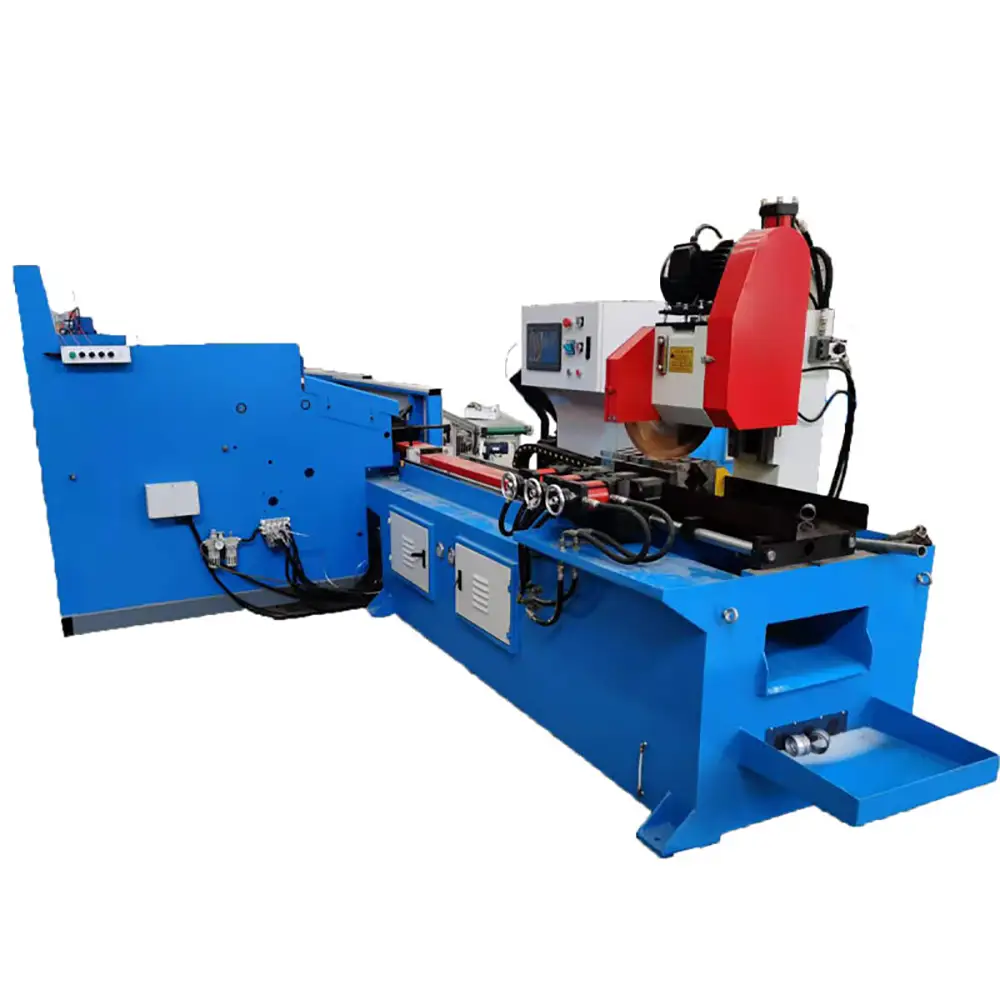
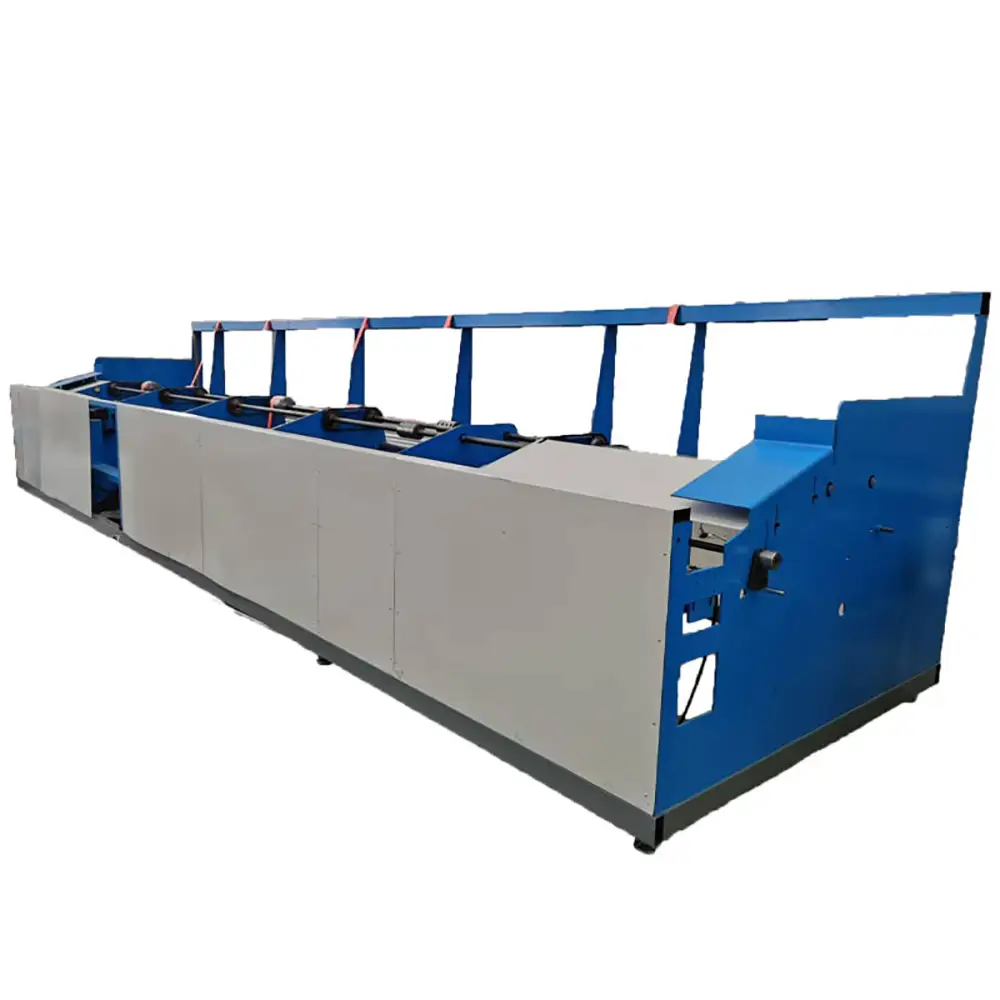
|
Saw blade dia.(mm) |
¢300mm |
¢350mm |
¢400mm |
¢450mm |
|
Cutting angle(°) |
45° |
90° |
45° |
90° |
45° |
90° |
45° |
90° |
|
●(mm) |
50 |
50 |
50 |
50 |
50 |
50 |
50 |
50 |
|
■(mm) |
50×50 |
50×50 |
50×50 |
50×50 |
50×50 |
50×50 |
50×50 |
50×50 |
|
○(mm) |
70 |
80 |
80 |
95 |
115 |
125 |
130 |
140 |
|
╚(mm) |
60×60 |
70×70 |
70×70 |
80×80 |
110×110 |
120×120 |
120×120 |
130×130 |
|
□(mm) |
60×60 |
70×70 |
70×70 |
80×80 |
110×110 |
120×120 |
120×120 |
130×130 |
425 CNC Frame Saw Blade Cutting Machine with Automatic Feeding
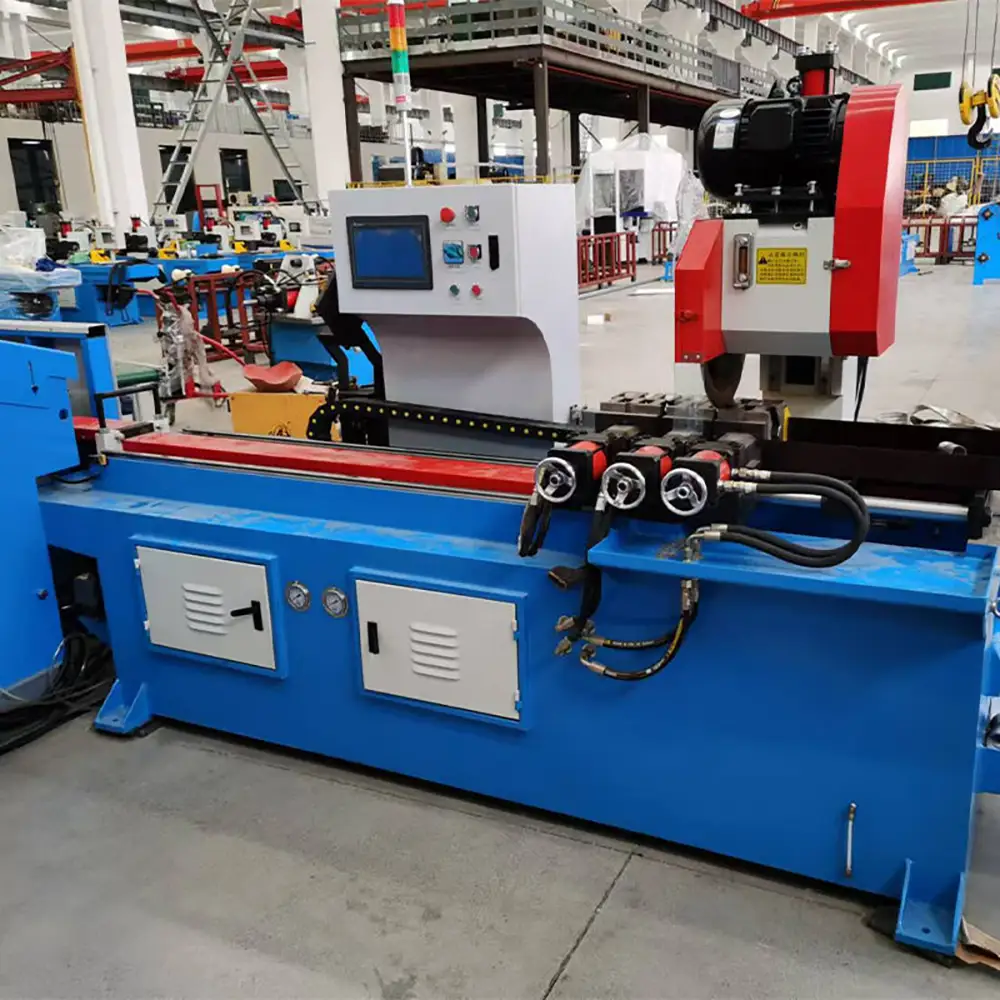
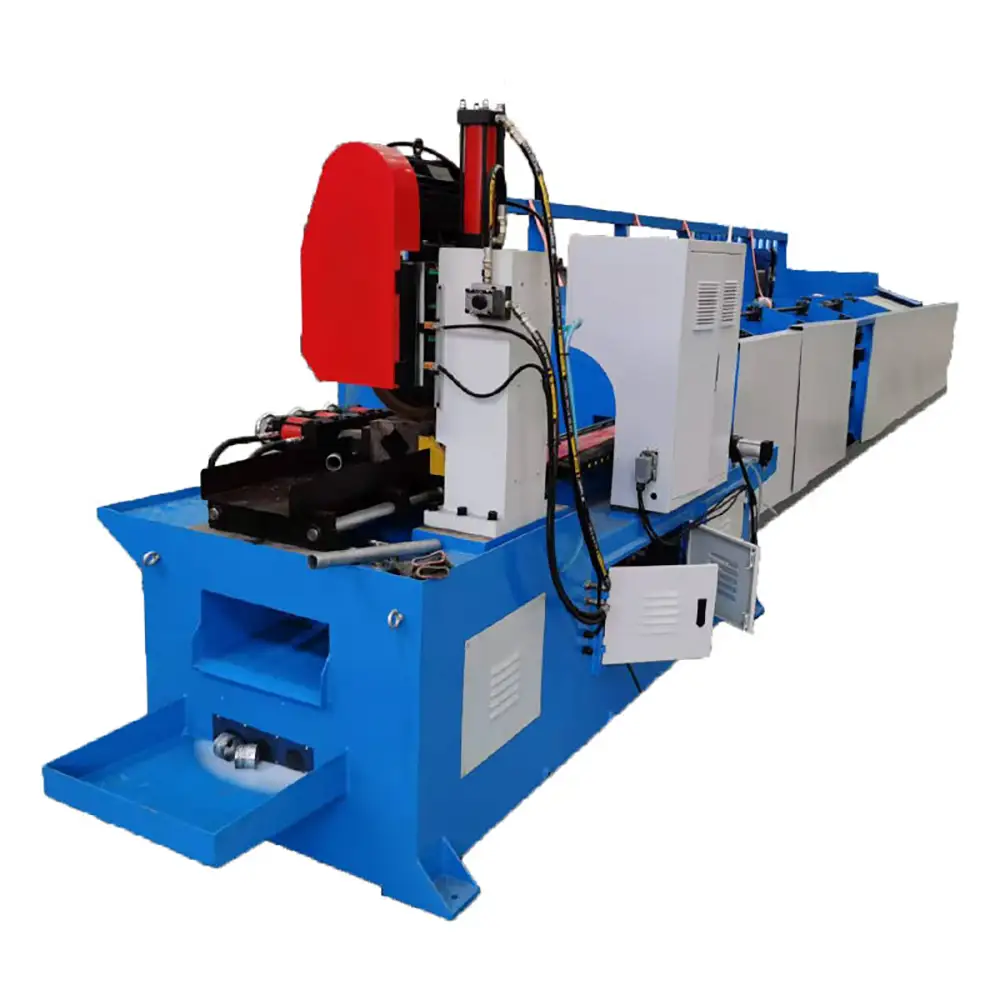
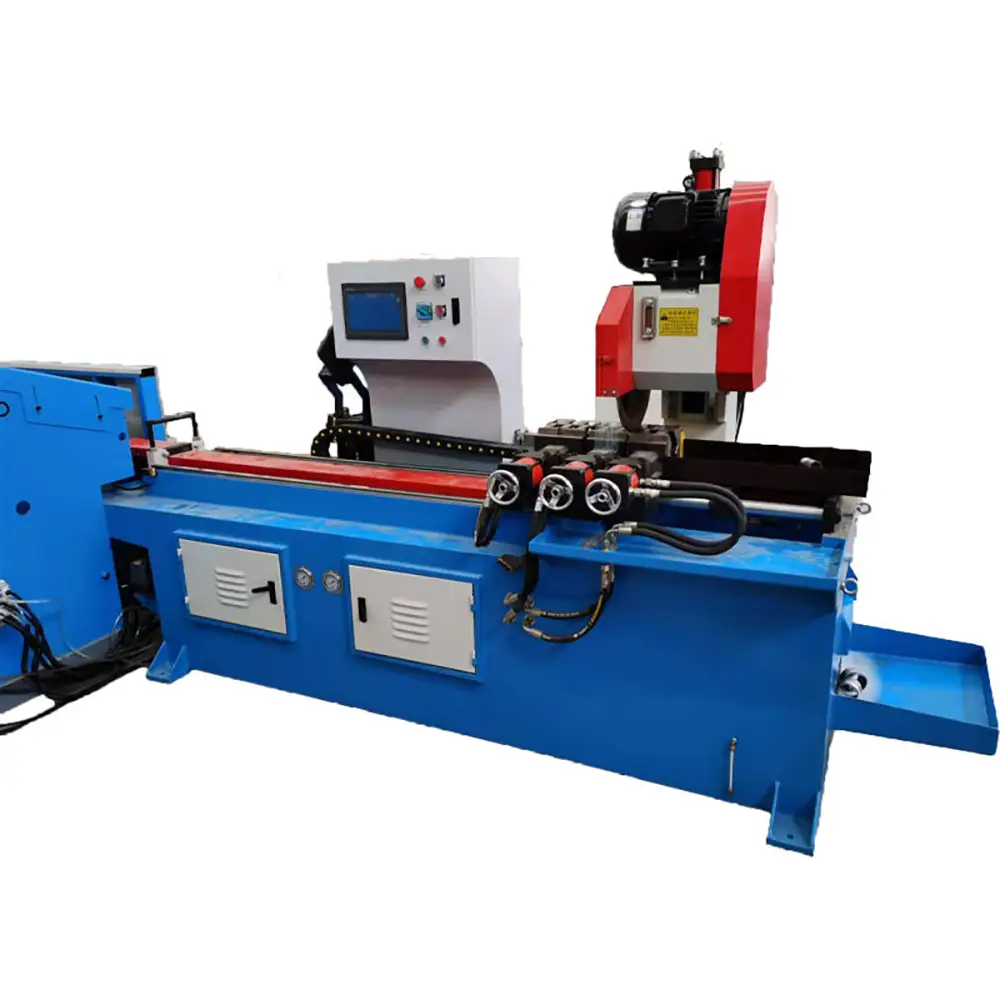
The 425 CNC Frame Saw Blade Cutting Machine is an industrial metal tube and pipe cutting solution designed for manufacturers that require repeatable cutting, automatic material feeding, and efficient batch production. Combining a frame-style saw blade cutting structure with CNC control and automatic feeding, the machine is suitable for processing compatible metal pipes, tubes, profiles, and other workpieces according to specific production requirements.
The 425 CNC configuration is designed for industrial cutting applications where stable workholding, controlled feeding, and repeatable cutting are important. Instead of relying on manual measurement and positioning for every workpiece, the CNC control and automatic feeding system can help organize repeated cutting operations and reduce repetitive operator tasks.
The actual cutting range, material compatibility, blade specifications, cutting tolerance, and production output depend on the machine configuration and workpiece characteristics. Customers should confirm tube dimensions, material, wall thickness, required cutting length, and production volume before selecting the final configuration.
425 CNC Pipe Cutting System
The 425 CNC configuration provides a programmable platform for automatic pipe and tube cutting. Depending on the selected machine design, CNC control can coordinate material feeding, positioning, clamping, cutting, and production cycling.
This type of system is particularly useful when a factory needs to process many tubes to standardized lengths. Once the appropriate production parameters have been established, repeated cutting can be performed with less manual measuring.
CNC control can also make it easier to change cutting lengths or production settings between different orders. The exact programming functions depend on the machine's control system and configuration.
Frame Saw Blade Cutting Structure
The frame saw structure provides a stable platform for metal cutting. A frame-supported saw mechanism can help maintain controlled blade movement during the cutting cycle.
The saw blade must be selected according to the material and tube dimensions. Carbon steel, stainless steel, aluminum, copper, brass, and other metals have different cutting characteristics and may require different blade specifications and cutting parameters.
Proper blade selection, workpiece clamping, feeding speed, and cutting conditions are important for maintaining consistent cutting performance.
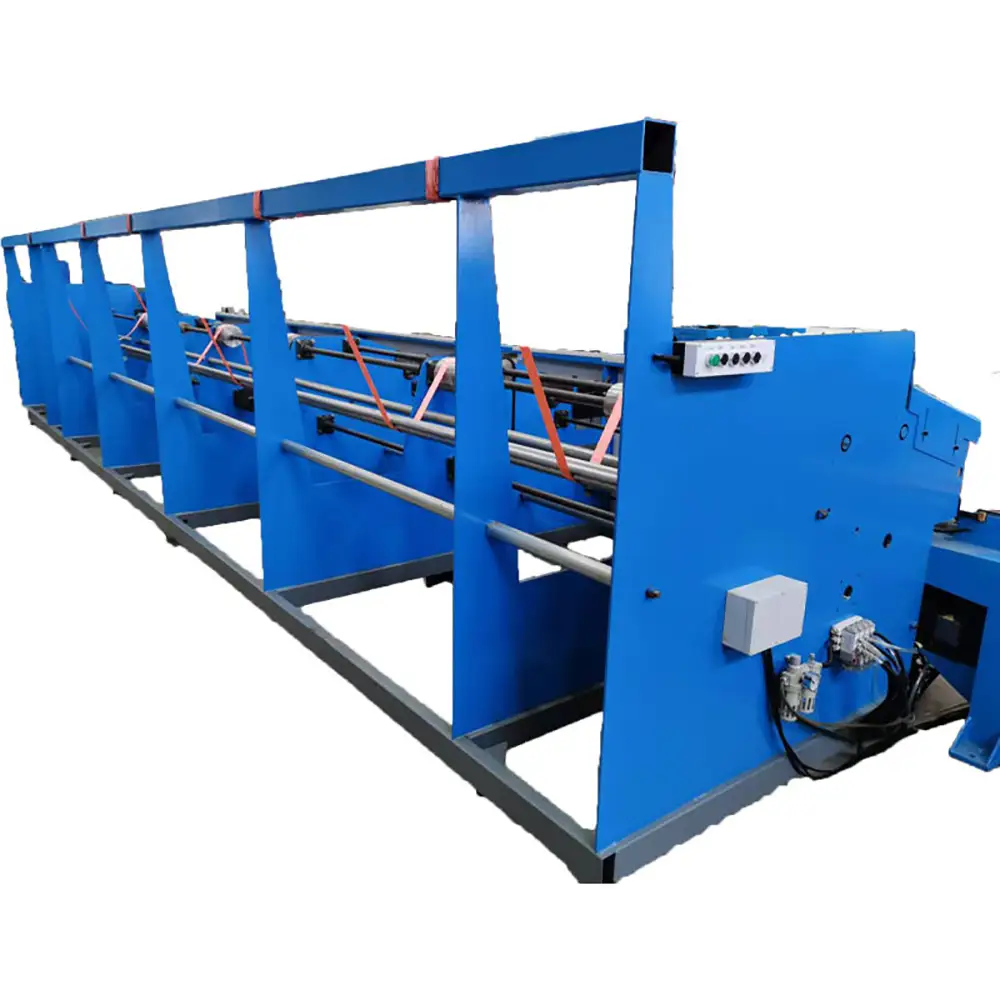
Automatic Material Feeding
Automatic feeding is one of the key features for batch pipe and tube processing. Depending on the configuration, the feeding system can move raw material into the cutting area, position the tube according to the programmed cutting length, and prepare the next section for processing.
Automatic feeding can reduce repetitive manual handling and improve the consistency of production.
For long tubes, proper material support is important. Tube straightness, length, weight, diameter, and surface condition can affect feeding performance.
The actual production rate depends on tube dimensions, cutting length, material, blade condition, feeding system, loading method, and overall machine configuration.
Automatic Pipe Cutting
The machine is designed to support automatic pipe cutting operations after the material has been correctly loaded and configured.
A typical cutting cycle may include:
Material Feeding
Length Positioning
Workpiece Clamping
Saw Blade Cutting
Workpiece Release
Finished Piece Collection
Repeat Cycle
Depending on the automation package, some of these steps can be coordinated automatically.
Automatic operation should not be interpreted as completely unmanned production. Operators may still be required for material loading, parameter setup, process monitoring, inspection, blade changes, and maintenance.
Metal Pipe and Tube Applications
The 425 CNC cutting machine can be evaluated for various compatible metal pipes and tubes.
Potential materials include:
Carbon Steel
Stainless Steel
Aluminum
Copper
Brass
Other Compatible Metal Profiles
Material-specific blade selection is important. The same blade and cutting parameters should not automatically be used for every material.
Customers should provide the material grade, tube diameter, wall thickness, and required cutting length for application evaluation.
Precision Cutting and Repeatability
Repeatable cutting is important for industrial tube fabrication. When multiple pipes must be cut to the same length, automatic feeding and CNC positioning can reduce variation caused by manual measurement.
Actual cutting accuracy depends on:
Tube Diameter
Wall Thickness
Material Properties
Tube Straightness
Cutting Length
Feeding Accuracy
Clamping Stability
Blade Condition
Machine Rigidity
Cutting Parameters
For applications requiring a specific tolerance, the tolerance should be evaluated using the actual workpiece and machine configuration.
Sample cutting and dimensional inspection can be used to verify suitability before mass production.
Stable Workpiece Clamping
Proper clamping keeps the pipe or tube stable during the cutting cycle. Movement or vibration can affect cut quality and dimensional consistency.
The clamping system should be selected according to the workpiece shape and material. Round pipes, square tubes, rectangular tubes, and other profiles may require different fixtures or support arrangements.
Thin-wall tubing also requires careful control of clamping pressure. Excessive force may deform the tube, while insufficient force may allow movement during cutting.
Saw Blade Selection
The frame saw blade is a critical consumable component. Blade selection should consider the material, tube size, wall thickness, cutting length, production volume, and desired edge quality.
Important factors include:
Blade Diameter
Tooth Geometry
Tooth Pitch
Blade Material
Cutting Speed
Feed Rate
Lubrication
Workpiece Support
A correctly selected blade can improve cut quality and help control blade wear.
For high-volume production, monitoring blade condition is important because a worn blade can increase cutting resistance and affect finished tube quality.
Clean and Consistent Cutting
Industrial pipe cutting applications often require consistent tube ends for downstream processing. Cut tubes may subsequently undergo welding, bending, drilling, machining, threading, polishing, or assembly.
The 425 CNC saw cutting system can provide repeatable cuts when the machine, blade, material, and cutting parameters are correctly matched.
Depending on the final application, additional deburring or chamfering may be required. The need for secondary finishing depends on the material and the customer's edge-quality requirements.
Different Tube Lengths
A programmable CNC cutting system can support production orders involving different tube lengths.
For example, a manufacturer may need to produce several batches of tubes for different assemblies. Cutting parameters can be adjusted according to the required production program.
Changing tube specifications may require fixture, guide, blade, or feeding adjustments depending on the machine design.
For factories processing a wide range of diameters and wall thicknesses, the complete workpiece range should be considered when selecting the machine.
Industrial Applications
The 425 CNC automatic pipe cutting machine can support a variety of industries.
Automotive Components
Metal tubing can be used for compatible automotive structures, exhaust-related components, supports, frames, and other fabricated parts.
Furniture Manufacturing
Steel, stainless steel, and aluminum tubes are widely used in furniture frames, tables, chairs, shelving, displays, and other structures.
Construction
Metal pipes and tubes can be cut for construction components, structural fabrication, handrails, supports, and installation-related products.
Industrial Machinery
Manufacturers can process tubing for equipment frames, guards, supports, brackets, and mechanical assemblies.
HVAC and Plumbing
Compatible metal pipes can be cut into specified lengths for piping, fittings, and installation applications.
General Metal Fabrication
Fabrication shops can use the machine for repeated tube cutting jobs and preparation for downstream welding, forming, or assembly.
Production Line Integration
The machine can be integrated into a broader tube-processing workflow. Depending on production requirements, upstream material storage and feeding systems can supply raw tubes to the machine.
Downstream equipment can include collection racks, inspection stations, deburring equipment, bending machines, welding systems, or other fabrication equipment.
Integrating multiple operations can help reduce unnecessary material handling and create a more organized manufacturing process.
Quality Control
Quality control should be performed throughout the tube cutting process.
Important inspection points include:
Tube Diameter
Wall Thickness
Cut Length
Cut Squareness
Tube Deformation
Burr Condition
Surface Condition
Dimensional Consistency
Blade wear should also be monitored. If cutting performance changes significantly, the blade and machine parameters should be inspected.
For precision production, sample inspection should be performed before and during batch production.
Maintenance
Regular maintenance helps maintain reliable operation. Operators should inspect the saw blade, automatic feeding system, clamping mechanism, guides, drive components, lubrication points, electrical controls, and safety devices.
Metal chips and debris should be removed from the cutting area regularly.
The saw blade should be inspected for wear or damage and replaced according to its actual cutting condition and manufacturer recommendations.
Safety
The machine contains a rotating saw blade, automatic feeding mechanisms, and moving components. Proper operating procedures are therefore essential.
Guards, emergency-stop systems, protective devices, and chip-control measures should be provided according to the machine configuration and applicable workplace regulations.
Operators should use appropriate personal protective equipment and verify that the material is properly supported and clamped before starting the cutting cycle.
Customized CNC Tube Cutting Solutions
Different factories have different pipe cutting requirements. Machine configuration can be evaluated according to tube diameter, wall thickness, material, cutting length, production volume, automation level, and factory layout.
Customized options may include feeding systems, fixtures, material supports, collection systems, blade configurations, electrical requirements, and production-line integration.
Customers are encouraged to provide tube drawings, material specifications, sample workpieces, required lengths, and target production output when requesting a quotation.
OEM and ODM Support
For machinery distributors, metal fabrication companies, tube manufacturers, and industrial production plants, OEM and ODM support can provide additional flexibility.
Machine specifications, fixtures, feeding systems, branding, control configurations, and application-specific functions can be evaluated according to project requirements.
With the right machine configuration, the 425 CNC frame saw system can become an important part of an efficient metal tube and pipe processing workflow.
Why Choose Us
1. 425 CNC Industrial Configuration
The 425 CNC platform is designed for professional metal pipe and tube cutting applications.
2. Automatic Material Feeding
Automatic feeding options can reduce repetitive manual handling and improve production workflow.
3. Frame Saw Blade Structure
The frame-supported saw mechanism provides a stable cutting platform for compatible metal workpieces.
4. Repeatable CNC Cutting
Programmable positioning and cutting can help maintain consistent tube lengths in batch production.
5. Multi-Material Applications
The machine can be evaluated for compatible steel, stainless steel, aluminum, copper, brass, and other metal tubing.
6. Flexible Workholding
Fixtures and clamping systems can be selected according to tube diameter, profile, and wall thickness.
7. OEM and ODM Services
Customized feeding systems, fixtures, automation, branding, and machine configurations can support different B2B projects.
8. Application-Based Engineering
Drawings, samples, material specifications, and production requirements can be used to evaluate the appropriate machine configuration.
FAQs
1. What is a 425 CNC pipe cutting machine?
A 425 CNC pipe cutting machine is an industrial saw cutting system designed for programmable and repeatable cutting of compatible metal pipes and tubes. The exact 425 specification should be confirmed according to the manufacturer's machine configuration.
2. What does 425 mean in the machine name?
The “425” is commonly used as a model or size designation, but its exact meaning depends on the manufacturer's design. Customers should confirm the actual cutting capacity and machine specifications before ordering.
3. Can the machine automatically feed pipes?
Yes, the machine can be configured with an automatic feeding system. The feeding capacity should be matched to the pipe diameter, length, weight, and production requirements.
4. What materials can the machine cut?
Depending on configuration, it can be evaluated for carbon steel, stainless steel, aluminum, copper, brass, and other compatible metal pipes and tubes.
5. Can it cut stainless steel pipes?
Yes. Suitable stainless steel applications can be evaluated with the appropriate saw blade, cutting parameters, clamping, and machine configuration.
6. Can it cut square and rectangular tubes?
Some configurations can process square and rectangular profiles. The appropriate fixtures and cutting range should be confirmed according to the tube dimensions.
7. Is this machine suitable for batch production?
Yes. Automatic feeding and CNC-controlled cutting make the machine suitable for repeated cutting operations, depending on the required production volume and configuration.
8. Can the cutting length be programmed?
Depending on the CNC control system, cutting lengths and production parameters can be programmed for repeated operations.
9. Does automatic feeding mean the machine is fully automatic?
Not necessarily. Automatic feeding and cutting reduce manual operations, but operators may still be required for material loading, monitoring, inspection, blade replacement, and maintenance.
10. How do I select the correct saw blade?
Blade selection depends on material, tube diameter, wall thickness, production volume, desired edge quality, and machine specifications.
11. Can the machine be customized?
Yes. Feeding, fixtures, workpiece support, cutting range, automation, electrical configuration, and production-line integration can be evaluated according to customer requirements.
12. What information is needed for a quotation?
Please provide material and grade, tube diameter or profile dimensions, wall thickness, required cutting lengths, production volume, cutting tolerance, and drawings or samples if available.
Automatic Pipe Cutting Machine,Automatic Feeding Tube Cutting Machine,Metal Pipe Cutting Machine,CNC Tube Cutting Machin China, suppliers, manufacturers, factory, customized, wholesale, quotation, made in China