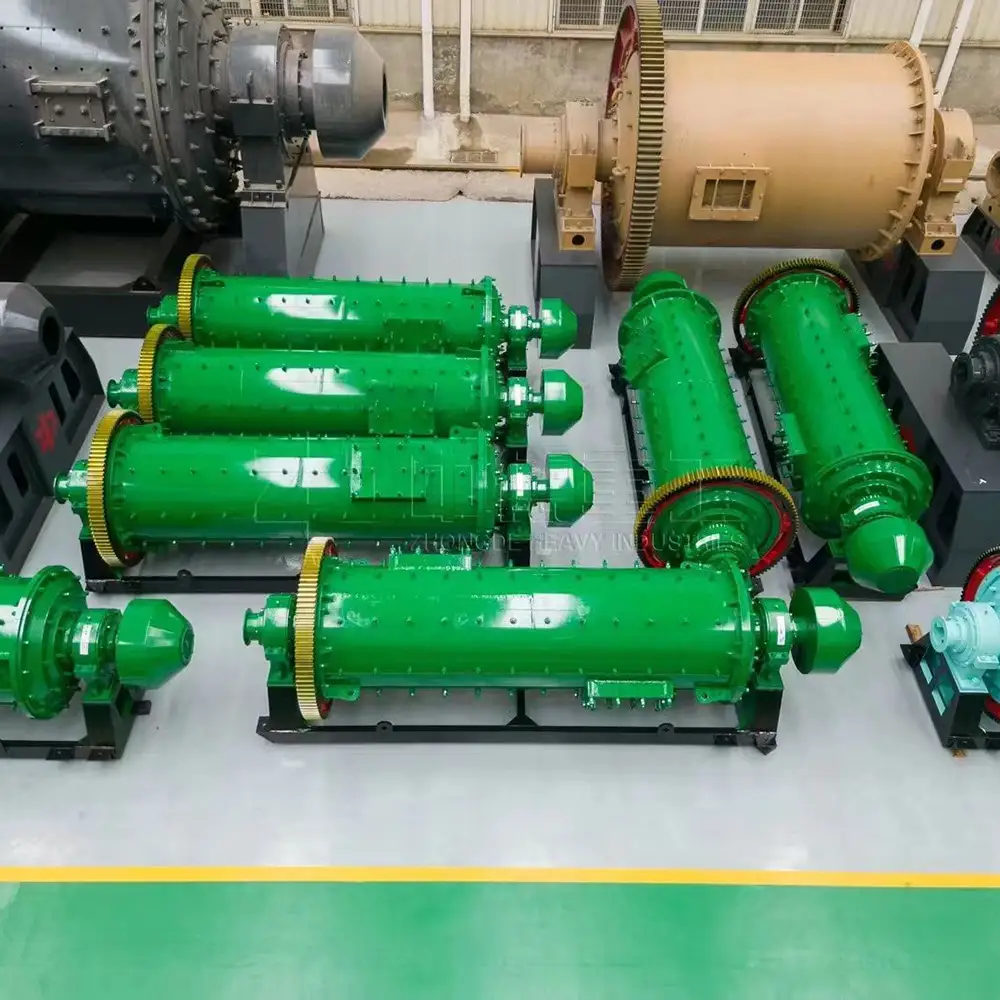
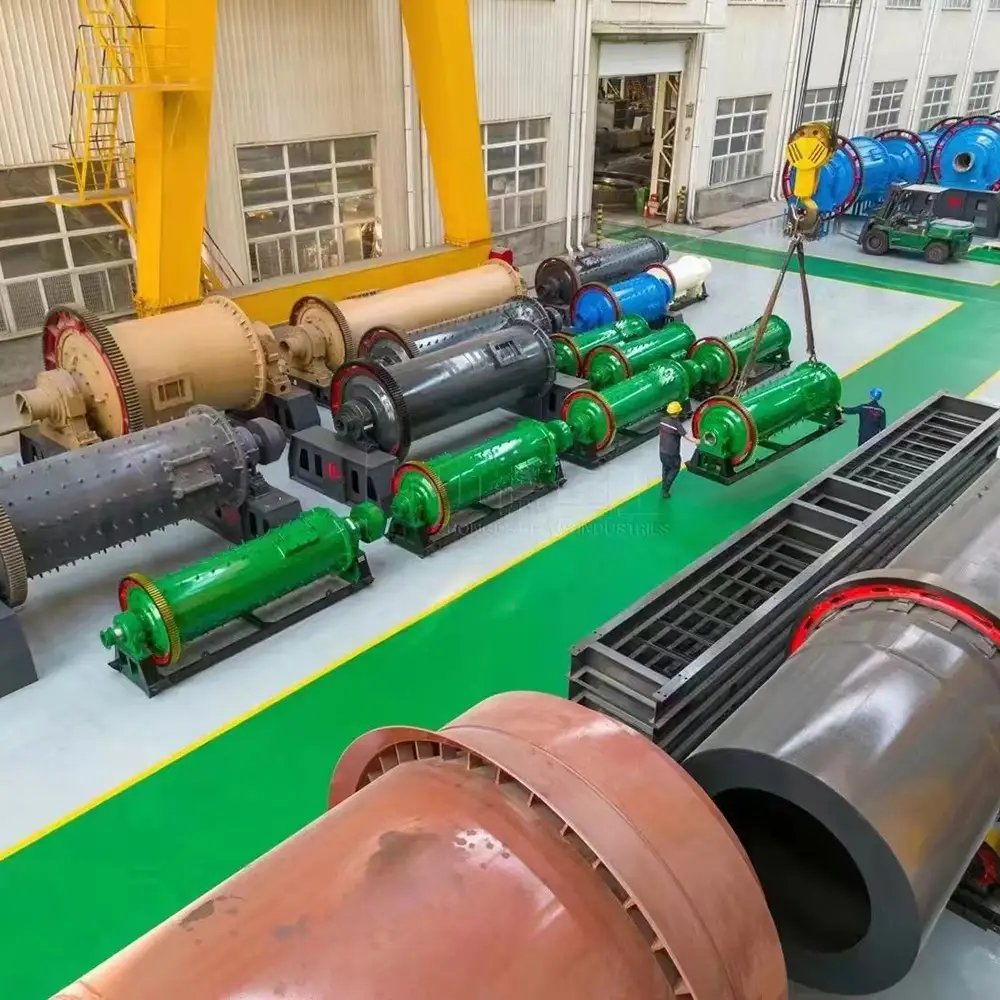
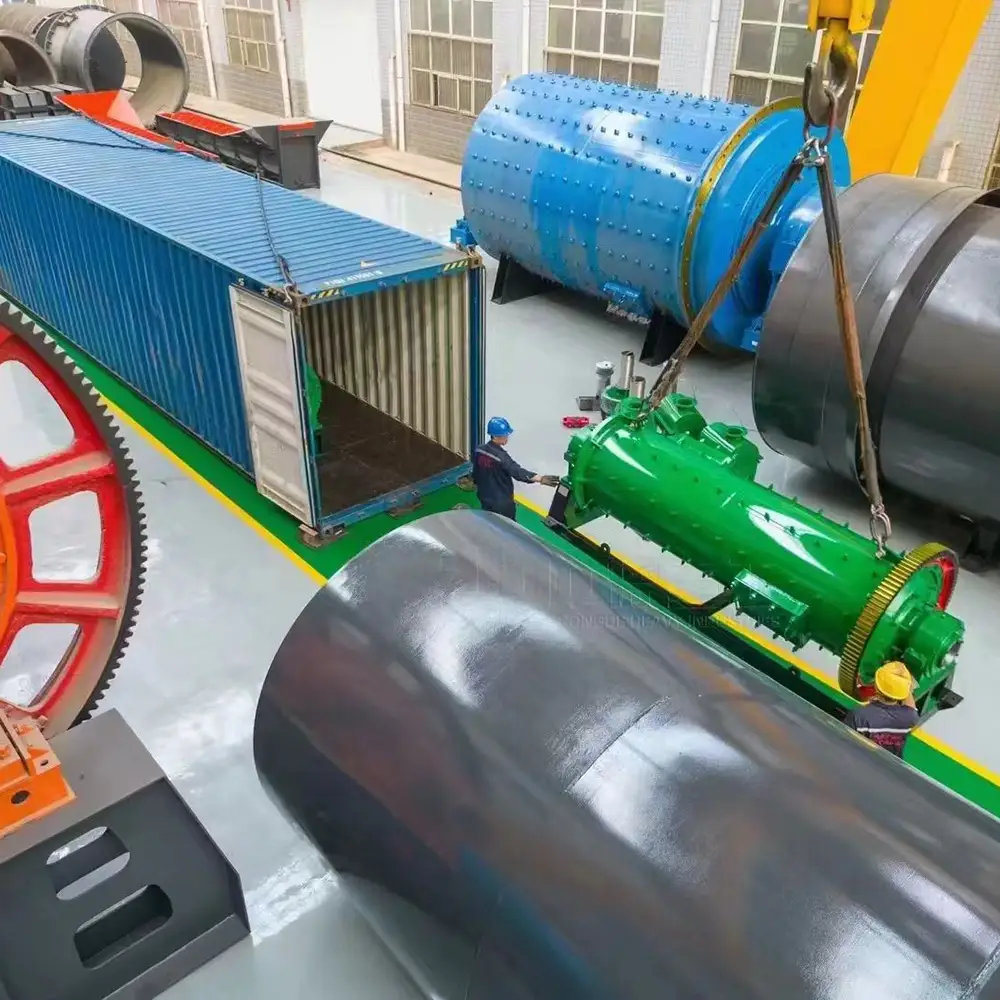
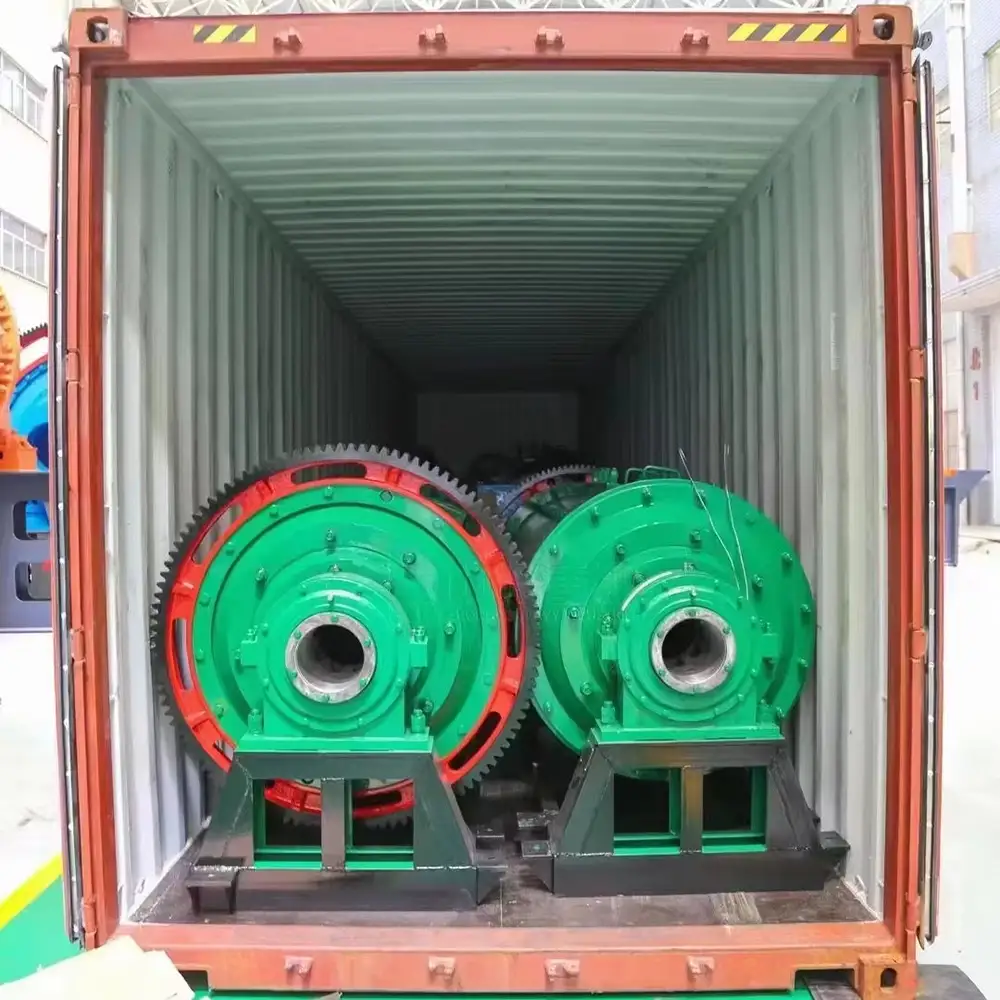
Ball mill for sale introduction
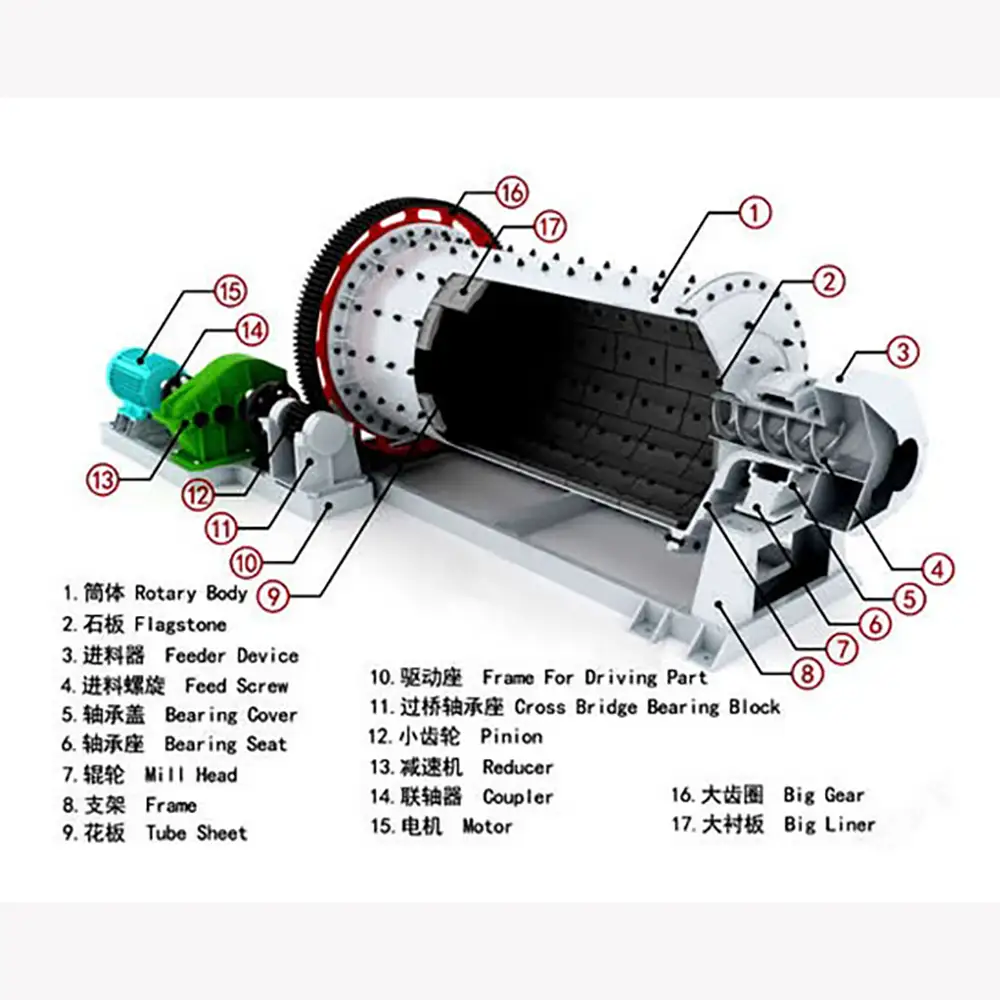
Ball mill works on the principle of impact: size reduction is done by impact as the balls drop from near the top of the shell. A ball mill consists of a hollow cylindrical shell rotating about its axis. The axis of the shell may be either horizontal or at a small angle to the horizontal. it is partially filled with balls. The grinding media is the balls, which may be made of steel (chrome steel), stainless steel or rubber. The inner surface of the cylindrical shell is usually lined with an abrasion-resistant material such as manganese steel or rubber.
Main Features
1) Ball mill is an efficient tool for grinding many materials into fine powder.
2) The ball mill is used to grind many kinds of mine and other materials, or to select the mine
3) Ball mill is widely used in mining industry, building material, and chemical industry.
4) There are two ways of grinding: the dry way and the wet way.
5) Ball mill can be divided into tabular type and flowing type according to different expelling mine
6) To use the ball mill, the material to be ground is loaded into the neoprene barrel that contains grinding media.
7) As the barrel rotates, the material is crushed between the individual pieces of grinding media that mix and crush the product into fine powder over a period of several hours.
8) The longer the ball mill runs, the finer the powder will be.
9) Ultimate particle size depends entirely on how hard the material you're grinding is, and the time how long the ball mill runs.
10) Our ball mills have been used to grind glass, powder food products, create custom varnishes, make ceramic glaze, and powder various chemicals.
Energy Saving Ball Mill, Limestone Grinding Ball Mill
An Energy Saving Ball Mill is a widely used grinding machine for reducing limestone, ores, minerals, cement materials, and other bulk solids into fine or controlled particle sizes. Designed for continuous industrial operation, ball mills use rotating cylinders filled with grinding media to achieve efficient impact and attrition grinding.
The Limestone Grinding Ball Mill is particularly suitable for limestone powder production, mineral processing, cement plants, building materials, chemical industries, and other applications requiring reliable and consistent grinding performance. Depending on the process requirements, ball mills can be configured for wet grinding or dry grinding.
As an industrial grinding equipment supplier and manufacturer, we provide ball mill solutions that can be selected according to material characteristics, required capacity, feed size, final particle size, and production conditions.
What Is an Energy Saving Ball Mill?
An Energy Saving Ball Mill is a cylindrical grinding machine designed to improve grinding efficiency while reducing unnecessary energy consumption during operation. The mill rotates around its horizontal axis, causing the grinding media inside the cylinder to lift and fall as the shell rotates.
The resulting impact and friction between the grinding media and material gradually reduce the feed material into smaller particles.
Compared with basic grinding equipment, an energy-efficient ball mill can be designed with optimized transmission components, grinding chamber configuration, lining systems, and operating parameters to improve the overall grinding process.
Ball mills are available in various sizes and configurations for laboratory, pilot, and large-scale industrial production.
Limestone Grinding Ball Mill
Limestone is a common industrial mineral used in cement manufacturing, construction materials, calcium carbonate production, chemical processing, agriculture, and environmental applications.
A Limestone Grinding Ball Mill can process limestone into the required fineness for downstream production. The grinding process may be combined with classifiers, dust collectors, conveyors, feeders, separators, and other auxiliary equipment to form a complete grinding system.
The appropriate mill configuration depends on limestone hardness, moisture content, feed particle size, target fineness, required throughput, and whether the process uses wet or dry grinding.
How Does a Ball Mill Work?
The grinding process begins when limestone, ore, or other feed material enters the mill through the feeding system.
The cylindrical grinding chamber rotates at a controlled speed. Grinding media inside the chamber are carried upward by the rotating shell before falling or rolling back through the material.
Repeated impact, compression, and friction gradually reduce the material particle size.
The ground product is then discharged through the outlet. Depending on the production line, the material may pass through a classifier or separator to achieve a specific particle-size distribution.
For closed-circuit grinding systems, coarse particles can be returned to the mill for additional grinding while qualified fine material is collected as the final product.
Main Components
A typical Energy Saving Ball Mill consists of several major components:
Grinding cylinder
Grinding media
Mill liners
Feed inlet
Discharge outlet
Main bearing system
Transmission system
Motor
Reducer or drive system
Lubrication system
Supporting frame
Safety and control components
The internal liner protects the grinding cylinder from excessive wear and also influences the movement of the grinding media.
Grinding media are selected according to material characteristics and required grinding performance.
Wet Ball Mill and Dry Ball Mill
Ball mills can generally be configured for wet or dry grinding.
Wet Grinding
Wet grinding uses liquid as part of the grinding process. It can be suitable for mineral processing applications where slurry handling is required.
Dry Grinding
Dry grinding processes material without adding process water. It is commonly used for limestone, cement materials, industrial minerals, and other applications where dry powder is required.
The choice between wet and dry grinding should be based on the material properties, downstream processing requirements, final product specifications, and complete plant configuration.
Applications
Limestone Processing
The Limestone Grinding Ball Mill can produce finely ground limestone for cement, building materials, calcium-based products, and other industrial applications.
Mining and Mineral Processing
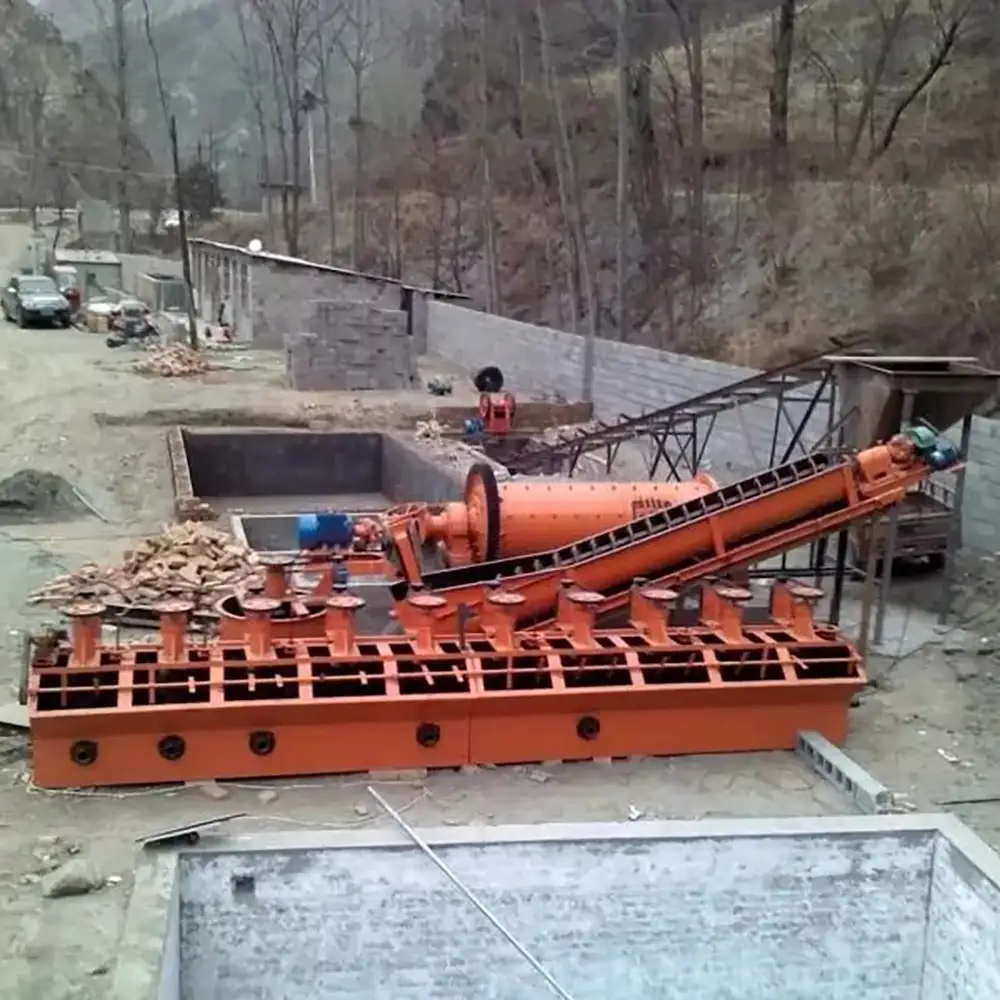
Ball mills are widely used for grinding ores and mineral materials after crushing. They can be integrated into complete mineral processing plants.
Cement Manufacturing
Grinding equipment is an important part of cement and clinker processing. Ball mills can be used for raw material, clinker, and other grinding applications depending on the plant design.
Building Materials
Ground limestone and other minerals are used in concrete products, dry-mix materials, blocks, panels, and other construction applications.
Chemical Industry
Industrial ball mills can process selected mineral and chemical raw materials where controlled particle size is required.
Power and Industrial Minerals
Grinding systems may also be used for selected industrial minerals and bulk materials requiring fine or intermediate grinding.
Key Advantages
Energy-Efficient Grinding
An optimized Energy Saving Ball Mill is designed to improve grinding efficiency and reduce unnecessary power consumption per unit of production.
Reliable Continuous Operation
Heavy-duty construction allows the equipment to operate continuously when properly selected, installed, and maintained.
Wide Material Compatibility
Ball mills can process many types of materials, including limestone, ores, minerals, clinker, and other suitable bulk solids.
Adjustable Grinding Performance
Grinding media, mill speed, liner design, and operating parameters can be selected according to the application.
Large Production Capacity
Industrial ball mills are available in different sizes for small, medium, and large production requirements.
Easy Integration
The mill can be integrated with feeders, conveyors, classifiers, dust collectors, separators, and automated control systems.
Durable Construction
Heavy-duty components and wear-resistant liners help support long-term operation in demanding industrial environments.
How to Select a Limestone Grinding Ball Mill
Several technical factors should be evaluated before selecting a ball mill.
Material: Provide the exact material to be processed, such as limestone, clinker, copper ore, iron ore, or another mineral.
Feed Size: The maximum feed particle size affects the required grinding configuration.
Capacity: Specify the desired production rate, typically expressed in tons per hour.
Final Fineness: The target particle size or mesh specification is essential for selecting the grinding system.
Wet or Dry Grinding: Determine whether the process requires slurry grinding or dry powder production.
Mill Size: Cylinder diameter and length should be selected according to capacity and grinding requirements.
Power Supply: Motor power and electrical configuration should match the customer's installation conditions.
Downstream Equipment: Classifiers, separators, dust collectors, and conveying equipment may be required depending on the complete process.
Installation and Maintenance
Proper installation is essential for reliable ball mill operation. The foundation should meet the equipment requirements, and the mill should be correctly aligned before commissioning.
Regularly inspect bearings, lubrication systems, liners, transmission components, fasteners, and electrical systems. Grinding media should be checked periodically, and worn liners should be replaced according to operating conditions.
Operators should monitor mill temperature, vibration, motor load, product fineness, and production capacity. Abnormal noise, excessive vibration, overheating, or changes in power consumption should be investigated promptly.
Following a planned maintenance schedule can help reduce unexpected downtime and extend equipment service life.
OEM and Custom Ball Mill Solutions
Different grinding plants require different mill configurations. We can provide OEM and customized Energy Saving Ball Mill and Limestone Grinding Ball Mill solutions based on material characteristics, capacity, fineness, installation conditions, and production requirements.
Customization may include mill dimensions, motor configuration, liner material, grinding media recommendations, feeding and discharge arrangements, electrical systems, automation, and complete grinding-line integration.
We can also support customers with complete grinding system configurations including crushers, feeders, conveyors, classifiers, separators, dust collectors, and other auxiliary equipment.
Why Choose Us?
We provide industrial grinding equipment designed for mining, mineral processing, limestone processing, cement, construction materials, and other demanding applications.
Our Energy Saving Ball Mill solutions focus on efficient grinding, durable construction, stable operation, and compatibility with complete material processing systems. We can help customers select suitable equipment according to material type, production capacity, feed size, and final product requirements.
As an experienced industrial equipment manufacturer and supplier, we support OEM and customized orders for distributors, engineering companies, mining operators, cement plants, mineral processors, and international B2B customers.
FAQs
1. What is an Energy Saving Ball Mill?
It is a rotary grinding machine designed to grind minerals and other bulk materials efficiently while optimizing energy consumption.
2. What materials can a ball mill grind?
Depending on the configuration, ball mills can process limestone, ores, minerals, clinker, cement materials, and various industrial raw materials.
3. What is a Limestone Grinding Ball Mill used for?
It is mainly used to grind limestone into controlled particle sizes for cement, construction materials, chemical processing, calcium-based products, and other industrial applications.
4. Can the ball mill perform wet grinding?
Yes. Ball mills can be configured for wet grinding applications where slurry processing is required.
5. Can a ball mill be used for dry grinding?
Yes. Dry ball mills are commonly used for applications where the final product needs to remain a dry powder.
6. How do I determine the required ball mill capacity?
Capacity depends on material properties, feed size, required fineness, grinding method, mill dimensions, and process configuration. Providing these parameters allows the appropriate equipment to be selected.
7. What determines the final particle size?
Grinding time, mill speed, grinding media, liner design, material properties, feed size, and classification equipment can all influence final particle size.
8. Is a ball mill suitable for continuous production?
Yes. Industrial ball mills can be designed for continuous operation and integrated into automated material processing systems.
9. Can you customize an Energy Saving Ball Mill?
Yes. OEM and custom configurations can be provided according to capacity, material, fineness, power supply, installation conditions, and complete plant requirements.
10. What information should I provide for a quotation?
Provide the material name, feed size, required capacity, target fineness, moisture content if applicable, wet or dry grinding requirement, power supply, and any existing equipment in the production line.
Prev:Sorry, no information
Next:Sorry, no information
TAG:
Mineral Processing Equipment,
Industrial Grinding Equipment,
Limestone Grinding Ball Mill,
Ball Mill,
Industrial Ball Mill,
Ball Mill Grinding Machine,
Ball Grinding Mill,
Grinding Ball Mill,
Mining Ball Mill,
Mineral Grinding Ball Mill,
Ore Grinding Ball Mill,
Limestone Ball Mill,
Limestone Grinding Machine,
Limestone Grinding Mill,
Limestone Powder Grinding Mill,
Energy Efficient Ball Mill,
Energy Saving Grinding Mill,
Industrial Grinding Mill,
Mineral Grinding Machine,
Mineral Grinding Mill,
Ore Grinding Machine,
Ore Grinding Mill,
Mining Grinding Machine,
Mining Grinding Mill,
Wet Ball Mill,
Dry Ball Mill,
Wet Grinding Ball Mill,
Dry Grinding Ball Mill,
Mining Grinding Equipment,
Grinding Equipment,
Related Category:
Energy Saving Ball Mill,Limestone Grinding Ball Mill,Ball Mill Grinding Machine,Industrial Ball Mill,Mining Ball Mill China, suppliers, manufacturers, factory, customized, wholesale, quotation, made in China