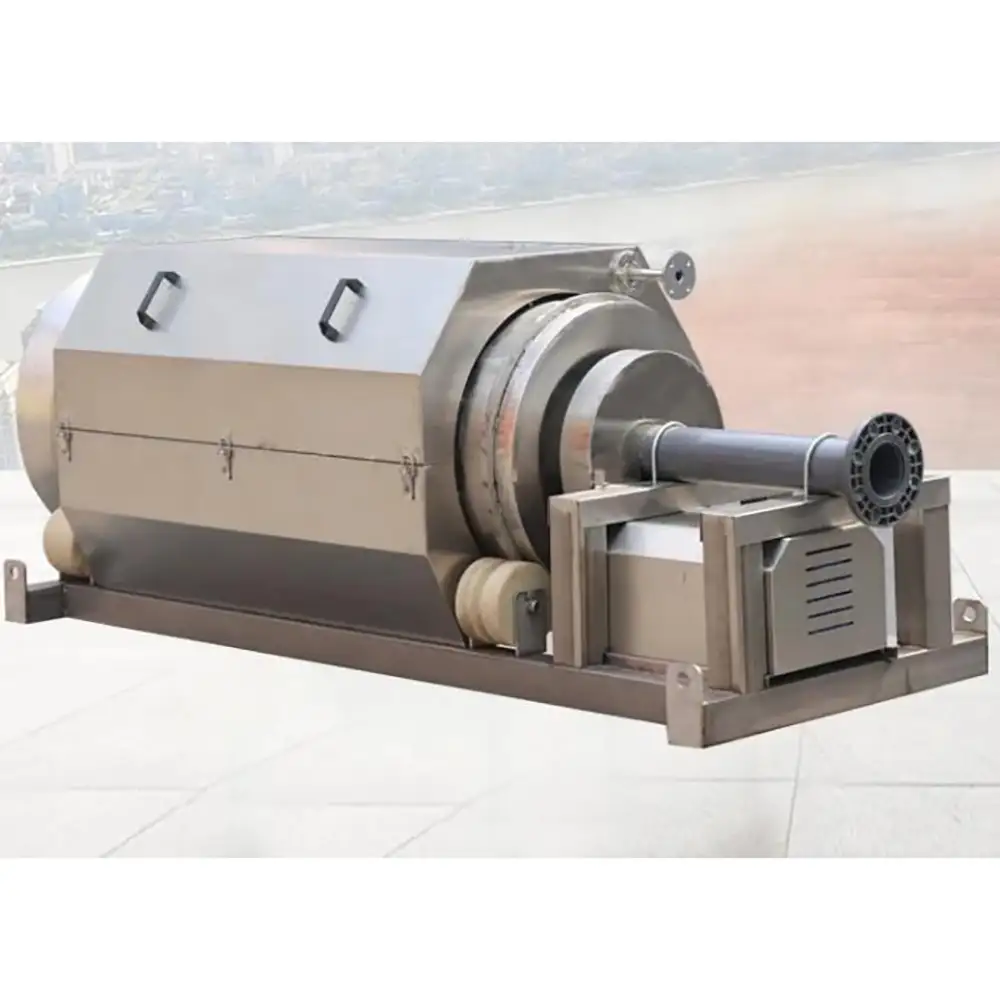
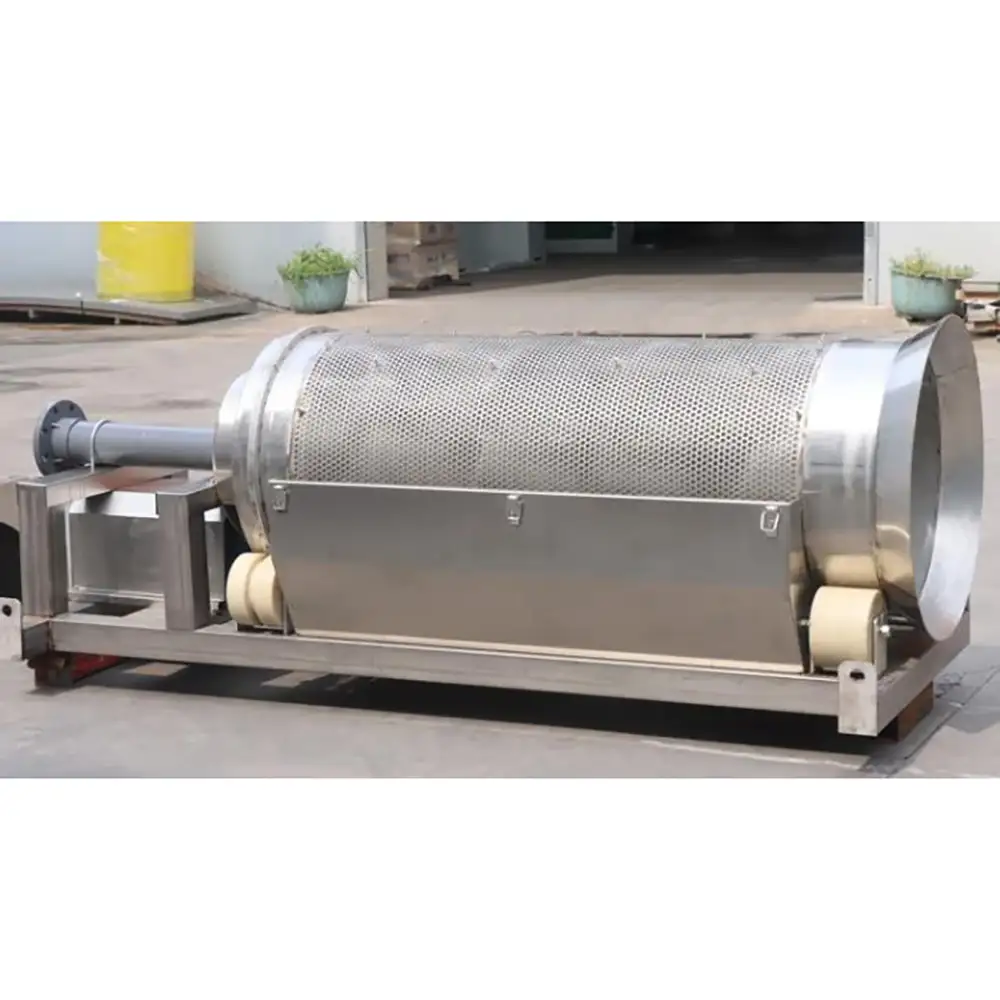
How the Drum Solid-Liquid Separator Works
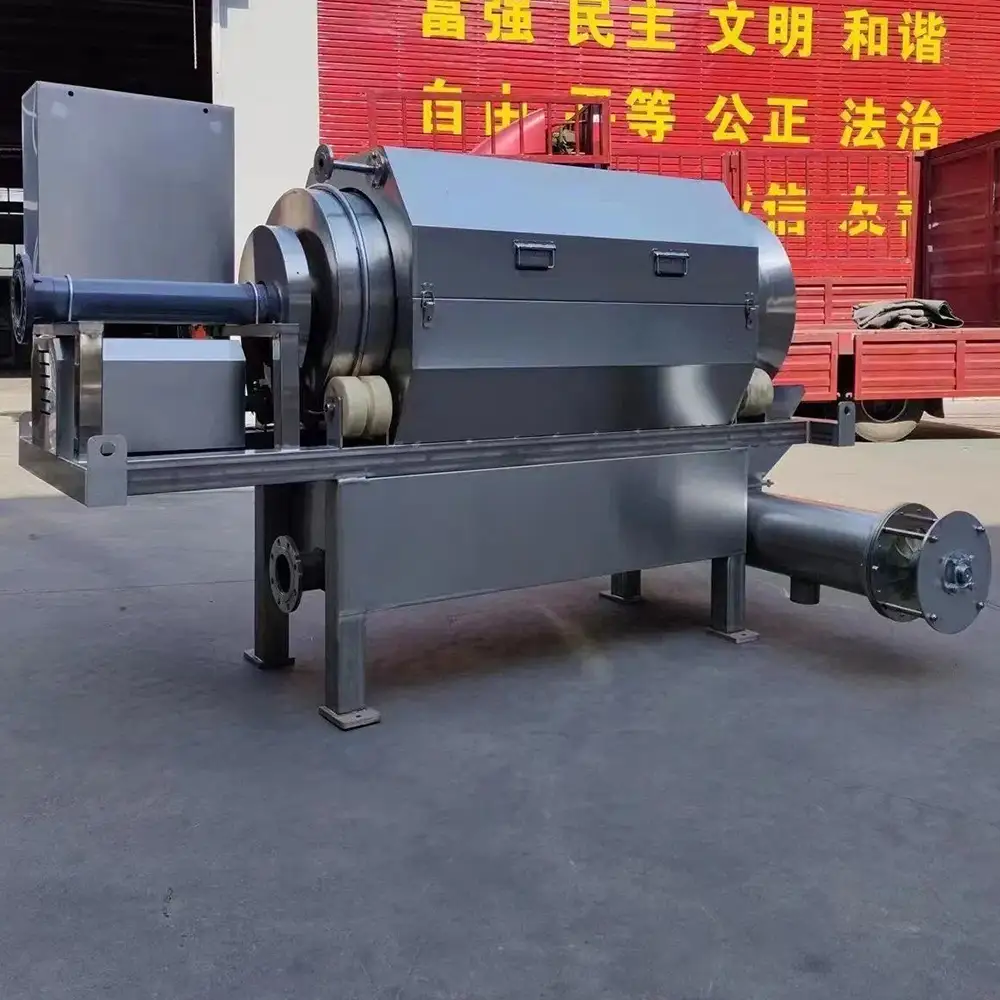
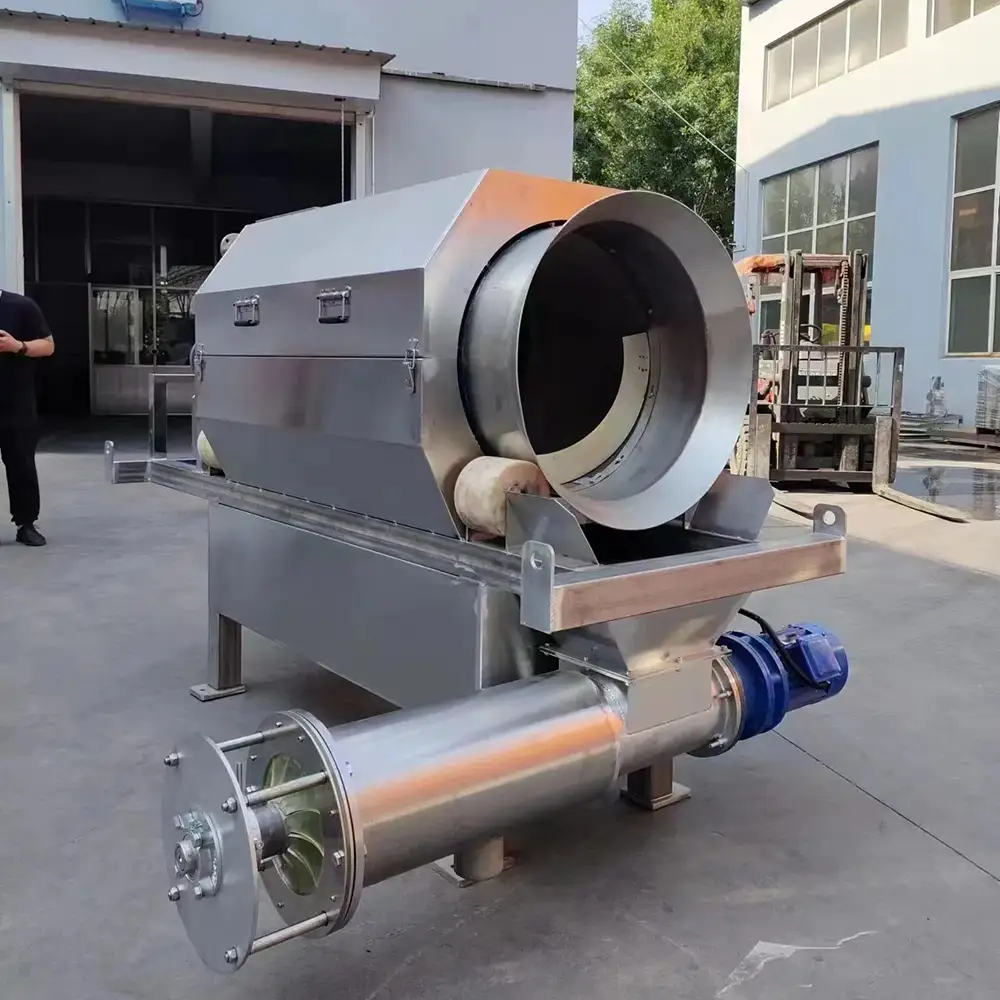
The drum-type separator uses a rotating screening drum to separate solid particles from liquid manure slurry.
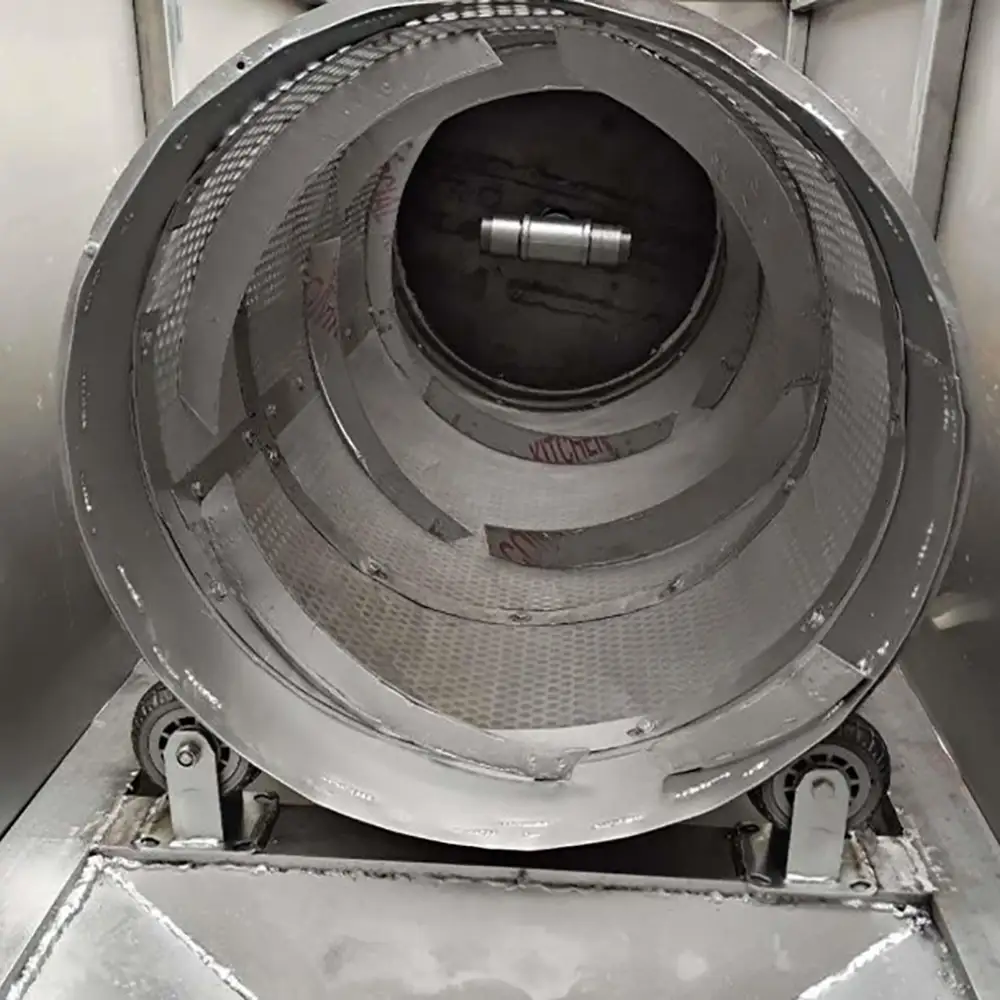
Manure slurry is fed into the separator and enters the rotating drum. As the material moves through the screened drum, liquid passes through the screen openings while larger solid particles remain inside the separation zone and are transported toward the solid discharge outlet.
Depending on the equipment design, an internal screw or conveying mechanism can assist material movement through the drum. The separated liquid is collected below or around the screening section, while the separated solid fraction is discharged from the opposite end.
This creates two output streams:
Manure Slurry → Rotary Drum Screening → Solid Fraction + Liquid Fraction
The two fractions can then be handled independently according to the farm's manure management strategy.
Livestock Manure Solid-Liquid Separation
The equipment can be used for different livestock manure streams, including cattle manure, dairy manure, pig manure, swine manure and other farm slurry materials.
Solid-liquid separation can help reduce the amount of solids entering storage lagoons or other liquid manure handling systems. EPA notes that removing solids before wet or anaerobic storage can reduce organic loading and may help with manure management objectives.
The actual separation performance depends on manure consistency, total solids concentration, particle size, flow rate, screen configuration and equipment design.
Poultry Manure Separation
Poultry and chicken manure can contain substantial organic solids and moisture depending on the collection method and farm operation.
For poultry operations where manure is handled as a slurry or combined with liquid, a rotary drum separator can be considered for preliminary solid-liquid separation.
The separated solids may be directed to composting, drying, organic fertilizer processing or other approved utilization routes. The liquid fraction can be transferred to storage, anaerobic digestion, further wastewater treatment or other appropriate management systems.
EPA notes that solid separation technologies can also be used for poultry manure when it is handled as a liquid or slurry or combined with other liquids.
Wet and Dry Manure Separation
The term
wet and dry separator refers to the ability to divide a wet manure stream into a more concentrated solid fraction and a lower-solids liquid fraction.
The purpose is not necessarily to completely dry the manure. Instead, the equipment reduces the amount of free liquid associated with the solid fraction and separates material into two manageable streams.
The final moisture content and separation efficiency vary according to the incoming material and equipment configuration. University extension research notes that solid-liquid separator performance can vary significantly depending on manure type, consistency, total solids content, flow rate and separator design.
Manure Dewatering Applications
A drum solid-liquid separator can serve as a manure dewatering machine for farms and agricultural waste management systems.
Typical applications include:
-
Dairy Farms
-
Cattle Farms
-
Pig Farms
-
Swine Farms
-
Poultry Farms
-
Chicken Farms
-
Livestock Breeding Facilities
-
Animal Husbandry Operations
-
Biogas Plants
-
Organic Fertilizer Facilities
-
Agricultural Waste Treatment Projects
The separator can be installed as an independent manure processing machine or integrated into a larger manure treatment line.
Benefits of Solid-Liquid Separation
Separating manure into solid and liquid fractions provides several potential operational benefits.
The solid fraction can be easier to transport, stack, compost or process into organic fertilizer products. The liquid fraction can be pumped and transferred to a storage tank, lagoon, anaerobic digester or additional treatment process.
University of Wisconsin Extension explains that separating manure into solid and liquid streams can support separate handling and management, potentially improving storage and transportation efficiency.
Solid separation can also reduce the solids load entering downstream liquid manure treatment or storage systems.
Rotary Drum Screening Design
The rotary drum is the primary separation component. Screen opening size is an important parameter because it affects which particles remain in the solid fraction and which particles pass into the liquid stream.
A smaller screen opening can retain more fine solids, while a larger opening allows more particles to pass through. The appropriate screen size should therefore be selected according to manure characteristics and the desired downstream process.
The drum can be designed with wear-resistant and corrosion-resistant materials suitable for agricultural waste environments.
Depending on the application, stainless steel or other appropriate materials may be considered for wetted and high-wear components.
Continuous Operation
The drum separator is designed for continuous material processing. This can be useful for farms that generate manure slurry on a regular basis and need a separation system integrated with daily manure handling.
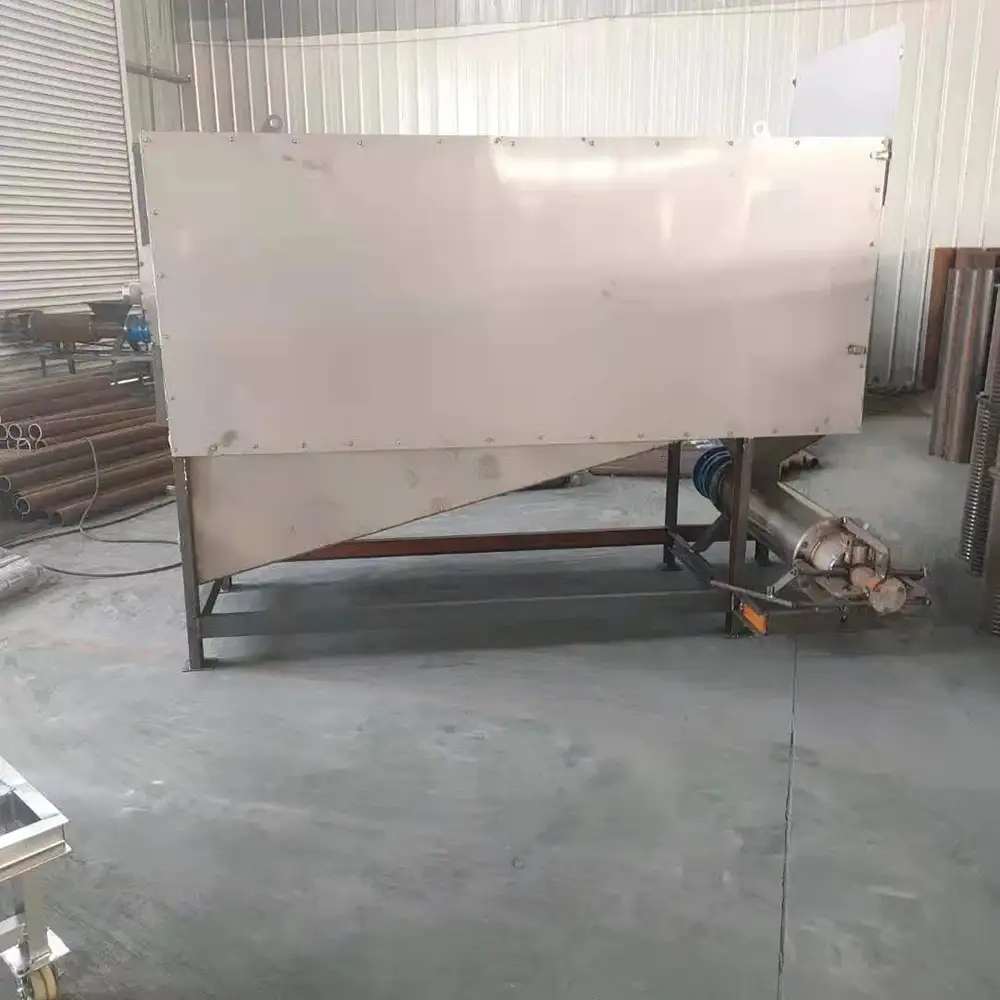
An automated feed pump can transfer slurry from a collection pit to the separator. The solid outlet can discharge into a container, conveyor or composting area, while the liquid outlet can connect to a storage tank or further treatment system.
A control panel can be used to manage motors, pumps and protective functions.
Integration with Biogas and Fertilizer Systems
Solid-liquid separation is commonly used as a pretreatment or intermediate step in manure management systems.
In an anaerobic digestion project, the separator can be positioned before or after selected digestion stages depending on the process design. The separated solids may be directed toward composting or other utilization, while the liquid stream can be processed through digestion or additional wastewater treatment.
For fertilizer production, the separated solid fraction can be further composted, dried, screened or processed according to the final product requirements.
Research and extension resources describe solid-liquid separation as a common processing step in manure management and organic-material processing systems.
Operation and Maintenance
Regular maintenance helps maintain stable separation performance.
Operators should inspect the screen drum, drive system, bearings, feed system, discharge outlet and electrical components. The screen should be cleaned when material buildup affects throughput or separation.
Foreign objects should be removed before they enter the machine because stones, metal, ropes or other hard materials may damage rotating or screening components.
The actual maintenance schedule depends on manure characteristics, operating hours and equipment configuration.
Why Choose Us
Our drum solid-liquid separator is designed for farms and agricultural waste treatment applications requiring continuous separation of wet manure slurry into solid and liquid fractions.
The equipment can be configured for livestock and poultry manure according to material characteristics, processing capacity and downstream utilization requirements.
We focus on practical separation performance, easy material handling and integration with complete manure management systems.
The equipment can be combined with manure pumps, storage tanks, conveyors, composting systems, anaerobic digesters, fertilizer production lines and wastewater treatment equipment.
For different manure types, screen opening, drum configuration, feed system and drive arrangement can be selected according to actual operating conditions.
Before final equipment selection, it is recommended to evaluate manure consistency, total solids content, particle size, flow rate and the desired characteristics of the separated solid and liquid streams.
FAQs
1. What is a drum solid-liquid separator?
A drum solid-liquid separator is mechanical equipment that separates wet slurry into a more concentrated solid fraction and a lower-solids liquid fraction using a rotating screening drum.
2. Can it separate livestock manure?
Yes. It can be used for cattle, dairy, pig, swine and other livestock manure when the material is handled as slurry or contains sufficient liquid for mechanical separation.
3. Can it process poultry manure?
Yes. Poultry or chicken manure can be processed when it is collected and handled as a suitable slurry or liquid-containing material.
4. Is this machine a manure dewatering machine?
Yes. It can be used as a manure dewatering and solid-liquid separation machine, although the actual final moisture content depends on the material and equipment configuration.
5. What are the two outputs?
The separator produces a solid fraction and a liquid fraction. Each stream can then be handled separately.
6. Can the separated solids be used for composting?
Yes. The solid fraction can potentially be sent to composting or other approved manure utilization processes, depending on its characteristics and local requirements.
7. Can the liquid fraction be used for fertilizer?
The liquid fraction may be suitable for further nutrient management or agricultural application where permitted, but its suitability should be evaluated based on nutrient content, contaminants and applicable regulations.
8. Can the separator be used before anaerobic digestion?
Yes. Solid-liquid separation can be integrated into manure processing and anaerobic digestion systems. The appropriate position in the process depends on the specific project design.
9. Does screen size affect separation performance?
Yes. Screen opening size affects particle retention and the characteristics of the separated solid and liquid fractions. Selection should be based on manure properties and downstream requirements.
10. How do I choose the right drum separator?
Important factors include manure type, moisture content, total solids, particle size, hourly throughput, desired separation results, available power and the intended use of the separated fractions.
11. Can the machine operate continuously?
Yes. Drum separators can be configured for continuous feeding and discharge, making them suitable for regular farm manure processing.
12. Can the drum manure separator be integrated into a complete treatment line?
Yes. It can be connected with manure collection systems, pumps, conveyors, composting equipment, anaerobic digesters, fertilizer processing equipment and wastewater treatment systems.
Installation Instructions
Sewage treatment is done every hour. If the water volume exceeds 100 cubic meters per hour and the garbage content exceeds 0.3%, the sieve drum will be lengthened or its diameter will be increased (the garbage content needs to be provided by the customer) .
Fixed legs are only used for welded water trays. There are no fixed legs without water trays. The above data is a conventional selection for garbage content of 1/1000 to 2/1000. If you need special customization, please contact us