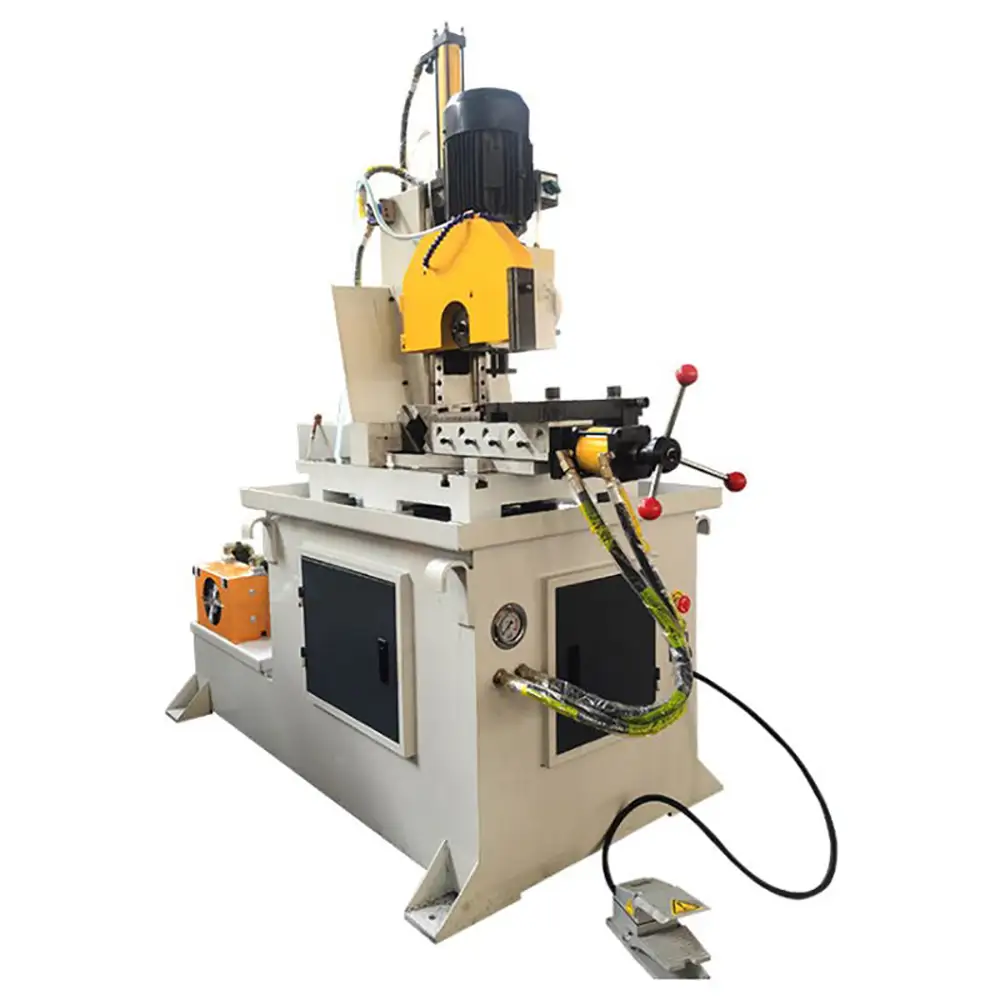
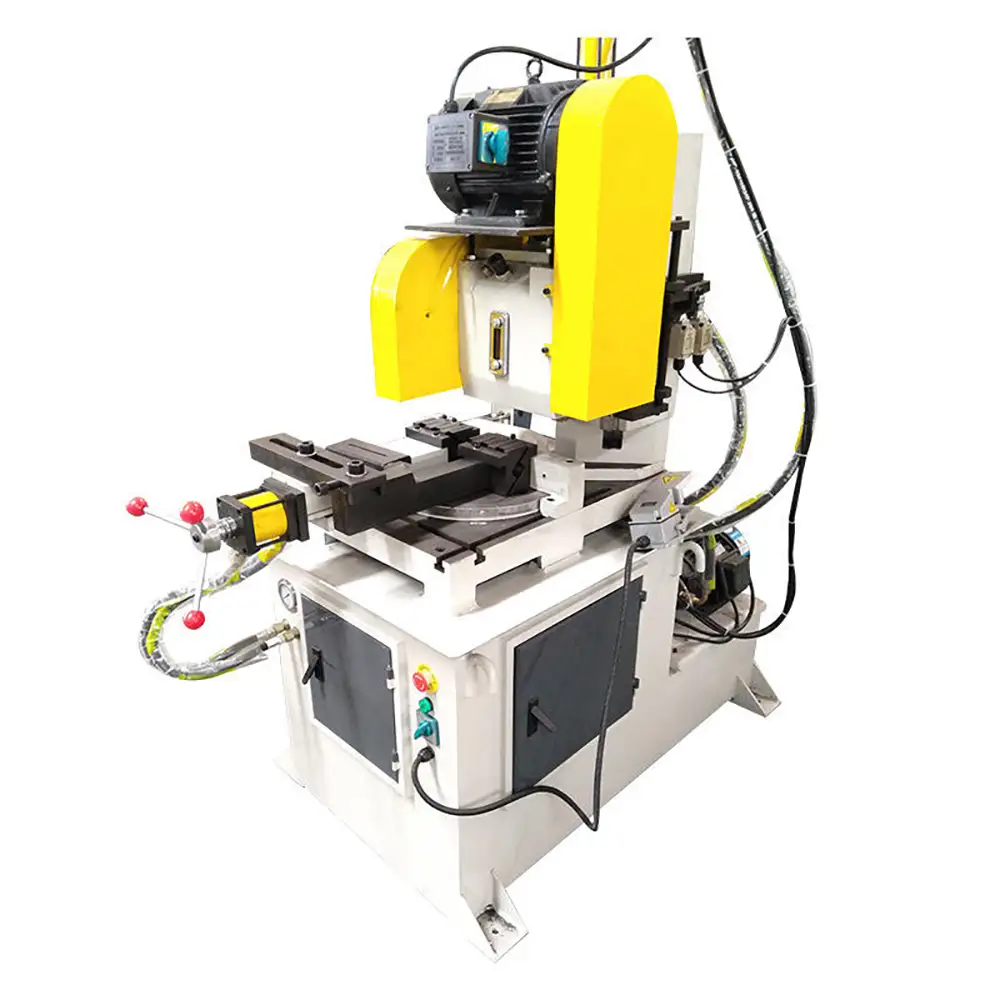
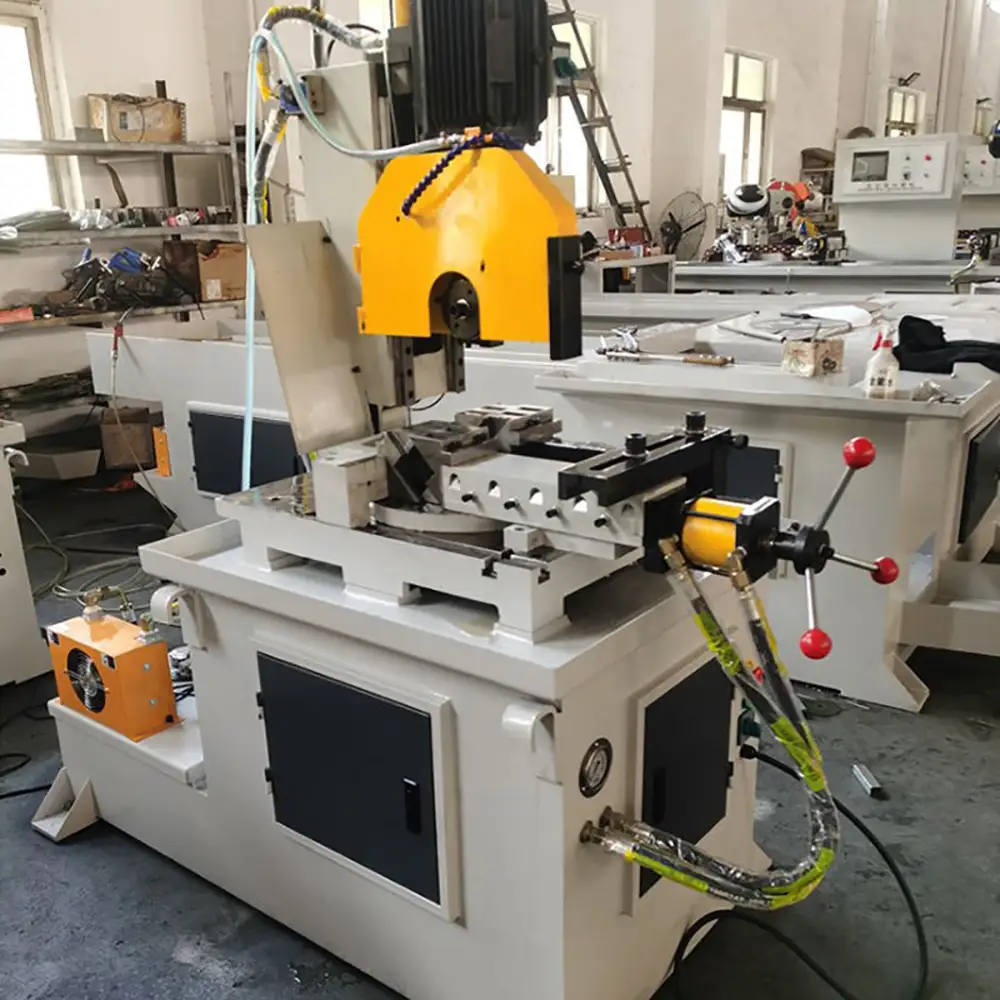
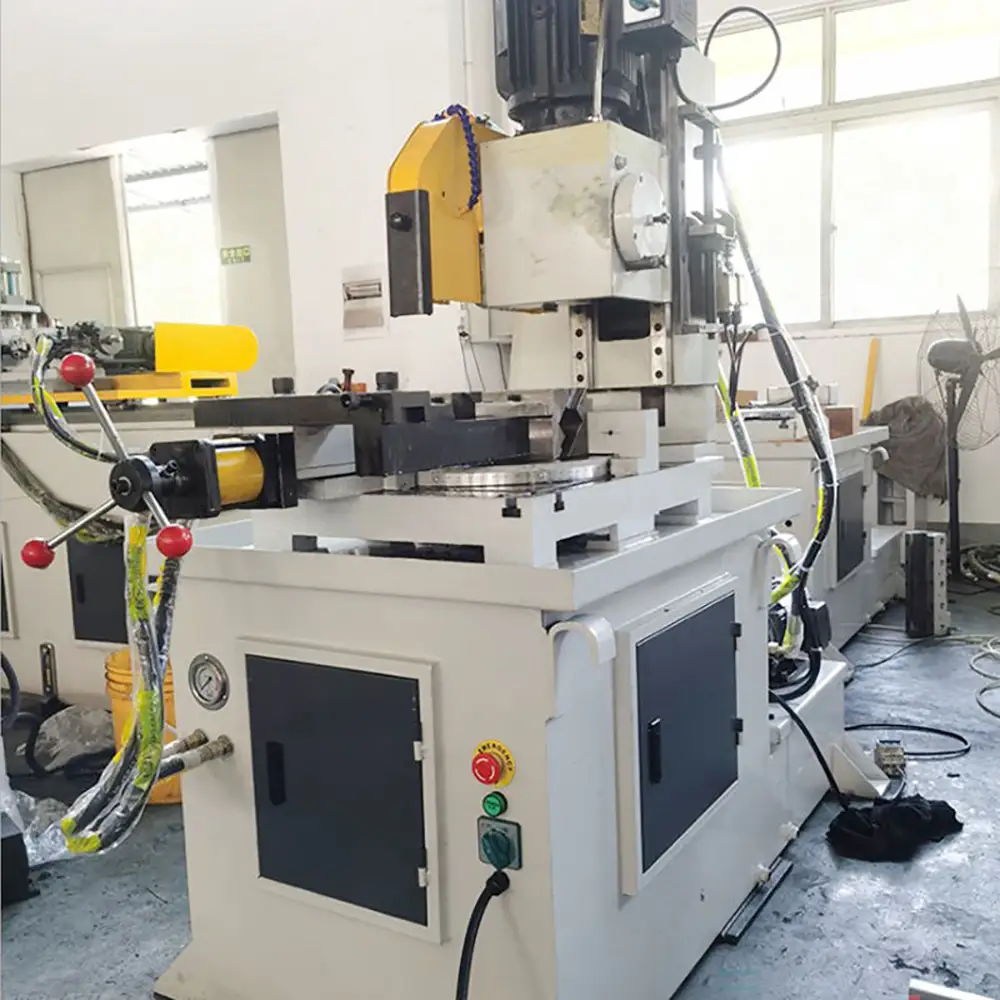
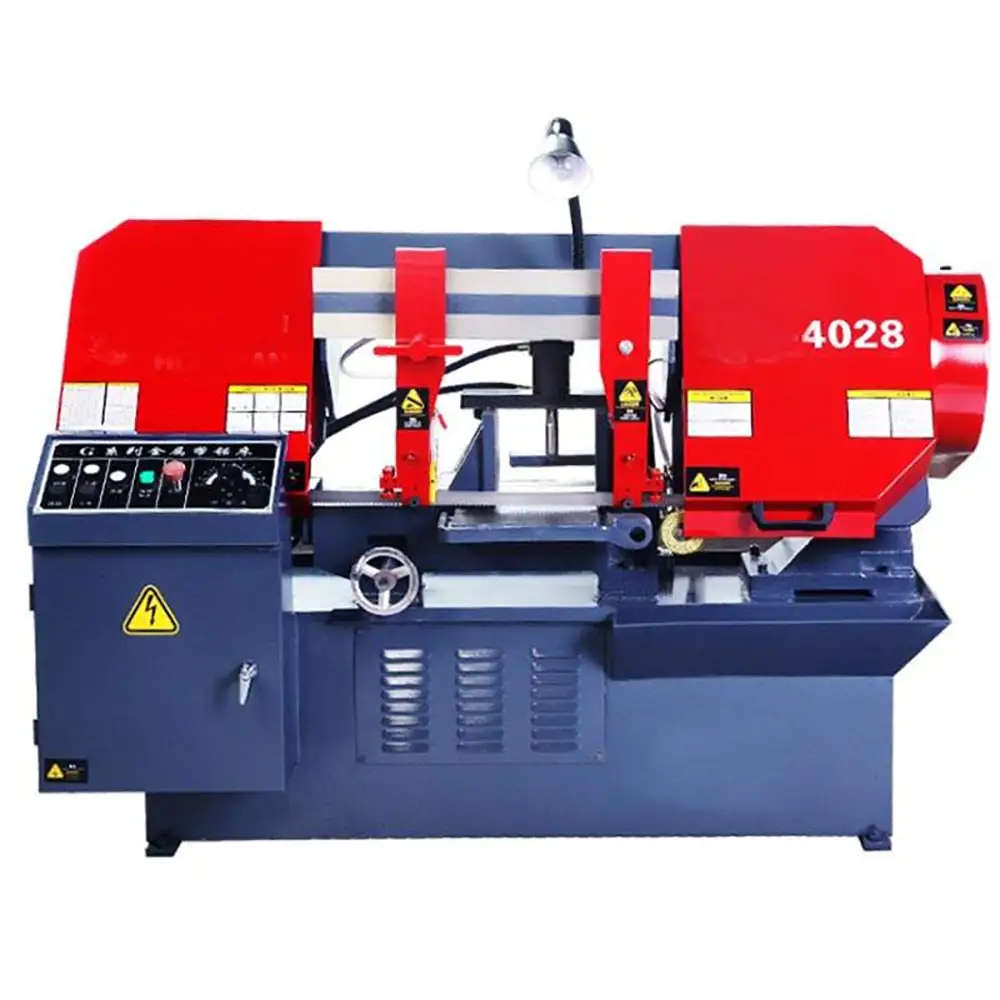
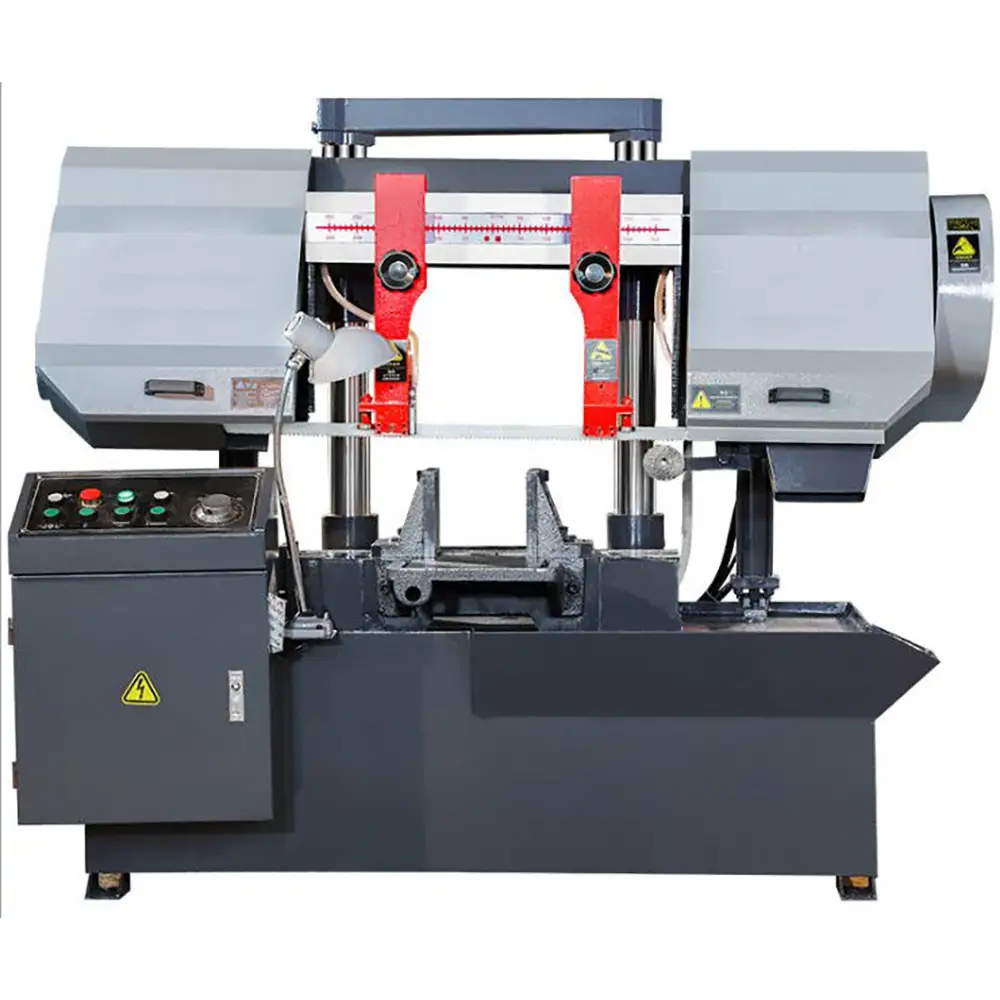
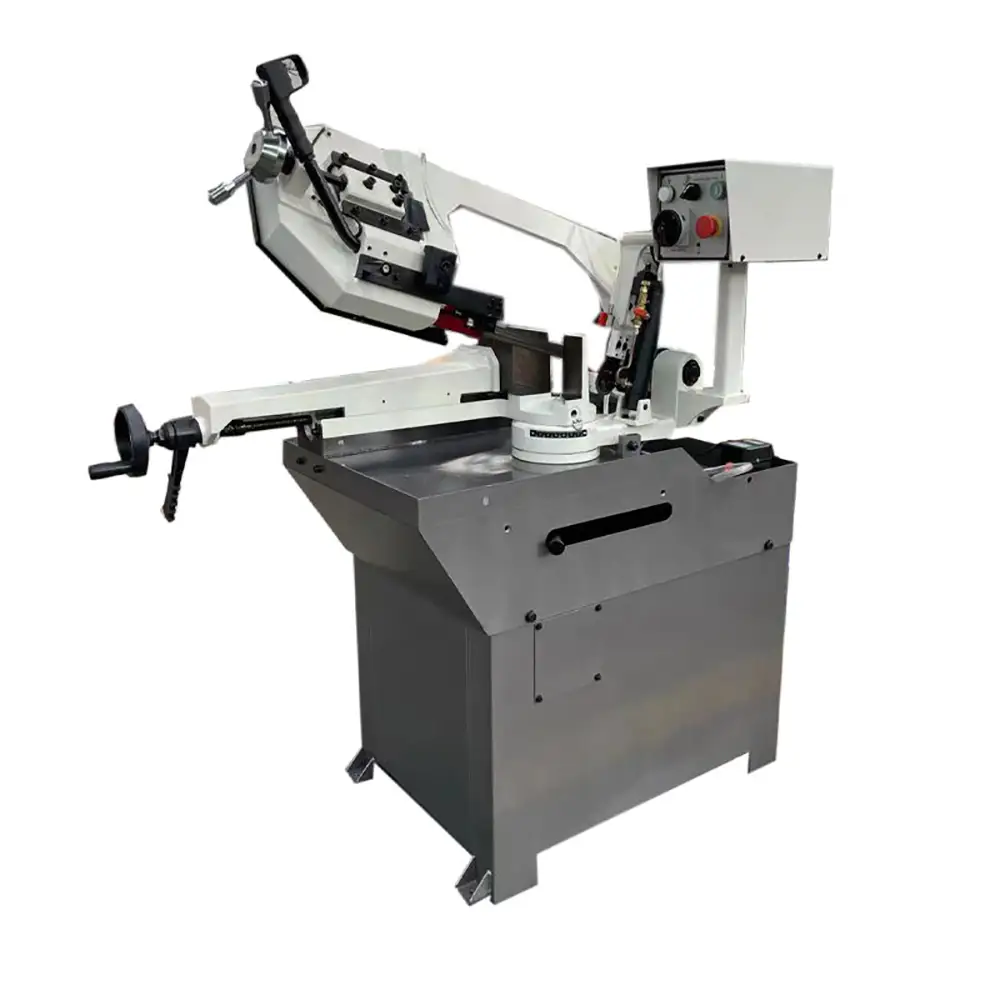
Product feature:
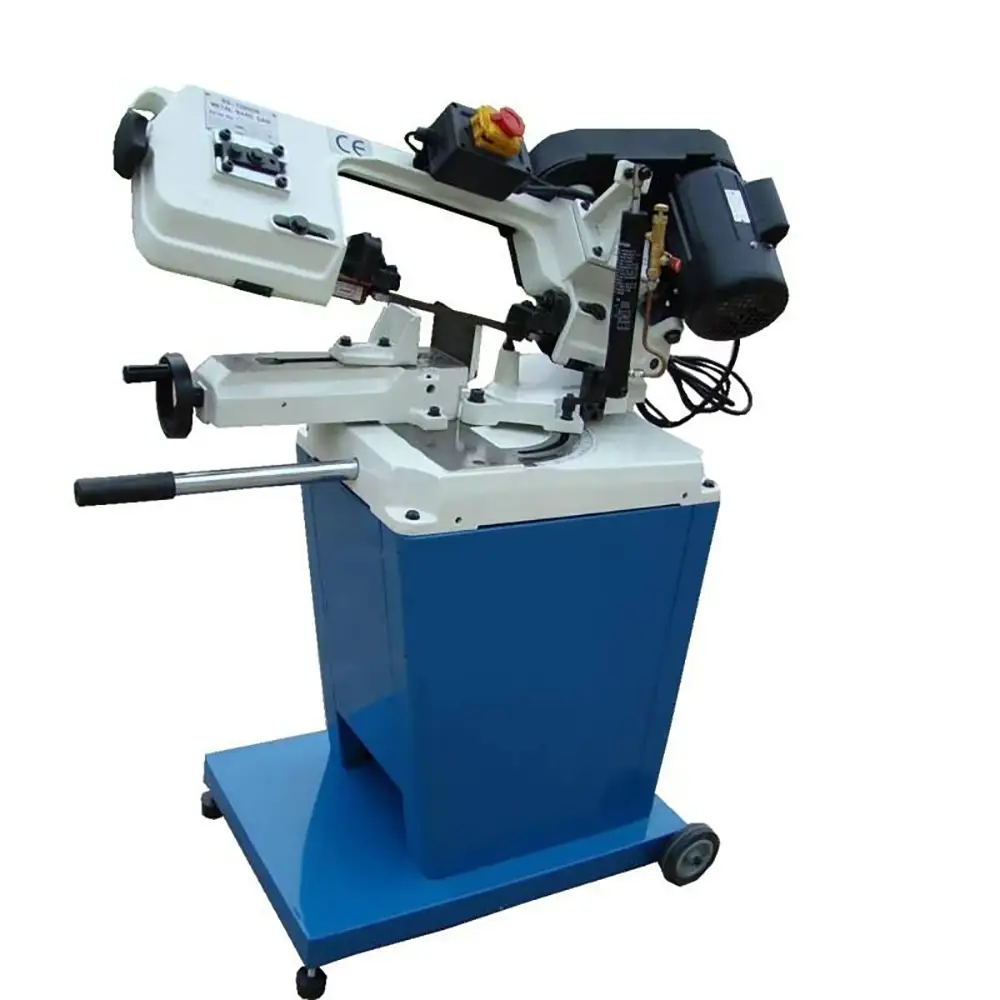
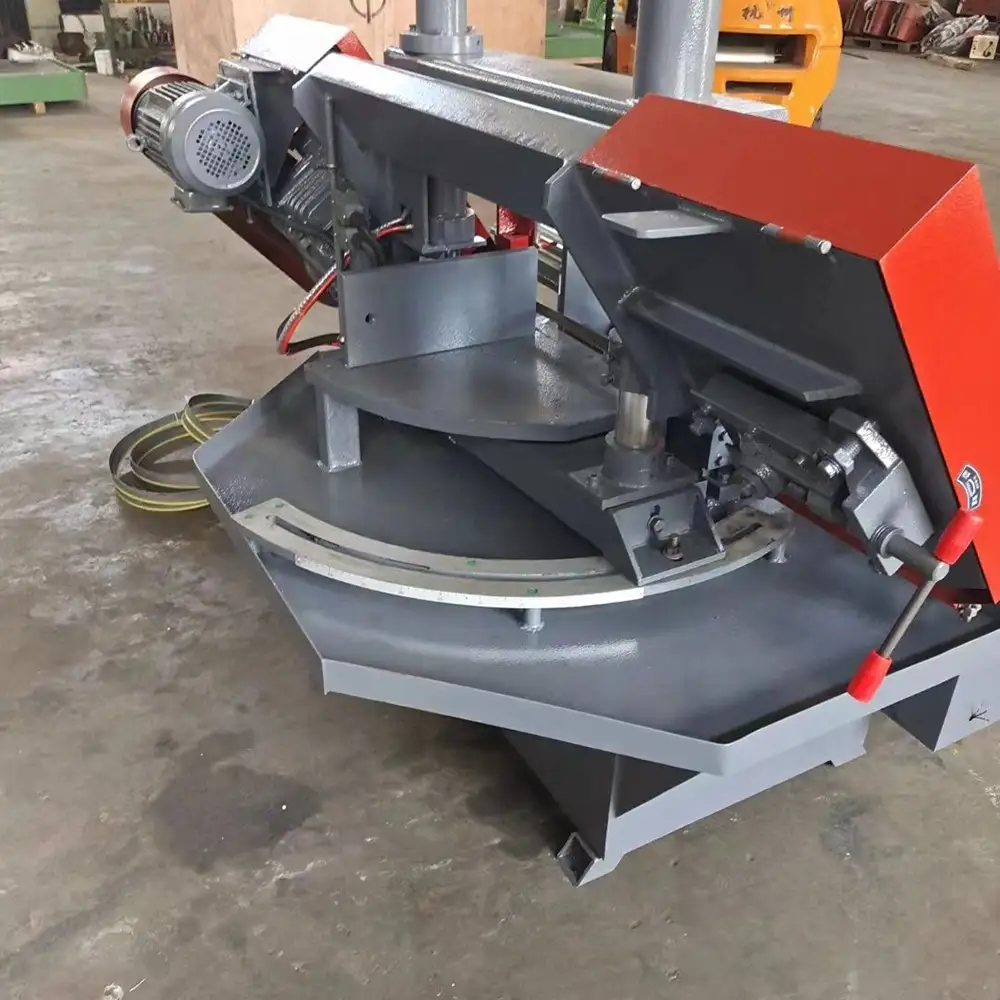
●This machine is an equipment for sawing metal materials with bimetallic saw blades. It has the advantages of compact structure,fast cutting speed, high precision, narrow saw gap, low noise, convenient operation, etc. It is a new energy-saving product that replaces circular saws and bow saws. ● It is widely used for sawing various metal materials in various industries such as electromechanical, metallurgy, automobiles, bridges, and ships. Specification
|
Model |
YJ350Y |
|
Sawing& cutting capacity |
○ |
115 |
|
□ |
110×110 |
|
┗ |
110×110 |
|
▭ |
150×90 |
|
● |
60 |
|
■ |
60×60 |
|
Power mode |
Hydraulic |
|
Max gap of clamp(MM) |
150 |
|
Cutting angle |
45°, 90° |
|
Rotary speed |
60/120 |
|
Suitable size for saw blade(mm) |
300,325,350 |
Chair Frame & Fitness Equipment Processing Circular Saw Pipe Cutting Machine
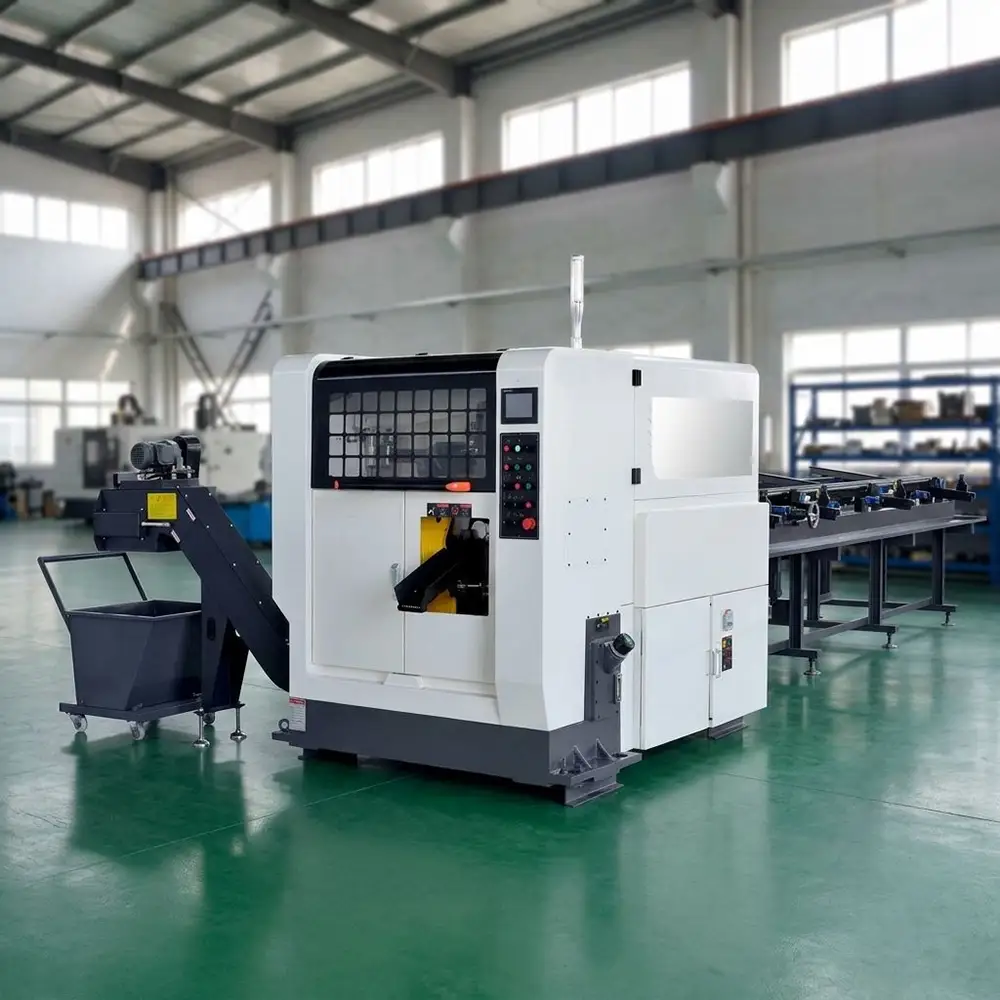
The Chair Frame Fitness Equipment Processing Circular Saw Pipe Cutting Machine is designed for efficient cutting of metal pipes, tubes, and profiles used in chair frames, fitness equipment, furniture structures, and other fabricated metal products. Combining circular saw cutting technology with stable workpiece positioning, the machine provides a practical solution for manufacturers that require repeatable tube cutting for welded and assembled products.
Metal tubes are widely used in modern furniture and fitness equipment because they provide a strong yet relatively lightweight structural framework. Chair frames, exercise equipment frames, gym machines, training benches, stools, tables, and similar products often require multiple tube components cut to specific lengths before bending, drilling, welding, or assembly.
This pipe cutting machine can be used as an important first-stage processing machine for these production workflows.
Circular Saw Cutting Technology
The machine uses a circular saw blade to cut metal pipes and tubes. Circular sawing is commonly used for tube processing because it provides a controlled cutting path and can support repeatable production.
Depending on the machine configuration and blade selection, suitable workpieces may include round steel pipes, square tubes, rectangular tubes, stainless steel tubes, carbon steel tubes, and other metal profiles.
The cutting blade should be selected according to the material, tube diameter, wall thickness, required edge quality, and production requirements. Different materials and tube dimensions require different cutting parameters.
For chair frame and fitness equipment manufacturing, consistent cutting length is important because multiple tube components often need to fit together during welding and assembly.
Chair Frame Tube Processing
Chair frames commonly use round, square, or rectangular metal tubes. These components may be used for seat frames, backrest supports, legs, armrests, connecting structures, and other structural sections.
A dedicated tube cutting machine can help manufacturers produce repeatable blanks before subsequent forming and welding processes.
For example, a production workflow may include:
Loading the metal tube
Positioning the workpiece
Clamping the tube
Circular saw cutting
Removing the finished section
Measuring or inspecting the cut
Transferring the blank to bending, drilling, welding, or assembly
When automated feeding or positioning is available, repetitive cutting operations can be streamlined further.
Fitness Equipment Manufacturing
Fitness equipment manufacturers use metal tubes and profiles to construct strong frames for treadmills, exercise bikes, weight machines, rowing machines, benches, racks, and other training equipment.
The cutting machine can prepare tube sections before they are bent, drilled, welded, or assembled into finished equipment.
Consistent tube lengths can help improve the repeatability of frame fabrication. Stable cutting also makes it easier to organize downstream welding fixtures and assembly operations.
Actual cutting capability depends on the machine's work range, blade specifications, material, tube dimensions, and configuration.
Metal Tube Cutting for Furniture Production
In addition to chair frames and fitness equipment, the machine can be used in furniture manufacturing. Metal furniture frequently uses tubular steel components because of their structural properties and clean appearance.
Typical applications include:
Dining chair frames
Office chair frames
Bar stools
Furniture legs
Table frames
Sofa support structures
Storage racks
Display stands
Shopping fixtures
Outdoor furniture frames
The same machine platform can therefore support multiple product categories where tubular metal components require accurate cutting.
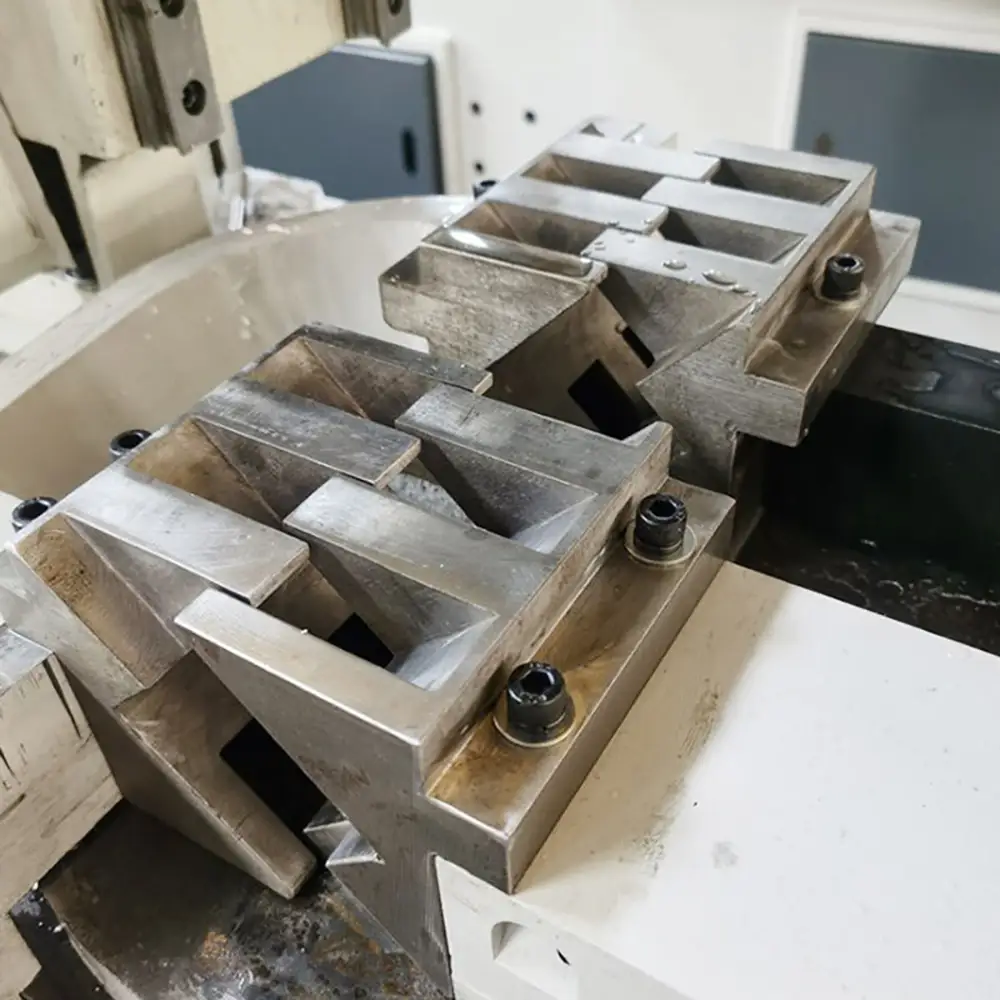
Stable Clamping for Tube Cutting
Proper workpiece clamping is essential for circular saw tube cutting. The tube should remain stable during the cutting process to reduce vibration and unwanted movement.
Round, square, and rectangular tubes have different contact surfaces, so suitable clamping arrangements should be selected according to the workpiece geometry.
Thin-wall tubes require particular attention because excessive clamping force can deform the material. Correct blade selection, feed rate, support, and clamping pressure can help improve cutting results.
For longer tubes, roller supports or automatic feeding systems can be integrated according to the production layout.
Cutting Different Metal Materials
The machine can process suitable metal materials according to its configuration and blade selection.
Common materials may include:
Carbon steel pipe
Mild steel tube
Stainless steel tube
Alloy steel profiles
Aluminum tube
Other suitable metal tubing
Stainless steel, aluminum, carbon steel, and other metals have different cutting characteristics. The correct blade and cutting parameters should be selected for each material.
For high-volume production, using an application-specific blade can help improve cutting consistency and tool life.
Production Efficiency
Chair and fitness equipment manufacturers often process large quantities of similar tube components. Repetitive manual cutting can increase labor requirements and make consistent length control more difficult.
A circular saw pipe cutting machine can provide a more organized production process by combining controlled feeding, clamping, and cutting.
Depending on the configuration, the machine can be equipped with automatic feeding, length positioning, material support, coolant systems, counting functions, and other production aids.
Actual production output depends on tube size, material, cutting length, blade type, machine cycle, loading method, and operator workflow. Automatic operation should not be interpreted as fully unmanned production unless the complete automation system is specifically configured for it.
Cutting Quality and Repeatability
The quality of a cut depends on the complete cutting system rather than the saw blade alone. Machine rigidity, blade sharpness, tube support, clamping stability, feeding accuracy, and cutting parameters all influence the finished result.
For chair frames and fitness equipment, consistent tube length can be especially important because multiple components may be welded together in jigs or fixtures.
If a project has strict dimensional requirements, customers should provide tube drawings, material information, diameter or profile dimensions, wall thickness, required cutting length, and expected production volume when selecting the machine.
Integration With Downstream Processes
The pipe cutting machine can be positioned at the beginning of a larger tube-processing workflow.
After cutting, tube components may move to:
Tube bending
Drilling
Punching
Chamfering
Deburring
Laser processing
Welding
Grinding
Surface treatment
Powder coating
Final assembly
For furniture and fitness equipment factories, connecting tube cutting with subsequent production stages can improve material flow and reduce unnecessary handling.
Safety and Maintenance
Circular saw machines contain moving blades and mechanical components, so proper operating procedures are essential. Operators should use machine guards, emergency-stop functions, and other safety devices provided with the equipment and follow applicable workplace regulations.
Routine maintenance should include checking blade condition, clamping components, feeding mechanisms, coolant or lubrication systems, electrical components, and machine alignment.
The cutting area should be cleaned regularly to remove chips and debris. Worn blades should be replaced or serviced according to the manufacturer's recommendations.
OEM and Custom Solutions
Different chair frame and fitness equipment manufacturers may use different tube sizes, materials, cutting lengths, and production volumes. The machine can therefore be configured according to specific production requirements.
Customers can provide tube diameter, square or rectangular tube dimensions, wall thickness, material grade, cutting length, required cutting angle, production quantity, and automation requirements.
OEM and ODM solutions can include automatic feeding, customized clamping, length positioning, material collection, coolant systems, production counting, and integration with other tube-processing equipment.
For manufacturers looking for a chair frame pipe cutting machine, fitness equipment tube cutting machine, circular saw pipe cutter, or industrial metal tube cutting solution, this equipment provides a practical platform for efficient and repeatable tubular metal processing.
FAQs
1. What is this machine mainly used for?
It is designed for cutting metal pipes and tubes used in chair frames, fitness equipment, furniture, and other fabricated metal products.
2. Can it cut chair frame tubes?
Yes. Round, square, and rectangular tubes suitable for chair frame production can be processed according to the machine's cutting capacity.
3. Can it process fitness equipment tubes?
Yes. The machine can be used for tube components used in exercise equipment frames, racks, benches, and other fitness equipment structures.
4. What materials can it cut?
Depending on the configuration, it can process carbon steel, mild steel, stainless steel, aluminum, alloy steel, and other suitable metal tubes.
5. Can it cut square and rectangular tubes?
Yes. Square and rectangular metal tubes can be processed when their dimensions fall within the machine's working range.
6. Why use a circular saw for tube cutting?
Circular sawing provides a controlled cutting process and is widely used for repeatable cutting of metal pipes, tubes, bars, and profiles.
7. Is it suitable for thin-wall tubes?
Yes, when properly configured. Thin-wall tubes require suitable clamping pressure, blade selection, support, and cutting parameters to minimize deformation.
8. Can automatic feeding be added?
Depending on the machine model, automatic feeding, length positioning, material support, and other automation functions can be integrated.
9. Can it cut stainless steel tubes?
Yes, when the machine and blade are configured for stainless steel. Stainless steel requires suitable cutting parameters and tooling.
10. Can the machine be used for furniture manufacturing?
Yes. It can be used for chair frames, table frames, stools, racks, display structures, and other tubular metal furniture components.
11. What information is needed for machine selection?
Provide the tube material, round or profile dimensions, wall thickness, cutting length, required production volume, and desired automation level.
12. Can the machine be customized?
Yes. Feeding, clamping, positioning, coolant, material support, cutting capacity, and production-line integration can be customized according to project requirements.
Why Choose Us
Designed for Tube Frame Production – Suitable for chair frames, fitness equipment, furniture, and other tubular metal structures.
Circular Saw Cutting Technology – Provides controlled cutting for round, square, and rectangular metal tubes.
Flexible Material Compatibility – Can be configured for suitable carbon steel, stainless steel, aluminum, and alloy tubing.
Stable Workpiece Clamping – Proper clamping and support help improve cutting consistency and reduce unwanted tube movement.
Production Efficiency – Suitable for repetitive cutting of large quantities of tube components.
Automation Options – Automatic feeding, positioning, counting, material support, and other functions can be integrated depending on requirements.
Wide Industrial Applications – Suitable for furniture, fitness equipment, automotive components, machinery, construction, and general metal fabrication.
OEM & ODM Support – Machine configurations can be developed around tube dimensions, materials, cutting lengths, and production requirements.
Prev:
Electric Cutting Pipe Steel Manual Metal Cutting Band Saw Machine
Next:
Multi-Angle Cut Pipe, Channel & Angle Steel Band Saw Machine
TAG:
Metal Tube Processing Machine,
Tube Processing Machine,
Automatic Tube Processing Machine,
Metal Tube Processing Equipment,
Metal Pipe Processing Equipment,
Steel Profile Cutting Machine,
Tube Cutting Equipment,
Pipe Cutting Equipment,
Stainless Steel Pipe Cutting Machine,
Square Tube Cutting Machine,
Metal Tube Cutting Machine,
Stainless Steel Tube Cutting Machine,
Metal Pipe Cutting Machine,
Square Pipe Cutting Machine,
Automatic Tube Cutting Machine,
Metal Profile Cutting Machine,
Steel Tube Cutting Machine,
Automatic Pipe Cutting Machine,
CNC Tube Cutting Machine,
Round Pipe Cutting Machine,
Round Tube Cutting Machine,
Precision Tube Cutting Machine,
Aluminum Tube Cutting Machine,
Aluminum Pipe Cutting Machine,
Automatic Metal Tube Cutting Machine,
Precision Metal Cutting Machine,
CNC Metal Tube Cutting Machine,
Industrial Tube Cutting Machine,
CNC Pipe Cutting Machine,
Steel Pipe Cutting Machine,
Related Category:
Chair Frame Pipe Cutting Machine,Fitness Equipment Pipe Cutting Machine,Circular Saw Pipe Cutting Machine,Chair Frame Cu China, suppliers, manufacturers, factory, customized, wholesale, quotation, made in China